用词的正确形式填空-【题型易-期末复习】2024-2025学年八年级下册 英语 仿真模拟特训 易错重难点 满分冲刺(人教版Go for it!)
2025-05-30
|
2份
|
24页
|
547人阅读
|
38人下载
资源信息
| 学段 | 初中 |
|---|---|
| 学科 | 英语 |
| 教材版本 | 初中英语人教版(2012)八年级下册 |
| 年级 | 八年级 |
| 章节 | - |
| 类型 | 题集-专项训练 |
| 知识点 | - |
| 使用场景 | 同步教学-期末 |
| 学年 | 2025-2026 |
| 地区(省份) | 全国 |
| 地区(市) | - |
| 地区(区县) | - |
| 文件格式 | ZIP |
| 文件大小 | 115 KB |
| 发布时间 | 2025-05-30 |
| 更新时间 | 2025-06-10 |
| 作者 | 乐思英语精品馆 |
| 品牌系列 | - |
| 审核时间 | 2025-05-30 |
| 下载链接 | https://m.zxxk.com/soft/52364034.html |
| 价格 | 3.00储值(1储值=1元) |
| 来源 | 学科网 |
内容正文:
考前特训
用词的正确形式填空 仿真模拟100题(人教版Go for it!)
2024-2025学年八年级下学期 期末满分冲刺
学校:___________姓名:___________班级:___________考号:___________
内容提要
期末模拟题
期末仿真题
Unit 1 What's the matter?
1.We should know about the (important) of studying English.
【答案】importance
【详解】句意:我们应该知道学习英语的重要性。此处应填名词作宾语,important“重要的”,形容词,其名词importance“重要性”符合语境。故填importance。
2.His grandfather’s (die) made the whole family very sad.
【答案】death
【详解】句意:他祖父的去世让整个家庭非常伤心。“die”是动词,意为“死亡”,而此空需要一个名词作主语,表示“……的去世”,“die”的名词形式是“death”,在句中作主语。故填death。
3.We are old enough to look after (we).
【答案】ourselves
【详解】句意:我们已经足够大了,可以照顾自己了。主语和宾语是同一人称,宾语应用反身代词。故填ourselves。
4.This woman with her friends really enjoyed (she) at the party.
【答案】herself
【详解】句意:这个女士和她朋友在聚会上真得玩得很开心。enjoy oneself意为“玩得开心”,固定搭配。本句主语为This woman,with her friends为伴随主语,故空处需代词she的反身代词herself。故填herself。
5.Children, would you please behave at the party? (you)
【答案】yourselves
【详解】句意:孩子们,你们在聚会上能规矩点吗?behave oneself“举止得体;规规矩矩”,根据children可知,此处应填写you“你们”复数的反身代词。故填yourselves。
6.Judy made a (decide) to try out for a volunteer of 2025 Asian Winter Games in Harbin.
【答案】decision
【详解】句意:Judy下定决心要参加2025年哈尔滨亚洲冬季运动会的志愿者选拔。根据“made a ...”可知,此处应用名词作宾语;动词“decide”的名词形式是“decision”,表示“决定”,符合句意。故填decision。
7.The ball (hit) the boy just now.
【答案】hit
【详解】句意:球刚刚撞到了那个男孩。“hit”在句子中作谓语,“just now”是一般过去时的标志词,“hit”的过去式与原形同形,所以此处应填“hit”。故填hit。
8.Never (give) up easily. It is the key to success.
【答案】give
【详解】句意:永远不要轻易放弃。它是通往成功的关键。分析句子可知,句子是祈使句,以动词原形开头。故填give。
9.My father’s (stomach) stopped after he took the medicine.
【答案】stomachache
【详解】句意:我父亲服药后,他的胃痛停止了。根据“stopped after he took the medicine.”可知,服药后停止的是胃痛,应用名词stomachache。故填stomachache。
10.Every morning we get up early, (breath) the fresh air and hear the birds sing in the woods.
【答案】breathe
【详解】句意:每天早上我们都起得很早,呼吸新鲜空气,听鸟儿在林中歌唱。分析句子结构可知,此处为并列谓语,用动词形式,breathe“呼吸”,句子时态为一般现在时,主语为“we”,用动词原形。故填breathe。
Unit 2 I'll help to clean up the city parks.
1. (volunteer) in the west of China is a dream for me.
【答案】Volunteering
【详解】句意:在中国西部做志愿工作对我来说是一个梦想。空处在句子中作主语,这里需要用动名词形式来表示“做志愿工作”这个行为,volunteer的动名词是volunteering,首字母大写。故填Volunteering。
2. She felt very (lonely) after moving to a new city without friends.
【答案】lonely
【详解】句意:在搬到一个没有朋友的新城市后,她感到非常孤独。根据“She felt very”可知,feel是系动词,后接形容词作表语,根据“moving to a new city without friends”可知,在新城市没有朋友,应该是孤独的,lonely本身就是形容词,意为“孤独的;寂寞的”,无需变形。故填lonely。
3. —Please look at the sign. You can’t smoke here.
—Sorry, I (not notice) it. And I won’t smoke again.
【答案】didn’t notice
【详解】句意:——请看这个标志。你不能在这里抽烟。——抱歉,我没注意到它。我不会再抽了。根据“You can’t smoke here.”可知,仍抽烟说明过去没有注意到禁烟标志,此句应用一般过去时,notice为实义动词,应借助助动词didn’t构成否定句,其后接动词原形notice。故填didn’t notice。
4. They prefer (travel) by bus rather than take the subway.
【答案】to travel
【详解】句意:他们宁愿坐公共汽车也不坐地铁。根据句子和单词提示可知,此处时一个常用英文表达prefer to do rather than do“宁愿做某事而不做某事”,空处应填travel的不定式形式to travel。故填to travel。
5. The new program allowed teenagers (volunteer) at the nursing home to help the elderly.
【答案】to volunteer
【详解】句意:这个新项目允许青少年在养老院做志愿者来帮助老年人。根据“The new program allowed teenagers … at the nursing home to help the elderly.”以及英文提示可知,“allow sb. to do sth.”意为“允许某人做某事”,此处需要填入动词不定式形式。volunteer“志愿做;义务做”,其动词不定式为to volunteer。故填to volunteer。
6. They did as much as they could (help) more people in need.
【答案】to help
【详解】句意:他们尽其所能帮助更多有需要的人。根据“They did as much as they could...more people in need.”可知,他们做尽可能多的事是为了帮助更多有需要的人,用动词不定式表示目的,应填to help。故填to help。
7. Their house is too old. Cold air always goes in through (break) windows.
【答案】broken
【详解】句意:他们的房子太旧了,冷空气总是从破窗户里灌进来。根据“through...windows”可知是通过破窗户,修饰名词windows用形容词broken“破的”。故填broken。
8. (keep) healthy, you should eat a lot of fruit and vegetables.
【答案】To keep
【详解】句意:为了保持健康,你应该多吃水果和蔬菜。根据“healthy, you should eat a lot of fruit and vegetables.”可知,“多吃蔬菜和水果”的目的是为了“保持健康”,用动词不定式作目的状语。故填To keep。
9. She became (able) after the terrible car accident a few years ago.
【答案】disabled
【详解】句意:她在几年前的车祸后变得残疾了。根据“after the terrible car accident”及单词提示可知,此处为disabled“残疾的”,became后跟形容词作表语。故填disabled。
10. Although it rained heavily, he still decided (send) his child to basketball practice.
【答案】to send
【详解】句意:尽管雨下得很大,他仍然决定送孩子去参加篮球训练。decide to do sth表示“决定做某事”,其后接动词不定式作宾语。故填to send。
Unit 3 Could you please clean your room?
1. My mother reminded me (not throw) rubbish everywhere.
【答案】not to throw
【详解】句意:我妈妈提醒我不要到处扔垃圾。根据“remind sb. not to do sth.”表示“提醒某人不要做某事”,是固定短语,此处应使用动词不定式的否定形式。故填not to throw。
2. Taking part in after-school activities can help kids develop the spirit of (independent).
【答案】independence
【详解】句意:参加课外活动可以帮助孩子们培养独立精神。根据“the spirit of”可知,介词后需要名词,此处表示独立精神。故填independence。
3. Tom thinks it’s (fair) for him to do all the housework all the time.
【答案】unfair
【详解】句意:汤姆认为一直由他做所有家务是不公平的。根据“do all the housework all the time”可知,此处应表示“由他做所有家务是不公平的”,用“fair”的否定形式“unfair”,意为“不公平的”。故填unfair。
4. I can’t imagine (waste) my time on such a meaningless thing.
【答案】wasting
【详解】句意:我无法想象把时间浪费在这样毫无意义的事情上。waste“浪费”,是动词,imagine doing sth“想象做某事”,故填wasting。
5. The charity often (provide) free lunch for disabled people.
【答案】provides
【详解】句意:这家慈善机构经常为残疾人提供免费午餐。根据“often”可知,此句是一般现在时,主语是第三人称单数,动词用三单形式。故填provides。
6. Of all the chores, I hate (sweep) the floor the most.
【答案】sweeping
【详解】句意:在所有的家务中,我最讨厌扫地。hate doing sth.表示“习惯性地不喜欢做某事”。故填sweeping。
7. The best way (pass) an exam is to work hard every day in a year.
【答案】to pass
【详解】句意:通过考试的最好方法是一年中的每一天都努力学习。根据“The best way ... an exam is to work hard every day in a year.”可知,“The best way”后面接动词不定式形式作定语,表示“做某事的最好方法”,因此“pass”应使用不定式形式“to pass”。故填to pass。
8. Marry went to the library yesterday in order to (borrow) some science fictions.
【答案】borrow
【详解】句意:Marry昨天去图书馆是为了借一些科幻小说。borrow“借”,动词;in order to do sth. “为了做某事”,to后接动词原形。故填borrow。
9. His phone doesn’t work because he (drop) it on the floor yesterday.
【答案】dropped
【详解】句意:他的手机坏了,因为他昨天把它掉在地板上了。根据“yesterday”可知,句子时态应用一般过去时,谓语动词应用过去式dropped。故填dropped。
10. In fact, I (understand) little of what he said at that time.
【答案】understood
【详解】句意:事实上,当时我对他说的话几乎听不懂。根据“at that time”可知,此空应填动词过去式,故填understood。
Unit 4 Why don't you talk to y our parents?
1. My brother borrows my CD without (return) it.
【答案】returning
【详解】句意:我哥哥借了我的CD,没有归还。空前为介词without,其后接动名词作宾语,故填returning。
2. Why don’t you (communicate) more with your team members? They need some help.
【答案】communicate
【详解】句意:你为什么不多和你的团队成员交流呢?他们需要一些帮助。根据“Why don’t you”可知,“Why don’t you + 动词原形”是固定句型,用来提出建议,意为“你为什么不……”,所以此处应填动词原形communicate。故填communicate。
3. China’s (develop) catches the world’s attention (注意).
【答案】development
【详解】句意:中国的发展令世界瞩目。空前的China’s是所有格形式,其后接名词,所以空处应用develop的名词形式development,此处表示“发展”的整体概念,无需复数形式。故填development。
4. It’s a waste of time (argue) about the same problem again and again.
【答案】arguing
【详解】句意:一次次地争论同一个问题很浪费时间。It’s a waste of time doing sth.意为“做某事是浪费时间”,其中“doing sth.”是动名词短语,作句子的真正主语,而it则是形式主语。argue“争论”的动名词形式为arguing。故填arguing。
5. The boy did whatever he could (compete) for the first prize.
【答案】to compete
【详解】句意:这个男孩做了他所能做的一切来竞争一等奖。 根据“The boy did whatever he could...(compete) for the first prize.”可知,此处应是动词不定式作目的状语,to compete符合语境。故填to compete。
6. The teacher doesn’t allow (shout) loudly in the classroom.
【答案】shouting
【详解】句意:老师不允许在教室里大声喊叫。allow doing sth.意为“允许做某事”,此处用动名词形式。故填shouting。
7. The man did whatever he could (compete) for the prize.
【答案】to compete
【详解】句意:这个男人竭尽所能去角逐这个奖项。 根据“The man did whatever he could...(compete) for the prize.”可知,此处应是动词不定式作目的状语,to compete符合语境。故填to compete。
8. The mother gave up (push) her children, so that they can have more free time.
【答案】pushing
【详解】句意:这位母亲放弃了逼迫她的孩子,以便他们有更多的自由时间。分析句子结构和所给单词可知,应填push的动名词形式pushing,作give up的宾语。give up doing sth“放弃做某事”。故填pushing。
9. (push) children too hard isn’t good for their development.
【答案】Pushing
【详解】句意:给孩子们施加太大压力对他们的发展没有好处。分析句子结构,“…children too hard”在句中作主语,“push”是动词,意为“推动;逼迫”,在这里用动名词形式“pushing”作主语,表示“逼迫孩子”这一行为。句首单词首字母大写。故填Pushing。
10. Which is your (old) brother and which is your younger brother?
【答案】elder
【详解】句意:哪个是你哥哥,哪个是你弟弟?根据“which is your younger brother”可知,此处询问哪个是哥哥,elder brother“哥哥”,是固定搭配。故填elder。
Unit 5 What were you doing w hen the rainstorm came?
1. My sister didn’t fall (sleep) until 11:00 last night.
【答案】asleep
【详解】句意:我的姐姐/妹妹昨晚直到11点才睡着。sleep“睡觉”是动词。fall后应跟形容词作表语,sleep的形容词是asleep,“fall asleep”是固定短语,意为“入睡;睡着”。故填asleep。
2. Our class (beat) Class One and won the football game.
【答案】beat
【详解】句意:我们班打败了一班,赢得了足球比赛。根据won可知,时态是一般过去时,所以空处应填beat的过去式beat。故填beat。
3. The boy picked up all the (fall) leaves (树叶) in the garden after the storm.
【答案】fallen
【详解】句意:暴风雨过后,男孩捡起了花园里所有的落叶。根据“The boy picked up all the...(fall) leaves in the garden after the storm.”可知,此处使用形容词修饰名词leaves,fall的形容词为fallen,表示“落下的”,强调叶子已经从树上掉落的状态。故填fallen。
4. I (walk) home on the street when the rainstorm came.
【答案】was walking
【详解】句意:当暴风雨来临时,我正在街上步行回家。分析句子结构和所给单词可知,时态为过去进行时,表示当暴风雨来临时,我正在街上步行回家。主语是I,be动词用was,walk的现在分词是walking。故填was walking。
5. It was raining even (heavy) when we returned home yesterday.
【答案】more heavily
【详解】句意:昨天我们回家的时候,雨下得甚至更大了。rain是动词,意思是“下雨”,需要用副词来修饰。heavy是形容词,副词形式是heavily;even常用来修饰比较级,强调程度的进一步加深;heavily是多音节副词,其比较级是more heavily,表示“更大程度地;更猛烈地”。故填more heavily。
6. More than one worker (tie) the newspapers in a bundle (捆) when I walked past the office.
【答案】was tying
【详解】句意:当我走过办公室时,不止一个工人正在把报纸捆成一捆。根据“More than one worker…(tie) the newspapers in a bundle (捆) when I walked past the office.”可知,此处时态为过去进行时,其结构为was/were+现在分词,主语遵循“more than one+单数名词”的结构,谓语动词需用单数形式was,tie的现在分词为tying。故填was tying。
7. She has moved to an apartment downtown (recent), closer to her workplace.
【答案】recently
【详解】句意:她最近搬到了市中心的一套公寓,离她的工作地点更近了。此处用副词修饰一整句话,recently意为“最近”,副词。故填recently。
8. It rained (heavy) yesterday morning. Many students were late for school.
【答案】heavily
【详解】句意:昨天早上雨下得很大。很多学生上学迟到了。根据“It rained”可知,这里需要用副词来修饰动词rained,heavy的副词形式是heavily。故填heavily。
9. The TV (broadcast) a football match when I got home.
【答案】was broadcasting
【详解】句意:我到家的时候,电视正在播放一场足球比赛。题干为when引导的时间状语从句,when I got home是一般过去时,描述过去某个时间点发生的动作;主句表示在“我到家”这个过去时间点,电视正在进行的动作,强调过去某一时刻正在进行的动作,要用过去进行时,结构是“was/were+现在分词”;主语是单数,be动词用was,broadcast的现在分词是broadcasting。故填was broadcasting。
10. The flag (rise) up and stopped in the right place.
【答案】rose
【详解】句意:旗帜升起,停在了合适的位置。stopped为动词过去式;and为并列连词,前后连接词性时态需一致;rise为动词原形,过去式为rose。故填rose。
Unit 6 An old man tried to mo ve the mountains.
1.We mustn’t throw any (object) from the tall building. It’s very dangerous.
【答案】objects
【详解】句意:我们禁止从高楼扔任何物体。这非常危险。any修饰可数名词复数形式。故填objects。
2.He took off his expensive watch that he was very rich. (hide)
【答案】to hide
【详解】句意:他摘下了昂贵的手表,以隐藏自己非常富有的事实。此处需要用动词不定式“to hide”表示目的状语,说明摘下手表的目的是为了隐藏自己很富有的情况。故填to hide。
3.The movie was so (touch) that many people cried.
【答案】touching
【详解】句意:这部电影如此令人感动以至于很多人都哭了。根据“The movie was so...that many people cried.”可知,句中“so...that...”引导结果状语从句,“so”后接形容词或副词,句中主语是“The movie”,表示物,此处应该使用“-ing”形式的形容词作表语,“touch”的形容词形式为“touching”,意为“令人感动的”符合语境。故填touching。
4.When the father came home from work, he heard his wife (shout) at their son, Tom.
【答案】shouting
【详解】句意:当父亲下班回家时,他听到妻子正在对他们的儿子汤姆大喊。根据“When the father came home from work,”可知,此处是指父亲下班回家时听到妻子正在对儿子大喊;考查hear sb. doing sth.“听到某人正在做某事”,固定搭配,强调动作正在进行,所以这里应用动词shout的现在分词形式shouting。故填shouting。
5.As soon as the sun (shine), the workers have to begin to work.
【答案】shines
【详解】句意:太阳一出来,工人们就必须开始工作。分析句子结构可知,句子为as soon as引导的时间状语从句;主句“the workers have to begin to work”是一般现在时,描述的是习惯性动作,从句也应用一般现在时;从句主语“the sun”是第三人称单数,所以谓语动词应用三单形式shines。故填shines。
6.I (return) it to the library as soon as I finish reading Little Women.
【答案】will return
【详解】句意:我一读完《小妇人》,就会把它还给图书馆。as soon as意为“一……就……”,引导时间状语从句时,主句用一般将来时,从句用一般现在时,故填will return。
7.He says he (not come) to her birthday party next week unless he (invite).
【答案】 won’t come is invited
【详解】句意:他说他下周不会来参加她的生日派对,除非他被邀请。根据“next week”可知此处描述的是将来的事情,且“he”和“invite”之间是被动关系,第一空用一般将来时的否定形式“won’t come”,第二空用一般现在时的被动语态“is invited”表示将来的被动。故填won’t come;is invited。
8.These beautiful hats are those men’s (wife).
【答案】wives’
【详解】句意:这些漂亮的帽子是那些男人的妻子的。根据“These beautiful hats are those men...”可知此处指漂亮的帽子是那些男人的妻子的,使用wife“妻子”的复数的所有格wives’。故填wives’。
9.My parents got (marry) twenty years ago.
【答案】married
【详解】句意:我父母20年前结婚了。get married“结婚”,固定搭配。故填married。
10.We Chinese were very (excite) when seeing Shenzhou-18 flying into space on TV.
【答案】excited
【详解】句意:我们中国人在电视上看到神舟-18飞向太空的时候感到非常兴奋。excite“使兴奋”,是动词; excited“兴奋的”,是形容词,修饰人;在系动词were后面用形容词作表语。故填excited。
Unit 7 What's the highest mou ntain in the world?
1. There are many on the Great Wall. (tour)
【答案】tourists
【详解】句意:长城上有很多游客。根据“on the Great Wall”可知,此处指长城上的游客。tour是动词“旅行”,其名词形式为tourist“游客”,many修饰可数名词复数形式。故填tourists。
2. Going to a live concert is a(n) experience than listening to an album at home. (impress)
【答案】more impressive
【详解】句意:去看现场音乐会比在家听专辑更令人印象深刻。根据空后的名词“experience”可知,此处填形容词作impressive,作定语;根据“than”可知,应用impressive的比较级形式more impressive,意为“更令人印象深刻的”,符合句意。故填more impressive。
3. The rich man gave away (million) of dollars to those poor areas.
【答案】millions
【详解】句意:那富人捐出数百万美元给那些贫困地区。根据所给单词及空格后“of”可知,此处表示数百万的。millions of“数百万的;成千上万的”,固定搭配。故填millions。
4. We were all filled with admiration for his greatest scientific (achieve) of the decade.
【答案】achievement
【详解】句意:我们都对他十年来最伟大的科学成就充满钦佩。根据空前的形容词“scientific”并结合句子结构可知,此处应用名词形式achievement“成就”,作介词for后的宾语。故填achievement。
5. She is wearing sunglasses (protect) her eyes from the strong sunlight.
【答案】to pretect
【详解】句意:她戴着太阳镜,以保护眼睛免受强烈阳光的伤害。protect“保护”,动词;结合“She is wearing sunglasses...her eyes from the strong sunlight.”可知,戴眼镜的目的是保护眼睛,空处使用动词不定式作目的状语。故填to pretect。
6. It was raining even (heavy) when you returned home yesterday.
【答案】more heavily
【详解】句意:昨天你回家的时候,雨下得甚至更大了。rain是动词,意思是“下雨”,需要用副词来修饰。heavy是形容词,副词形式是heavily;even常用来修饰比较级,强调程度的进一步加深;heavily是多音节副词,其比较级是more heavily,表示“更大程度地;更猛烈地”。故填more heavily。
7. Some teenagers seem much (crazy) than usual when they see their favorite idols.
【答案】crazier
【详解】句意:当一些青少年看到他们最喜欢的偶像时,他们似乎比平时更疯狂。根据“than usual”可知,此处用形容词比较级,crazy的比较级为crazier。故填crazier。
8. I think Wu Qilong is one of the most popular (actor). I’m his fan.
【答案】actors
【详解】句意:我认为吴奇隆是最受欢迎的演员之一。我是他的粉丝。根据“one of the most popular ...”可知,“one of + the + 形容词最高级 + 可数名词复数”表示“最……之一”,所以横线处需填可数名词复数形式;且吴奇隆是男性,actor“演员”,可数名词,其复数形式为actors。故填actors。
9. The more exercise you do, the happier and (health) you will be.
【答案】healthier
【详解】句意:你锻炼得越多,你就会越快乐和越健康。根据“The more exercise you do, the happier and… you will be.”可知,这里使用了“the+比较级,the+比较级”结构,表示“越……,越……”。and连接两个并列的部分,前面是happier,是happy的比较级,所以后面也需要用health的形容词healthy形式的比较级形式来保持结构的一致性。 故填healthier。
10. His (ill) is the result of eating too much junk food.
【答案】illness
【详解】句意:他的疾病是吃太多垃圾食品的结果。ill是形容词,空处是作主语,应用名词illness“疾病”。故填illness。
Unit 8 Have you read Treasure Island yet?
1. These buildings add (beautiful) to our city.
【答案】beauty
【详解】句意:这些建筑为我们的城市增添了美丽。根据“These buildings add”可知,此处是说建筑为我们的城市增添了“美丽”,beauty“美丽”符合语境,此处为抽象意义,不可数名词。故填beauty。
2. I want to thank everyone who has (courage) and supported me.
【答案】encouraged
【详解】句意:我要感谢所有鼓励和支持我的人。根据“I want to thank everyone who has…(courage) and supported me.”可知,此处是指感谢鼓励过的人,时态为现在完成时,应用courage的动词过去分词形式encouraged表示“鼓励”。故填encouraged。
3. Alice has (hide) her diary somewhere so that her sister can’t find it.
【答案】hidden
【详解】句意:爱丽丝把她的日记藏在某个地方了,这样她妹妹就找不到了。根据空前的“has”可知,本句时态为现在完成时,谓语结构为“has done”,hide的过去分词为hidden,故填hidden。
4. The exam is coming to an end, but Tom (not write) even a word in his paper yet.
【答案】hasn’t written
【详解】句意:考试快结束了,可汤姆的卷子一个字也没写。根据“The exam is coming to an end, but Tom…(not write) even a word in his paper yet.”可知,此处时态为现在完成时,其结构为have/has done,主语为Tom,助动词用has,其否定形式为hasn’t,动词write的过去分词为written。故填hasn’t written。
5. The number of tourists (rise) recently because of the cherry blossom festival.
【答案】has risen/has been rising
【详解】句意:由于樱花节,最近游客的数量已经上升了。“the number of+名词复数”表示“……的数量”,作主语时,谓语动词用单数形式。根据“recently”可知,句子要用现在完成时,主语“the number of tourists”是单数,所以用has,rise的过去分词是risen。has risen在句中作谓语,表示动作从过去持续到现在。也可以用现在完成进行时,同样强调从过去某一时刻开始一直持续到现在的动作,并且有可能继续持续下去。用“has been rising”,句意就变为“由于樱花节,最近游客数量一直在上升” ,更突出数量上升这个动作的持续性。故填has risen/has been rising。
6. —Have you been to any places of interest in Wuxi?
—Yes. It’s the second time that I (visit) this beautiful city in spring.
【答案】have visited
【详解】句意:——你去过无锡的名胜古迹吗?——是的。这是我第二次在春天来游览这座美丽的城市。It is/was the+序数词+time +that从句 “这是某人第……次做某事”。that从句只能使用完成时态,若主句是It is…,则that从句使用现在完成时,若主句是It was…,则that从句使用过去完成时;visit为动词,意为“参观”,其过去分词为visited;主语是I,故助动词是have。故填have visited。
7. Their trip to the place was a great (successful).
【答案】success
【详解】句意:他们去那个地方的旅行非常成功。根据空前的“a great”并结合句子结构可知,此处应用名词形式,success“成功”,不可数名词。故填success。
8. —Have you got presents ready for Mom’s birthday?
—Oh no, I have (forget) all about it.
【答案】forgotten
【详解】句意:—— 你为妈妈的生日准备好礼物了吗?—— 哦,不,我完全忘了这件事。根据“I have…all about it.”可知,时态为现在完成时,因此此处应用forget的过去分词forgotten。故填forgotten。
9. I once lived in the (south) part of town.
【答案】southern
【详解】句意:我曾经住在城镇的南部。分析句子结构可知,此处用形容词,作定语,修饰“part”,southern“南部的”符合。故填southern。
10. Let me (introduce) today’s super star to you.
【答案】introduce
【详解】句意:让我来介绍一下今天的超级明星。introduce“介绍”,动词。let sb. do sth.“让某人做某事”,动词短语。故填introduce。
Unit 9 Have you ever been to a museum?
1. The village used to be quiet and . (peace)
【答案】peaceful
【详解】句意:这个村子过去很安静祥和的。根据“be quiet and”可知,此处应用形容词作表语,名词peace的形容词为peaceful,意为“宁静的”,故填peaceful。
2. I’m used to cards in my free time. (collect)
【答案】collecting
【详解】句意:我习惯在空闲时间收集卡片。be used to doing sth“习惯做某事”,为固定短语。故填collecting。
3. Our teachers often us to face the challenges bravely. (courage)
【答案】encourage
【详解】句意:我们的老师经常鼓励我们勇敢地面对挑战。根据“Our teachers often…us to face the challenges bravely. (courage)”可知,此处是指老师经常鼓励我们,应用名词courage的动词形式encourage表示“鼓励”,主语为复数,时态为一般现在时,应用动词原形。故填encourage。
4. The coach told the team that winning the game was a matter of doing their best on the field. (simple)
【答案】simply
【详解】句意:教练告诉队员们,赢得比赛的关键是在场上全力以赴。根据“winning the game was...a matter of doing their best on the field.”可知,此处需用副词修饰整个句子,simply“仅仅”,simple的副词形式,故填simply。
5. The (usual) weather in Chongqing made us change our plans for the picnic.
【答案】unusual
【详解】句意:重庆不寻常的天气使我们改变了野餐的计划。根据“made us change our plans for the picnic”可知,使我们改变了野餐的计划,说明气候多变,不同寻常,unusual“不寻常的”符合。故填unusual。
6. The lady tried many times and managed to (invention) a new kind of biscuits.
【答案】invent
【详解】句意:这位女士尝试了很多次,终于发明了一种新的饼干。“manage to do sth”是固定搭配,意为“设法做成某事”,其中to是不定式符号,后接动词原形。“invention”是名词,意为“发明;发明物”,其动词形式是“invent”,表示“发明;创造”。故填invent。
7. He (ride) six winners so far this year in the horse racing.
【答案】has ridden
【详解】句意:今年到目前为止,他已经在赛马中骑赢了六次。根据“so far this year”可知用现在完成时,主语“He”后接助动词has,ride的过去分词形式ridden,“has ridden”,表示“已经骑赢”,故填has ridden。
8. The of People’s square is in the center of Shanghai. (locate)
【答案】location
【详解】句意:人民广场的位置在上海的中心。根据“The…of People’s square”可知,此处缺名词,location“位置”符合题意,结合“is”可知,填单数名词。故填location。
9. It was an (believable) moment when we won the first prize in the competition.
【答案】unbelievable
【详解】句意:当我们在比赛中获得一等奖的时候,那是一个令人难以置信的时刻。根据“when we won the first prize in the competition”可知,此处是指“获得一等奖”的那一刻是令人难以置信的,应用“believable”的否定形式unbelievable“令人难以置信的,不可思议的”,形容词,在句中作定语,修饰名词“moment”。故填unbelievable。
10. We all hope the two countries can solve the problem in a (peace) way.
【答案】peaceful
【详解】句意:我们都希望两国能够和平解决这个问题。根据空后的名词“way”并结合“We all hope the two countries can solve the problem in a…way.”的语境可知,此处应用形容词形式,作定语,对其进行修饰,指和平解决这个问题,peaceful“和平的”符合。故填peaceful。
Unit 10 I've had this bike for th ree years.
1. Dale is a lovely boy, when he was a baby. (especial)
【答案】especially
【详解】句意:戴尔是个可爱的男孩,尤其是当他还是个婴儿的时候。根据“Dale is a lovely boy...when he was a baby.”可知,这里指尤其是当他还是个婴儿的时候,此处修饰句子应用副词形式,especial的副词为especially,意为“特别,尤其”,故填especially。
2. My mum (feed) the cat since it came to our house.
【答案】has fed
【详解】句意:自从猫来到我们家,我妈妈就一直在喂它。根据“since it came to our house”可知,主句应用现在完成时,主语为“My mum”,应填has fed。故填has fed。
3. —Alice, have you ever been to Hong Kong?
—Sure. I (work) there for one year, but now I’m back in Wuxi and work here.
【答案】worked
【详解】句意:——爱丽丝,你去过香港吗?——当然去过。我在那儿工作过一年,但现在我已经回到无锡并在这儿工作了。根据“but now I’m back in Wuxi and work here”可知,Alice在香港工作的时间已明确结束,属于过去发生的动作,因此需用一般过去时。故填worked。
4. Clare and her brother (travel) to four foreign countries since two years ago.
【答案】have traveled/have travelled
【详解】句意:自两年前,克莱尔和她哥哥到过四个国家旅行。根据“since two years ago”可知,本句时态为现在完成时,主语是Clare and her brother,助动词用have,travel“旅行”的过去分词是traveled/travelled。故填have traveled/travelled。
5. I (make) some friends since I lived in the new place.
【答案】have made
【详解】句意:自从我住在新地方以来,我交了一些朋友。根据“since I lived in the new place”可知,主句时态为现在完成时,主语为“I”,应填have made。故填have made。
6. She (marry) him for 15 years, yet she still doesn’t know what kind of man he is.
【答案】has been married to
【详解】句意:她已经嫁给他15年了,但她仍然不知道他是个什么样的人。根据可知此处应用现在完成时“主语+have/has+done”,并且与一段时间连用,非延续动词“marry”需变为延续性动词“be married”,主语“She”是第三人称单数,助动词应用“has”,“be”需变为过去分词“been”,故此处“已经与某人结婚”has been married to sb。故填has been married to。
7. —Mum, I want to watch Readers on TV tonight.
—Oh, dear, it (begin) for a few minutes. Come on!
【答案】has been on
【详解】句意:——妈妈,我今晚想在电视上看《朗读者》。——噢,亲爱的,它已经开始几分钟了。快来!根据“for a few minutes”可知此处应用现在完成时“主语+have/has+done”,动词“begin”是非延续性动词,不能与一段时间连用,因此此处需变为“be on”,主语是“it”,助动词应用“has”,“be”需变为过去分词“been”。故填has been on。
8. I (borrow) the magazine for two weeks. I’ll return it to the library tomorrow.
【答案】have kept
【详解】句意:我把这本杂志保存了两个星期。我明天会把它还给图书馆。根据“for two weeks”可知,本句时态为现在完成时,且句子和时间段连用,此处用延续性动词,borrow“借入”为短暂性动词,需用延续性动词keep,主语为I,助动词用have,keep的过去分词为kept。故填have kept。
9. —The boy misses his parents very much.
—So he does. They (leave) the hometown for nearly two years.
【答案】have been away from
【详解】句意:——这个男孩非常想念他的父母。——确实如此。他们离开家乡已经将近两年了。根据“for nearly two years”可知此句应用现在完成时“主语+have/has+done”,并且与一段时间连用,非延续动词“leave”需变为延续性动词“be away from”,主语“They”是复数,助动词应用“have”,“be”变为过去分词“been”。故填have been away from。
10. Many great artists (introduce) Chinese culture to people since they joined Douyin.
【答案】have introduced
【详解】句意:自从许多伟大的艺术家加入抖音以来,他们向人们介绍了中国文化。根据“since they joined Douyin”可知,主句的句子时态为现在完成时(have/has+动词过去分词),主语为artists,助动词使用have。故填have introduced。
3 / 18
学科网(北京)股份有限公司
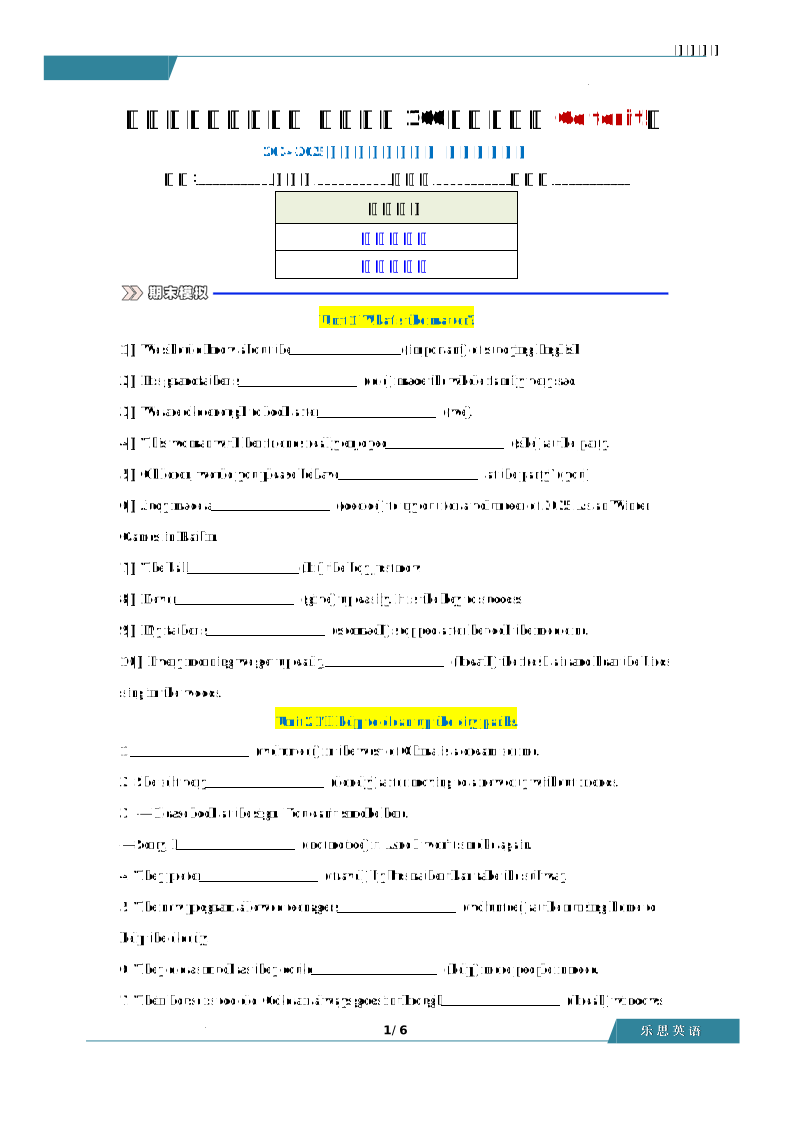
$$考前特训
用词的正确形式填空 仿真模拟100题(人教版Go for it!)
2024-2025学年八年级下学期 期末满分冲刺
学校:___________姓名:___________班级:___________考号:___________
内容提要
期末模拟题
期末仿真题
Unit 1 What's the matter?
1.We should know about the (important) of studying English.
2.His grandfather’s (die) made the whole family very sad.
3.We are old enough to look after (we).
4.This woman with her friends really enjoyed (she) at the party.
5.Children, would you please behave at the party? (you)
6.Judy made a (decide) to try out for a volunteer of 2025 Asian Winter Games in Harbin.
7.The ball (hit) the boy just now.
8.Never (give) up easily. It is the key to success.
9.My father’s (stomach) stopped after he took the medicine.
10.Every morning we get up early, (breath) the fresh air and hear the birds sing in the woods.
Unit 2 I'll help to clean up the city parks.
1. (volunteer) in the west of China is a dream for me.
2. She felt very (lonely) after moving to a new city without friends.
3. —Please look at the sign. You can’t smoke here.
—Sorry, I (not notice) it. And I won’t smoke again.
4. They prefer (travel) by bus rather than take the subway.
5. The new program allowed teenagers (volunteer) at the nursing home to help the elderly.
6. They did as much as they could (help) more people in need.
7. Their house is too old. Cold air always goes in through (break) windows.
8. (keep) healthy, you should eat a lot of fruit and vegetables.
9. She became (able) after the terrible car accident a few years ago.
10. Although it rained heavily, he still decided (send) his child to basketball practice.
Unit 3 Could you please clean your room?
1. My mother reminded me (not throw) rubbish everywhere.
2. Taking part in after-school activities can help kids develop the spirit of (independent).
3. Tom thinks it’s (fair) for him to do all the housework all the time.
4. I can’t imagine (waste) my time on such a meaningless thing.
5. The charity often (provide) free lunch for disabled people.
6. Of all the chores, I hate (sweep) the floor the most.
7. The best way (pass) an exam is to work hard every day in a year.
8. Marry went to the library yesterday in order to (borrow) some science fictions.
9. His phone doesn’t work because he (drop) it on the floor yesterday.
10. In fact, I (understand) little of what he said at that time.
Unit 4 Why don't you talk to y our parents?
1. My brother borrows my CD without (return) it.
2. Why don’t you (communicate) more with your team members? They need some help.
3. China’s (develop) catches the world’s attention (注意).
4. It’s a waste of time (argue) about the same problem again and again.
5. The boy did whatever he could (compete) for the first prize.
6. The teacher doesn’t allow (shout) loudly in the classroom.
7. The man did whatever he could (compete) for the prize.
8. The mother gave up (push) her children, so that they can have more free time.
9. (push) children too hard isn’t good for their development.
10. Which is your (old) brother and which is your younger brother?
Unit 5 What were you doing w hen the rainstorm came?
1. My sister didn’t fall (sleep) until 11:00 last night.
2. Our class (beat) Class One and won the football game.
3. The boy picked up all the (fall) leaves (树叶) in the garden after the storm.
4. I (walk) home on the street when the rainstorm came.
5. It was raining even (heavy) when we returned home yesterday.
6. More than one worker (tie) the newspapers in a bundle (捆) when I walked past the office.
7. She has moved to an apartment downtown (recent), closer to her workplace.
8. It rained (heavy) yesterday morning. Many students were late for school.
9. The TV (broadcast) a football match when I got home.
10. The flag (rise) up and stopped in the right place.
Unit 6 An old man tried to mo ve the mountains.
1.We mustn’t throw any (object) from the tall building. It’s very dangerous.
2.He took off his expensive watch that he was very rich. (hide)
3.The movie was so (touch) that many people cried.
4.When the father came home from work, he heard his wife (shout) at their son, Tom.
5.As soon as the sun (shine), the workers have to begin to work.
6.I (return) it to the library as soon as I finish reading Little Women.
7.He says he (not come) to her birthday party next week unless he (invite).
8.These beautiful hats are those men’s (wife).
9.My parents got (marry) twenty years ago.
10.We Chinese were very (excite) when seeing Shenzhou-18 flying into space on TV.
Unit 7 What's the highest mou ntain in the world?
1. There are many on the Great Wall. (tour)
2. Going to a live concert is a(n) experience than listening to an album at home. (impress)
3. The rich man gave away (million) of dollars to those poor areas.
4. We were all filled with admiration for his greatest scientific (achieve) of the decade.
5. She is wearing sunglasses (protect) her eyes from the strong sunlight.
6. It was raining even (heavy) when you returned home yesterday.
7. Some teenagers seem much (crazy) than usual when they see their favorite idols.
8. I think Wu Qilong is one of the most popular (actor). I’m his fan.
9. The more exercise you do, the happier and (health) you will be.
10. His (ill) is the result of eating too much junk food.
Unit 8 Have you read Treasure Island yet?
1. These buildings add (beautiful) to our city.
2. I want to thank everyone who has (courage) and supported me.
3. Alice has (hide) her diary somewhere so that her sister can’t find it.
4. The exam is coming to an end, but Tom (not write) even a word in his paper yet.
5. The number of tourists (rise) recently because of the cherry blossom festival.
6. —Have you been to any places of interest in Wuxi?
—Yes. It’s the second time that I (visit) this beautiful city in spring.
7. Their trip to the place was a great (successful).
8. —Have you got presents ready for Mom’s birthday?
—Oh no, I have (forget) all about it.
9. I once lived in the (south) part of town.
10. Let me (introduce) today’s super star to you.
Unit 9 Have you ever been to a museum?
1. The village used to be quiet and . (peace)
2. I’m used to cards in my free time. (collect)
3. Our teachers often us to face the challenges bravely. (courage)
4. The coach told the team that winning the game was a matter of doing their best on the field. (simple)
5. The (usual) weather in Chongqing made us change our plans for the picnic.
6. The lady tried many times and managed to (invention) a new kind of biscuits.
7. He (ride) six winners so far this year in the horse racing.
8. The of People’s square is in the center of Shanghai. (locate)
9. It was an (believable) moment when we won the first prize in the competition.
10. We all hope the two countries can solve the problem in a (peace) way.
Unit 10 I've had this bike for th ree years.
1. Dale is a lovely boy, when he was a baby. (especial)
2. My mum (feed) the cat since it came to our house.
3. —Alice, have you ever been to Hong Kong?
—Sure. I (work) there for one year, but now I’m back in Wuxi and work here.
4. Clare and her brother (travel) to four foreign countries since two years ago.
5. I (make) some friends since I lived in the new place.
6. She (marry) him for 15 years, yet she still doesn’t know what kind of man he is.
7. —Mum, I want to watch Readers on TV tonight.
—Oh, dear, it (begin) for a few minutes. Come on!
8. I (borrow) the magazine for two weeks. I’ll return it to the library tomorrow.
9. —The boy misses his parents very much.
—So he does. They (leave) the hometown for nearly two years.
10. Many great artists (introduce) Chinese culture to people since they joined Douyin.
5 / 5
学科网(北京)股份有限公司
$$
资源预览图
1

2

3
所属专辑

相关资源
由于学科网是一个信息分享及获取的平台,不确保部分用户上传资料的 来源及知识产权归属。如您发现相关资料侵犯您的合法权益,请联系学科网,我们核实后将及时进行处理。