Unit 1 Understanding Cultures Marco Polo and the silk road 教学设计 2024-2025学年冀教版英语七年级下册
2025-05-21
|
6页
|
242人阅读
|
0人下载
普通
资源信息
| 学段 | 初中 |
|---|---|
| 学科 | 英语 |
| 教材版本 | 初中英语冀教版七年级下册 |
| 年级 | 七年级 |
| 章节 | Marco Polo and the Silk Road |
| 类型 | 教案-教学设计 |
| 知识点 | - |
| 使用场景 | 同步教学-新授课 |
| 学年 | 2025-2026 |
| 地区(省份) | 全国 |
| 地区(市) | - |
| 地区(区县) | - |
| 文件格式 | DOCX |
| 文件大小 | 101 KB |
| 发布时间 | 2025-05-21 |
| 更新时间 | 2025-05-21 |
| 作者 | yzhlong |
| 品牌系列 | - |
| 审核时间 | 2025-05-21 |
| 下载链接 | https://m.zxxk.com/soft/52220463.html |
| 价格 | 0.50储值(1储值=1元) |
| 来源 | 学科网 |
内容正文:
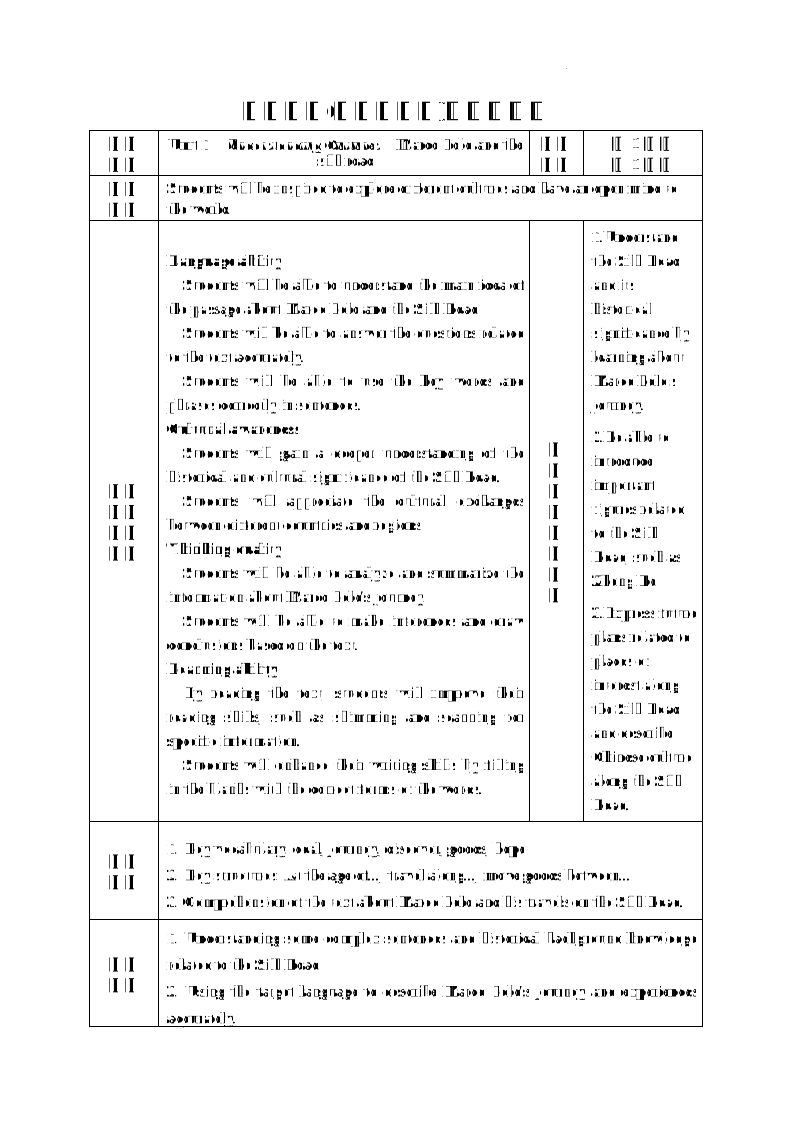
单元课时(融通探究课)学程设计案
课题
名称
Unit 1 Understanding Cultures Marco Polo and the silk road
课时
分配
共1课时
第1课时
育人
目标
Students will be inspired to explore different cultures and have an open mind to the world.
学科
核心
素养
目标
Language ability
Students will be able to understand the main idea of the passage about Marco Polo and the Silk Road.
Students will be able to answer the questions related to the text accurately.
Students will be able to use the key words and phrases correctly in sentences.
Cultural awareness
Students will gain a deeper understanding of the historical and cultural significance of the Silk Road.
Students will appreciate the cultural exchanges between different countries and regions.
Thinking quality
Students will be able to analyze and summarize the information about Marco Polo's journey.
Students will be able to make inferences and draw conclusions based on the text.
Learning ability
By reading the text, students will improve their reading skills, such as skimming and scanning for specific information.
Students will enhance their writing skills by filling in the blanks with the correct forms of the words.
学
业
质
量
达
成
指
标
1.Understand the Silk Road and its historical significance by learning about Marco Polo's journey.
2.Be able to introduce important figures related to the Silk Road, such as Zheng He.
3.Express future plans related to places of interest along the Silk Road and describe Chinese culture along the Silk Road.
教学
重点
1. Key vocabulary: coal, journey, discover, goods, hope
2. Key structures: At the age of..., travel along..., move goods between...
3. Comprehension of the text about Marco Polo and his travels on the Silk Road.
教学
难点
1. Understanding some complex sentences and historical background knowledge related to the Silk Road.
2. Using the target language to describe Marco Polo's journey and experiences accurately.
本节内
容与中
考分析
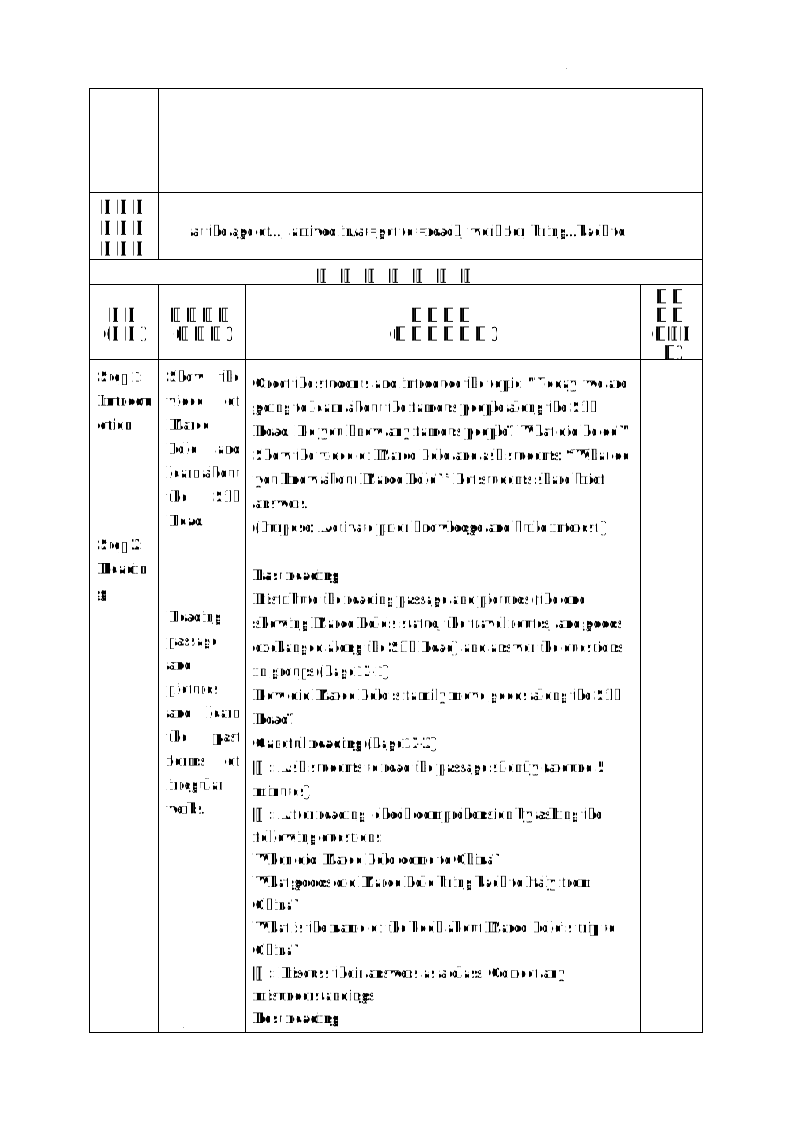
at the age of..., arrived in/at=get to =reach, work for, bring...back to.
教 与 学 过 程 预 设
环节
(任务)
学习内容
(学什么)
师生活动
(怎么学怎么教)
过程诊断
(学的怎样)
Step 1:
Introduction
Step 2:
Reading
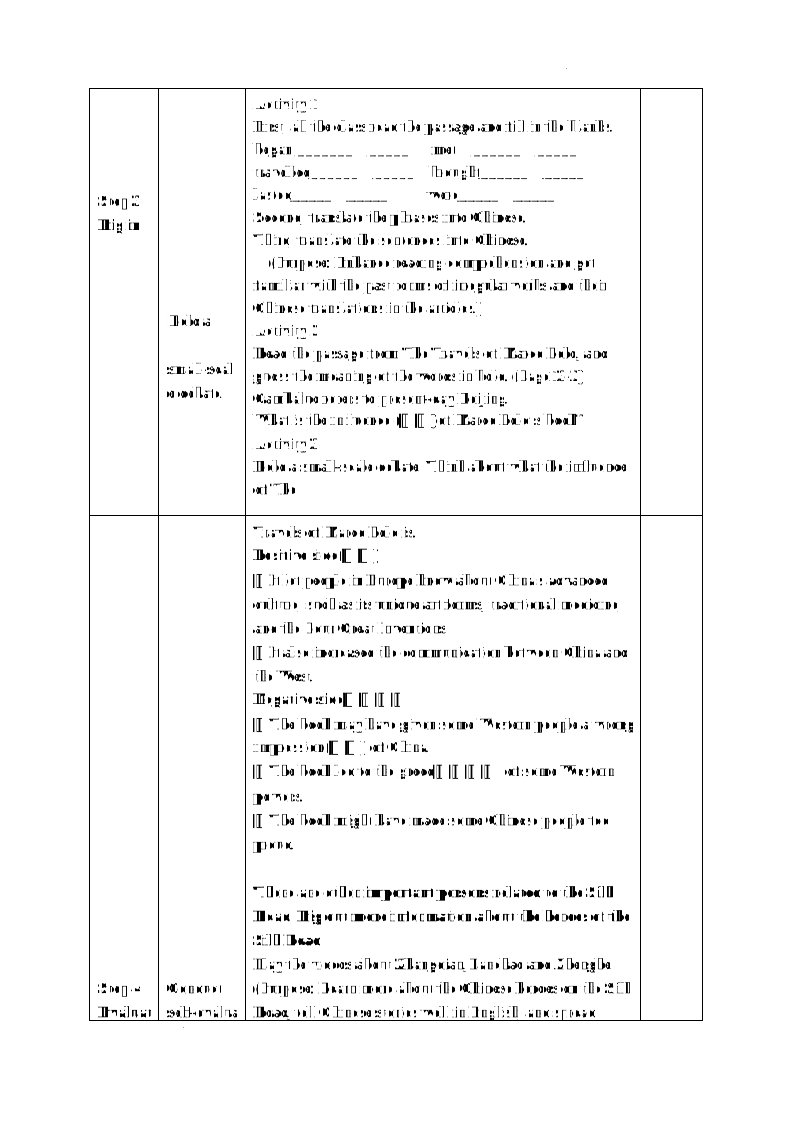
Step 3
Dig in
Show the video of Marco Polo and learn about the Silk Road.
Reading passage and pictures and learn the past forms of irregular verbs.
Hold a
small-scale debate.
Greet the students and introduce the topic: "Today, we are going to learn about the famous people along the Silk Road. Do you know any famous people? What did he do?"
Show the video of Marco Polo and ask students: “What do you know about Marco Polo?” Let students share brief answers.
(Purpose: Activate prior knowledge and build interest.)
Fast reading
Distribute the reading passage and pictures (the one showing Marco Polo's statue, the travel routes, and goods exchanged along the Silk Road) and answer the questions in groups.(Page12-1)
How did Marco Polo’s family move goods along the Silk Road?
Careful reading (Page13-2)
①: Ask students to read the passage silently (around 5 minutes).
②: After reading, check comprehension by asking the following questions:
When did Marco Polo come to China?
What goods did Marco Polo bring back to Italy from China?
What is the name of the book about Marco Polo’s trip to China?
③: Discuss their answers as a class. Correct any misunderstandings.
Post reading
Activity 1
First, all the class read the passage and fill in the blanks.
began _______ _____ met ______ _____
travelled______ _____ brought______ _____
lasted_____ _____ were_____ _____
Second, translate the phrases into Chinese.
Third, translate the sentences into Chinese.
(Purpose: Enhance reading comprehension and get familiar with the past forms of irregular verbs and their Chinese translations in the articles.)
Activity 2
Read the passage from The Travels of Marco Polo, and guess the meaning of the words in bold. (Page13-2)
Cambaluc refers to present-day Beijing.
What is the influence (影响)of Marco Polo’s book?
Activity 3
Hold a small-scale debate. Think about what the influence of The
Step 4
Evaluation
Conduct self-evaluation and peer evaluation.
Travels of Marco Polo is.
Positive side(正方)
①It let people in Europe know about China's advanced culture, such as its unique art forms, traditional medicine, and the Four Great Inventions.
②It also increased the communication between China and the West.
Negative side(反方)
①The book may have given some Western people a wrong impression(印象) of China.
②The book led to the greed(贪婪) of some Western powers.
③The book might have made some Chinese people too proud.
There are other important persons related to the Silk Road. Dig out more information about the heroes of the Silk Road.
Play the videos about Zhangqian,Banchao and Zhenghe.
(Purpose: Learn more about the Chinese heroes on the Silk Road, tell Chinese stories well in English, and spread Chinese culture effectively.)
达
标
检
测
一、 单项选择
1.Marco Polo began to travel along the Silk Road at the age of ______.
A. 15 B. 17 C. 19 D. 21
2.They travelled by ______.
A. bike, ship and car B. boat, horse and camel
C. bus, train and plane D. taxi, subway and motorcycle
3.Marco Polo arrived in ______ in 1275.
A. Shanghai B. Guangzhou C. Beijing D. Nanjing
4.He worked for the emperor for ______ years.
A. 15 B. 17 C. 19 D. 21
二、根据动词的适当形式填空
1.At the age of seven, I started to learn __________ (play) the piano.
2.She arrived in __________ (Paris) yesterday.
3.They travelled by __________ (bus).
4.He worked for a big __________ (company).
5.The book is made of __________ (paper).
三、翻译
1.他在十岁的时候开始学习画画。
2.我坐火车去北京旅行。
3.她在一家医院工作。
4.这个杯子是由玻璃制成的。
5.他昨天到了上海。
本节作
业
设
计
与
布
置
基
础
性
必
做
作
业
1.Remember the key points of the lesson, including the vocabulary, sentence patterns, and main content of the text.
2.Find the sentences related to the description of scenic spots in the article and organize them in chronological order in your notebook.
拓
展
性
选
做
作
业
Suppose you are Jenny. Based on the content of the article, write an email to your friend, introducing your travel plan to Beijing. The email should be no less than 50 words.
反
思
改
进
学科网(北京)股份有限公司
$$
资源预览图
1
2
3
相关资源
由于学科网是一个信息分享及获取的平台,不确保部分用户上传资料的 来源及知识产权归属。如您发现相关资料侵犯您的合法权益,请联系学科网,我们核实后将及时进行处理。