Unit 8 Literature Lesson 2 Poetry 课件-2024-2025学年高中英语北师大版(2019)选择性必修第三册
2025-03-28
|
23页
|
820人阅读
|
2人下载
普通
资源信息
| 学段 | 高中 |
|---|---|
| 学科 | 英语 |
| 教材版本 | 高中英语北师大版选择性必修第三册 |
| 年级 | 高二 |
| 章节 | Lesson 2 Poetry |
| 类型 | 课件 |
| 知识点 | - |
| 使用场景 | 同步教学-新授课 |
| 学年 | 2025-2026 |
| 地区(省份) | 全国 |
| 地区(市) | - |
| 地区(区县) | - |
| 文件格式 | PPTX |
| 文件大小 | 8.43 MB |
| 发布时间 | 2025-03-28 |
| 更新时间 | 2025-03-28 |
| 作者 | 匿名 |
| 品牌系列 | - |
| 审核时间 | 2025-03-28 |
| 下载链接 | https://m.zxxk.com/soft/51301633.html |
| 价格 | 0.50储值(1储值=1元) |
| 来源 | 学科网 |
内容正文:
Unit 8 Literature
Lesson 2 Poetry
Warming-up
What’s your favourite poem, either in English or Chinese? Read it aloud and say why you like it.
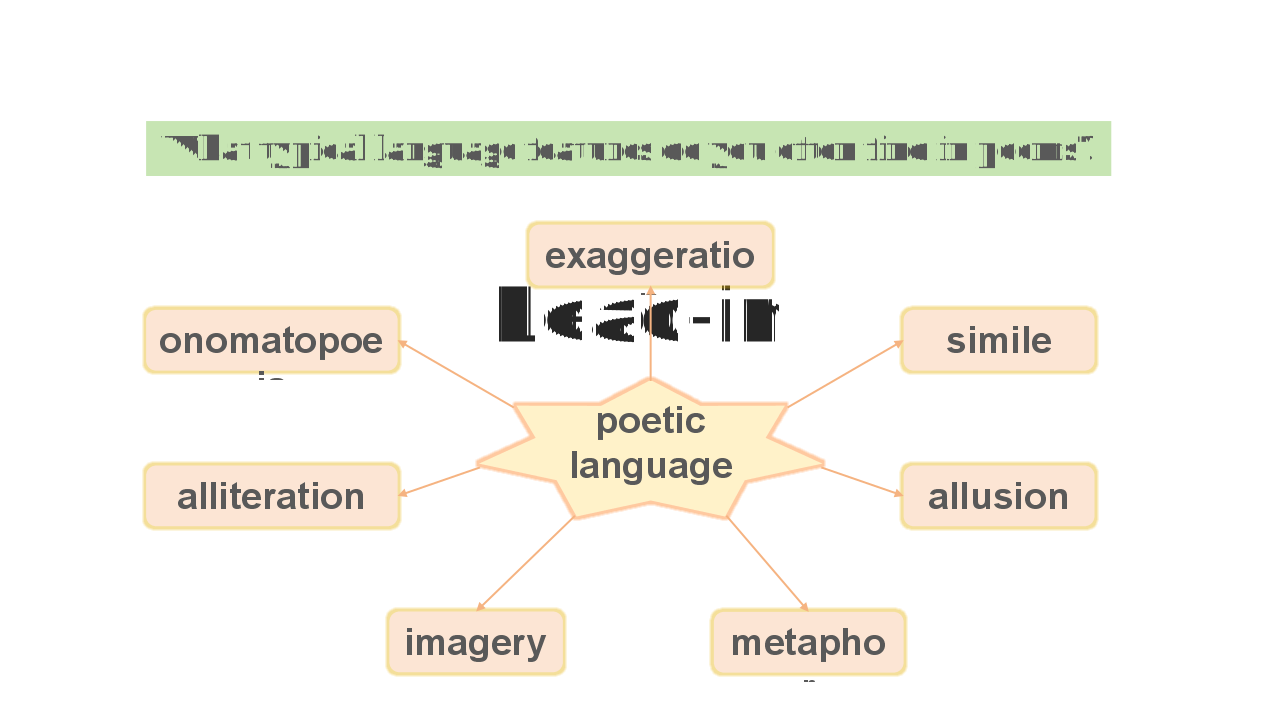
Lead-in
poetic language
alliteration
onomatopoeia
simile
metaphor
imagery
allusion
What typical language features do you often find in poems?
exaggeration
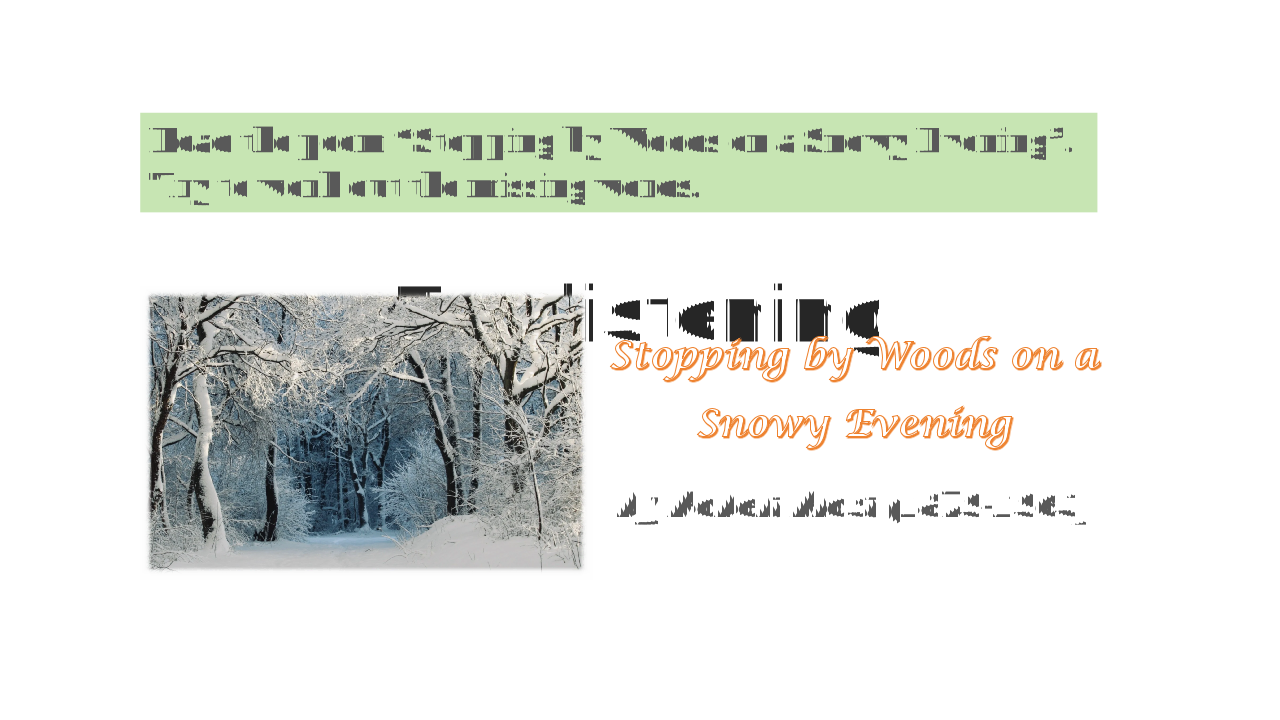
Pre-listening
Stopping by Woods on a Snowy Evening
by Robert Frost (1879-1963)
Read the poem “Stopping by Woods on a Snowy Evening”. Try to work out the missing words.
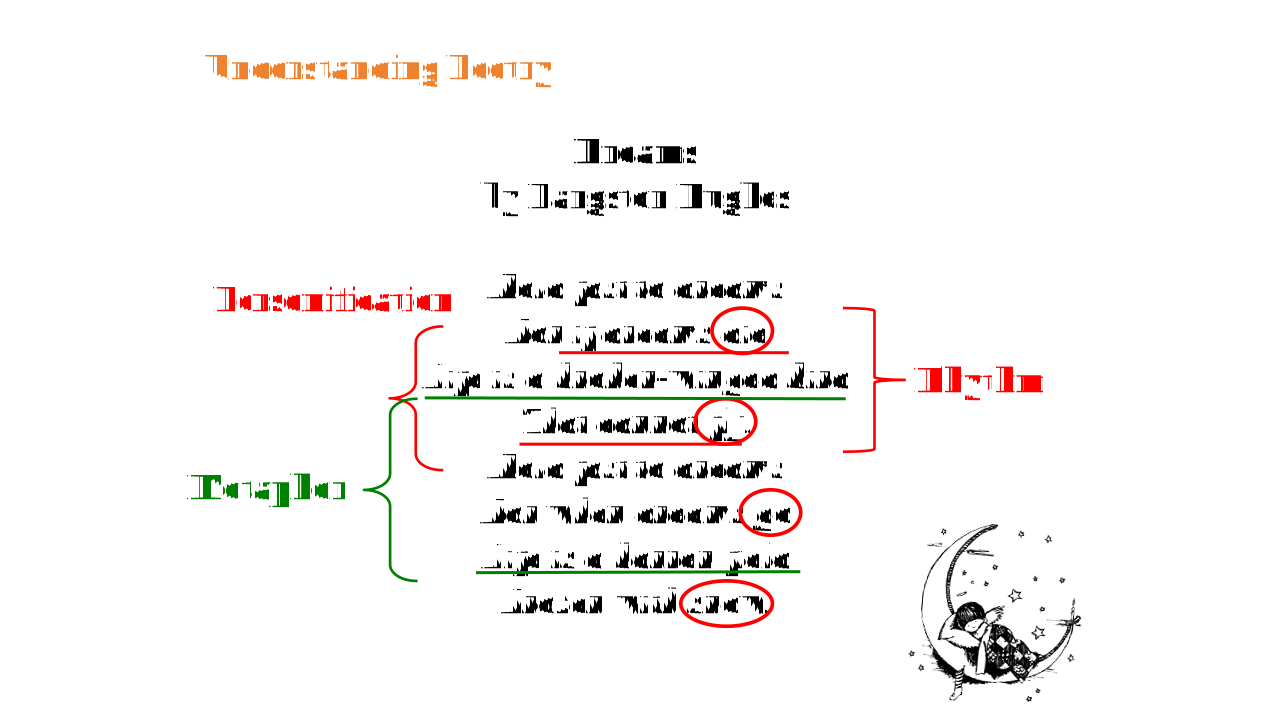
Dreams
by Langston Hughes
Hold fast to dreams
For if dreams die
Life is a broken-winged bird
That cannot fly.
Hold fast to dreams
For when dreams go
Life is a barren field
Frozen with snow.
Understanding Poetry
Personification
Rhythm
Metaphor
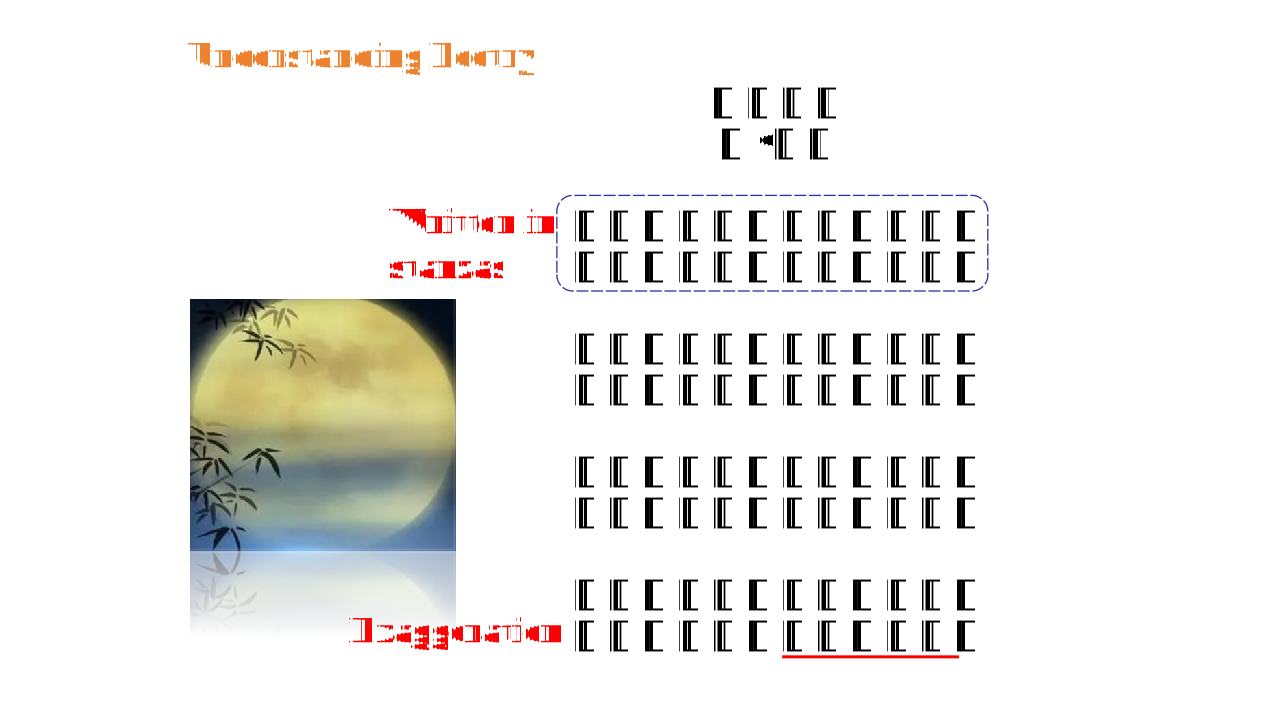
古朗月行
唐•李白
小时不识月,呼作白玉盘。
又疑瑶台镜,飞在青云端。
仙人垂两足,桂树何团团。
白兔捣药成,问言与谁餐。
蟾蜍蚀圆影,大明夜已残。
羿昔落九乌,天人清且安。
阴精此沦惑,去去不足观。
忧来其如何,凄怆摧心肝。
Understanding Poetry
Written in stanzas
Exaggeration
Skill Builder
Poetry is a form of literature that is usually written in lines and stanzas.
Words in a poem are put in a special way to make a rhythm (a regular repeated pattern of sounds).
The theme of a poem is often shown by images and through literary devices (e.g. simile, personification, metaphor, exaggeration).
Understanding Poetry
What's your favourite poem?
What typical language features do you find in them?
Listen for understanding
Read the poem “Stopping by Woods on a Snowy Evening”. Try to work out the missing words. Then, listen and check.
Stopping by Words on a Snowy Evening
by Robert Frost (1874-1963)
Whose woods these are I think I know.
His house is in the village ____________;
He will not see me stopping here
To watch his woods fill up with snow.
My little horse must think it queer
To stop without a farmhouse near
Between the woods and frozen lake
The darkest evening of the __________.
He gives his harness bells a shake
To ask if there is some ______________.
The only other sound's the sweep
Of easy wind and downy flake.
The woods are lovely, dark and deep,
But I have promises to keep,
And miles to go before I sleep,
And miles to go before I _________.
though
year
mistake
sleep
Listen to the poem again and answer the questions.
1. Why did the writer stop by the words?
2. Why did the horse give the harness bells a shake?
He wanted to watch the snow falling in the woods.
The horse was unsure why they had stopped without a barn nearby.
3. Why couldn't the writer stay longer in the woods?
The writer couldn't stay because he needed to keep going on his journey and he had many more miles left to travel.
What is the effect of the repetition in the last lines of the poem?
...
And miles to go before I sleep,
And miles to go before I sleep.
To show how sad the speaker feels. He cannot stop and must continue on his long journey.
Whose woods these are I think I know.
His house is in the village _________;
He will not see me stopping here
To watch his woods fill up with snow.
While-listening
Listen to the poem and check the answers.
He gives his harness bells a shake
To ask if there is some _________.
The only other sound’s the sweep
Of easy wind and downy flake.
My little horse must think it queer
To stop without a farmhouse near
Between the woods and frozen lake
The darkest evening of the _________.
The woods are lovely, dark and deep,
But I have promises to keep,
And miles to go before I sleep,
And miles to go before I _________.
though
year
mistake
sleep
While-listening
Work in groups and try to explain the meaning of the poem in your own words.
While-listening
Why did the writer stop by the woods?
He wanted to watch the snow falling in the woods.
2 Why did the horse give the harness bells a shake?
The horse was unsure why they had stopped without a barn nearby.
3 Why couldn’t the writer stay longer in the woods?
He needed to keep going on his journey and he had more miles left
to travel.
Listen to the poem and answer the questions.
Read the two poems again. Underline and talk about the literary devices the two poets used to express their feelings.
Stopping by Woods on a Snowy Evening
personification (拟人)
-- He gives his harness bells a shake
alliteration (头韵法)
-- The woods are lovely, dark and deep
repetition (重复)
-- And miles to go before I sleep
Listen for understanding
The Daffodils
alliteration (头韵)
-- Beside the lake, beneath the trees
simile (明喻)
-- I wondered lonely as a cloud
personification (拟人)
-- Fluttering and dancing in the breeze
exaggeration (夸张)
-- Continuous as the stars that shine
Read the two poems again. Underline and talk about the literary devices the two poets used to express their feelings.
Stopping by Woods on a Snowy Evening
He gives his harness bells a shake ...
The woods are lovely, dark and deep, ...
And miles to go before I sleep.
personification
alliteration
repetition
Read the two poems again. Underline and talk about the literary devices the two poets used to express their feelings.
The Daffodils
Beside the lake, beneath the trees, ...
I wondered lonely as a cloud, ...
Fluttering and dancing in the breeze
Continuous as the stars that shine
alliteration
simile
personification
exaggeration
Both Robert Frost and William Wordsworth expressed their deep love and appreciation of
nature in their poems. Discuss the different ways they expressed their appreciation. Find examples.
Post-listening
The repetition in the last lines shows how sad the speaker feels. He cannot stop and must continue on his long journey.
Work in groups and discuss what the effect of the repetition is in the last lines of the poem.
And miles to go before I sleep,
And miles to go before I sleep.
The rhythm is iambic tetrameter.
Post-listening
How many syllables are there in each line?
What’s the rhythm?
Read the poem carefully and answer the questions.
There are 8 syllables in each line.
抑扬格四音步
The rhythm is iambic tetrameter.
Post-listening
How many syllables are there in each line?
What’s the rhythm?
Read the poem carefully and answer the questions.
There are 8 syllables in each line.
抑扬格四音步
Write a short poem, expressing your love or appreciation of something. Read it aloud to the class.
Assignment
Writing
Goodbye!
12
73298.93
null
65670.43
$$
资源预览图

1

2
3
4
5
6
相关资源
由于学科网是一个信息分享及获取的平台,不确保部分用户上传资料的 来源及知识产权归属。如您发现相关资料侵犯您的合法权益,请联系学科网,我们核实后将及时进行处理。