UNIT 4 Section Ⅰ Reading and Thinking(Word教参)-【状元桥·优质课堂】2024-2025学年高中英语选择性必修第四册(人教版2024)
2025-05-05
|
11页
|
59人阅读
|
2人下载
教辅

资源信息
| 学段 | 高中 |
|---|---|
| 学科 | 英语 |
| 教材版本 | 高中英语人教版选择性必修第四册 |
| 年级 | 高二 |
| 章节 | Reading and Thinking |
| 类型 | 教案-讲义 |
| 知识点 | - |
| 使用场景 | 同步教学-新授课 |
| 学年 | 2025-2026 |
| 地区(省份) | 全国 |
| 地区(市) | - |
| 地区(区县) | - |
| 文件格式 | DOCX |
| 文件大小 | 285 KB |
| 发布时间 | 2025-05-05 |
| 更新时间 | 2025-05-05 |
| 作者 | 湖北千里万卷教育科技有限责任公司 |
| 品牌系列 | 状元桥·优质课堂·高中同步 |
| 审核时间 | 2025-03-26 |
| 下载链接 | https://m.zxxk.com/soft/51253469.html |
| 价格 | 3.00储值(1储值=1元) |
| 来源 | 学科网 |
内容正文:
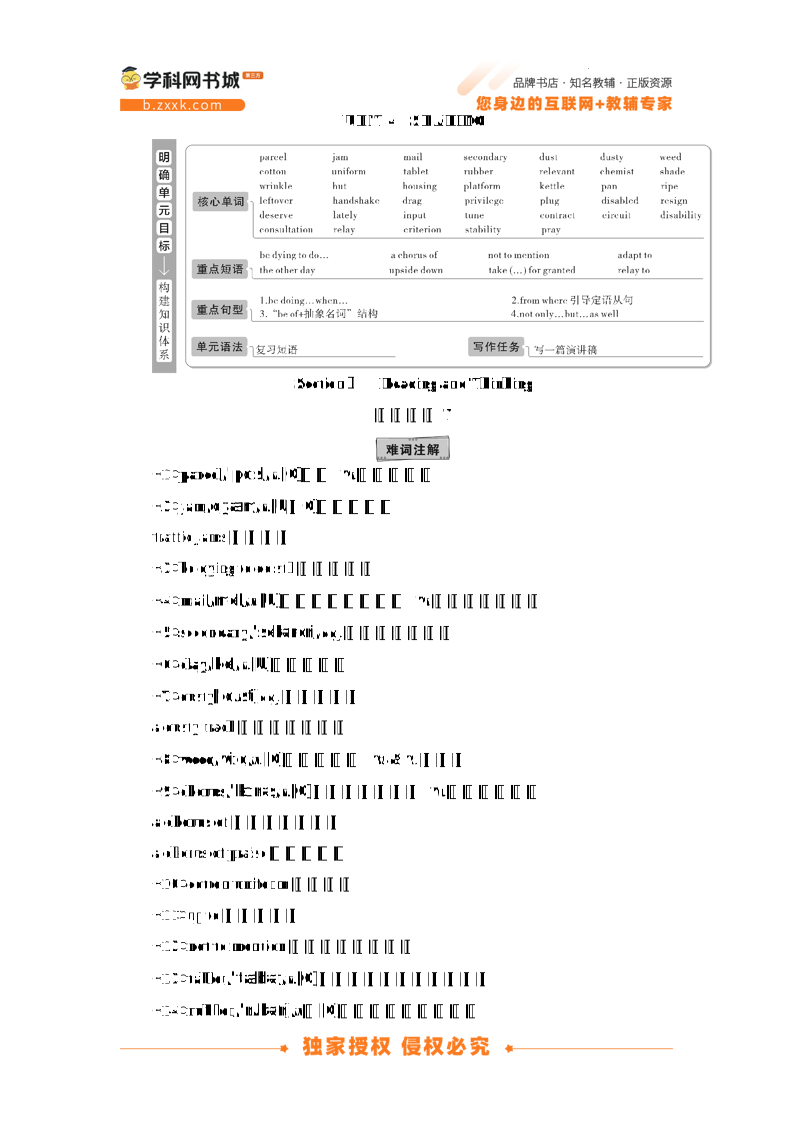
UNIT 4 SHARING
Section Ⅰ Reading and Thinking
教材助读7
<1>parcel/ˈpɑːsl/n.[C]包裹 vt.裹好;打包
<2>jam/dʒæm/n.[U,C]果酱;堵塞
traffic jams交通堵塞
<3>be dying to do sth渴望做某事
<4>mail/meIl/n.[U]邮件;信件;邮政 vt.邮寄;发电邮给
<5>secondary/ˈsekəndri/adj.中学的;次要的
<6>clay/kleI/n.[U]黏土;陶土
<7>dusty[ˈdʌsti]adj.布满灰尘的
a dusty track尘土飞扬的小路
<8>weed/wiːd/n.[C]杂草;野草 vt.& vi.除杂草
<9>chorus/ˈkɔːrəs/n.[C]合唱曲;合唱团 vt.合唱;齐声说
a chorus of齐声;异口同声
a chorus of praise一片赞扬声
<10>cotton uniform棉质校服
<11>up to多达;高达
<12>not to mention更不用说;且不说
<13>tablet/ˈtæblət/n.[C]平板电脑;便笺本;药片
<14>rubber/ˈrʌbə(r)/n.[C]橡皮;黑板擦;橡胶
<15>adapt to适应
<16>have no concept of…没有……的概念
concept n.[C]观念;概念
<17>washroom/ˈwɒʃruːm/n.[C]洗手间;厕所
[同义]toilet;restroom
<18>basin/ˈbeIsn/n.[C]盆
<19>rigid/ˈrIdʒId/adj.死板的;固执的
[同义]stubborn/ˈstʌbən/adj.固执的
[反义]flexible/ˈfleksəbl/adj.灵活的
<20>the other day几天前;不久前的一天(谓语动词用一般过去时)
<21>bubble/ˈbʌbl/vi.起泡;沸腾
<22>tube/tjuːb/n.[C]管子;管状物
test tube试管
<23>spill/spIl/vt.& vi.溢出;泼出;(使)洒出;散落
<24>circus/ˈsɜːkəs/n.[C]马戏团
<25>come across偶然遇见;碰上
<26>relevant adj.有意义的;有价值的
<27>chemist/ˈkemIst/n.[C]化学家;药剂师;药房
chemistry n.[U]化学
<28>to be honest(=honestly speaking)说实话
<29>make a difference to对……起作用
<30>make one's visit to…拜访……
<31>fantastic views极美的景色
<32>shade/ʃeId/vt.给……遮挡(光线);加灯罩;把……涂暗 n.[U]阴凉处;阴影部分;灯罩
shade指阴凉处,强调避热作用;shadow强调光照下形成的影子
<33>jaw/dʒɔː/n.[sing.]下巴;颌
<34>wrinkle/ˈrIŋkl/vt.&vi.(使脸上)起皱纹;皱起n.[C]皱纹
forehead/ˈfɔːhed/n.[C]额;前额
wrinkled forehead布满皱纹的前额
<35>hut/hʌt/n.[C]简陋的房子
<36>stick out of…从……中伸出;探出;突出
<37>housing/ˈhaʊzIŋ/n.[U]住房;住宅
<38>adjust vi.& vt.适应;(使)习惯
adjustment n.调整,调节
<39>platform/ˈplætfɔːm/n.[C]平台;站台;舞台
<40>fireplace/ˈfaIəpleIs/n.[C]壁炉
<41>possession n.[C,usually pl.]所有物;财产;财物
possess vt.拥有
<42>broom/bruːm/n.[C]扫把;扫帚
<43>saucer/ˈsɔːsə(r)/n.[C]茶碟;杯托
<44>kettle/ˈketl/n.[C](烧水用的)壶;水壶
<45>pan/pæn/n.[C]平底锅;烤盘
<46>jar/dʒɑː(r)/n.[C]罐子;坛子
a couple of jars几个罐子
<47>build a fire(=make a fire) 生火
<48>ripe/raIp/adj.成熟的;时机成熟的
<49>greens n.绿叶蔬菜
<50>upside down颠倒地
<51>grill/ɡrIl/n.[C]烤架;烤肉餐馆
<52>doorway/ˈdɔːweI/
n.[C]门口;出入口;门道
<53>dry out (使)干透;(使)完全变干
<54>leftover/ˈleftəʊvə(r)/adj.吃剩的;残留的
<55>dry up使干涸;使干燥
<56>handshake/ˈhændʃeIk/n.握手
<57>drag/dræɡ/(dragged,dragged) vt.拖;拽; vt.&vi.缓慢而费力地移动
<58>privilege/ˈprIvəlIdʒ/n.[sing.]优惠待遇;特权
VOLUNTEERING IN THE BUSH
8 March
I just got a parcel<1> from home! It took about two weeks to arrive, and it was a bit damaged, but it was so nice to get some sweets and jam<2> from home;①I've been dying to<3> have some of my favourite sweets, and it's always nice to get mail<4>!
①此处是并列句。第一个分句中谓语动词是现在完成进行时(have been doing sth);后一个分句中it为形式主语,动词不定式短语作真正的主语。
So I've been here in the jungle for about a month now.My secondary<5>school is a bush school.The classrooms are made of bamboo, with clay<6> floors and roofs of grass.②It takes me only a few minutes to walk to school down a dusty<7> track covered in weeds<8>.When I reach the school grounds, I'm greeted by a chorus of<9> “good morning” from the boys.Unlike students in our country, these boys do not wear cotton uniforms<10>, and many of them also have to walk a long way, sometimes for up to<11> two hours, just to get to school.
②此处是句型It takes sb some time to do sth花某人一些时间做某事;covered in weeds是过去分词短语作后置定语。
There's no electricity, running water or even textbooks,not to mention<12> laptops, tablets<13>, or other modern devices! All the students have are pencils, rubbers<14>, and paper.I'm still trying to adapt to<15> these conditions.I've had to become much more imaginative in my teaching.Science is my most challenging subject as my students have no concept of<16> doing experiments.③There is no equipment, and since there isn't even a washroom<17>, if I need water I have to carry it from my house in a basin<18>!It's important not to be too rigid<19> about rules here, too.④The other day<20> I was showing the boys a chemistry experiment when, before I knew it, the mixture was bubbling<21> out of the test tube<22> spilling<23> everywhere! ⑤The class became a circus<24> as the boys, who had never come across<25> anything like this before, started jumping out of the windows.Sometimes I wonder how relevant<26> chemistry is to these students—few will ever become chemists<27>—and most will be going back to their villages after Year 8 anyway.To be honest<28>, I doubt whether I'm making any difference to<29>these boys' lives at all.
③此处and连接两个并列分句,第二个分句中的since引导原因状语从句, since在此意为“因为”;if I need water为if引导的条件状语从句。
④本句的核心部分是句型:was/were doing…when…意为“正在做……这时……”;before 引导时间状语从句。
⑤此处为as引导的原因状语从句,as意为“因为”;该从句中who引导非限制性定语从句,修饰先行词the boys, who在从句中作主语。
17 April
Last weekend I made my first visit to<30>a remote village, home to one of our students, Tombe.Another teacher and I walked for two and a half hours to get there—first, up a mountain ⑥from where we had fantastic views<31>, and then down a shaded<32> path to the valley below.⑦When we arrived at the village, Tombe's mother, Kiak, saw us coming and started crying “ieee ieee”.We shook hands with all the villagers.Everyone seemed to be related to Tombe.
⑥此处是from where引导的定语从句,修饰先行词a mountain。
⑦此处是主从复合句。when引导时间状语从句;主句中包含了“see sb doing sth”结构,意为“看见某人正在做某事”。
Tombe's father, Mukap, a man with a strong jaw<33> and a wrinkled forehead<34>, led us to his house, a low, round bamboo hut<35> with no windows, with a door just big enough to get through, and ⑧with grass sticking out of<36> the roof—this shows it is a man's house.Such housing<37> is dark inside so it took time for our eyes to adjust<38>.Fresh grass had been laid on the floor and there was a platform<39> for Jenny and me to sleep on.There was a fireplace<40> in the centre of the hut.The only possessions<41> ⑨I could see were one broom<42>, a few saucers<43>, a kettle<44>, cups, pans<45>, and a couple of jars<46>.
⑧此处是with复合结构,在句中作定语,修饰hut。
⑨此处是省略了关系代词that的定语从句,修饰先行词possessions。
Mukap built a fire<47> outside and laid stones on it to heat.He then placed the hot stones in an empty oil drum with kau kau (sweet potato), ripe<48> corn, and greens<49>.He then covered the vegetables with banana leaves and left them to steam.It smelled delicious.We ate inside the hut ⑩sitting round the fire.⑪I loved listening to the family talking softly to each other in their language, even though I could not participate much in the conversation.Luckily, Tombe interpreted for us.
⑩现在分词短语在句中作方式状语。
⑪此处是主从复合句。even though引导让步状语从句,意为“即使”;前面主句中含有“感官动词(词组)+宾语+宾补”结构。
Later, I noticed a can standing upside down<50> on the grill<51> over the fire.After a while, Tombe threw it out of the doorway<52>.Tombe told me that the can was heated to dry out<53> the leftover<54> food.⑫His family believes that leftovers attract bad spirits in the night, so any leftover food is dried up<55> in a can and the can is then thrown out of the hut.
⑫本句是so连接的并列句;that引导宾语从句。
We left the village the next morning after many goodbyes and firm handshakes<56>.⑬My muscles were aching and my knees shaking as we dragged<57> ourselves down the mountain towards home.That evening I fell happily into bed.⑭It was such a privilege<58> to have spent a day with Tombe's family.
⑬此处是and连接的两个句式相同的并列分句,第二个分句承前省略了系动词were。
⑭此处包含了It is/was a privilege to do sth句型,该句型意为“有幸做某事”。to have spent是动词不定式的完成时,表示该动作先于谓语动词表示的动作发生或完成。
丛林中的志愿工作
3月8日
我刚收到一个从家里寄来的包裹!大约花了两周的时间包裹才到达,而且有点破损,但是真高兴能收到家里寄来的一些糖果和果酱;我一直非常渴望吃一些我最喜欢的糖果,而且收到邮包总是令人开心不已!
到现在我已经在丛林里待了大约一个月了。我所在的中学是一所丛林学校。教室是用竹子搭建的,黏土夯的地面,茅草搭的屋顶。沿着杂草丛生、尘土飞扬的小路,我几分钟就能走到学校。我走进校园时,男孩们齐声对我喊“早上好”。与我们国家的学生不同,这些男孩不穿棉制校服,他们中的很多人得长途跋涉,有时长达两个小时才能到学校。
这里没有电,没有自来水,甚至也没有教科书,更不用说笔记本电脑、平板电脑或其他现代化设备了!学生们只有铅笔、橡皮和纸。我还在努力适应这些条件。在我的教学中,我不得不变得更有想象力。科学课是我最具挑战性的科目,因为我的学生没有做实验的概念。这里没有设备,甚至连洗手间都没有。如果需要水,我得用盆子从我的房子里端来!在这里,很重要的一点是也不能太墨守成规。几天前,我正在给男孩们演示一个化学实验,在我反应过来前,混合物冒着泡从试管中涌出,洒得到处都是!班上乱成了马戏团,男孩们纷纷跳窗跑走,因为他们以前从没遇到过像这样的事情。有时,我会想化学对这些学生来说到底有多大的用处——几乎没有人会成为化学家——而且大多数人无论如何在八年级后都要回到自己的村庄。说实话,我怀疑我是否能给这些男孩们的生活带来不同。
4月17日
上周末,我第一次去了一个偏远的村庄,我们的学生汤贝的家在那里。我和另一位老师走了两个半小时才走到那儿。我们首先爬上了一座山,在山里欣赏到了极美的景色,然后沿着一条阴凉的小路走到了下面的山谷。我们到达村子时,汤贝的母亲齐亚克看见我们到来,就“唉咿——唉咿”地叫了起来。我们和所有的村民握手。每个人似乎都是汤贝的亲戚。
汤贝的父亲穆卡普,一位下巴结实、额头满是皱纹的男人,把我们带到他的房子前:一座低矮的圆形竹屋,没有窗户,门的宽度仅够单人穿过,屋顶伸出一簇茅草——这表明这是一个男人的房子。这样的房屋里面很暗,所以过了一会儿我们的眼睛才适应过来。地上铺着新草,还有一个让我和珍妮睡觉的平台。屋子中央有个火炉。我能看到的物品只有一把扫帚、几个碟子、一个水壶,还有几个杯子、平底锅和罐子。
穆卡普在屋外生了火,然后把石头放在上面加热。接着,他把热石头放入一个空油桶,里面有红薯、熟玉米和青菜。然后他用香蕉叶盖住蔬菜,把它们蒸上。食物闻起来很香。我们在屋内围着火炉吃饭。我喜欢听这家人用他们的语言轻声地交谈,虽然我无法过多地参与他们的谈话。幸好汤贝为我们做了解说。
后来,我注意到炉火上方的烤架上倒放着一个罐子。过了一会儿,汤贝把它扔到了门外。他告诉我把罐子烤热是为了烘干剩饭。他的家人认为,剩饭会在晚上引来恶鬼,所以要把所有的剩饭放在罐子里烘干,然后把罐子扔到屋外去。
第二天早上,许多次道别和有力的握手之后,我们离开了村子。当我们费力地走下山回家时,我的肌肉酸痛,膝盖发抖。那天晚上我带着愉快的心情入睡了。与汤贝一家共度了一日,真是一种荣幸。
Ⅰ.明主旨大意
What's the main idea of the passage?
A.Jo went to a bush school to visit friends.
B.Jo's experience as a volunteer in a bush school.
C.Introduction of a bush school.
D.Introduction of Tombe's home in the village.
答案 B
Ⅱ.绘层次结构
Read the text and match the main idea of each part.
Part 1(Para.1) A.Jo and another teacher visited Tombe's home in the village.
Part 2(Paras.2 & 3) B.Getting mail from home made Jo feel nice.
Part 3(Paras.4~8) C.The school where Jo worked and Jo's work at school.
答案 Parts 1~3 BCA
Read the text (P38~39), then choose the best answer.
1.Why did the boys jump out of the windows?
A.They were frightened of the bubbling mixture.
B.They couldn't stand the terrible smell of the mixture.
C.They didn't like doing chemistry experiments.
D.They knew chemistry was not relevant to them.
答案 A
2.Which of the following is the description of Tombe's house?
A.There were a lot of possessions in it.
B.It was bright and there was a fireplace in the centre of it.
C.It was round-shaped, with small windows and a narrow door.
D.It was a low bamboo hut with grass sticking out of the roof.
答案 D
3.What does the author want to tell us by writing “The only possessions…of jars”?
A.Tombe's family were kind-hearted.
B.Tombe's family were hospitable.
C.Tombe's family only used simple things.
D.Tombe's family was too poor.
答案 D
4.What's the author's purpose of writing the passage?
A.To share her teaching experience in the secondary school.
B.To share her volunteer experience.
C.To tell us she couldn't get money by teaching.
D.To tell us how happy she was in the small village.
答案 B
Ⅰ.解决长难句
1.
The class became a circus as the boys, who had never come across anything like
as引导的 原因状语 从句 ↓
who引导的定语从句修饰 the boys
this before, started jumping out of the windows.
[尝试翻译] 班上乱成了马戏团,男孩们纷纷跳窗跑走,因为他们以前从没遇到过像这样的事情。
2.
I loved listening to the family talking softly to each other in their language, even though I could not participate much in the conversation.
even though引导的 让步状语 从句
[尝试翻译] 我喜欢听这家人用他们的语言轻声地交谈,虽然我无法过多地参与他们的谈话。
3.
His family believes that leftovers attract bad spirits in the night, so any leftover
↓ ↓ ↓
主句 that引导的 宾语 从句 so后是由and连接的 并列句
food is dried up in a can and the can is then thrown out of the hut.
[尝试翻译] 他的家人认为,剩饭会在晚上引来恶鬼,所以要把所有的剩饭放在罐子里烘干,然后把罐子扔到屋外去。
Ⅱ.课文语法填空
VOLUNTEERING IN THE BUSH
I got a parcel from home, 1. which took about two weeks to arrive.Though it was a bit damaged, I felt very delighted because I've been dying 2. to have (have) some of my favourite sweets.
My secondary school is a bush school.The classrooms are made 3. of bamboo.When I reach the school grounds, I 4. am greeted (greet) by the boys who have to walk sometimes for up to two hours to get to school.
There's no electricity or running water and not even textbooks, not to mention modern devices! I'm still trying to adapt 5. to these conditions.Science is my most 6. challenging (challenge) subject as my students have no concept of doing experiments.
Last weekend I made my first visit with another teacher to Tombe's village.It took us two and a half hours 7. to get (get) there.When we arrived, Tombe's mother and all the villagers greeted us 8. warmly (warm).
We left the village the next morning after many goodbyes and firm handshakes.Though I 9. felt (feel) very exhausted, that evening I fell happily into bed.It was such a privilege 10. to have spent (spend) a day with Tombe's family.
学科网(北京)股份有限公司
$$
资源预览图
1
2
3

相关资源
由于学科网是一个信息分享及获取的平台,不确保部分用户上传资料的 来源及知识产权归属。如您发现相关资料侵犯您的合法权益,请联系学科网,我们核实后将及时进行处理。