UNIT 3 Section Ⅱ Learning About Language(课件PPT)-【状元桥·优质课堂】2024-2025学年高中英语选择性必修第四册(人教版2024)
2025-04-04
|
52页
|
68人阅读
|
4人下载
教辅

资源信息
| 学段 | 高中 |
|---|---|
| 学科 | 英语 |
| 教材版本 | 高中英语人教版选择性必修第四册 |
| 年级 | 高二 |
| 章节 | Learning About Language |
| 类型 | 课件 |
| 知识点 | - |
| 使用场景 | 同步教学-新授课 |
| 学年 | 2025-2026 |
| 地区(省份) | 全国 |
| 地区(市) | - |
| 地区(区县) | - |
| 文件格式 | PPTX |
| 文件大小 | 2.05 MB |
| 发布时间 | 2025-04-04 |
| 更新时间 | 2025-04-04 |
| 作者 | 湖北千里万卷教育科技有限责任公司 |
| 品牌系列 | 状元桥·优质课堂·高中同步 |
| 审核时间 | 2025-03-22 |
| 下载链接 | https://m.zxxk.com/soft/51185262.html |
| 价格 | 5.00储值(1储值=1元) |
| 来源 | 学科网 |
内容正文:
SEA EXPLORATION
UNIT 3
Section Ⅱ Learning About Language
语法慧学·提升语言能力
目
录
Contents
课时作业(八)
语基输入·助力语言输出
语法慧学·提升语言能力
主语
宾语补足语
返回目录
英语 选择性必修 第四册
目的状语
后置定语
表语
宾语
返回目录
英语 选择性必修 第四册
返回目录
英语 选择性必修 第四册
返回目录
英语 选择性必修 第四册
返回目录
英语 选择性必修 第四册
返回目录
英语 选择性必修 第四册
to give
to find
返回目录
英语 选择性必修 第四册
to catch
返回目录
英语 选择性必修 第四册
返回目录
英语 选择性必修 第四册
返回目录
英语 选择性必修 第四册
返回目录
英语 选择性必修 第四册
返回目录
英语 选择性必修 第四册
返回目录
英语 选择性必修 第四册
返回目录
英语 选择性必修 第四册
返回目录
英语 选择性必修 第四册
返回目录
英语 选择性必修 第四册
返回目录
英语 选择性必修 第四册
返回目录
英语 选择性必修 第四册
返回目录
英语 选择性必修 第四册
返回目录
英语 选择性必修 第四册
返回目录
英语 选择性必修 第四册
返回目录
英语 选择性必修 第四册
返回目录
英语 选择性必修 第四册
返回目录
英语 选择性必修 第四册
返回目录
英语 选择性必修 第四册
返回目录
英语 选择性必修 第四册
返回目录
英语 选择性必修 第四册
返回目录
英语 选择性必修 第四册
返回目录
英语 选择性必修 第四册
to bite
宾语
to be
主语
返回目录
英语 选择性必修 第四册
to teach
状语
to be lifted
宾补
to be held
定语
返回目录
英语 选择性必修 第四册
返回目录
英语 选择性必修 第四册
返回目录
英语 选择性必修 第四册
He wanted to shut the window but was told not to.
not to
返回目录
英语 选择性必修 第四册
to go
to benefit
返回目录
英语 选择性必修 第四册
to say
To enjoy
to have prepared
to protect
返回目录
英语 选择性必修 第四册
to address
to see
to stay
to be completed
返回目录
英语 选择性必修 第四册
my aim was to be
the best in my class
To achieve this goal
返回目录
英语 选择性必修 第四册
the last to leave and the first to arrive, only
to find myself always sleepy in class
it was very important to have enough
sleep
返回目录
英语 选择性必修 第四册
He advised me to make a plan
返回目录
英语 选择性必修 第四册
语基输入·助力语言输出
1
返回目录
英语 选择性必修 第四册
返回目录
英语 选择性必修 第四册
mixture
mixed
mixing learning and fun
返回目录
英语 选择性必修 第四册
2
返回目录
英语 选择性必修 第四册
行走(一段路程)
报道
返回目录
英语 选择性必修 第四册
覆盖;遮住
包括
封面
返回目录
英语 选择性必修 第四册
Covering
coverage
see live coverage of
返回目录
英语 选择性必修 第四册
课时作业(八) 语言运用专项
返回目录
英语 选择性必修 第四册
制 作 者:状元桥
适用对象:高中学生
制作软件:Powerpoint2010、
Photoshop cs3
运行环境:WindowsXP以上操作系统
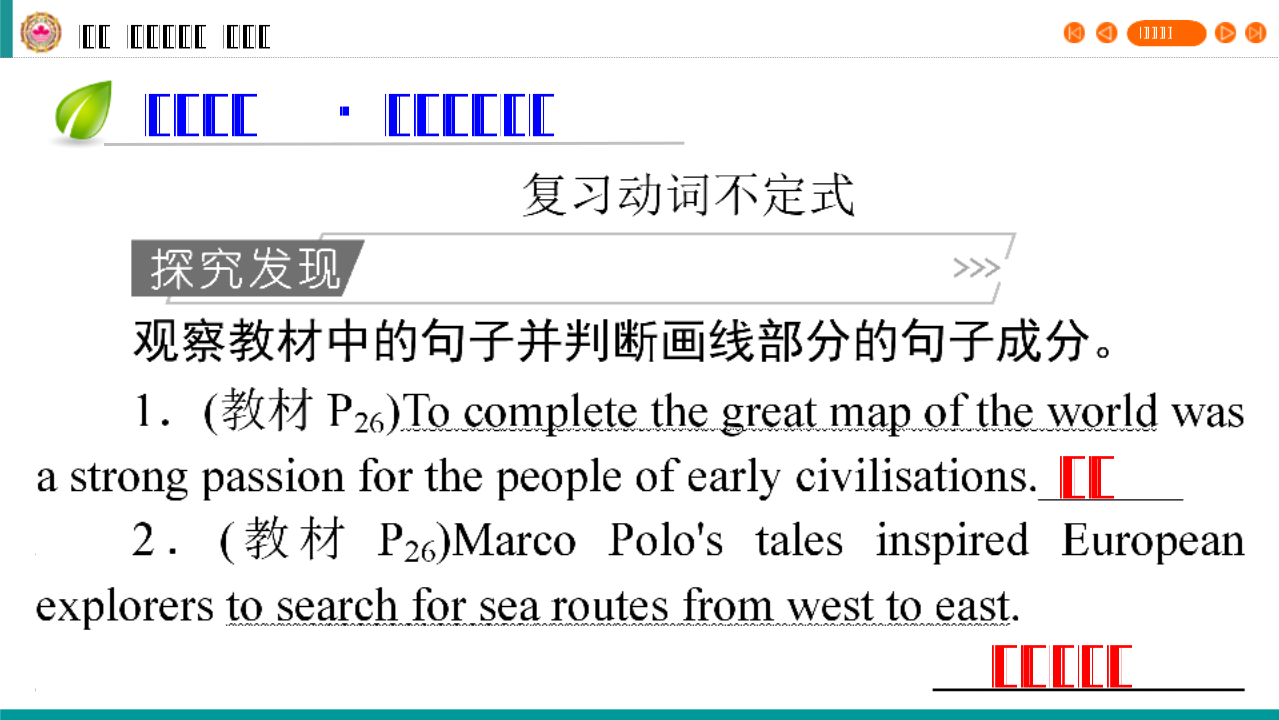
复习动词不定式
观察教材中的句子并判断画线部分的句子成分。
1.(教材P26)To complete the great map of the world was a strong passion for the people of early civilisations.______
2.(教材P26)Marco Polo's tales inspired European explorers to search for sea routes from west to east.
_____________
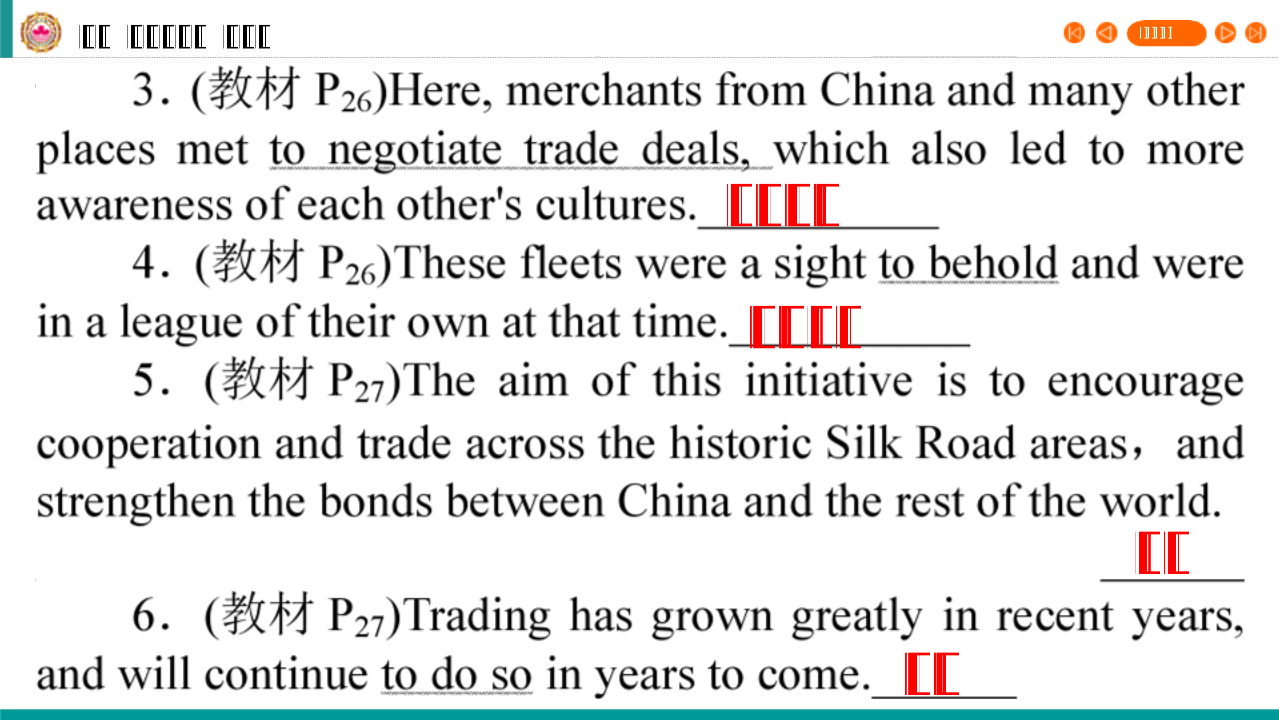
3.(教材P26)Here, merchants from China and many other places met to negotiate trade deals, which also led to more awareness of each other's cultures.__________
4.(教材P26)These fleets were a sight to behold and were in a league of their own at that time.__________
5.(教材P27)The aim of this initiative is to encourage cooperation and trade across the historic Silk Road areas,and strengthen the bonds between China and the rest of the world.
______
6.(教材P27)Trading has grown greatly in recent years, and will continue to do so in years to come.______
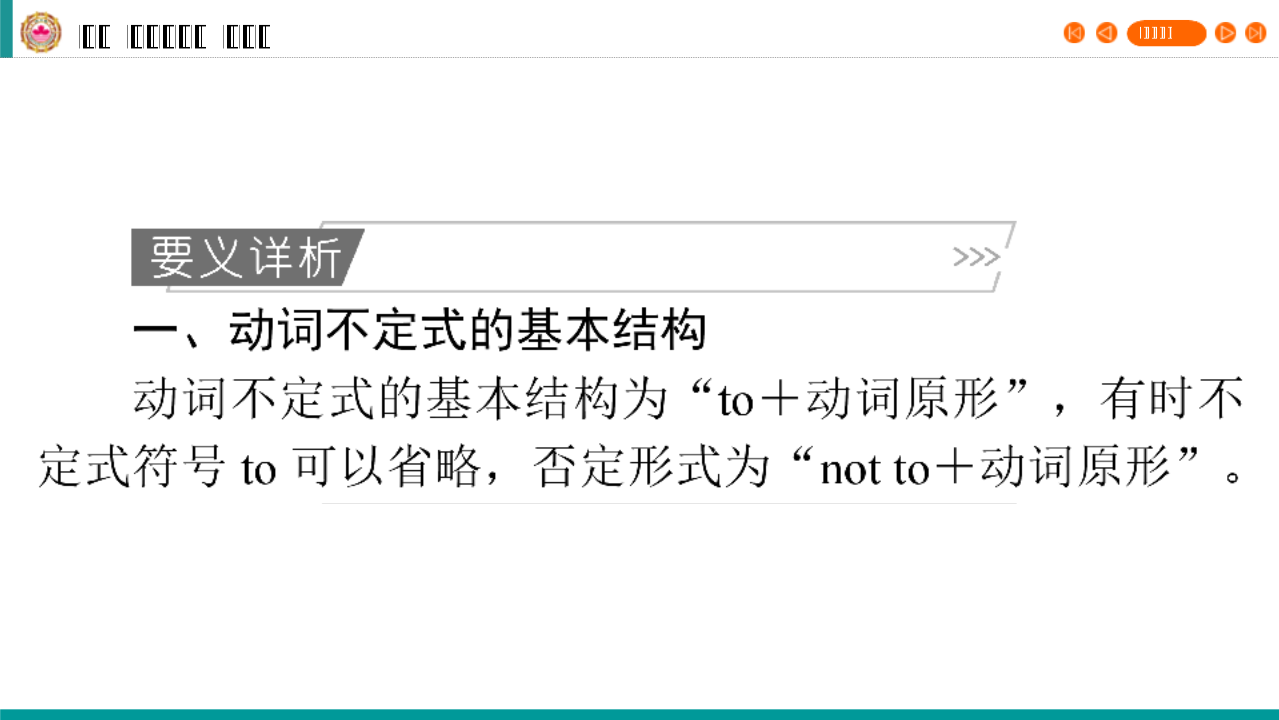
一、动词不定式的基本结构
动词不定式的基本结构为“to+动词原形”,有时不定式符号to可以省略,否定形式为“not to+动词原形”。
不定式有时态和语态变化,通常有下表中的几种形式(以do为例):
形 式
主 动
被 动
一般式
to do
to be done
完成式
to have done
to have been done
进行式
to be doing
完成进行式
to have been doing
►(2023·新课标Ⅰ)On March 7, 1907, the English statistician Francis Galton published a paper which illustrated what has come to be known as the “wisdom of crowds” effect.1907年3月7日,英国统计学家弗朗西斯·高尔顿发表了一篇论文,阐述了后来被称为“群体智慧”的效应。
►(2024·1月浙江)A woman is believed to have broken her leg after a tree fell on her car.据说一位女士在一棵树倒在她的车上后腿骨骨折了。
►When his mother came into his room, Jimmy pretended to be reading an English novel.
当他的母亲走进他的房间时,吉米假装在看一本英文小说。
►He was found to have been enjoying the company of the kids on the street.他被人发现喜欢与那些流浪街头的孩子混在一起。
►I'm sorry to have kept you waiting for so long a time.很抱歉让你等了那么久。
[即时训练1]——单句语法填空
(1)(2024·新课标Ⅰ)These sepals open on warm days ___________(give) the inside plants sunshine and fresh air.
(2)(2024·新课标Ⅱ)Those cultural elements have increased Stratford's international visibility, said Edmondson, adding that visitors walking through the Birthplace Garden were often amazed __________(find) the connection between the two great writers.
(3)(2024·全国甲)Although parks of all sizes and types exist at any level, the national parks, in particular, tend ____________(catch) our attention because of their large size and variety.
二、动词不定式的基本用法
1.作主语
(1)动词不定式作主语时,相当于名词或代词的作用,谓语动词用单数。
►For him to admit his mistakes is not easy.
要他承认错误是不容易的。
(2)为了避免头重脚轻,常用it作形式主语放在句首,作主语的不定式常置于句末。
►It is very important for us to make full use of each minute.
充分利用每一分钟对于我们来说非常重要。
[提示] (1)若要说明不定式表示的动作的发出者,要在不定式前加for引起的短语,构成“for+名词(或代词宾格)+不定式”短语,这一短语被称为不定式的复合结构;
(2)在“It is+adj.+不定式复合结构”句型中,当其中的形容词说明逻辑主语的性质、品质时,要由of引出逻辑主语,不能用for。这类形容词有clever, foolish, kind, nice, polite, silly, stupid, wise等。
►It's still a little too cold for them to go out into the open.
对它们来说,到户外还有点太冷了。
►It is kind of you to inform us of the change of the time in advance.
提前告诉我们时间的变化,你真是太好了。
2.作表语
(1)动词不定式放在be, become, sound, taste等系动词后面,常表示将来的动作或起解释说明作用,其主语常常是wish, ambition, plan, idea, task, purpose, duty, job等表示意向、打算、计划的词。
►He seemed not to notice the man next to him.
他好像没有注意他旁边的那个人。
►The next technique is to write your draft rapidly without worrying about being perfect.
下一个技巧是快速撰写草稿,而不用担心是否完美。
(2)动词不定式作表语时,常用来表示预计要发生的动作,或表示未来的可能性或假设。
►His aim is to become a famous astronaut when he grows up.
他的目标是长大后成为著名航天员。
3.作宾语
(1)常见的接动词不定式作宾语的动词有afford(付得起), agree(同意), aim(力争), appear(显得), arrange(安排), attempt(试图), choose(选择), claim(声称), decide(决定), demand(要求), determine(决心), expect(期待), fail(未履行), help(帮助), hesitate(犹豫), hope(希望), learn(学会), manage(设法做到), offer(主动提出), plan(计划), prepare(准备), pretend(假装), promise(答应), refuse(拒绝), seem(似乎), tend(往往会), want(想要), wish(希望)等。
►It didn't take long for Merebeth to decide to drive the dog there herself.
没过多久,梅里韦瑟就决定亲自开车把狗送到那里。
►They rushed to the window, 30 or 40 birds all trying to get out at the same time.
它们冲到窗户边,同时有30或40只鸟正试图出去。
►They planned to make French toast and chicken porridge.
他们计划做法式吐司和鸡肉粥。
(2)不定式前可带what, who, which, where, when, how, whether等疑问词,构成“疑问词+动词不定式”结构。
►He has provided an opportunity for kids in his neighborhood to learn how to fix their own bikes.他提供机会给小区里的孩子学习怎样修他们自己的自行车。
►I don't know what to say when I'm asked at the party.
在派对上被问起时,我不知道说什么。
(3)常见句型:“主语+v.+it+adj./n.(+for sb)+to do sth”。其中,it为形式宾语,to do为真正的宾语。能用于这一句型的动词有believe, consider, feel, find, make, suppose, think等。
►This will make it easier for you to answer questions about your symptoms.
这就会使得你回答关于你症状的问题更容易些。
4.作定语
(1)动词不定式作定语时,要放在它所修饰的名词或代词后面。
►In Wickenden's book, she expanded on the history of the West and also on feminism, which of course influenced the girls' decision to go to Elkhead.
在威肯登的书中,她扩展了西方历史和女权主义,这当然影响了女孩们去埃尔克黑德的决定。
►I'd like to, but I have a lot of emails to answer tonight.
我想去,但是今晚我有很多邮件需要回复。
(2)如果动词不定式是不及物动词,后面就应有必要的介词。
►Give me a piece of paper to write on.
给我一张纸写字。
(3)当中心词为序数词、最高级、the last/only等或中心词被这类词修饰时,常用不定式作定语。
►For Pruitt, a keen bicyclist, the first thing to do was replace his stolen bike.
普鲁特作为热衷骑自行车的人,自行车被偷,他首先要做的应该是换一辆自行车。
►He was the last person to leave the company that night.
他是那天晚上最后一个离开公司的人。
5.作状语
(1)表示目的
►The elderly residents in care homes in London are being given hens to look after to stop them feeling lonely.
伦敦养老院让老人照看母鸡,以防止他们感到孤独。
►She went right into the shower to wash it, but it was no use.
她直接冲到淋浴间去洗,但没有用。
►To survive in that city, he had to work harder than others.
为了在那个城市里活下来,他不得不比别人更加努力地工作。
[提示] 作目的状语的动词不定式前常加上in order或so as,但so as不能置于句首。
►She asked me to drive her to the airport in order/so as to catch the 5:00 plane.为了赶上5点的飞机,她让我开车把她送到机场。
(2)表示结果
动词不定式作状语表示结果时,常用如下结构:
so+形容词/副词+as to do
如此……以至于……
such(+形容词)+名词+as to do
如此……以至于……
enough+名词+to do 足够……
形容词/副词+enough+to do 足够……
too+形容词/副词+to do 太……不能……
►He is not so stupid/such a fool as to do that.
他还没有蠢到做那种事。
►The Californian ship arrived too late to save more people.
“加利福尼亚号”来得太晚,没能挽救更多的人。
[提示] 动词不定式短语表示结果时,常与only连用,暗示一种意外的结果。
►He hurried to the station, only to find the train had left.
他匆忙赶到车站,却发现火车已经开走了。
(3)表示原因
动词不定式作原因状语,常用在某些表示喜、怒、哀、乐等感情的形容词后。
►I'm sorry to hear that your grandma is ill.
听说你祖母生病了,我感到很难过。
(4)在“be+性质形容词+不定式”结构中,常见的这类形容词有easy, hard, difficult, interesting, heavy, pleasant, light, good, fit, comfortable, safe, dangerous, impossible等。
►The box is not easy to carry.
这个箱子不易携带。
[提示] 此句型中动词不定式用主动形式表示被动意义。
6.作宾语补足语
(1)动词不定式常跟在下列动词之后作宾语补足语:ask, advise, get, allow, beg, cause, command, enable, encourage, expect, force, invite, mean, order, permit, persuade, remind, require, request, teach, tell, urge, warn等。
►Ms Raspopova has once asked her husband to help her out on stage.
拉斯波波娃夫人曾经让丈夫在台上帮助她。
►The admiration and respect his uncle earned inspired Nielsen to make a career in acting.
叔叔赢得的崇拜和尊敬激励着尼尔森从事表演行业。
(2)使役动词 let, have, make等和感官动词(短语)see, watch, look at, notice, observe, hear, listen to, feel等后跟动词不定式作宾语补足语时,省略to。get除外(get sb to do sth)。
►The teacher made him say the word like this.
老师让他像这样念这个单词。
[提示] 上述动词变为被动语态时,不定式符号to不能省略。
►The children were seen to run down the street.
有人看到孩子们沿着这条街跑了。
[即时训练2]——用所给词的适当形式填空,并写出其在句中所作的成分
(1)(2023·新课标Ⅰ)To eat one, you have to decide whether __________(bite) a small hole in it first, releasing the stream and risking a spill(溢出), or to put the whole dumpling in your mouth, letting the hot soup explode on your tongue.
______
(2)Emma says it's challenging ______(be) a health expert, because people can be easily influenced by advertisements that lack scientific support.______
(3)(2023·全国甲)For thousands of years, people have told fables(寓言) ____________(teach) a lesson or to pass on wisdom.______
(4)(2023·新课标Ⅰ)Nanxiang aside, the best Xiao long bao have a fine skin, allowing them ________________(lift) out of the steamer basket without allowing them tearing or spilling any of their contents.______
(5)We had better put off interviewing the athlete, for he is busy preparing for an international contest ______________ (hold) in Shanghai next month.______
三、动词不定式的省略
在expect, hope, wish, mean, prefer, want, try以及used to, would like/love to等后面,动词不定式常常省略to后面的动词部分,只保留to,以避免重复。
►—Would you like to go with us?
——你想和我们一起去吗?
—I hope to, but I am too busy.
——我想去,但是我太忙了。
►He doesn't like playing football, but he used to.
他不喜欢踢足球,但是他以前喜欢。
[提示] 倘若承前省略(上文出现,下文省略)的动词不定式中含有be或have的任何形式,要保留be或have或其相应的某种形式。
►China is not what she used to be.
中国已是今非昔比了。
►—Didn't he tell you to attend the meeting?
——他没有告诉你要开会吗?
—No, I ought to have been (told).
——是的,我本应该被告知的。
[即时训练3]——句型转换/完成句子
(1)He wanted to shut the window.He was told not to shut the window.(用不定式的省略合并句子)
→____________________________________________
(2)那个司机想把车停靠在路边,但是警察不允许他这样做。
The driver wanted to park his car near the roadside but was asked by the police__________.
Ⅰ.单句语法填空
1.It took us about 3 hours______(go) all the way around the Xi'an City Wall.
2.(2024·1月浙江)The shelves in most supermarkets are full of family-size this and multi-buy that.However, if you're shopping for one, buying extra ______________(benefit) from price reductions doesn't make sense.
3.As she was leaving she was eager ____________(say) goodbye to each of us in the nursing team.
4.__________(enjoy) the convenience of digital payment, many senior citizens started to use smartphones.
5.Rose showed no anxiety before the competition.She seemed ____________________(prepare) for it pretty well.
6.It was built originally _____________(protect) the city in the Tang Dynasty and has now been completely restored.
7.(2023·北京)She called for action ______________ (address) the struggles of people around the world facing “too little water or too dirty water”.
8.After the war they parted company, never __________ (see) each other again.
9.Once his message was delivered, the man allowed me ___________(stay) and watch.
10.The airport ___________________(complete) next year will help promote tourism in this area.
Ⅱ.语法与写作
1.上初三时,我的目标是成为全班最好的学生。(不定式作表语)
When I was a Junior Three student, _________________ ________________________.
2.为了实现这个目标,我决定像我同桌一样每天熬到半夜。(不定式作目的状语)
_________________________, I decided to stay up until midnight like my deskmate.
3.我努力最后一个走,第一个到,却发现我上课总是犯困。(不定式作定语和结果状语)
I tried to be ____________________________________ ___________________________________.
4.我的老师说保持充足的睡眠是很重要的。(不定式作主语)
My teacher said _________________________________ _________.
5.他建议我制订一个适合我自己的计划。(不定式作宾补)
____________________________ that/which is suitable for myself.
(教材P28)Reaching out across the sea is often a mixture of danger and boredom.
远渡重洋往往既危险又无聊。
mixture n.混合;结合体;混合物
①mix v.(使)混合;掺和;调配
mix (…) with把(……)和……混合
mix A and B (together)把A与B混合起来/融合在一起
mix up (with)(把……)混淆;弄乱;搅匀
②mixed adj.复杂的;混合的
Her face showed a mixture of fear and excitement at that moment.
在那一刻,她脸上的表情是又惊又喜。
[融会练通]——单句语法填空
(1)We listened to the news with a ___________(mix) of surprise and horror.
(2)He was so nervous that he got the speech pages all _________(mix) up.
[习作练笔]——补全句子
(3)我非常期待这次经历会有回报,(因为它)完美地融合了学习和乐趣。
I highly expect the experience to be rewarding, perfectly ___________________________.
(教材P28)When the journey ended, Zac's adventure received widespread media coverage.
旅程结束后,扎克的冒险经历得到了媒体的广泛报道。
coverage n.新闻报道;覆盖范围
cover vt.覆盖;涉及;包括;报道;支付;行走(一段路程)
n.掩护;覆盖物;掩蔽物;躲避处;(书刊的)封面,封皮
be covered with 被……覆盖
[语义感知]——写出下列句中cover的含义
(1)Inspired by the Belt and Road Forum for International Cooperation held in Beijing, Cao decided to cover the route by hiking as a tribute(致敬) to the ancient Silk Road.
________________
(2)(2024·新课标Ⅰ)Johnson began writing about sports as a second-year student at the University of Colorado, covering high school volleyball games for his hometown newspaper.______
(3)(2023·1月浙江)She was covered in spider-webs(蛛网) and was barely able to move her wings.___________
(4)(2023·新课标Ⅰ)The 2.5-hour tour covers the Gooyer Windmill, the Skinny Bridge, the Rijksmuseum, Heineken Brewery and much more.______
(5)(2024·新课标Ⅰ)Of course, these days there are plenty of online dictionaries and thesauruses, but I'm old-fashioned enough to prefer a hard cover and pages I can leaf through with my fingers.______
[融会练通]——单句语法填空
(6)____________(cover) an area about three times the size of Yellowstone National Park, the GPNP will be one of the first national parks in the country.
(7)The park, planned to open in 2026, has increased the area's green ____________(cover) and attracted more wildlife.
[习作练笔]——补全句子
(8)你可以看到英格兰和法国队比赛的现场报道。
You can __________________________ England's game against France.
$$
资源预览图

1

2
3
4
5
6

相关资源
由于学科网是一个信息分享及获取的平台,不确保部分用户上传资料的 来源及知识产权归属。如您发现相关资料侵犯您的合法权益,请联系学科网,我们核实后将及时进行处理。