Unit 6 Useful numbers Part A(教案)-2024-2025学年人教PEP版(2024)英语三年级上册
2025-03-20
|
8页
|
96人阅读
|
30人下载
普通
资源信息
| 学段 | 小学 |
|---|---|
| 学科 | 英语 |
| 教材版本 | 小学英语人教PEP版三年级上册 |
| 年级 | 三年级 |
| 章节 | Part A |
| 类型 | 教案 |
| 知识点 | - |
| 使用场景 | 同步教学-新授课 |
| 学年 | 2024-2025 |
| 地区(省份) | 全国 |
| 地区(市) | - |
| 地区(区县) | - |
| 文件格式 | DOCX |
| 文件大小 | 46 KB |
| 发布时间 | 2025-03-20 |
| 更新时间 | 2025-03-20 |
| 作者 | 匿名 |
| 品牌系列 | - |
| 审核时间 | 2025-03-20 |
| 下载链接 | https://m.zxxk.com/soft/51143220.html |
| 价格 | 0.00储值(1储值=1元) |
| 来源 | 学科网 |
内容正文:
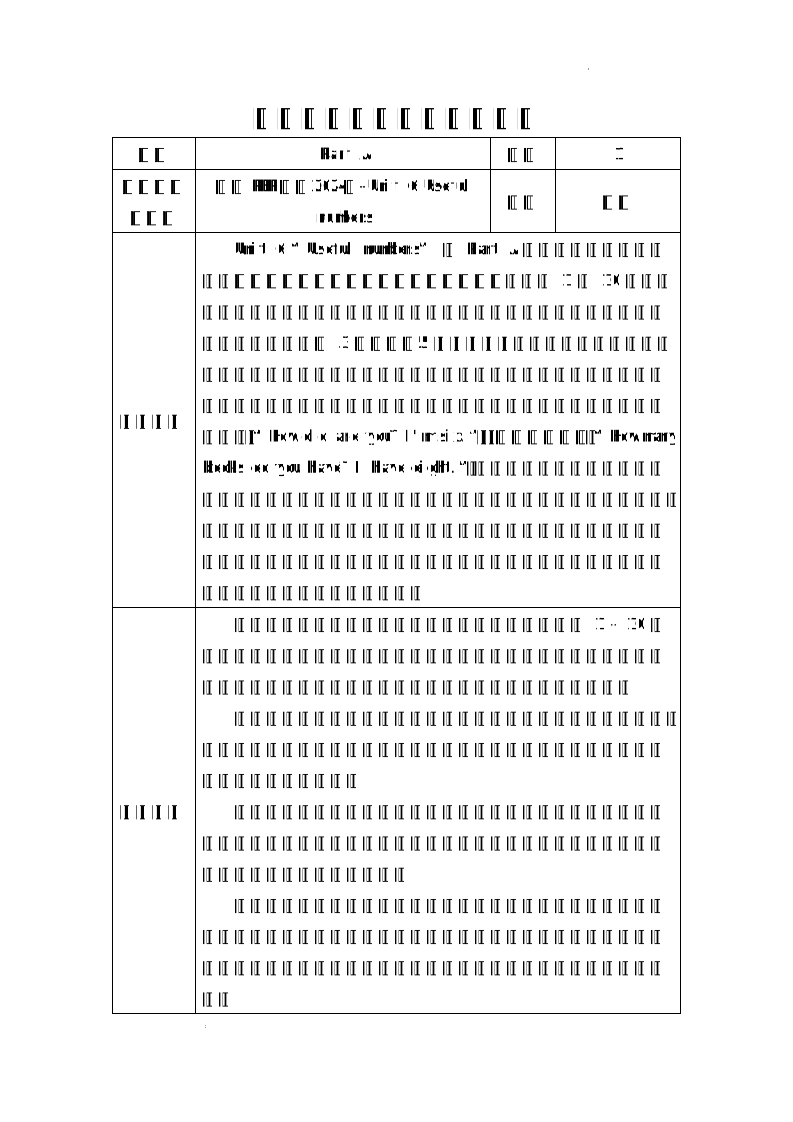
教学评一体化课时备课模板
课题
Part A
课时
1
所在教材与单元
人教PEP版(2024)-Unit 6 Useful numbers
课型
新授
教材分析
Unit 6 “Useful numbers” 的 Part A 部分聚焦基础数字教学,是学生构建数字认知体系的重要开端。教材从 1 至 10 的数字入手,通过形象直观的方式呈现,例如利用色彩鲜艳的图片展示相应数量的物品,像 3 只鸭子、5 个苹果等,让学生将抽象数字与具体事物建立联系,符合三年级学生以形象思维为主的认知规律,降低学习难度,增强理解与记忆。同时,搭配简单的对话场景,如询问年龄(“How old are you? I'm six.”)、讨论物品数量(“How many books do you have? I have eight.”),使数字学习融入日常交流情境,不仅教授数字的认读与书写,更注重其在实际生活中的运用,让学生在真实语境中感受数字的实用性,激发学习兴趣。在练习设计上,形式丰富多样,有听数字选图片、跟读模仿等,多维度强化学生对数字的感知与表达能力。
学习目标
语言能力:学生能够准确听懂、说出、认读与书写 1 - 10 的数字,熟练运用相关句型询问和回答数量、年龄等信息,提升语言表达的准确性与流畅度,增强在数字相关情境下的交流能力。
文化意识:了解英语国家中数字在生活、文化习俗方面的运用,如西方文化中某些数字的特殊寓意,拓宽文化视野,培养对多元文化的敏感度与包容心。
思维品质:在学习数字与数量对应关系、分析对话情境中,锻炼逻辑思维能力;鼓励学生通过数字进行简单运算或规律探索,培养创造性思维与批判性思维。
学习能力:借助教材丰富的学习资源,如图片、对话、练习,学会自主探索数字知识,总结数字学习方法,在小组合作练习中提升合作学习能力,逐步形成适合自己的学习策略,提升自主学习能力。
重难点
重点:掌握 1 - 10 数字的正确发音、拼写与运用,熟练运用询问和回答数量、年龄的基本句型,能够在简单对话中准确使用数字信息进行交流。
难点:部分数字发音相近,如 “six” 和 “seven”,学生易混淆,需要加强发音辨析练习;引导学生将数字知识灵活运用到真实生活场景中,解决实际问题,例如在购物时计算价格、在游戏中统计得分等,对于三年级学生来说,实现知识从课堂到生活的迁移存在一定挑战,教师需创设丰富的真实情境,帮助学生突破难点 。
教学环节
学习活动
新课教学
I. Warm-up and Lead-in
Teacher: Good morning, everyone!
Students: Good morning, teacher!
Teacher: How are you today?
Students: We're fine, thank you. And you?
Teacher: I'm great, thank you for asking. Now, let's get started with our new lesson. Before we begin, I want to ask you a question. Can you tell me what we learned in our last class?
Student 1: We learned about fruits.
Teacher: That's right! We learned many interesting things about fruits. Today, we are going to learn something different but also very important in our daily life. Can anyone guess what it is?
Student 2: Numbers!
Teacher: Yes, that's correct! Numbers are very useful, and today we will learn how to say numbers in English. Are you excited?
Students: Yes!
II. Presentation of New Words
Teacher: Now, let's look at the board. Can you see the numbers?
Students: Yes!
Teacher: Great! Let's say these numbers together. One, two, three...
Students: One, two, three...
Teacher: Very good! You all did a fantastic job. Now, let's learn some sentences with these numbers. Look at the first picture. What do you see?
Student 3: A bird.
Teacher: Yes, and how old is the bird?
Student 4: Eight.
Teacher: Very good! Now, let's say the sentence together: "Look at the bird. It's eight."
Students: Look at the bird. It's eight.
Teacher: Excellent! Let's move on to the next picture. What do you see now?
Student 5: A fish.
Teacher: That's right! And how many fins does the fish have?
Student 6: Two.
Teacher: Perfect! Let's say the sentence: "Look at the fish. It has two fins."
Students: Look at the fish. It has two fins.
III. Textbook Exploration
Teacher: Now, open your books to page 44. Look at the pictures and the sentences. Let's read them together.
Teacher and Students: (Reading together) Look at the fish. It's five. Look at the boy. He's six.
Teacher: Can you find the numbers in the sentences?
Students: (Pointing to the numbers in the sentences)
Teacher: Great job! Now, let's try to say the sentences by ourselves. Practice in pairs.
Students: (Practicing in pairs)
IV. Interactive Practice
Teacher: Now, let's play a game. I will show you a picture, and you have to say the correct sentence with the number.
Teacher: (Holding up a picture of a cat) Who can tell me how old the cat is?
Student 7: Nine.
Teacher: Excellent! Now, let's switch. You show me a picture, and I will say the sentence. Take turns.
Students: (Taking turns to show pictures and say sentences)
V. Role-play Activity
Teacher: Next, let's do a role-play. You will be the teacher, and I will be the student. You show me a picture, and I will say the sentence.
Student 8: (Holding up a picture of a dog) What should I say?
Teacher: Look at the dog. It's seven.
Student 8: Look at the dog. It's seven.
Teacher: Very good! Now, let's switch roles. You be the student, and I will be the teacher.
Teacher and Students: (Continuing with several rounds of role-play)
VI. Consolidation and Extension
Teacher: Now, let's review what we have learned today. Can you tell me the English words for the numbers one to ten?
Students: (Saying the numbers one by one)
Teacher: Great! You all did a fantastic job. Now, let's talk about the importance of numbers in our daily life. Can you give me some examples?
Student 9: We use numbers to count things.
Student 10: We use numbers to tell time.
Teacher: That's right! Numbers are everywhere around us. They help us count, measure, and understand the world better. Let's do a small activity. I want you to find numbers in our classroom and tell me what they mean.
Students: (Looking around the classroom and sharing their findings)
Teacher: Wonderful! You have all found many numbers in our classroom. This shows how important numbers are in our daily lives.
VII. Cultural Awareness
Teacher: Now, let's talk about numbers in different cultures. Did you know that some numbers have special meanings in different cultures?
Students: (Showing interest)
Teacher: For example, in some cultures, the number eight is considered lucky, while the number thirteen is considered unlucky. Can you think of any other examples?
Student 11: In China, the number six is considered lucky because it sounds like the word for "smooth" in Chinese.
Teacher: That's a great example! It's interesting how numbers can have different meanings in different cultures. This is why it's important to learn about other cultures and their traditions.
VIII. Practice and Application
Teacher: Now, let's practice using the numbers and sentences we have learned today. I want you to work in groups of three. Each group will choose a scenario, such as a shopping trip, a birthday party, or a picnic. Use the numbers and sentences we have learned to create a short dialogue for your scenario.
Students: (Working in groups to create dialogues)
Teacher: (Walking around the classroom, listening to the groups, and providing feedback)
IX. Presentation and Feedback
Teacher: Now, it's time for each group to present their dialogue. When it's your turn, come to the front of the classroom and perform your dialogue for the class.
Groups: (Presenting their dialogues one by one)
Teacher: (Giving feedback and encouragement to each group)
Teacher: Wonderful job, everyone! You have all done a fantastic job of using the numbers and sentences we have learned today. Remember, practice makes perfect. The more you use English, the better you will get at it.
X. Homework Assignment
Teacher: Before we end our lesson today, I want to give you a homework assignment. I want you to find five numbers in your home and write a short sentence about each one. For example, "I found the number 7 on the clock in my bedroom." Bring your homework to the next class, and we will share our findings.
Students: (Taking notes of the homework assignment)
Teacher: That's all for today. You have all done a great job. Remember to practice using the numbers and sentences we have learned. See you in the next class!
Students: See you, teacher!
XI. Additional Activities for Enhanced Learning
Teacher: (Optional) For those of you who want to further enhance your learning, here are some additional activities you can do at home:
1. Number Songs and Rhymes: Sing number songs or recite number rhymes in English to help you remember the numbers.
2. Number Games: Play number games such as "I Spy" or "Memory" using English number words.
3. Number Stories: Create your own number stories using the numbers and sentences we have learned.
4. Number Art: Draw pictures and label them with numbers in English.
5. Number Diary: Keep a number diary where you write down the numbers you see in your daily life and describe their context.
Teacher: These activities will not only help you review what we have learned in class but also make learning English more fun and engaging. Have fun with your learning!
XII. Reflection and Future Lessons
Teacher's Reflection: Today's lesson was focused on teaching students how to say numbers one to ten in English and use them in simple sentences. The students showed great enthusiasm and participation throughout the lesson. They were able to recognize and say the numbers, as well as use them in sentences and dialogues. However, there is always room for improvement. Some students struggled with the pronunciation of certain numbers, and some were hesitant when speaking in front of the class. To address these issues, I plan to incorporate more pronunciation drills and provide more opportunities for students to practice speaking in front of the class.
学科网(北京)股份有限公司
学科网(北京)股份有限公司
$$
资源预览图
1

2

3
相关资源
由于学科网是一个信息分享及获取的平台,不确保部分用户上传资料的 来源及知识产权归属。如您发现相关资料侵犯您的合法权益,请联系学科网,我们核实后将及时进行处理。