UNIT 5 Section Ⅱ Discovering Useful Structures & Listening and Talking(word练习)-【勤径学升】2024-2025学年高中英语必修第三册同步练测(人教版2019)
2025-05-27
|
12页
|
11人阅读
|
1人下载

资源信息
| 学段 | 高中 |
|---|---|
| 学科 | 英语 |
| 教材版本 | 高中英语人教版必修第三册 |
| 年级 | 高一 |
| 章节 | Discovering Useful Structures,Listening and Talking |
| 类型 | 作业-同步练 |
| 知识点 | - |
| 使用场景 | 同步教学-新授课 |
| 学年 | 2025-2026 |
| 地区(省份) | 全国 |
| 地区(市) | - |
| 地区(区县) | - |
| 文件格式 | DOCX |
| 文件大小 | 116 KB |
| 发布时间 | 2025-05-27 |
| 更新时间 | 2025-05-27 |
| 作者 | 哈尔滨勤为径图书经销有限公司 |
| 品牌系列 | 勤径学升·高中同步练测 |
| 审核时间 | 2025-02-15 |
| 下载链接 | https://m.zxxk.com/soft/50438990.html |
| 价格 | 3.00储值(1储值=1元) |
| 来源 | 学科网 |
内容正文:
[对应素能提升训练第47页]
[基础语用题]
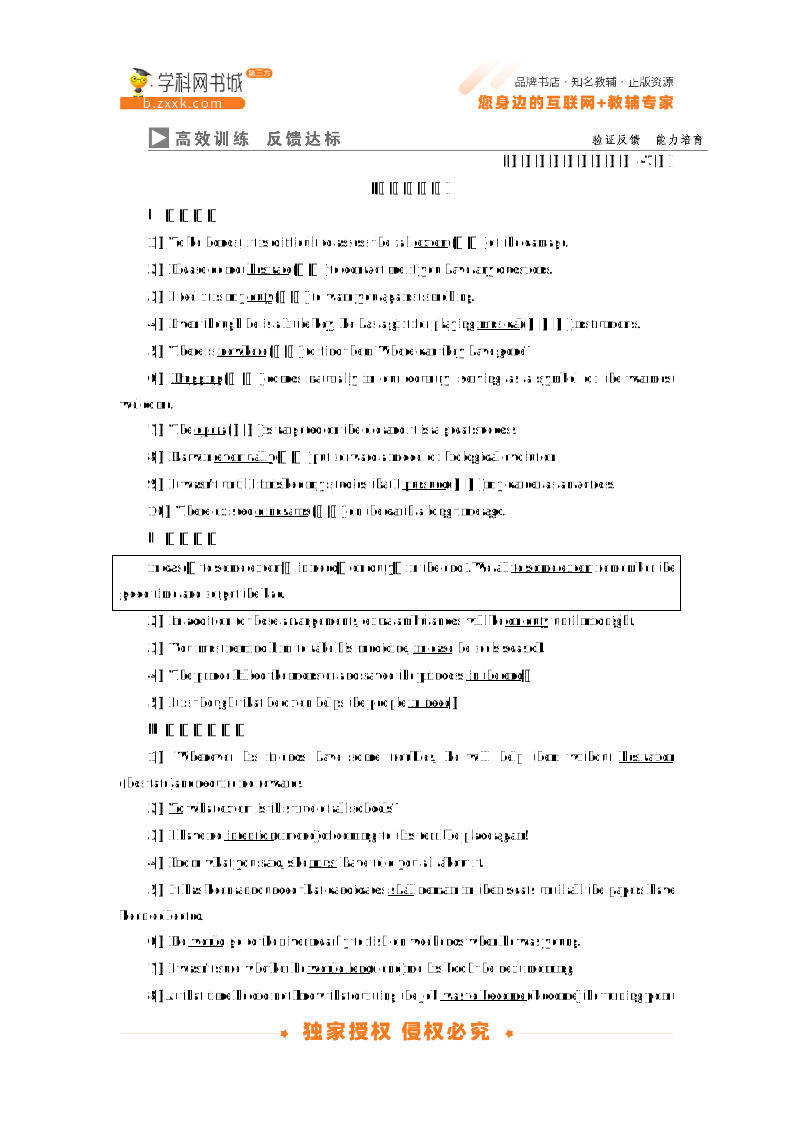
Ⅰ.单词拼写
1.To be honest, it is difficult to assess the fall extent(程度)of the damage.
2.Please do not hesitate(犹豫)to contact me if you have any questions.
3.I feel it is my duty(义务)to warn you against smoking.
4.Even though he is a little boy, he has a gift for playing musical(音乐的)instruments.
5.There is nowhere(无处)to find them.Where can they have gone?
6.Hugging(拥抱)comes naturally in our country, serving as a symbol of the warmest welcome.
7.The opera(歌剧)is targeted on the old and it is a great success.
8.Darwin eventually(最后)put forward a model of biological evolution.
9.It wasn't until I finished my studies that I pursued(追求)my career as an actress.
10.There existed dinosaurs(恐龙)on the earth a long time ago.
Ⅱ.短语填空
in case;to some extent;in need;on duty;in the end1.We all to some extent remember the good time and forget the bad.
2.In addition to these arrangements, extra ambulances will be on duty until midnight.
3.You must remind him to take his medicine, in case he feels seasick.
4.The prince killed the monster and saved the princess in the end.
5.It is thought that he often helps the people in need.
Ⅲ.单句语法填空
1.Whenever his friends have some troubles, he will help them without hesitation(hesitate)and require no rewards.
2.To what extent is this true of all schools?
3.I have no intention(intend)of coming to this terrible place again!
4.From what you said, she must have told you all about it.
5.It has been announced that candidates shall remain in their seats until all the papers have been collected.
6.He would go to the river nearby to fish on weekends when he was young.
7.I wasn't sure whether he would lend(lend)me his book the next morning.
8.At that time he did not know that quitting the job was to become (become)the turning point in his life.
9.Late at night on November 28 Dr.Bethune got news that a battle would begin(begin)soon.
10.The girl was going to cry(cry)loudly if the meeting was postponed.
Ⅳ.完成句子
1.既然你有了机会, 你不妨充分利用它。
Now that you have got a chance, you might as well make full use of it.
2.虽然他所有的朋友都劝他放弃他的计划, 但他还是坚持了下来。
While all his friends advised him to give up his plan, he went through with it.
3.起初, 学英语看上去那么难以至于我还没尝试就想放弃。
At the beginning, learning English seemed so difficult that I wanted to give up without even trying.
4.在工作时间你不应该打私人电话。
You shouldn't/oughtn't to make private phone calls in work time.
5.你本该昨天完成论文, 因为昨天就是最后期限。
You ought to/should have finished the paper yesterday as it was the deadline.
Ⅴ.语段填空(用情态动词或过去将来时完成下列语篇)
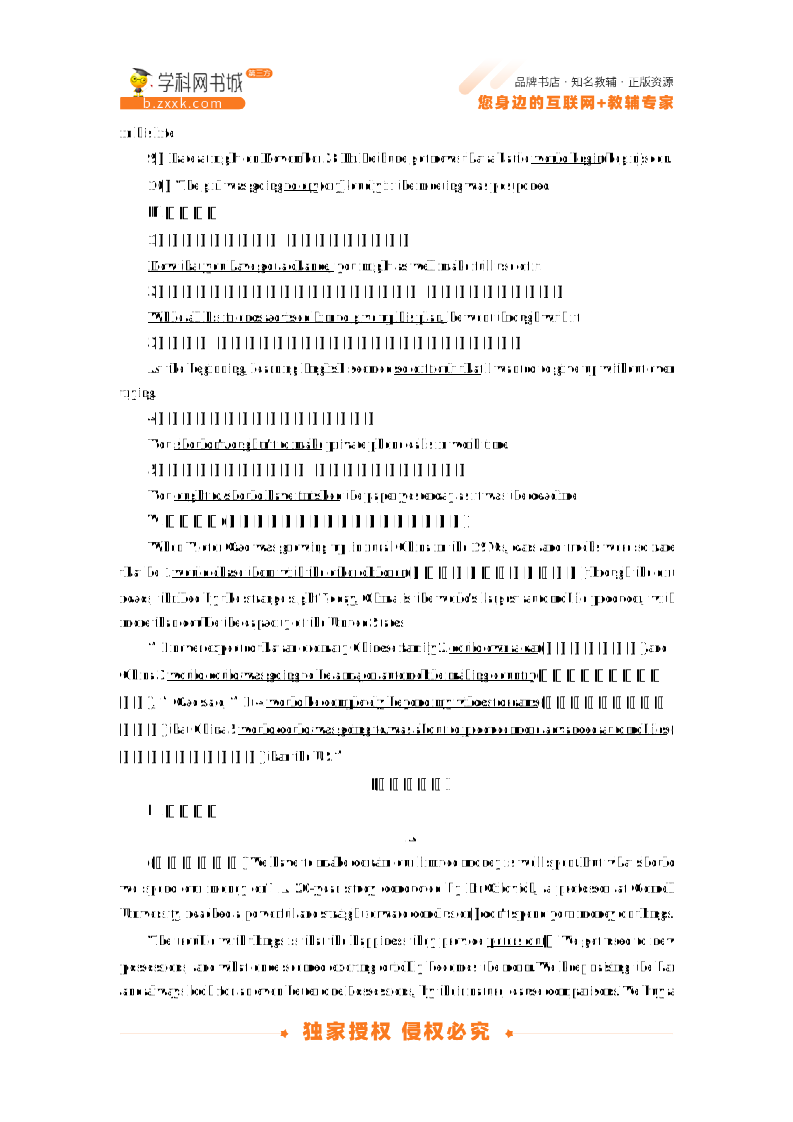
When Victor Gao was growing up in rural China in the 1970s, cars and trucks were so rare that he 1.would chase them with the other children(常和其他孩子一起追逐它们)through the dirt roads, thrilled by the strange sight.Today, China is the world's largest automobile producer, with more than double the capacity of the United States.
“I never expected that an ordinary Chinese family 2.could own a car(能够拥有一辆车)and China 3.would/could/was going to be a major automobile making country(会成为主要的汽车制造国), ”Gao said, “It 4.would be completely beyond my wildest dreams(将完全超出我最疯狂的梦想)that China 5.would/could/was going to/was about to produce more advanced automobiles(会生产更多的高级汽车)than the US.”
[能力提升题]
Ⅰ.阅读理解
A
(衡水高一检测)We have to make certain our limited money is well spent.But what should we spend our money on? A 20year study conducted by Dr.Gilovich, a professor at Cornell University, reached a powerful and straightforward conclusion:don't spend your money on things.
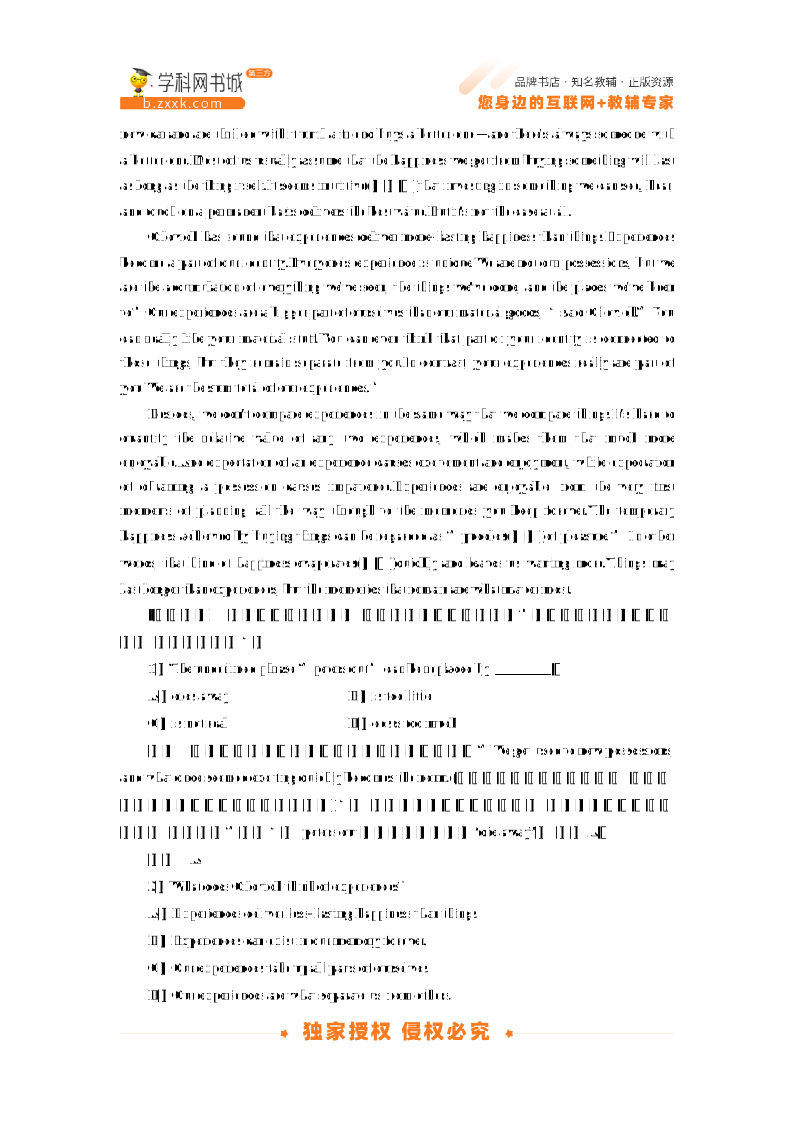
The trouble with things is that the happiness they provide peters out.We get used to new possessions, and what once seemed exciting quickly becomes the norm.We keep raising the bar and always look for an even better one.Possessions, by their nature, cause comparisons.We buy a new car and are thrilled with it until a friend buys a better one—and there's always someone with a better one.Most of us usually assume that the happiness we get from buying something will last as long as the thing itself.It seems intuitive(直觉的)that investing in something we can see, hear, and touch on a permanent basis delivers the best value.But it's not the case at all.
Gilovich has found that experiences deliver morelasting happiness than things.Experiences become a part of our identity.Everyone's experience is unique.We are not our possessions, but we are the accumulation of everything we've seen, the things we've done, and the places we've been to.“Our experiences are a bigger part of ourselves than our material goods, ” said Gilovich.“You can really like your material stuff.You can even think that part of your identity is connected to those things, but they remain separate from you.In contrast, your experiences really are part of you.We are the sum total of our experiences.”
Besides, we don't compare experiences in the same way that we compare things.It's hard to quantify the relative value of any two experiences, which makes them that much more enjoyable.And expectation of an experience causes excitement and enjoyment, while expectation of obtaining a possession causes impatience.Experiences are enjoyable from the very first moments of planning, all the way through to the memories you keep forever.The temporary happiness achieved by buying things can be regarded as “puddles(水坑)of pleasure.” In other words, that kind of happiness evaporates(蒸发)quickly and leaves us wanting more.Things may last longer than experiences, but the memories that remain are what matter most.
[语篇导读] 本文是一篇议论文, 作者论证说明了一个道理“为什么要把钱花在经历上, 而不是事物上”。
1.The underlined phrase “peters out” can be replaced by .
A.dies away B.is too little
C.is not real D.costs too much
解析 词义猜测题。根据画线短语所在句后一句提到“We get used to new possessions, and what once seemed exciting quickly becomes the norm.(我们习惯了新拥有的东西, 曾经令人兴奋的东西很快就变成了常态。)”, 即可推断出新拥有的东西, 能够带来的快乐是短暂的, 很快就会“消失”, peters out对应的同义词应是“die away”, 故选A。
答案 A
2.What does Gilovich think of experiences?
A.Experiences deliver lesslasting happiness than things.
B.Experiences can exist in our memory forever.
C.Our experiences take up all parts of ourselves.
D.Our experiences are what separate us from others.
解析 细节理解题。根据第三段“Gilovich has found that experiences deliver morelasting happiness than things.Experiences become a part of our identity.Everyone's experience is unique.(吉洛维奇发现, 体验比物质更能带来持久的幸福。经历成为我们身份的一部分。每个人的经历都是独一无二的。)”可知, 吉洛维奇(Gilovich)认为经历是个人身份的象征, 个人的经历形成与他人的区别, 故选D。
答案 D
3.It can be inferred from the passage that .
A.experiences can be compared with each other
B.expecting an experience increases our feeling of anxiety
C.people are more likely to be impatient when buying things
D.spiritual wealth is the most valuable for us
解析 推理判断题。根据第二段“The trouble with things is that the happiness they provide peters out.(问题是, 事物所带来的快乐会逐渐消失。)”及第三段“Gilovich has found that experiences deliver morelasting happiness than things.(吉洛维奇发现, 体验比物质更能带来持久的幸福。)”及最后一段“Things may last longer than experiences, but the memories that remain are what matter most.(事物可能比经历更持久, 但留下的记忆才是最重要的。)”可推断出, 在作者的观点看来, 事物可能留存的时间比经历更久, 但是并不能带来长久的幸福, 而经历留下的精神财富才是最重要的, 故选D。
答案 D
4.Which is the main idea of the passage?
A.How can we gain happiness with money?
B.How can we make happiness last long?
C.Why should we spend money on experiences instead of things?
D.Why do experiences achieve permanent happiness than things?
解析 主旨大意题。通读全文内容可知, 本文主要讲述了事物能够带来的幸福是短暂, 经历留下来的精神财富才是最重要的;再根据第一段首句, 引出文章主题“We have to make certain our limited money is well spent.But what should we spend our money on?(我们必须确保有限的钱花得值。但是我们应该把钱花在什么地方呢?)”, 所以本文主要想表达的主题是“为什么要把钱花在经历上, 而不是事物上”, 故选C。
答案 C
B
(全国甲卷)“I didn't like the ending,” I said to my favorite college professor. It was my junior year of undergraduate, and I was doing an independent study on Victorian literature. I had just finished reading The Mill on the Floss by George Eliot, and I was heartbroken with the ending. Prof. Gracie, with all his patience, asked me to think about it beyond whether I liked it or not. He suggested I think about the difference between endings that I wanted for the characters and endings that were right for the characters, endings that satisfied the story even if they didn't have a traditionally positive outcome. Of course, I would have preferred a different ending for Tom and Maggie Tulliver, but the ending they got did make the most sense for them.
This was an aha moment for me, and I never thought about endings the same way again. From then on, if I wanted to read an ending guaranteed to be happy, I'd pick up a love romance. If I wanted an ending I couldn't guess, I'd pick up a mystery(悬疑小说). One where I kind of knew what was going to happen, historical fiction. Choosing what to read became easier.
But writing the end—that's hard. It's hard for writers because endings carry so much weight with readers. You have to balance creating an ending that's unpredictable, but doesn't seem to come from nowhere, one that fits what's right for the characters.
That's why this issue(期)of Writer's Digest aims to help you figure out how to write the best ending for whatever kind of writing you're doing. If it's short stories, Peter Mountford breaks down six techniques you can try to see which one helps you stick the landing. Elizabeth Sims analyzes the final chapters of five great novels to see what key points they include and how you can adapt them for your work.
This issue won't tell you what your ending should be—that's up to you and the story you're telling—but it might provide what you need to get there.
[语篇导读] 本文是一篇议论文。文章首先通过作者与教授关于小说结局的讨论引发了对结局的思考,接着阐述了不同类型的文学作品结局的特点,最后提出了写作好的结局的重要性并介绍了Writer's Digest杂志如何帮助作家写出更好的结尾。
5.Why did the author go to Prof. Gracie?
A.To discuss a novel.
B.To submit a book report.
C.To argue for a writer.
D.To ask for a reading list
解析 细节理解题。根据第一段“‘I didn't like the ending,’ I said to my favorite college professor. It was my junior year of undergraduate, and I was doing an independent study on Victorian literature. I had just finished reading The Mill on the Floss by George Eliot, and I was heartbroken with the ending. Prof. Gracie, with all his patience, asked me to think about it beyond whether I liked it or not.(‘我不喜欢这个结局,’我对我最喜欢的大学教授说。那是我大三的时候,我正在做一项关于维多利亚文学的独立研究。我刚刚读完乔治·艾略特的《弗洛斯河上的磨坊》,读到结尾我很伤心。格雷西教授耐心地让我考虑一下,不要只看我喜不喜欢。)”可知,作者去找格雷西教授是为了讨论小说。故选A。
答案 A
6.What did the author realize after seeing Gracie?
A.Writing is a matter of personal preferences.
B.Readers are often carried away by characters.
C.Each type of literature has its unique end.
D.A story which begins well will end well.
解析 推理判断题。根据第二段“This was an aha moment for me, and I never thought about endings the same way again. From then on, if I wanted to read an ending guaranteed to be happy, I'd pick up a love romance. If I wanted an ending I couldn't guess, I'd pick up a mystery(悬疑小说). One where I kind of knew what was going to happen, historical fiction. Choosing what to read became easier.(这对我来说是一个顿悟的时刻,我再也没有想过同样的结局。从那时起,如果我想读一个保证幸福的结局,我就会选一部爱情小说。如果我想要一个我猜不到的结局,我会选一本悬疑小说。一种是我有点知道会发生什么,那就是历史小说。选择读什么变得更容易了。)”可知,见过格雷西教授后,作者意识到了每种类型的文学都有其独特的结局。故选C。
答案 C
7.What is expected of a good ending?
A.It satisfies readers' taste.
B.It fits with the story development.
C.It is usually positive.
D.It is open for imagination.
解析 推理判断题。根据第三段“But writing the end—that's hard. It's hard for writers because endings carry so much weight with readers. You have to balance creating an ending that's unpredictable, but doesn't seem to come from nowhere, one that fits what's right for the characters.(但是写出结局——那很难。对作家来说很难,因为结局对读者来说意义重大。你必须平衡创造一个不可预测的结局,但这个结局又不能显得凭空而来,要适合角色的设定。)”可知,人们对一个好结局的期望是结局又不能显得凭空而来,要适合角色的设定,也就是符合故事的发展。故选B。
答案 B
8.Why does the author mention Peter Mountford and Elizabeth Sims?
A.To give examples of great novelists.
B.To stress the theme of this issue.
C.To encourage writing for the magazine.
D.To recommend their new books.
解析 写作意图题。根据倒数第二段“That's why this issue(期)of Writer's Digest aims to help you figure out how to write the best ending for whatever kind of writing you're doing. If it's short stories, Peter Mountford breaks down six techniques you can try to see which one helps you stick the landing. Elizabeth Sims analyzes the final chapters of five great novels to see what key points they include and how you can adapt them for your work.(这就是为什么这期Writer's Digest旨在帮助你找出如何为你正在写的任何类型的作品写出最好的结局。如果是短篇小说,彼得·蒙特福德分解了六种技巧,你可以尝试看看哪一种能帮助你完美着陆。伊丽莎白·西姆斯分析了五部伟大小说的最后几章,看看它们包含了哪些关键点,以及你如何将它们应用到你的作品中。)”可知,作者提到彼得·蒙福德和伊丽莎白·西姆斯是为了强调这期Writer's Digest的主题,即帮助读者写出更好的结尾。故选B。
答案 B
Ⅱ.完形填空
(湛江高一期末)As I walked to the market, I saw an old and dirty man sitting in front of a shop. It was 1 that he was a beggar looking for help. I made a 2 that on my way back I would give him whatever 3 I had. A few feet away was a drunklooking man 4 on the pavement and no one who passed by 5 , including me.
When I returned to see the 6 old man was still there, I felt a sense of 7 to offer some help. I took out all the change to hand it over to him. He hardly looked into my eyes but 8 his head as though saying that he did not need it. I 9 and pushed it into his hand.
As I was 10 of my great act of charity, the man walked up to the drunk man and asked him something. 11 , I couldn't hear what he said. I only noticed him walk to the tea shop and buy some food with the 12 money I gave. Then, he went back to the man, helped him to sit and eat the food. He 13 I was still there, so he explained that man had not eaten for two days and had no 14 to sit up. And that was why he collapsed(昏倒)on the pavement.
Suddenly I felt so small and admired the 15 of the old man who had so little compared to me.
[语篇导读] 本文是一篇记叙文。文章讲述了作者在去市场买东西回来的路上把零钱给了一个乞丐老人, 而老人却用作者给他的钱给一个饿晕的年轻人买了食物。这让作者很钦佩老人的无私。
1.A.likely B.necessary
C.alarming D.unusual
解析 考查形容词辨析。句意:他很可能是一个寻求帮助的乞丐。A.likely(可能的);B.necessary(必要的);C.alarming(引起恐慌的);D.unusual(不寻常的)。根据后文“on my way back I would give him whatever”可知, 作者决定把零钱给老人, 觉得他可能是乞丐。故选A。
答案 A
2.A.request B.decision
C.protest D.proposal
解析 考查名词辨析。句意:我做了一个决定, 在我回来的路上, 我会给他一些零钱。A.request(要求);B.decision(决定);C.protest(抗议);D.proposal(提议)。根据后文“on my way back I would give him whatever”可知, 决定把零钱给老人, 这是作者做的决定。故选B。
答案 B
3.A.change B.food
C.water D.clothes
解析 考查名词辨析。句意:我做了一个决定, 在我回来的路上, 我会给他一些零钱。A.change(零钱);B.food(食物);C.water(水);D.clothes(衣服)。根据后文“I took out all the change to hand it over to him”可知, 作者把零钱给老人。故选A。
答案 A
4.A.driving B.volunteering
C.eating D.lying
解析 考查动词辨析。句意:几英尺远的地方, 一个貌似喝醉了的男人躺在人行道上, 经过的人没有一个伸出援手, 包括我。A.driving(驾驶);B.volunteering(自愿做);C.eating(吃);D.lying(躺)。根据下文“And that was why he collapsed(昏倒)on the pavement”可知, 男人晕倒在人行道上, 所以是躺在那里。故选D。
答案 D
5.A.gave up B.turned to
C.referred to D.reached out
解析 考查动词短语辨析。句意:几英尺远的地方, 一个貌似喝醉了的男人躺在人行道上, 经过的人没有一个伸援手, 包括我。A.gave up(放弃);B.turned to(求助于);C.referred to(提到);D.reached out(伸出援手)。根据“A few feet away was a drunklooking man”可知, 男人像喝醉了一样, 而对于整日酗酒的人是没人愿意伸出援手的。故选D。
答案 D
6.A.poor B.curious
C.positive D.frightened
解析 考查形容词辨析。句意:当我回来看到那个可怜的老人还在那里时, 我感到有责任提供一些帮助。A.poor(可怜的);B.curious(好奇的);C.positive(积极的);D.frightened(害怕的)。根据前文“It was 1 that he was a beggar looking for help”可知, 作者觉得老人是乞丐, 所以是可怜的老人。故选A。
答案 A
7.A.shock B.duty
C.pain D.concern
解析 考查名词辨析。句意:当我回来看到那个可怜的老人还在那里时, 我感到有责任提供一些帮助。A.shock(震惊);B.duty(责任);C.pain(疼痛);D.concern(忧虑)。根据后文“I took out all the change to hand it over to him”可知, 作者拿出所有的零钱给老人, 感到有责任提供一些帮助。故选B。
答案 B
8.A.raised B.nodded
C.lowered D.shook
解析 考查动词辨析。句意:他几乎没有看我的眼睛, 只是摇摇头, 好像是在说他不需要。A.raised(举起);B.nodded(点头);C.lowered(降低);D.shook(摇头)。根据“as though saying that he did not need it”可知, 老人不需要, 所以应是摇头。故选D。
答案 D
9.A.begged B.insisted
C.demanded D.questioned
解析 考查动词辨析。句意:我坚持着, 把零钱塞到他手里。A.begged(恳求);B.insisted(坚持);C.demanded(要求);D.questioned(质疑)。根据“pushed it into his hand”可知, 作者把零钱塞到他手里, 所以是坚持给他。故选B。
答案 B
10.A.aware B.confident
C.proud D.sure
解析 考查形容词辨析。句意:正当我为自己的伟大善举感到自豪时, 那个人走到那个“醉汉”面前问了他一些问题。A.aware(意识到的);B.confident(自信的);C.proud(自豪的);D.sure(必定的)。 根据“my great act of charity”可知, 作者为自己的行为感到自豪。故选C。
答案 C
11.A.Actually B.Importantly
C.Immediately D.Strangely
解析 考查副词辨析。句意:事实上, 我听不见他说什么。A.Actually(事实上);B.Importantly(重要的是);C.Immediately(立即);D.Strangely(奇怪地)。根据后文“I only noticed him walk to the tea shop and buy some food”可知, 作者只是看到, 事实上没有听见他说什么。故选A。
答案 A
12.A.extra B.much
C.same D.digital
解析 考查形容词辨析。句意:我只注意到他用我给的钱去茶馆买了些吃的。A.extra(额外的);B.much(许多的);C.same(相同的);D.digital(数字的)。根据“I gave”可知, 老人用作者给的钱, 所以应是相同的。故选C。
答案 C
13.A.reminded B.observed
C.pretended D.imagined
解析 考查动词辨析。句意:他注意到我还在那儿, 就解释说那个男人已经两天没吃东西了, 没有力气坐起来了。A.reminded(提醒);B.observed(注意到);C.pretended(假装);D.imagined(想象)。根据“so he explained”可知, 老人在向作者解释, 所以应是注意到作者还在那儿。故选B。
答案 B
14.A.limit B.pressure
C.strength D.determination
解析 考查名词辨析。句意:他注意到我还在那儿, 就解释说那个男人已经两天没吃东西了, 没有力气坐起来了。A.limit(限制);B.pressure(压力);C.strength(力气);D.determination(决心)。根据“so he explained that man had not eaten for two days”可知, 男人两天没吃东西了, 结合实际, 应是没有力气坐起来了。故选C。
答案 C
15.A.wisdom B.creativity
C.selflessness D.profession
解析 考查名词辨析。句意:突然间, 我觉得自己是如此渺小, 我很钦佩这位老人的无私, 虽然他拥有的和我相比实在是微不足道。A.wisdom(智慧);B.creativity(创造力);C.selflessness(无私);D.profession(职业)。根据前文“I couldn't hear what he said. I only noticed him walk to the tea shop and buy some food with the 12 money I gave.”可知, 老人用作者给的零钱去帮助那个人, 所以是无私的。故选C。
答案 C
Ⅲ.语法填空
(佛山高一联考)Once upon a time, a man of Chu got a very priceless pearl, and wanted to coin money by 1. (sell)it. In order to make it look more 2. (wonder), he decided to make a very beautiful box to match it. He searched up and down for some fragrant wood, and, having taken great pains, he finally 3. (achieve)his goal: this box was really remarkable, with pretty charming patterns carved on it and welldesigned 4. (decoration)of coloured stones and lovely feathers.
Zheng Pearl in box and box in hand, he went to the market. Hardly had he got there when a man was 5. (attract)by the beautiful box. He took it over, observed it from side to side, and at once fondled(抚摸)it 6. (admiring). Without bargaining(议价), he offered a high price. When he opened the box, the pearl appeared, shining. But the Zheng man seemed 7. (take)no notice of it. He picked it out, returned it to the seller, and went away with the box 8. he got.
For quite some time 9. seller couldn't understand what had happened. Looking at the pearl, he sighed and murmured “Well, if all are 10. the buyer, focusing only on a thing's appearance rather than its nature, then, my poor pearl, your true value will never be discovered!”
[语篇导读] 这是一篇寓言故事。文章讲述了一个楚国人得到了一颗珍贵的珍珠, 为了增加它的价值, 他制作了一个精美的盒子。然而, 一个买家只对盒子的外观感兴趣, 对珍珠并不在意, 最终只买走了盒子。卖家感叹如果所有人都像这个买家一样, 只关注外表而忽视实质, 那么珍珠的真正价值将永远无法被发现。
1.解析 考查非谓语动词。句意:从前, 楚国的一个人得到了一颗非常珍贵的珍珠, 想通过卖掉它赚钱。空白处在句中作介词的宾语, 应用动名词形式。故填selling。
答案 selling
2.解析 考查形容词。句意:为了使它看起来更加美妙, 他决定做一个非常漂亮的盒子来搭配。空白处在句中作表语, 应用形容词wonderful。故填wonderful。
答案 wonderful
3.解析 考查时态。句意:他四处寻找香木, 经过很大的努力, 他终于实现了他的目标:这个盒子真的很出色, 上面雕刻着漂亮迷人的图案, 装饰着彩色的宝石和可爱的羽毛。空白处在句中作谓语, 根据上文时间状语Once upon a time可知, 句子表示的是发生在过去的动作, 谓语动词使用一般过去时。故填achieved。
答案 achieved
4.解析 考查名词复数。句意:他四处寻找香木, 经过很大的努力, 他终于实现了他的目标:这个盒子真的很出色, 上面雕刻着漂亮迷人的图案, 装饰着彩色的宝石和可爱的羽毛。空白处在句中作宾语, 根据“coloured stones and lovely feathers”可知, 装饰品大于一, 应用名词复数。故填decorations。
答案 decorations
5.解析 考查语态。句意:他刚到那里, 一个人就被美丽的盒子吸引住了。分析句子结构可知, 这是一个包含时间状语从句的复合句, 空白处在时间状语从句中作谓语, 因与从句主语之间为被动关系, 应用被动语态, 根据空白处前面的助动词was可知, 空白处使用过去分词。故填attracted。
答案 attracted
6.解析 考查副词。句意:他拿起来, 从各个角度观察, 立刻就爱不释手。空白处在句中作状语, 修饰动词fondled, 应用副词admiringly。故填admiringly。
答案 admiringly
7.解析 考查非谓语动词。句意:但这个人似乎对此毫不在意。seem to do sth.“似乎做某事”。故填to take。
答案 to take
8.解析 考查定语从句。句意:他把珍珠取出来, 归还给卖家, 带走了那个他得到的盒子。分析句子结构可知, 此处是定语从句, 先行词为the box, 指物, 关系词替代先行词在定语从句中作宾语, 应用关系代词that或which引导。故填that/which。
答案 that/which
9.解析 考查冠词。句意:相当长的一段时间里, 卖家都不明白发生了什么。根据上文“returned it to the seller”可知, 空白处后面的名词seller不止一次提到, 根据冠词的用法, 第二次提到的人或物的名词前, 需使用定冠词。故填the。
答案 the
10.解析 考查介词。句意:如果所有人都像这个买家一样, 只关注物品的外表而不是其本质, 那么, 我的可怜的珍珠啊, 你的真正价值将永远不会被发现!根据“focusing only on a thing's appearance rather than its nature”可推理出上文说的是“像这个买家一样”。故填like。
答案 like
学科网(北京)股份有限公司
$$
资源预览图
1
2
3
相关资源
由于学科网是一个信息分享及获取的平台,不确保部分用户上传资料的 来源及知识产权归属。如您发现相关资料侵犯您的合法权益,请联系学科网,我们核实后将及时进行处理。