Unit 5 Period 4 Discovering Useful Structures-【步步高】2023-2024学年高一英语必修第三册(人教版2019)
2025-05-10
|
13页
|
15人阅读
|
6人下载
教辅

资源信息
| 学段 | 高中 |
|---|---|
| 学科 | 英语 |
| 教材版本 | 高中英语人教版必修第三册 |
| 年级 | 高一 |
| 章节 | Discovering Useful Structures |
| 类型 | 学案-导学案 |
| 知识点 | - |
| 使用场景 | 同步教学-新授课 |
| 学年 | 2024-2025 |
| 地区(省份) | 全国 |
| 地区(市) | - |
| 地区(区县) | - |
| 文件格式 | DOCX |
| 文件大小 | 126 KB |
| 发布时间 | 2025-05-10 |
| 更新时间 | 2025-05-10 |
| 作者 | 山东金榜苑文化传媒有限责任公司 |
| 品牌系列 | 步步高·学习笔记 |
| 审核时间 | 2025-01-31 |
| 下载链接 | https://m.zxxk.com/soft/50214425.html |
| 价格 | 2.00储值(1储值=1元) |
| 来源 | 学科网 |
内容正文:
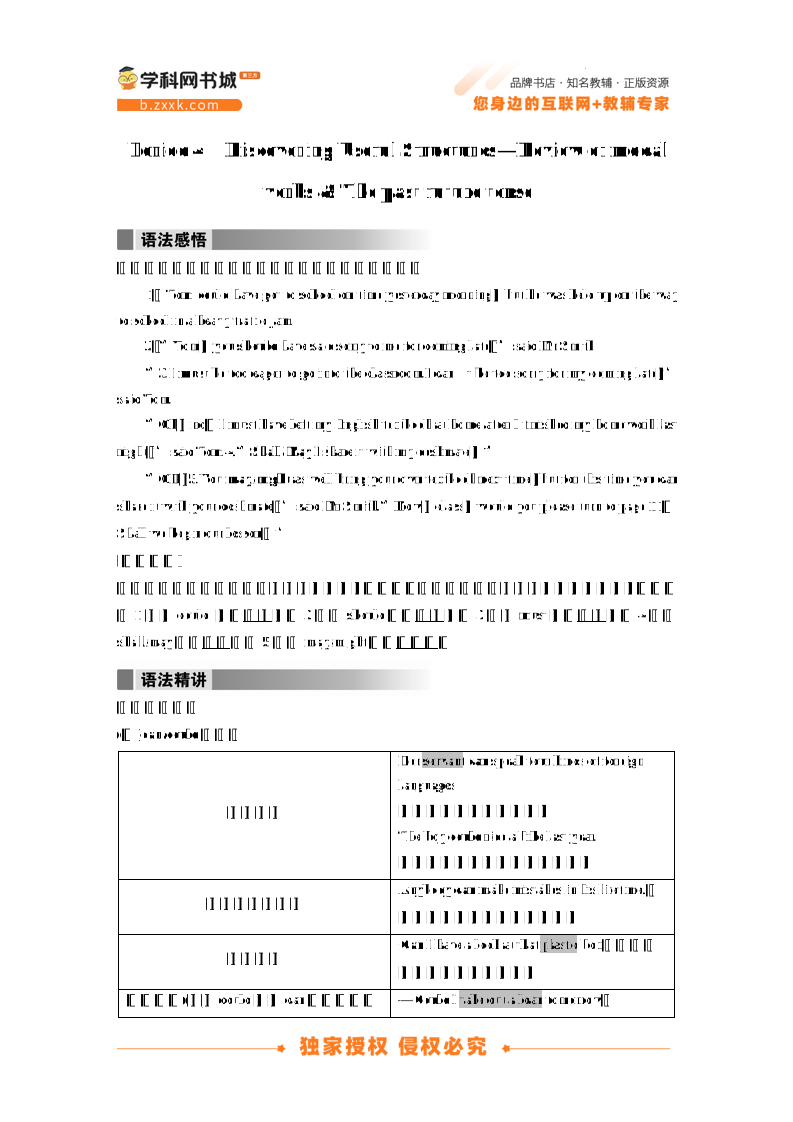
Period 4 Discovering Useful Structures—Review of modal verbs & The past future tense
阅读以下短文,感知加黑部分,并完成下面的练习
1.Tom could have got to school on time yesterday morning,but he was held up on the way to school in a heavy traffic jam.
2.“Tom,you should have said sorry to me for coming late,” said Mr Smith.
“3.I must be too eager to go into the classroom.I can’t be too sorry for my coming late!” said Tom.
“Oh,no,I must have left my English textbook at home after I finished my homework last night,” said Tom.4.“Shall/May I share it with my deskmate?”
“OK!5.You may/might as well bring your own textbook next time,but for this time you can share it with your deskmate,” said Mr Smith.“Now,class,would you please turn to page 11?Shall we begin our lesson?”
[自主发现]
情态动词可以表示能力、许可、必要性、可能性、责任和义务、建议、要求和打算等。例如:句1中的could 表示能力;句2中的should表示应该;句3中的must表示必须;句4中的shall/may表示许可;句5中的may/might表示可能性。
一、情态动词
(一)can/could的用法
表示能力
Her servant can speak four kinds of foreign languages.
她的仆人会说四种外语。
The boy could ride a bike last year.
这个男孩去年就会骑自行车了。
表示客观可能性
Anybody can make mistakes in his lifetime.任何人在一生中都可能犯错误。
表示许可
Can I have a look at that plastic box?我可以看一下那个塑料盒吗?
表示请求(使用could比用can语气更显委婉客气。could此时和can没有时间上的差别,它主要用于疑问句,不用于肯定句,因此肯定回答时要改用can。)
—Could I take out a loan tomorrow?
—Yes,you can./No,I’m afraid not.
——我明天能取得贷款吗?
——是的,可以。/不,恐怕不行。
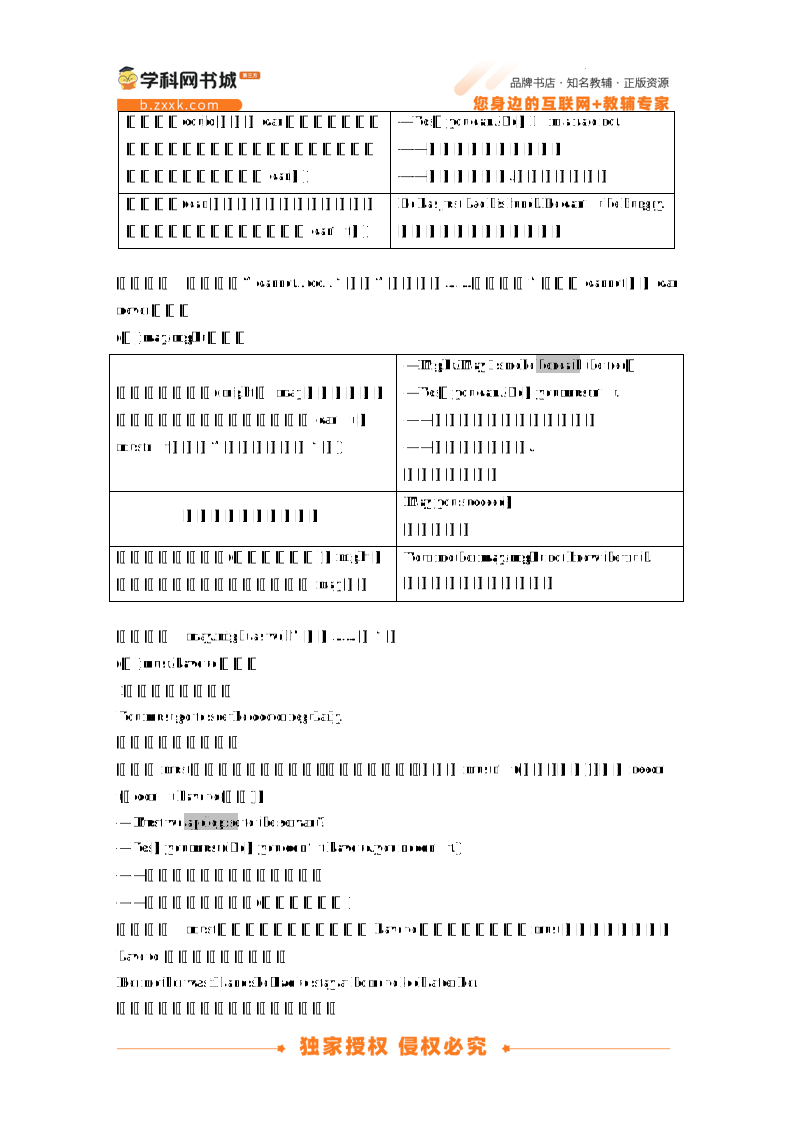
表示推测(can表示理论上存在的可能性;在表示否定的推测时,一般用can’t。)
He has just had his lunch.He can’t be hungry.
他刚吃过午饭,不会饿的。
名师点津 习惯用法“cannot...too...”表示“无论怎样……都不过分”,有时cannot可用can never替代。
(二)may/might的用法
表示请求和允许(might比 may语气更委婉,而不是过去式。否定回答时可用can’t或mustn’t,表示“不可以,禁止”。)
—Might/May I smoke beneath the tree?
—Yes,you can./No,you mustn’t.
——我可以在这棵树下吸烟吗?
——是的,你可以。/
不,你不可以。
用于祈使句,表示祝愿
May you succeed!
祝你成功!
表示推测、可能性(不用于疑问句),might不是过去式,它所表示的可能性比may小。
Your mother may/might not know the truth.
你妈妈或许不知道真相。
名师点津 may/might as well“还是……好”。
(三)must/have to的用法
1.表示必须、必要
You must go to see the doctor regularly.
你必须定期看医生。
在回答must引出的一般疑问句时,如果是否定的,不能用mustn’t(禁止,不准),而用needn’t,don’t have to(不必)。
—Must we apologise to the servant?
—Yes,you must.(No,you don’t have to/you needn’t.)
——我们必须向那个仆人道歉吗?
——是的,必须道歉。(不,不需要。)
名师点津 must是说话人的主观看法,而have to则强调客观需要。must只有一般现在时,have to 有更多的时态形式。
Her mother was ill and she had to stay at home to look after her.
她妈妈生病了,她必须在家照顾她。
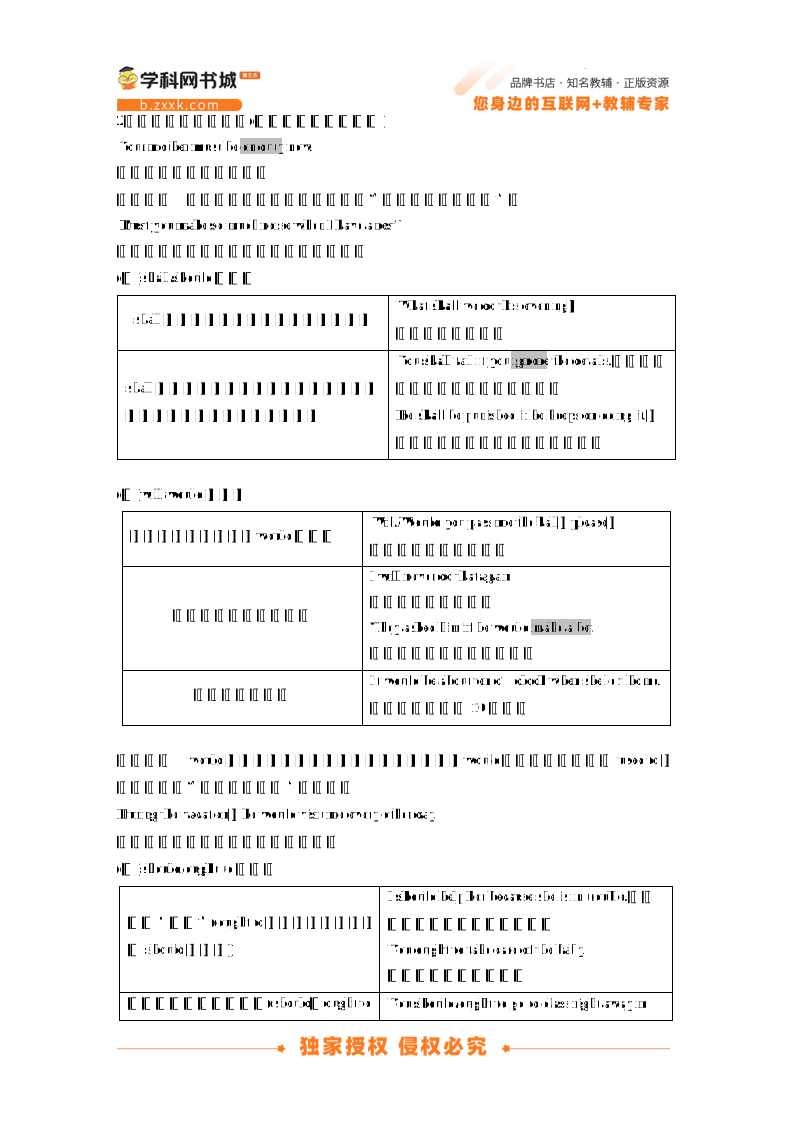
2.表示推测、可能性(只用于肯定的陈述句)
Your mother must be on duty now.
你妈妈现在一定在值班。
名师点津 表示说话人的一种态度,意为“偏要;硬要;偏偏”。
Must you make so much noise when I have a rest?
你非得在我休息时弄出这么大的声音吗?
(四)shall/should的用法
shall用于第一人称,征求对方的意见。
What shall we do this evening?
我们今晚做什么?
shall用于第二、三人称,表示说话人给对方的命令、警告、允诺或威胁。
You shall fail if you ignore the details.如果你忽视这些细节,你会失败的。
He shall be punished if he keeps on doing it.如果他继续那样做,会受到惩罚的。
(五)will/would的用法
表示请求、建议等,would更委婉
Will/Would you pass me the ball,please?
请把球递给我,好吗?
表示意志、愿望和决心
I will never do that again.
我再也不那样做了。
They asked him if he would make a bet.
他们问他是否愿意打个赌。
表示估计和猜想
It would be about ten o’clock when she left home.
她离开家时大约10点钟。
名师点津 would表示过去反复发生的动作或某种倾向。would表示过去习惯时比used to正式,且没有“现已无此习惯”的含义。
During the vacation,he would visit me every other day.
在假期中,他每隔一天来看我一次。
(六)should/ought to的用法
表示“应该”(ought to表示义务或责任,比should语气重)
I should help her because she is in trouble.她遇到麻烦了,我应该帮助她。
You ought to take care of the baby.
你应该照看这个婴儿。
表示劝告、建议和命令(should,ought to可通用,但在疑问句中常用should)
You should/ought to go to class right away in case you are late.你应该立刻去上课,以免迟到。
表示推测
He ought to/should be home by now.
现在他应该到家了。
(七)“情态动词+have done”的用法
1.can have done表示对过去发生的行为的怀疑和不肯定,通常用在疑问句和否定句中。
He cannot have forgotten it.
他不可能忘记的。
2.could have done用来表示推测,意为“可能已经”,也可以表示“本可以做某事而未做”。
He wasn’t at home last night.He could have gone to the movies.
他昨晚不在家,可能去看电影了吧。
The accident could have been avoided.
这场事故本来是可以避免的。
3.should/ought to have done意为“过去该做某事而没有做”,表示说话者后悔、遗憾或责备的语气。
I really regretted wasting the hours when I should have studied hard,but it was too late.
我真后悔浪费了本该努力学习的光阴,但已经晚了。
4.shouldn’t/oughtn’t to have done意为“过去不该做某事却(已经)做了”,也表示说话者后悔或责备的语气。
To be honest,I shouldn’t have spoken to you like that.
说实话,我本不应该那样对你说话的。
5.needn’t have done表示“本不必做某事却已经做了”。
You needn’t have taken out a loan;we could give you a hand.
你本不需要贷款的,我们可以帮助你。
6.must have done表示对过去的推测,只用于肯定句中,意为“一定做过某事”。
From what you said,she must have told you all about it.
从你所说的来看,她一定把一切都告诉你了。
7.may/might have done表示对过去发生的事情的推测,意为“也许已经做了某事”,多用在肯定句中。
二、过去将来时
(一)过去将来时的含义
1.表示在过去某一时间将要发生的动作或存在的状态。过去将来时常用在主句谓语动词为过去时态的宾语从句中。
The man said that he would wait for us at the consulate.
那个男人说他将在领事馆等我们。
2.表示过去的某种习惯性行为,只用would。
He would walk by the lake while in the countryside.
他在农村时经常在湖边散步。
(二)过去将来时的表达法
would+动词原形
He told me he would go to Beijing.
他告诉我他将去北京。
was/were going to do表示“准备、计划做某事”,或将要发生某事。
The boy was not going to do anything eventually.
最后这个男孩不准备做任何事。
was/were about to do表示“正要、即将”。
His father was about to be transferred to a seaside town.
他父亲即将被调往一座海滨小城。
was/were on the point of doing表示“正要做……”。
She was on the point of leaving when we came in.
她即将动身离开,这时我们进来了。
was/were due to do表示“定于……做某事”。
Word came that the ship was due to leave at midnight.
有消息说,船定于午夜起航。
go,come,leave,take等少数动词可用过去进行时表示过去将要发生的情况。
A great many people were coming to watch the fireworks.
有许多人要来看焰火。
She told her mother that she was leaving for a ball with Mike.她告诉母亲,她要和迈克一起去参加一个舞会。
was/were to do表示“曾计划做
某事”。
The man said he was to take up the position.
这个人说他要担任这个职务。
(三)过去将来时与一般将来时的比较
Tom says that he will never get married.
汤姆说他永远不结婚。
Tom said that he would never get married.
汤姆说过他永远不结婚。
总结:一般将来时是表示从现在看来将要发生的情况,而过去将来时则是表示从过去看来将要发生的情况。
阅读短文,在空白处填入1个适当的情态动词
Levinson started receiving donations from kind persons.Besides blankets,they also brought other necessities for the kids to survive the bitterly cold winter.A young mother even drove a long way with her little daughter to offer pairs of their handmade gloves and some school supplies.Just as quickly,the school was showered with so many items that the library stood unusable,piled high with packages from donors.After carefully sorting out the donations,Levinson made a detailed list to make sure every kid 1.could get the stuff they needed most.
Every kid was looking forward to the exciting moment.At the sight of the gifts,the kids could hardly contain their pure delight,bright eyes wide open,most sharing their portions immediately with their siblings.One little boy wiped his hands repeatedly on his coat before taking the soft blanket and he 2.must be excited.“Who 3.should I thank?”they 4.would always ask.Levinson told them to remain kind and pay it forward when they grow up.Cold as the winter was,all the needy kids were enveloped in the warmth from the nice and generous strangers.
Ⅰ.单句语法填空
1.He said that if it didn’t rain he could have gone(go) to the scene.
2.He was fifty-six.In two years he would be(be) fifty-eight.
3.While her time was limited,she would help(help) them with their work.
4.The girl was going to cry(cry) loudly if the meeting was postponed.
5.The servant said the bus was leaving(leave) at five the next morning.
6.I wasn’t sure whether he would come(come) to this scene the next morning.
7.He didn’t know that the experience was to change(change) his whole life.
8.The boy was about to open(open) the door when someone hugged him tightly.
9.The police still haven’t found the lost child,but they’re doing all they can.
10.—I left my handbag on the train,but luckily someone gave it to a railway official.
—It is beyond belief to get it back!I mean,someone might have stolen it.
Ⅱ.单句写作
1.你的鞋在明天中午前应该能修好。(should)
Your shoes should be mended by tomorrow noon.
2.走了这么长的路,那位老太太现在肯定累了。(must)
The old lady must be tired after the long walk now.
3.昨天你本不该告诉她事实的真相,不是吗?(shouldn’t)
You shouldn’t have told her the truth yesterday,did you?
4.你本来可以做得更好,但你没尽你最大的努力。(could/might)
You could/might have done better,but you didn’t try your best.
5.说实话,事故可能会发生在任何一个醉酒的司机身上。(can)
To be honest,accidents can happen to any drunken driver.
6.我敢说如果你遵循以上建议,你可以取得更多的进步。(dare)
I dare say that you can make much more progress if you follow the above suggestions.
7.你应该学会控制你自己,这会帮助你避免说你会后悔的话。(ought to)
You ought to learn to control yourself,which can help you avoid saying what you’ll regret.
8.昨天他说他会改正他的坏习惯。(would)
Yesterday he said that he would correct his bad habits.
Ⅲ.阅读理解
I sometimes find that watching a film adaptation(改编作品) of a book helps me to understand the story of the book.This is especially true for books from a different period or with a difficult dialect.My favourite example of these is Pride and Prejudice,which is also my favourite book.
Film and TV adaptations of books also mean that books reach a wider audience,prompting(促使) people to read the book if they really liked the film.In terms of language learning,watching film or TV adaptations of books can help to provide an understanding of a story that may have otherwise been difficult to understand.They also help to give a story a more modern twist.For example,Oliver is a good adaptation of Charles Dickens’ Oliver Twist.The language in the book can be enough to reduce a native speaker to tears,but the adaptation allows everyone to enjoy the story of the child Oliver.Similarly,the 1996 film Romeo and Juliet,an adaptation of the Shakespeare play of the same name,enables those of us who haven’t studied Shakespeare to still enjoy his play.
Of course,there are limitations and not every story that is translated onto the screen is liked by the many fans of the book,or even the author.For example,the author of the book Mary Poppins,P.L.Travers,hated Disney’s adaptation,but it is now a well-loved work.One of my least favourite adaptations is that of Still Alice by Lisa Genova.They changed the location from Boston to New York for no real reason,which for some readers changes the whole feel of the book.
In my opinion,adaptations are a great way to introduce people to the story and characters of a book before reading it.They’re also a good way for people who may not feel confident enough to read a whole novel in a different language,but still want to enjoy a specific story.
语篇解读 本文是一篇议论文。人们对改编自文学作品的影视作品爱憎不同,作者就此发表了看法。
1.How does the film adaptation of Pride and Prejudice help the author?
A.It helps him develop an interest in the book.
B.It helps him have an understanding of the story of the book.
C.It helps him learn history of a different period.
D.It helps him understand the dialect in the book.
答案 B
解析 细节理解题。作者在第一段先是提出观看改编自文学作品的电影有助于他理解书中的故事,接下来作者说到《傲慢与偏见》是一个典型例子,可知该电影帮助作者理解了书中的故事。故选B。
2.How does the author mainly support his ideas?
A.By listing facts.
B.By giving examples.
C.By making comparisons.
D.By offering explanations.
答案 B
解析 推理判断题。根据文章第一段的“My favourite example of these is...”、第二段的“For example,Oliver”、第三段的“For example...”可知,作者主要通过举例来支持自己的观点。故选B。
3.What does the underlined word “it” in paragraph 3 refer to?
A.The film Still Alice.
B.The book Still Alice.
C.The film Mary Poppins.
D.The book Mary Poppins.
答案 C
解析 代词指代题。 根据画线词所在句可知,it指代前面的“Disney’s adaptation”,即Mary Poppins的电影版。故选C。
4.What is the author’s attitude towards books being translated onto the screen?
A.He pays little attention to it.
B.He has doubts about it.
C.He is in support of it.
D.He is against it.
答案 C
解析 观点态度题。通读文章可知,作者在第一段就提出观看改编自文学作品的电影作品有好处,在最后一段总结时,作者再次强调了影视改编作品的优点,因此可推断,作者支持将文学作品改编成影视作品。故选C。
Ⅳ.完形填空
In April last year,I saw a post on the PNP (Pilots N Paws) website from a family in Topeka.They had to move to Virginia but they were on a very tight 1 .They could not afford to pay for 2 for their dog,Tiffy,and 3 wanted to take her with them.
It just 4 that I was planning another PNP flight with another pilot,Karen,who 5 to take Tiffy from Kansas City to Virginia.What I was to do was fly to Topeka to 6 Tiffy.
When I met Tiffy’s owners,they seemed very 7 .George,the husband,was trying to be calm,but I could tell this was 8 for him,having to leave his dog to a 9 and trust that everything would 10 .
After some goodbyes,I asked George and his wife to help me 11 Tiffy into the plane.I promised to take care of Tiffy and 12 them as soon as we got to Kansas City.
The flight was 13 ,and Tiffy was a great passenger.The next day,she 14 with Karen and made it back to George in Virginia within a few days.He was so 15 and sent me a nice e-mail with pictures.It felt great to know that I had helped bring this family together again.
语篇解读 本文是一篇记叙文。文章讲述了作者帮助一家搬家的人将他们的狗接到另一个城市的过程。
1.A.turn B.budget
C.schedule D.connection
答案 B
解析 turn转折点;budget预算;schedule时间表;connection联系。根据“They could not afford to pay”可知,这个家庭的预算非常紧张。故选B。
2.A.food B.shelter
C.medicine D.transportation
答案 D
解析 food食物;shelter庇护;medicine药;transportation交通。根据“wanted to take her with them”及下文作者帮助运送Tiffy可知,此处指付不起他们的狗Tiffy的交通费。故选D。
3.A.desperately B.temporarily
C.secretly D.originally
答案 A
解析 desperately非常;temporarily暂时地;secretly秘密地;originally起初。根据“wanted to take her with them”可知,这家人非常想把狗一起带走。故选A。
4.A.appeared B.proved
C.happened D.showed
答案 C
解析 appear出现;prove证明;happen碰巧;show展示。根据“I was planning another PNP flight with another pilot,Karen”可知,碰巧的是作者和另一名飞行员正在计划另一次PNP飞行,所以可以带上Tiffy。故选C。
5.A.waited B.offered
C.hurried D.failed
答案 B
解析 wait等待;offer主动提出;hurry匆忙;fail失败。根据“to take Tiffy from Kansas City to Virginia”可知,Karen主动提出帮忙把Tiffy从堪萨斯城带到弗吉尼亚。故选B。
6.A.see off B.look for
C.hand over D.pick up
答案 D
解析 see off为……送行;look for寻找;hand over移交;pick up接载。根据上文可知,Karen愿意将Tiffy从堪萨斯城送到终点弗吉尼亚,所以作者需要到起点托皮卡去接Tiffy。故选D。
7.A.confused B.nervous
C.annoyed D.curious
答案 B
解析 confused困惑的;nervous紧张的;annoyed恼怒的;curious好奇的。根据下文的“was trying to be calm”可知,这家人看起来有点紧张和不安。故选B。
8.A.hard B.fine
C.common D.lucky
答案 A
解析 hard困难的;fine好的;common常见的;lucky幸运的。根据上文“was trying to be calm”以及下文“having to leave his dog to a and trust that everything would ”可推知,此处指把狗留给一个陌生人对主人来说很难。故选A。
9.A.co-worker B.passenger
C.stranger D.neighbor
答案 C
解析 co-worker合作者;passenger乘客;stranger陌生人;neighbor邻居。根据上文可知,这家人和作者不认识,所以此处指要把狗留给一个陌生人。故选C。
10.A.speed up B.work out
C.come back D.take off
答案 B
解析 speed up加速;work out解决,成功地发展;come back回来;take off起飞。根据上文可知,让George将Tiffy交给一个陌生人并相信接下来的一切都会顺利,对他来说很难。故选B。
11.A.feed B.follow
C.change D.load
答案 D
解析 feed喂养;follow跟随;change改变;load装载。根据“Tiffy into the plane”可知,作者让George和他的妻子帮忙把Tiffy装上飞机。故选D。
12.A.call B.join
C.leave D.serve
答案 A
解析 call打电话;join加入;leave离开;serve服务。根据“them as soon as we got to Kansas City”可知,作者承诺一到堪萨斯城就给他们打电话。故选A。
13.A.unnecessary B.unexpected
C.unavoidable D.uneventful
答案 D
解析 unnecessary没有必要的;unexpected意想不到的;unavoidable不可避免的;uneventful太平无事的。根据“and Tiffy was a great passenger”可知,这次飞行平安无事。故选D。
14.A.returned B.fought
C.flew D.agreed
答案 C
解析 return返回;fight打仗;fly飞;agree同意。根据上文“Karen,who to take Tiffy from Kansas City to Virginia”可知,Karen接着带Tiffy飞往弗吉尼亚。故选C。
15.A.thankful B.generous
C.proud D.sympathetic
答案 A
解析 thankful感激的;generous慷慨的;proud骄傲的;sympathetic同情的。通读全文,再根据“and sent me a nice e-mail with pictures”可推知,对于作者的帮忙,George非常感激。故选A。
Ⅴ.语法填空
China is widely known for its ancient civilization 1. has continued all the way through into modern times.There are many reasons why this has been possible.
At the beginning,written Chinese was 2. picture-based language.Ancient Chinese people carved 3. (symbol) on animal bones and shells.By the Shang Dynasty,a well-developed writing system had come into being.At that time,people lived in different places,4. (lead) to many varieties of dialects and characters.
Emperor Qinshihuang united the seven major states into one country where the Chinese writing system began to develop 5. one direction.The writing system was of great 6._______(important) in uniting the Chinese people and culture.Even today,wherever Chinese people live or whatever dialect they speak,they can communicate 7. (free) in writing.
Written Chinese has also become an important means by which China’s present is connected with 8. (it) past.People in modern times can read classic works that 9.____________________(write) by Chinese in ancient times.The high regard for the Chinese writing system can be seen in the development of Chinese characters as an art form,10._______________(know) as Chinese calligraphy,which has become an important part of Chinese culture.Today,the Chinese writing system is still an important part of Chinese culture.
语篇解读 这是一篇说明文。文章主要介绍了汉字的起源、发展过程以及对古代和现代的重要意义和作用。
1.答案 which/that
解析 考查定语从句。根据句意并分析句子结构可知,空处引导定语从句,关系词指代先行词ancient civilization(指物)并在从句中作主语,故填which/that。
2.答案 a
解析 考查冠词。language为可数名词,此处泛指“一种语言”,且picture-based发音以辅音音素开头,需用不定冠词a。
3.答案 symbols
解析 考查名词复数。根据句意和句中bones和shells可知,雕刻的符号不止一个,应用名词复数形式。
4.答案 leading
解析 考查非谓语动词。分析句子结构可知,句中已有谓语动词lived,且句中无连词,此处使用非谓语形式,表示一种自然而然的结果,用现在分词作结果状语。
5.答案 in
解析 考查介词。固定短语in one/a direction,意为“在一个方向上,朝一个方向”。
6.答案 importance
解析 考查词性转换。be of importance=be important,意为“重要的”。
7.答案 freely
解析 考查词性转换。修饰动词communicate用副词,副词freely“自由地”,而free也可作副词,但表示“免费地”,不符合句意。
8.答案 its
解析 考查代词。修饰名词past用形容词性物主代词。
9.答案 were written
解析 考查时态、语态和主谓一致。分析句意和句子结构可知,空处在that引导的定语从句中作谓语,从句的先行词为classic works,与write之间是被动关系,而且动作发生在过去,所以用一般过去时的被动语态。故填were written。
10.答案 known
解析 考查非谓语动词。be known as为固定短语,意为“作为……而著名”。此处省略be,用过去分词作后置定语。故填known。
学科网(北京)股份有限公司
$$
资源预览图
1
2
3
相关资源
由于学科网是一个信息分享及获取的平台,不确保部分用户上传资料的 来源及知识产权归属。如您发现相关资料侵犯您的合法权益,请联系学科网,我们核实后将及时进行处理。