必修三 Unit 3 Diverse Cultures Discovering Useful Structures(课件)--- 【上好课】2024-2025学年高一英语同步精品课堂(人教版2019必修第三册)
2025-01-17
|
47页
|
2575人阅读
|
22人下载
精品
资源信息
| 学段 | 高中 |
|---|---|
| 学科 | 英语 |
| 教材版本 | 高中英语人教版必修第三册 |
| 年级 | 高一 |
| 章节 | Discovering Useful Structures |
| 类型 | 课件 |
| 知识点 | - |
| 使用场景 | 同步教学-新授课 |
| 学年 | 2025-2026 |
| 地区(省份) | 全国 |
| 地区(市) | - |
| 地区(区县) | - |
| 文件格式 | PPTX |
| 文件大小 | 19.01 MB |
| 发布时间 | 2025-01-17 |
| 更新时间 | 2025-01-17 |
| 作者 | 88998899 |
| 品牌系列 | 上好课·上好课 |
| 审核时间 | 2025-01-17 |
| 下载链接 | https://m.zxxk.com/soft/50063700.html |
| 价格 | 3.00储值(1储值=1元) |
| 来源 | 学科网 |
内容正文:
仓颉之初作书盖依类象形故谓之文其形声相益即谓之字文者物象之本字者言孳乳而浸多也著于竹帛谓之仓颉之初作书盖依类象形故谓之文其形声相益即谓之字文者物象之本字者言孳乳而
Discovering Useful Structures
新人教必修三
Unit 3
Diverse Cultures
Video
Best Cultural Diversity Slogans
口号
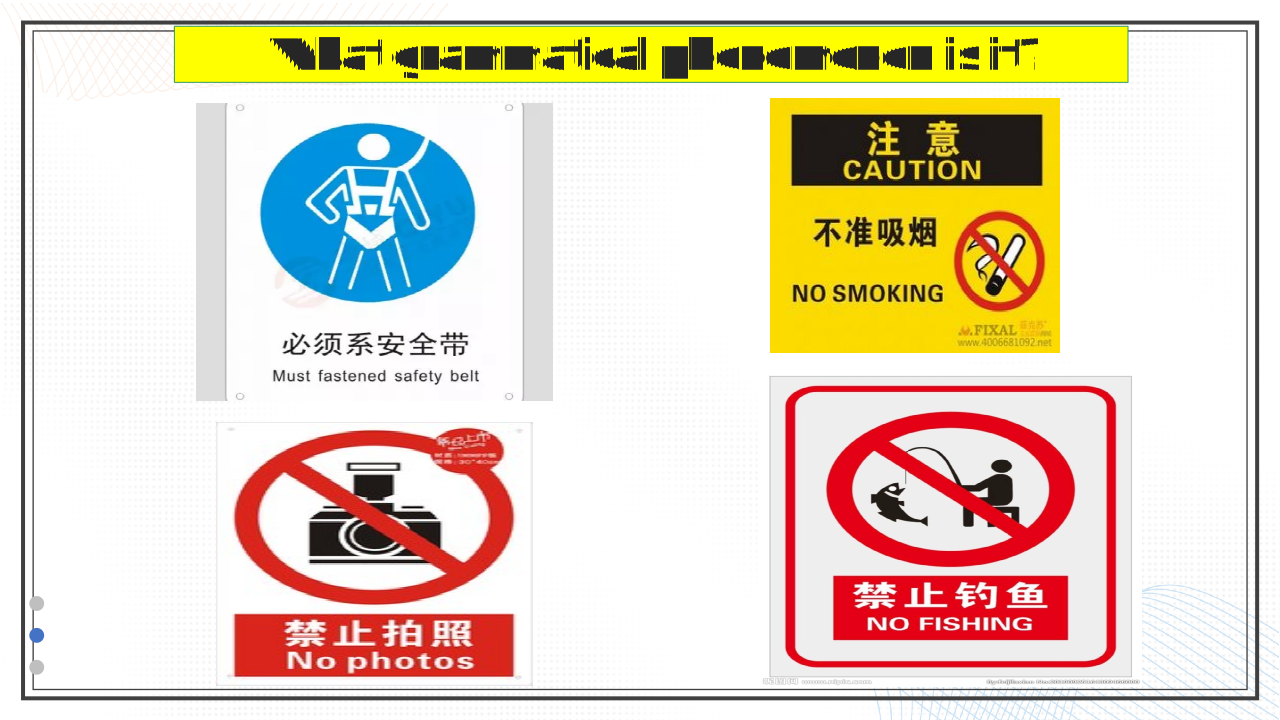
What grammatical phenomenon is it?
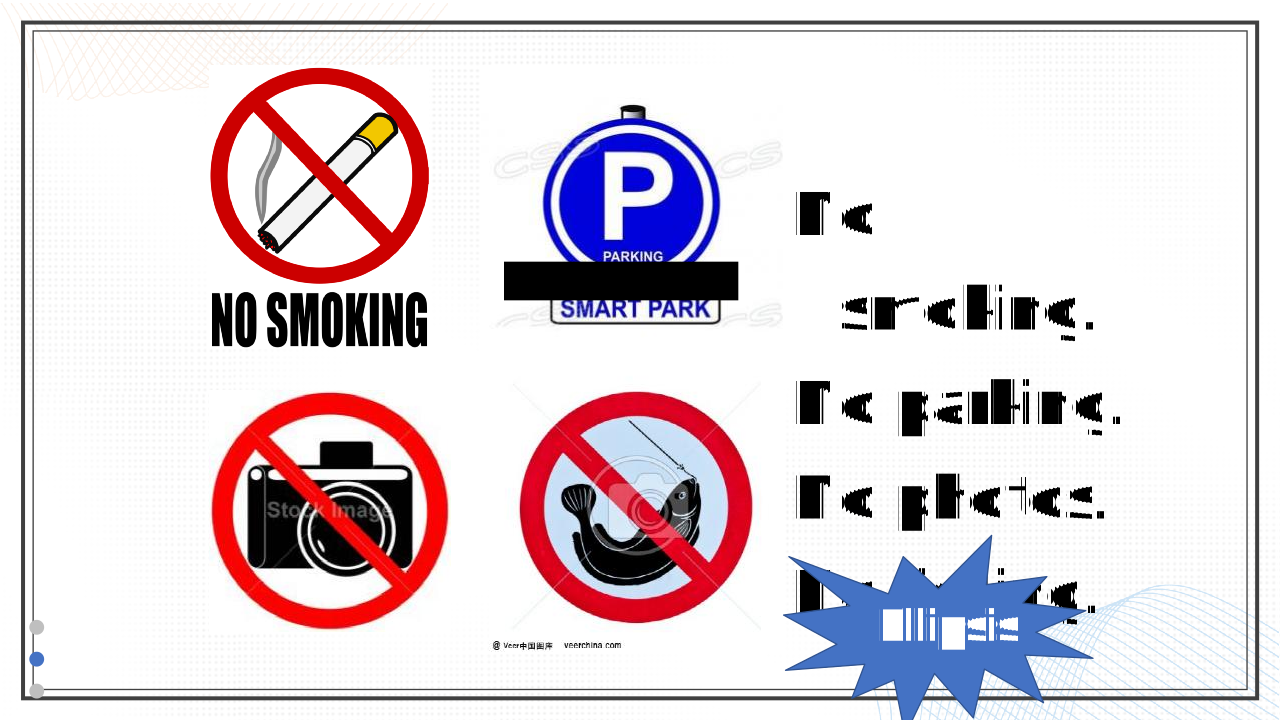
No smoking.
No parking.
No photos.
No fishing.
Ellipsis
Ⅰ
Ellipsis
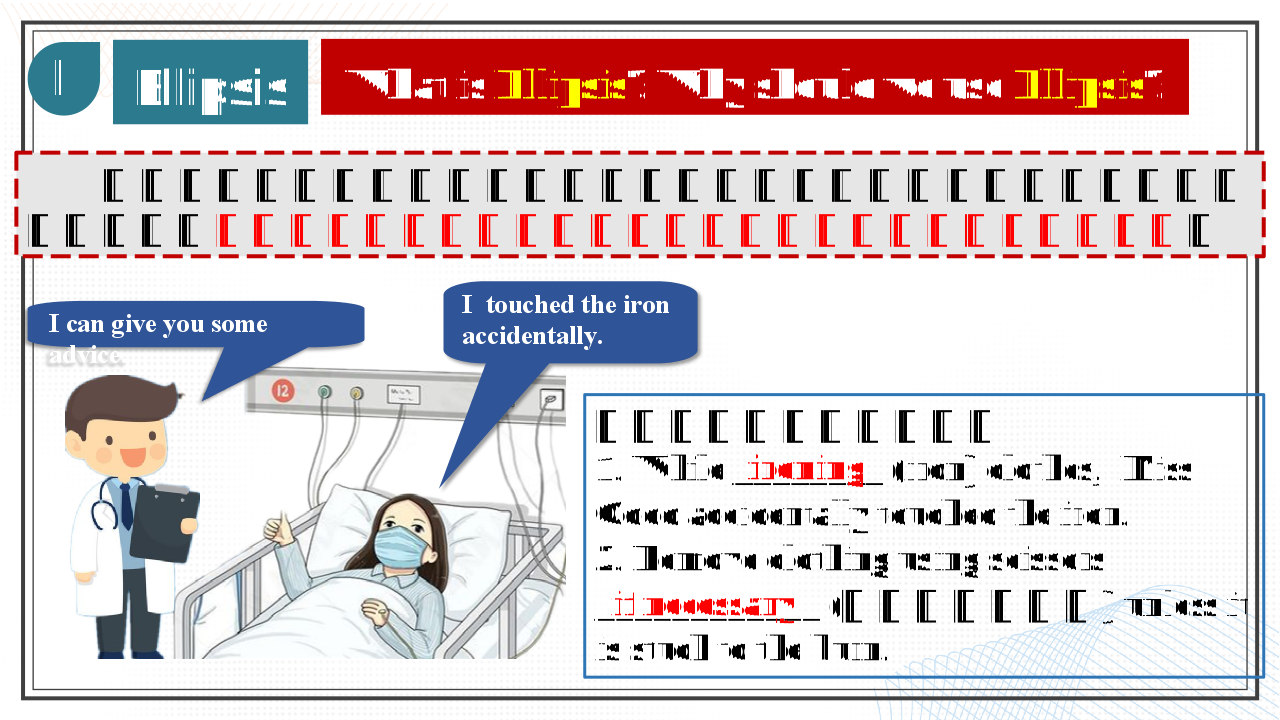
What is Ellipsis? Why should we use Ellipsis?
为了避免重复,将句子中的一个或几个成分省去,这种语法现象叫省略。省略是避免重复、突出新信息并使上下文紧密连接的一种语法手段。
I touched the iron accidentally.
I can give you some advice.
结合上面的对话完成句子
1. While ________ (iron) clothes, Miss Good accidentally touched the iron.
2. Remove clothing using scissors ____________ (如果有必要的话) unless it is stuck to the burn.
ironing
if necessary
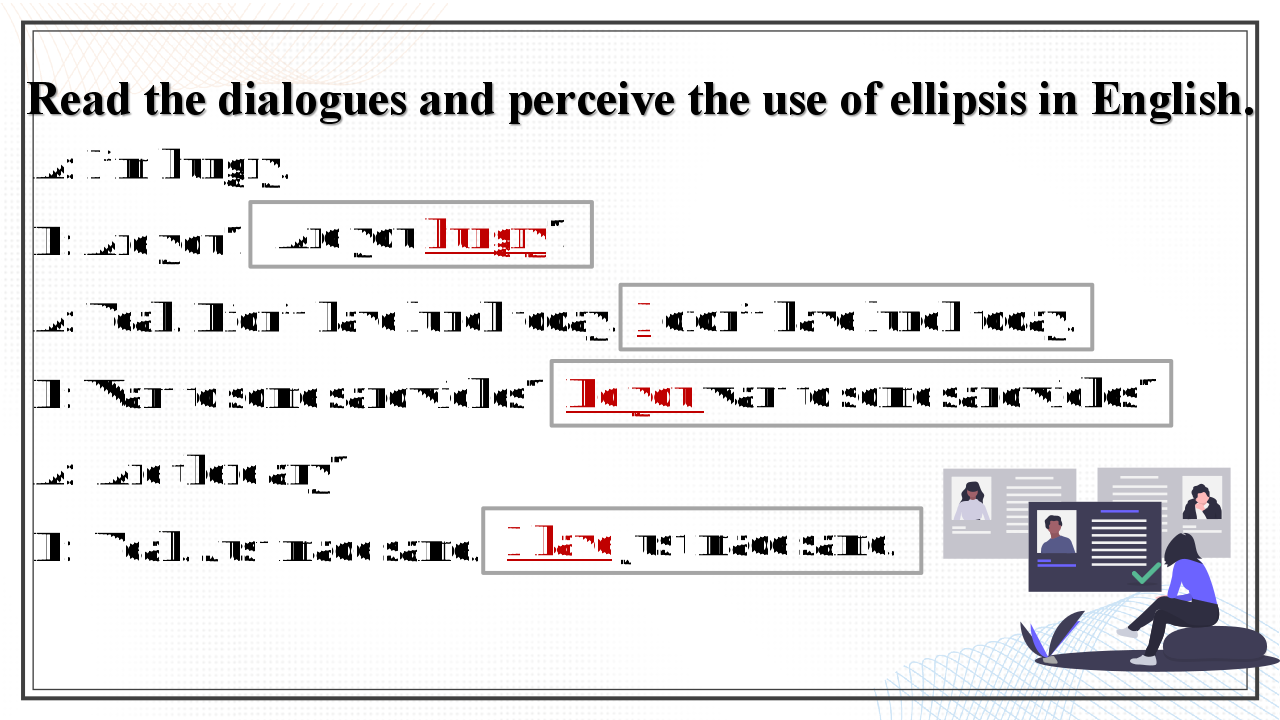
Read the dialogues and perceive the use of ellipsis in English.
A: I’m hungry.
B: Are you?
A: Yeah. Didn’t have lunch today.
B: Want to some sandwiches?
A: Are there any?
B: Yeah. Just made same.
Are you hungry?
I didn’t have lunch today.
Do you want to some sandwiches?
I have just made same.
Read and find the words that have been left out.
A: Oh, I just love nachos! Mexican corn chips covered in cheese!
B: Me too.
A: So it’s the food of many different cultures, all in one dish?
B: Exactly.
A: A real mix of cultures here!
B: Can’t wait!
They are
It’s the food of many different cultures, all in one dish.
There is
I
to go there.
Rewrite the sentences by taking out the unnecessary parts.
You mean you are planning a trip across the Atlantic for a holiday? It sounds like a good ideas.
He tried to solve his financial problems, but he couldn’t solve the problems.
If it is necessary, I’ll finish my report on American poetry as soon as it is possible.
Rewrite the sentences by taking out the unnecessary parts.
Are you going to dress like that? Wearing a dress might be better than wearing jeans and boots.
Some wild mushrooms are poisonous and some are not poisonous.
I really like that paper folding book, and my son likes that paper folding book , too.
Summarize
Summarize the different situations of ellipsis.
You mean you are planning a trip across the Atlantic for a holiday? It sounds like a good ideas.
He tried to solve his financial problems, but he couldn’t solve the problems.
If it is necessary, I’ll finish my report on American poetry as soon as it is possible.
简单句
并列句
复合句
Summarize
Summarize the different cases of ellipsis.
Are you going to dress like that? Wearing a dress might be better than wearing jeans and boots.
Some wild mushrooms are poisonous and some are not poisonous.
I really like that paper folding book, and my son likes that paper folding book , too.
复合句
并列句
并列句
Summarize
Different cases of ellipsis
Cases Examples
Simple sentences 简单句
Compound sentences 并列句
To do 不定式
Complex sentences 复合句
一、简单句中的省略
1. 省略主语 祈使句中主语通常省略
(You) shut up.
Sounds like a good idea.
(It) sounds like a good idea.
Shut up.
2. 省略主谓或主谓语的一部分
Got any ink?
3. 省略宾语
This way,please.
(You come) this way, please.
(Have you) got any ink?
--Do you know Miss Gao?
--I don’t know
(her)
4.省略表语
--Are you thirsty?
--Yes, I am.
Yes , I am (thirsty).
1. 若主语或宾语相同,省略共同的主语或宾语。
Tom picked up a book on the floor and (Tom) handed it to his teacher.
Jack must have been playing football and Mary (must have been) doing her homework.
二、并列句中的省略
2. 若主语不同,省略后面谓语部分相同的系动词、助动词或情态动词。
3. 若主语与谓语动词相同,则省略后面的主谓成分。
His advice made me happy, but (his advice made) Jim angry.
He has a knowledge of first aid but his friend doesn’t (have a knowledge of first aid).
4. 若主语不同,但主要动词及后续部分相同,则省略主要动词及后续部分。
1. 状语从句的省略。
Wood gives off much smoke while burning.
三、复合句中的省略
while (it is) burning.
⑴在when, while, if, as if, though, although, as, until, once, whether, unless, whenever等连接的状语从句中,当从句主语与主句主语相同且谓语中含有系动词be或从句的主语为it时,则从句主语和be动词常被省略。
③They don’t use more water than it is necessary.
④He runs as fast as Bob runs.
⑵在than, as等引导的比较状语从句中可以全部或部分省略。
⑤After half an hour, she became quieter than she had been.
( )
( )
(
)
找出以下句子当中可以省略的部分。
2. 定语从句的省略。
①The exact year Angela and her family spent together in China was 2008.
②He is the man they assume to be extremely rich.
⑴在限制性定语从句中,作宾语用的关系代词which, that, whom可以省略。(但whom, which紧跟在介词后时不能省略)。
③The firm in which Dick worked has gone bankrupt.
(which/that)
(whom)
⑵修饰way的关系词that/in which可以省略。
④The way he speaks to us is really annoying.
(in which)
(that)
(/)
3. 宾语从句的省略。
①I truly believe that beauty comes from within.
②He said that the text was very important and that we should learn it by heart.
⑴及物动词后接宾语从句时,连接词that一般可以省略;但如果及物动词接两个或两个以上that引导的宾语从句时,那么只有第一个that可以省略。
( )
( )
④I know that a movie star will come to our city but I don’t know when he will come to our city.
⑤Please pass me one of these books, I don’t care which you pass me.
⑵when, where, which, how和why引导的宾语从句有时可以仅保留引导词。
( )
( )
找出以下句子当中可以省略的部分。
( )
1. 动词不定式的省略。
①You can’t force him to answer the question if he’s not ready to answer the question.
四、其他省略情况
⑴当不定式在形容词afraid, anxious, eager, glad, happy, ready, willing等后作状语时,to后的内容常省略。
( )
①
②
当不定式在某些动词后作宾语时,常可省略。常见的动词有agree, afford, expect, forget, hope, know, manage, pretend, remember, refuse, want, wish, would like等。
--Will you go with me?
--Well, I’d like to (go with you).
-- Have you ever been to the seaside?
-- No, we can’t afford to (go to the seaside).
2.使用so, not等时的省略。
在英语中,可以用so, not或其他方式来省略上文或问句中的一部分或整个句子。
--Can you finish your work today?
-- (我认为能。)
-- (我认为不能。)
I think so.
I don’t think so./I think not
Attention:hope, guess, be afraid的否定形式只能用not的形式,不能用not…so的形式。
3.介词的省略。
一些与动词、名词或形容词搭配的介词常常可以省略。常见的结构有:
①have difficulty/trouble (in) doing sth
②be busy (in) doing sth
③spend some time (in) doing sth
④stop/prevent sb (from) doing sth
⑤There is no sense/point (in) doing sth
课堂小结 2’:
Ⅳ
Ellipsis in clause
1.定语从句的省略
1. Jeddy is the policeman (whom) you’ve been looking for.
2. The cat (that) I raised at home has a cute head.
3. I don’t like the way (that / in which) he talks in public.
如果关系代词在定语从句中作 ______,则关系代词可以省略。当先行词是 way,且引导词在定语从句中 ______ 时,关系词可以用 that、in which 或省略。
宾语
状语
2.宾语从句的省略
1. He said (that) the text was very important and that we should learn it by heart.
2. I know that a movie star will come to our city but I don’t know when (he will
come to our city).
3. He said (that) the book was very interesting and that (不省略) all the
children liked to read it.
及物动词后接宾语从句时,连接词_____一般可以省略,但如果及物动词后接两个或两个以上由_____引导的宾语从句时,那么只有第一个 that 可以省略。
when, where, how 和 why 引导的宾语从句有时可以仅保留引导词。
that
that
3.状语从句的省略
1. When (the novel is) published, the novel will become one of the best sellers
of the year.
2. Though (they were) tired, they went on with the work until it was finished.
3. He did as (he was) told by his mother.
4.He put up his hand as if (he were) to say something at the meeting.
5. If (it is) possible, I will go there with you for a dictionary.
当when, while, if, as if, though, as, until, unless 等连接的状语从句的主语和主句的主语一致,且状语从句中含有 be 动词或从句的主语为 it 时,省略状语从句中的 _________________。
在 than, as 等引导的 ________ 状语从句中常省略某些成分。
主语和 be 动词
比较
即学即练
用省略结构改写下列复合句。
1. Who is the man whom you were talking to?
→ Who is the man _____________________?
2. Someone has used my tape recorder, but I don’t know who has used it.
→ Someone has used my tape recorder, but I don’t know _____.
3. When it is completed, the museum will be open to the public next year.
→ __________________, the museum will be open to the public next year.
4. While I was walking along the street, I heard my name called.
→ ________________________________, I heard my name called.
5. Jack is a person that you can absolutely rely on.
→ Jack is a person ____________________________.
6. We all know the situation will get worse if it isn’t carefully dealt with.
→ We all know the situation will get worse __________________________.
you were talking to
who
When completed
While walking along the street
you can absolutely rely on
if not carefully dealt with
V
Ellipsis in subjunctive mood
Compare and find
1. They insisted that we (should) finish the work beforehand.
2. It is necessary that we (should) learn more English words by heart.
3. Had you come here yesterday, you would have met her.
4. Were I you, I would follow his advice and marry her.
5. Should there be a letter for me, please keep it in the drawer.
在一坚持 (insist),二命令 (order, command),三建议 (suggest, propose, advise),四要求 (demand, require, request, desire) 等后的宾语从句中,含这些词的派生词的其他主语从句、同位语从句、表语从句,以及 It is strange / natural / necessary / important that ... 从句中常省略 __________。
虚拟条件句常省略 ______,将 were, had, should 提前构成部分倒装。
should
if
VI
Ellipsis in other situations
1.动词不定式的省略
1. — Will you go with me ?
— Well, I’d like to (go with you).
2. He didn’t come, but he ought to have (come).
3. I saw him enter the room just now.
= He was seen to enter the room just now by me.
有些动词 (词组),如want, wish, expect, hope, would like, try, forget等后面的不定式作______时,为了避免重复,可以省略动词只保留到 _____,但如果在省略的不定式结构中含有系动词 be 和助动词 have,这些动词就要保留。
感官动词 (词组), see, look at, hear, listen to, notice, watch 等和使役动词 make, let, have 等的后面作宾补的不定式要省略 _____;但此类动词用于被动语态时 to 不可省略。
宾语
to
to
1.动词不定式的省略
4. She’d like to take off her coat and have a break.
5. It’s more difficult to do than to say.
做比说难(强调语意前后对比)。
在某些句式中,如介词 but,except 前有动词 do 的任何形式,后面的不定式要省略______。
两个或两个以上的不定式并列时,第一个带to,后面省去_____;但如果两个不定式表示对比、对照关系时,则to不可省略。
to
to
2.介词的省略
1. She spends half an hour (in) doing some reading every day.
2. The heavy rain prevented him (from) coming.
3. There is no sense / point (in) telling him about it.
4. He lost no time (in) answering the question.
5. I have trouble / difficulty (in) solving this problem.
在英语中,一些与动词、名词、形容词搭配的______常被省略,只保留后面的动名词。如 spend time / money (in) doing sth; have difficulty / trouble (in) doing sth; prevent / stop sb (from) doing sth。
表示______的介词 at, on 和 in 在 next, last, this, each, these, yesterday, every, tomorrow 等词之前,一般可以省略。
介词
时间
3. 替代性省略
— Can they finish their work today?
— I think so.
— I don’t think so. / I think not.
英语中,可以使用so, _____或其他手段来省略上文或问句中的一部分或整个句子。
not
Tips: hope, guess, be afraid 的否定形式只能用 not 的形式,不能用not ... so 的形式。
— The boys are not doing a good job at all, are they?
— I guess not.
4. 比较结构的省略
The sooner (you do it), the better (it will be).
(你做得)越快(结果就会)越好。
Never give children more money than (it is) necessary.
在“the + 比较级,the + 比较级”结构中和由______和as引导的比较句式中,常会有一些成分在上下文清楚的情况下被省略。
than
Let’s learn
Read the following sentences and find the words that have been omitted to avoid repetition.
A: Oh, I just love nachos! Mexican corn chips covered in cheese!
B: Me, too.
A: Oh, I just love nachos! They are Mexican corn chips covered in cheese!
B: I love nachos, too.
39
A: So, it’s the food of many different cultures, all in one dish?
B: Exactly.
A: So, it’s the food of many different cultures, and they are all in one dish?
B: Exactly, it’s the food of many different cultures, and they are all in one dish.
40
A real mix of cultures here!
There is a real mix of cultures here!
Can't wait!
I can't wait to go there!
41
Rewrite the sentences by taking out the unnecessary parts.
Before:
1.You mean you are planning a trip across the Atlantic for a holiday? It sounds like a good idea.
2.He tried to solve his financial problems, but he couldn’t solve the problems.
After:
1.You mean you are planning a trip across the Atlantic for a holiday? Good idea.
2.He tried to solve his financial problems, but couldn’t.
42
Before:
3.If it is necessary, I’ll finish my report on American poetry as soon as it is possible.
4.Are you going to dress like that? Wearing a dress might be better than wearing jeans and boots.
5.Some wild mushrooms are poisonous and some are not poisonous.
6.I really like that paper folding book, and my son likes that paper folding book, too.
After:
3.If necessary, I’ll finish my report on American poetry as soon as possible.
4.Are you going to dress like that? A dress might be better than jeans and boots.
5.Some wild mushrooms are poisonous and some are not.
6.I really like that paper folding book, and my son, too.
43
Read the conversation. Find out which words have been left out.
Justin: Linlin, I'm going to Guizhou Province next month. I'm super excited! Any recommendations for places to visit?
Linlin: Wow, cool! Guizhou is a province with a lot of cultural diversity. Places to visit... well, definitely the Huangguoshu Waterfall first.
Justin: What's special about the waterfall?
Do you have
in Guizhou Province
that’s
What are some
is the
place to visit in Guizhou Province
44
Linlin: Well, have you ever heard of the Chinese novel Journey to the West?
Justin: Yes, I have. Why?
Linlin: In the back of the waterfall, you wil find a cave, which is the home of the Monkey King.
Justin: Really? Cool! I'll definitely check it out.
Linlin: And I strongly recommend the ethnic minority villages. You'll find Chinese culture is much more diverse than you thought.
Justin: Sounds great, thanks!
heard of the Chinese novel Journey to the West.
That’s
do you ask if I have heard of the novel
Huangguoshu
from Journey to the West.
true
it’s
on your trip to Guizhou Province
it was
This all
45
1. You shall never make any noise.
2.Tom enjoys dancing, but Peter hates dancing.
3.I know that she is a teacher and that she is an excellent writer.
4. He likes the songs that Andy Lau sings.
5. He is the man whom she is looking for.
6.You mean you are planning a trip across the Atlantic for a holiday?
It sounds like a good idea.
7.He tried to solve his financial problems, but he couldn’t solve the problems.
8. If it is necessary, I’ll finish my report on American poetry as soon as
it is possible.
9. Are you going to dress like that? Wearing a dress might be better than wearing jeans and boots.
10. Some wild mushrooms are poisonous and some are not poisonous.
Let’s practice
仓颉之初作书盖依类象形故谓之文其形声相益即谓之字文者物象之本字者言孳乳而浸多也著于竹帛谓之仓颉之初作书盖依类象形故谓之文其形声相益即谓之字文者物象之本字者言孳乳而
Discovering Useful Structures
新人教必修三
Unit 3
Thank You !
$$
资源预览图
1
2
3
4
5
6

相关资源
由于学科网是一个信息分享及获取的平台,不确保部分用户上传资料的 来源及知识产权归属。如您发现相关资料侵犯您的合法权益,请联系学科网,我们核实后将及时进行处理。