Unit2 Colours--Task练习2024-2025学年九年级英语牛津译林版上册
2025-01-15
|
6页
|
53人阅读
|
1人下载
资源信息
| 学段 | 初中 |
|---|---|
| 学科 | 英语 |
| 教材版本 | 初中英语译林版(2012)九年级上册 |
| 年级 | 九年级 |
| 章节 | Task & Self-assessment |
| 类型 | 作业 |
| 知识点 | - |
| 使用场景 | 同步教学-新授课 |
| 学年 | 2024-2025 |
| 地区(省份) | 全国 |
| 地区(市) | - |
| 地区(区县) | - |
| 文件格式 | DOCX |
| 文件大小 | 38 KB |
| 发布时间 | 2025-01-15 |
| 更新时间 | 2025-01-23 |
| 作者 | 睿智教育工作室 |
| 品牌系列 | - |
| 审核时间 | 2025-01-15 |
| 下载链接 | https://m.zxxk.com/soft/50003708.html |
| 价格 | 0.50储值(1储值=1元) |
| 来源 | 学科网 |
内容正文:
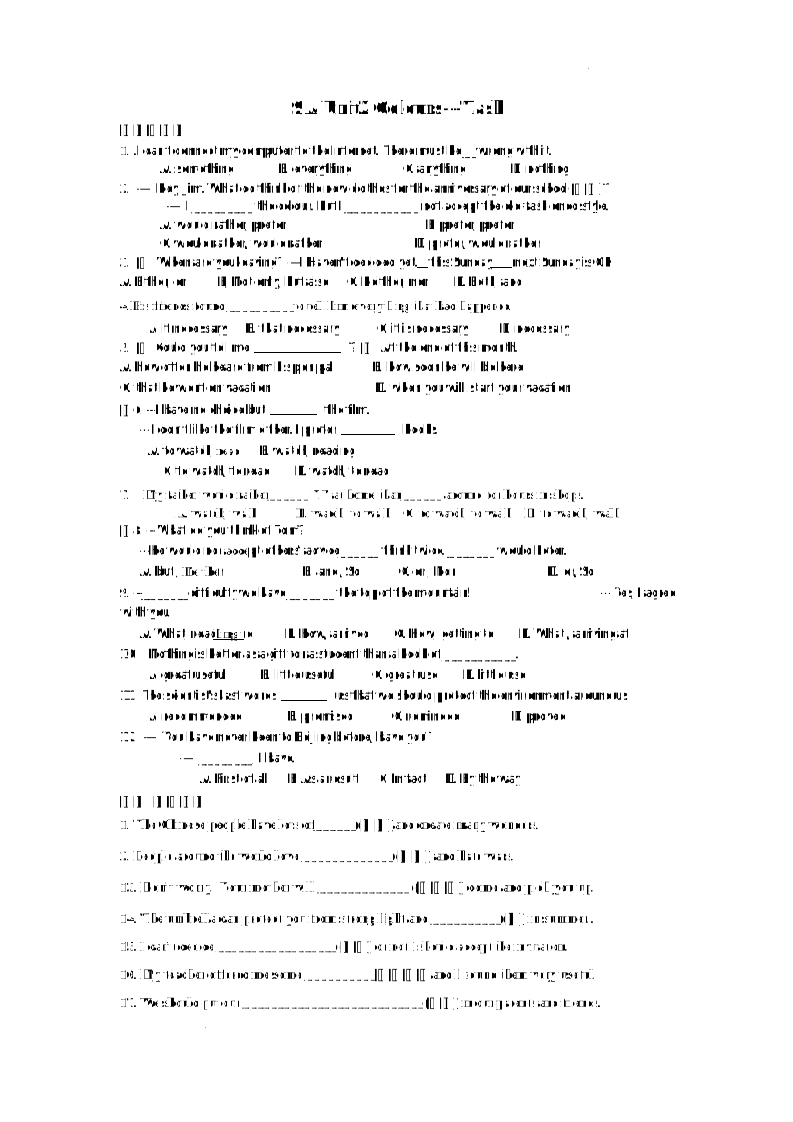
9A Unit2 Colours---Task
一、选择题
1. .I can’t connect my computer to the Internet. There must be __wrong with it.
A. something B. everything C. anything D. nothing
2. — Hey, Jim. What do think of the new clothes for the anniversary of our school(校庆)?
— I _________ the colour. But I ___________ not accept the old-fashioned style.
A. would rather, prefer B. prefer, prefer
C. would rather, would rather D. prefer, would rather
3. 一 When are you leaving? —I Haven't decided yet. this Sunday next Sunday is OK.
A. Either; or B, Not only; but also C. Neither; nor D. Both; and
4.His friends found __________to tell him everything that had happened.
A. it necessary B. that necessary C. it is necessary D. necessary
5. 一Could you tell me ? 一 At the end of this month.
A. how often he heard from his pen pal B. how soon he will be here
C. that he went on vacation D. when you will start your vacation
★6. --I have no choice but the film.
-- I don’t like the film either. I prefer books.
A. to watch, read B. watch, reading
C. to watch, to read D. watch, to read
7. My father would rather______ TV at home than______ around for hours in shops.
A. watch; walk B. watch; to walk C. to watch; to walk D. to watch; walk
★8. --What do you think of Tom?
--He would not accept others’ advice______ think twice. _______ would Peter.
A. but , Neither B. and , So C. or , Nor D. or, So
9. --_______difficulty we have _______ the top of the mountain!【来源:21·世纪·教育·-- Yes, I agree with you.
A. What, reaching to B. How, arrived C. How, getting to D. What , arriving at
10. Nothing is better as a gift for a student than a book of ___________.
A. great useful B. little useful C. great use D. little use
11. The scientist's last words us that we should protect the environment around us.
A. recommended B. promised C. reminded D. proved
12. — You have never been to Beijing before, have you?
— ________, I have.
A. First of all B. As a result C. In fact D. By the way
二、 词汇运用
1. The Chinese people have lots of______(智慧)and create many wonders.
2. People around the world love _____________(和平) and hate wars.
13. Don’t worry. Your mother will _____________ (必定地) come and pick you up.
14. The umbrella can protect you from strong light and __________(热) in summer..
15. I can’t decide __________________(是否) or not I should accept the invitation.
16. My teacher offered me some __________(建议)and I found them very useful.
17. We should put our ___________________________(信任) in our parents and friends.
18. The (悲伤)on his face showed that he failed in the exam.
19. You'd better have a good rest if you feel (stress).
20.Much more attention should be paid to _______________(平衡)the nature.
21. White is a calm colour. It can make us feel calm and (peace).
22. Alan wears a pair of red sports shoes to make himself look more (power).
He pushed away the large stone with all his (strong).
Fully half of these accidents come from drunk drivers and many others from _________(careful).
Why are you always getting so ______(patient) with your kids when helping him with his homework? Be more patient next time!
It’s a wonderful _______________ (feel) to be at home after such a long and tiring trip.
二.动词填空
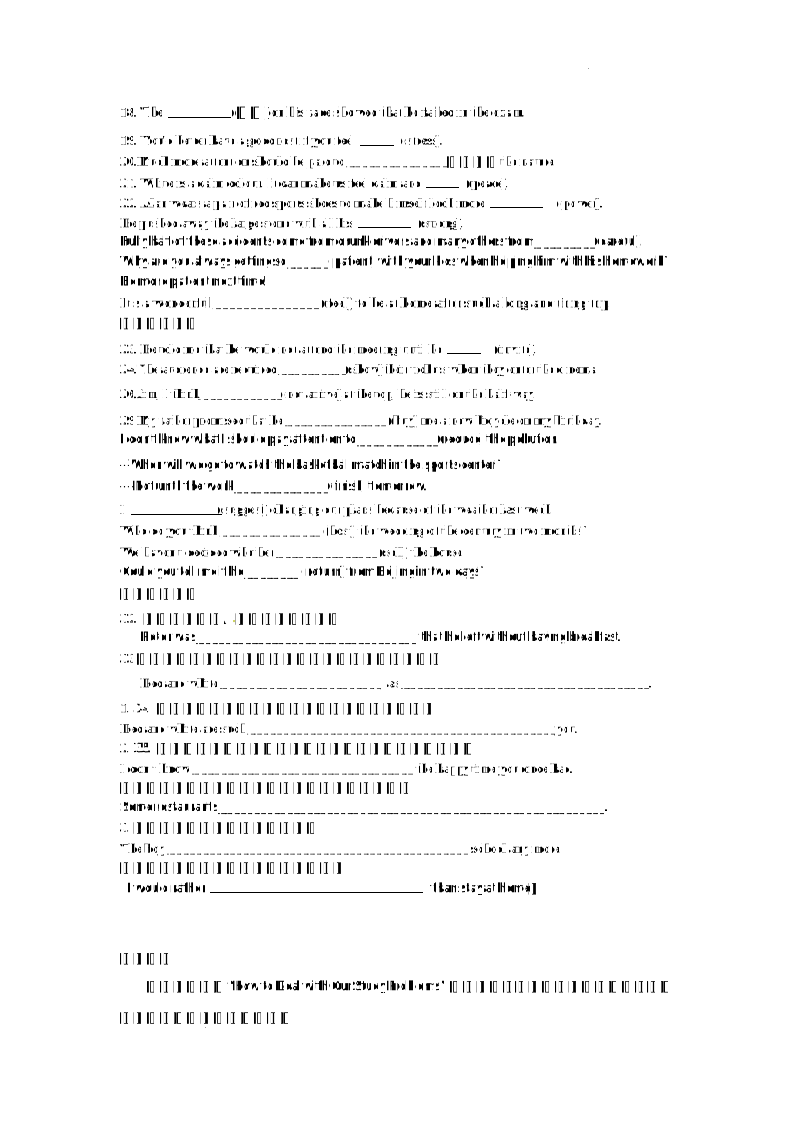
23. He told me that he would not attend the meeting until he (invite).
24.The audience are required __________(show)their tickets when they enter the cinema.
26.Jim, I think,____________(not arrive)at the top, he is still on the half-way.
29 My father promised that he _______________ (buy) me a new bicycle on my birthday.
I don’t know what I should pay attention to ____________(reduce) the pollution.
--When will we go to watch the basketball match in the sports center?
---Not until the work ______________(finish) tomorrow.
I (suggest) changing our plans because of the weather last week.
Who do you think _______________ (host) the wedding of the century in two months?
We haven’t decided whether _______________ (sell) the house.
Could you tell me if he ________ (return) from Beijing in two days?
四.完成句子
32. 彼得情绪不好, 没吃早饭就走了。
Peter was _________________________________ that he left without having breakfast.
33红白是很好的搭配,因为强烈的红平衡了平静的白。
Red and white ________________________, as _____________________________________.
1. 34. 红和白是很好的搭配,它们穿在你身上真好看。
Red and white are such ______________________________________________you.
2. 35. 我不知道这本书是否可以使你想起曾拥有的快乐时光。
I don’t know _________________________________ the happy time you once had.
一些餐厅更喜欢用暖色来创造温暖和舒适的感觉。
Some restaurants __________________________________________________________.
3. 那个男孩已经承诺不再缺课了。
The boy _____________________________________________ school any more.
她宁愿欣赏乡村美景,也不愿呆在家。
I would rather than stay at home.
书面表达
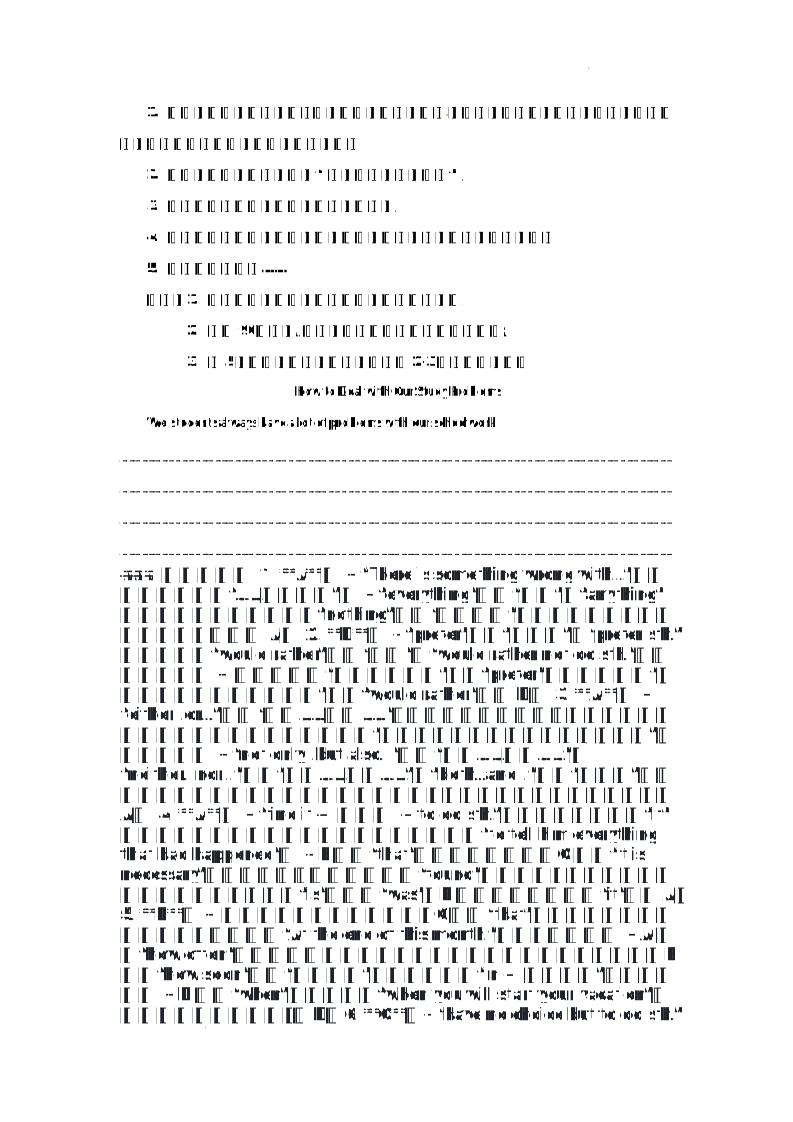
某英语报开展“How to Deal with Our Study Problems” 征文比赛,请你根据提示的内容,写一篇英语短文。内容要点如下:
1. 虽然我们时常感到压力,但是应该找到合适的方式来解决压力。可以选择穿像蓝色和白色一样的冷色调来使我们自己感到放松;
2. 我们应该足够细心,因为“失之毫厘,谬以千里”;
3. 也应该在课业和业余爱好之间取得平衡;
4. 任何时候都不要失去信心。通过努力学习,我们会取得大的进步。
5. 有问题时,我们……
要求:1. 内容须包含所有要点,语句通顺,意思连贯;
2. 词数90个左右,开头和结尾已给出,不计入总词数;
3. 第5点的内容需展开合理想象,用2-3句话补充完整。
How to Deal with Our Study Problems
We students always have a lot of problems with our schoolwork.
___________________________________________________________________________________
___________________________________________________________________________________
___________________________________________________________________________________
___________________________________________________________________________________
### 一、选择题 1. **A**: - “There is something wrong with...”是固定句型,表示“……出了毛病”。 - “everything”表示“一切”;“anything”常用于否定句和疑问句;“nothing”表示“没有什么”,与语境不符。此句是肯定句,所以选A。 2. **D**: - “prefer”表示“更喜欢”,“prefer sth.”喜欢某物;“would rather”表示“宁愿”,“would rather not do sth.”宁愿不做某事。 - 第一空表示“我更喜欢颜色”,用“prefer”;第二空表示“但我宁愿不接受老式的风格”,用“would rather”,选D。 3. **A**: - “either...or...”表示“要么……要么……”,连接两个并列成分,作主语时谓语动词遵循就近原则。此句意思是“要么这个周日要么下个周日都可以”,符合语境。 - “not only...but also...”表示“不但……而且……”;“neither...nor...”表示“既不……也不……”;“both...and...”表示“两者都”,连接两个并列主语时谓语动词用复数形式,这三个选项均不符合语境,选A。 4. **A**: - “find it + 形容词 + to do sth.”是固定结构,其中“it”作形式宾语,真正的宾语是后面的动词不定式“to tell him everything that had happened”。 - B选项“that”不能作形式宾语;C选项“it is necessary”是宾语从句,但是主句谓语“found”是过去式,从句也应用相应的过去时态,此句中“is”应改为“was”;D选项缺少形式宾语“it”,选A。 5. **D**: - 宾语从句要用陈述句语序,C选项“that”引导宾语从句在句中无意义,且与答语“At the end of this month.”不符,可排除。 - A选项“how often”询问频率,答语应该是表示频率的词或短语,不符合;B选项“how soon”询问“多久以后”,答语通常用“in + 一段时间”,也不符合。 - D选项“when”询问时间,“when you will start your vacation”符合语境及陈述句语序,选D。 6. **C**: - “have no choice but to do sth.”是固定搭配,表示“除了做某事别无选择”,所以第一空用“to watch”。 - “prefer to do sth.”表示“更喜欢做某事”,所以第二空用“to read”,选C。 7. **A**: - “would rather do sth. than do sth.”是固定句型,表示“宁愿做某事而不愿做某事”,两个“do”都用动词原形。 - 所以第一空填“watch”,第二空填“walk”,选A。 8. **C**: - 第一空“not...or...”表示“既不……也不……”,否定句中连接两个并列成分用“or”。 - 第二空表示“彼得也不”,“Nor + 助动词/情态动词/系动词 + 主语”表示“某人也不”,选C。 9. **D**: - “have difficulty (in) doing sth.”表示“做某事有困难”,“difficulty”是不可数名词,感叹句结构为“What + 形容词 + 不可数名词 + 主语 + 谓语”,所以第一空用“What”。 - “arrive at”表示“到达(小地点)”,“get to”也表示“到达”,“reach”是及物动词,后面直接接地点,不用“to”,所以第二空用“arriving at”,选D。 10. **C**: - “a book of great use”相当于“a very useful book”,“of + 名词”相当于形容词,“great use”表示“很有用”。 - “useful”是形容词,不能放在“of”后面,A、B选项错误;“little use”表示“几乎没用”,与语境不符,选C。 11. **C**: - “remind sb. that...”表示“提醒某人……”,符合语境,科学家的临终遗言提醒我们要保护环境。 - “recommend”推荐;“promise”承诺;“prove”证明,均不符合语境,选C。 12. **C**: - “in fact”表示“事实上”,用于强调实际情况,这里表示实际上“我”去过北京。 - “first of all”首先;“as a result”结果;“by the way”顺便说一下,选C。 ### 二、词汇运用 1. **wisdom**:“智慧”是不可数名词,用“wisdom”。 2. **peace**:“和平”是不可数名词,用“peace”。 3. **certainly**:“必定地”用副词“certainly”。 4. **heat**:“hot”的名词形式是“heat”,表示“热”。 5. **whether**:“whether or not”表示“是否”,固定搭配。 6. **suggestions**:“建议”是可数名词,“some”后接可数名词复数,用“suggestions”。 7. **trust**:“信任”是不可数名词,用“trust”。 8. **sadness**:“悲伤”的名词形式是“sadness”。 9. **stressed**:“feel”是系动词,后接形容词,“stress”的形容词形式是“stressed”,表示“有压力的”。 10. **balancing**:“pay attention to”中“to”是介词,后接动词 -ing形式,“平衡”的动词是“balance”,所以用“balancing”。 11. **peaceful**:“and”连接两个并列的形容词,“peace”的形容词是“peaceful”,表示“平静的”。 12. **powerful**:“look”是系动词,后接形容词,“power”的形容词是“powerful”,表示“强有力的”。 13. **strength**:“with all one's strength”表示“用尽全力”,“strong”的名词是“strength”。 14. **carelessness**:“from”是介词,后接名词,“careful”的反义词“粗心”的名词形式是“carelessness”,表示“这些事故很多是由于粗心造成的”。 15. **impatient**:根据语境“下次要更有耐心”,可知这里表示“不耐烦的”,“patient”的反义词是“impatient”。 16. **feeling**:“a wonderful feeling”表示“一种美妙的感觉”,“feel”的名词形式是“feeling”。 ### 三、动词填空 1. **was invited**:“he”和“invite”之间是被动关系,即“他被邀请”,且主句是过去将来时,从句用一般过去时的被动语态“was/were + 过去分词”,主语“he”是第三人称单数,所以用“was invited”。 2. **to show**:“be required to do sth.”表示“被要求做某事”,所以用“to show”。 3. **hasn't arrived**:根据“he is still on the half - way”可知“Jim还没到达山顶”,强调对现在的影响,用现在完成时“have/has + 过去分词”,主语“Jim”是第三人称单数,所以用“hasn't arrived”。 4. **would buy**:“promise”后接宾语从句,主句是一般过去时,从句要用相应的过去时态,这里表示“爸爸承诺在我生日时会给我买一辆新自行车”,用过去将来时“would + 动词原形”,所以用“would buy”。 5. **to reduce**:“pay attention to”中“to”是介词,后面接名词、代词或动名词,这里“what I should pay attention to”作“to”的宾语,“to reduce the pollution”是动词不定式作目的状语,表示“为了减少污染我应该注意什么”,所以用“to reduce”。 6. **is finished**:“not until”引导时间状语从句,遵循“主将从现”原则,从句中“the work”和“finish”之间是被动关系,用一般现在时的被动语态“is/am/are + 过去分词”,主语“the work”是不可数名词,所以用“is finished”。 7. **suggested**:根据“last week”可知用一般过去时,“suggest”的过去式是“suggested”。 8. **will host**:根据“in two months”可知用一般将来时“will + 动词原形”,所以用“will host”。 9. **to sell**:“whether to do sth.”表示“是否做某事”,所以用“to sell”。 10. **will return**:“if”引导宾语从句,根据“in two days”可知用一般将来时“will + 动词原形”,所以用“will return”。 ### 四、完成句子 1. **in such a bad mood**:“in a bad mood”表示“情绪不好”,“such + a/an + 形容词 + 名词”表示“如此……的……”,所以是“in such a bad mood”。 2. **are a good match; the powerful red balances the calm white**:“a good match”表示“很好的搭配”;“平衡”是“balance”,这里用一般现在时,主语“the powerful red”是第三人称单数,“balance”加“s”,即“the powerful red balances the calm white”。 3. **a good match that they look really nice on**:“such + a/an + 形容词 + 名词 + that...”表示“如此……以至于……”,“look nice on sb.”表示“穿在某人身上好看”,所以是“a good match that they look really nice on you”。 4. **if this book can remind you of**:“if”表示“是否”,引导宾语从句;“remind sb. of sth.”表示“使某人想起某事”,所以是“if this book can remind you of”。 5. **prefer to use warm colours to create a warm and comfortable feeling**:“prefer to do sth.”表示“更喜欢做某事”,“create”表示“创造”,所以是“prefer to use warm colours to create a warm and comfortable feeling”。 6. **has promised not to be absent from**:“promise not to do sth.”表示“承诺不做某事”,“be absent from”表示“缺席”,根据“已经承诺”可知用现在完成时“have/has + 过去分词”,主语“The boy”是第三人称单数,所以是“has promised not to be absent from”。 7. **enjoy the beautiful scenery of the countryside**:“would rather do sth. than do sth.”表示“宁愿做某事而不愿做某事”,“欣赏乡村美景”是“enjoy the beautiful scenery of the countryside”。 ### 书面表达 How to Deal with Our Study Problems We students always have a lot of problems with our schoolwork. Although we often feel stressed, we should find proper ways to deal with stress. We can choose to wear cool colours like blue and white to make ourselves feel relaxed. We should also be careful enough because a miss is as good as a mile. What's more, it's important to achieve a balance between schoolwork and hobbies. Besides, never lose confidence at any time. Through hard work, we will make great progress. When we have problems, we can ask our teachers and classmates for help. We can also talk to our parents, sharing our feelings with them. By doing these, we can better handle our study problems.
学科网(北京)股份有限公司
$$
资源预览图
1
2
3
相关资源
由于学科网是一个信息分享及获取的平台,不确保部分用户上传资料的 来源及知识产权归属。如您发现相关资料侵犯您的合法权益,请联系学科网,我们核实后将及时进行处理。