Unit 4 Welcome to the unit练习 2024-2025学年牛津译林版英语八年级下册
2025-01-13
|
5页
|
110人阅读
|
4人下载
资源信息
| 学段 | 初中 |
|---|---|
| 学科 | 英语 |
| 教材版本 | 初中英语译林版(2012)八年级下册 |
| 年级 | 八年级 |
| 章节 | Comic strip & Welcome to the unit |
| 类型 | 作业-单元卷 |
| 知识点 | - |
| 使用场景 | 同步教学-单元练习 |
| 学年 | 2025-2026 |
| 地区(省份) | 全国 |
| 地区(市) | - |
| 地区(区县) | - |
| 文件格式 | DOCX |
| 文件大小 | 35 KB |
| 发布时间 | 2025-01-13 |
| 更新时间 | 2025-01-13 |
| 作者 | 匿名 |
| 品牌系列 | - |
| 审核时间 | 2025-01-13 |
| 下载链接 | https://m.zxxk.com/soft/49954807.html |
| 价格 | 0.50储值(1储值=1元) |
| 来源 | 学科网 |
内容正文:
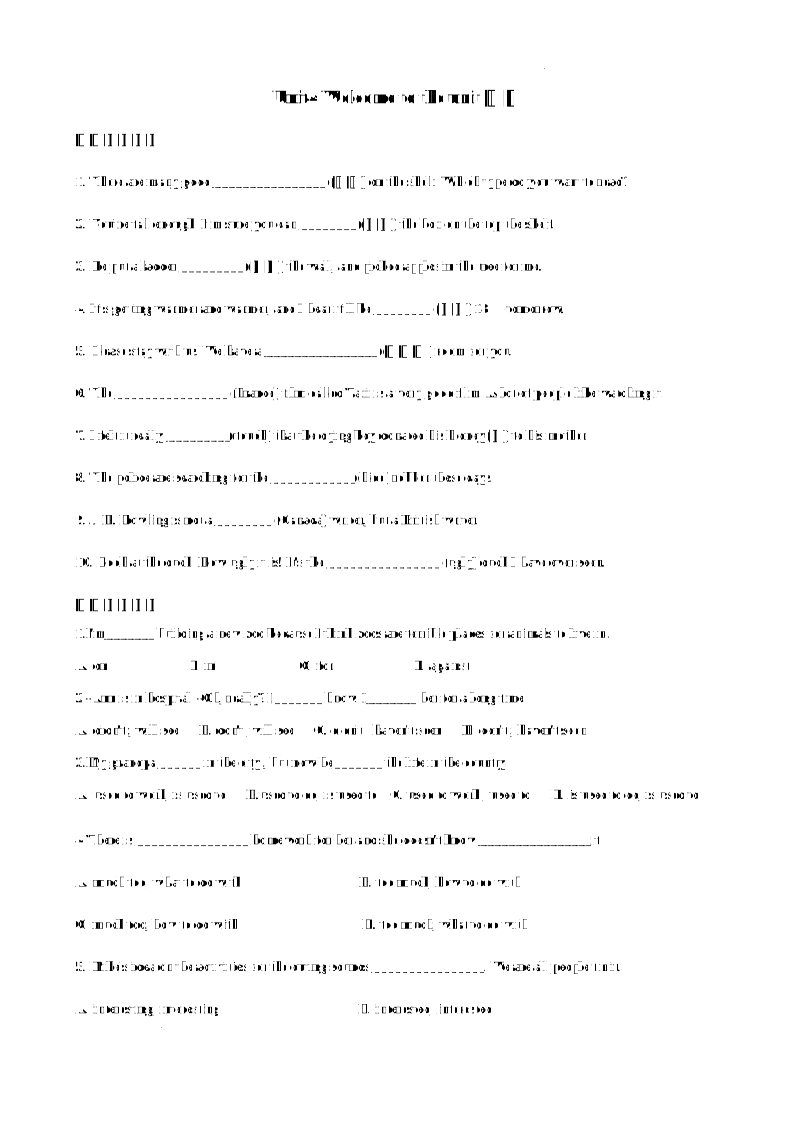
Unit4 Welcome to the unit练习
一、词汇运用
1. There are many good ________________ (读本) on the shelf. Which type do you want to read?
2. You’re tall enough. I’m sure you can ________ (够到) the box on the top the shelf.
3. He put a ladder _________ (靠着) the wall, and picked apples in the tree for me.
4. It’s getting warmer and warmer, and I hear it’ll be ________ (超过) 18℃ tomorrow.
5. Please stay with us. We have a ________________ (多余的) room for you.
6. The ________________ (France) film called Taxi is a very good film. A lot of people like watching it.
7. I felt it really _________(touch) that the dying boy donated his kidney(肾) to his mother.
8. The police are searching for the ____________(hide) robber these days.
9. J. K. Rowling is not a ________ (Canada) writer, but a British writer.
10. Look at the duck. How ugly it is! It's the ________________ (ugly) duck I have ever seen.
二、单项选择
1.I'm_______ building a new zoo because I think zoos are terrible places for animals to live in .
A. on B. in C. for D. against
2 -Ann is in hospital. -Oh, really? I_______ know. I_______ her for a long time.
A. didn't ; will see B. don't ,will see C. didn't ; haven't seen D. don't ; haven't seen
3.My grandpa ______ in the city , but now he_______ the life in the country.
A. used to work, is used to B.used to do, is used to C. used to work , used to D. is used to do, is used to
4 There is ________________ homework for her and she doesn't know ________________it.
A. much too; what to do with B. too much; how to do with
C. much too; how to do with D. too much; what to do with
5. Mike's idea on the activities for the outing sounds ________________. We are all people tin it.
A. interesting; interesting B. interested; interested
C. interested; interesting D. interesting; interested
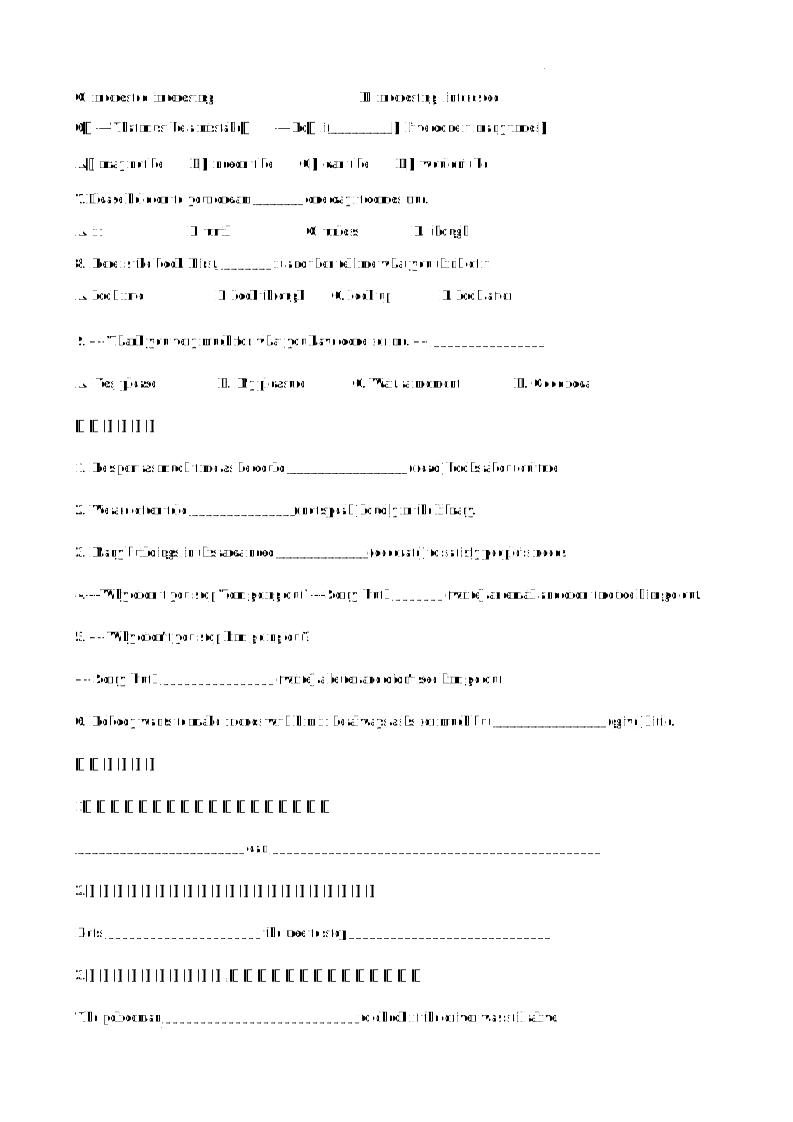
6.—That must be a mistake. —No,it_________.I’ve done it many times.
A.may not be B.needn’t be C.can’t be D.wouldn’t be
7.Please hold on to your dream _______ one day it comes true.
A. if B. until C. unless D. though
8. Here is the book. First, _______ it and then tell me what you think of it.
A. look into B. look through C. look up D. look after
9. --- Thank you very much for what you have done for me. --- ________________.
A. Yes, please B. My pleasure C. Wait. a moment D. Good idea
三、动词填空
1. He spent as much time as he could _________________ (read) books about culture.
2. We are often told _______________(not speak) loudly in the library.
3. Many buildings in this area need _____________(decorate) to satisfy people’s needs.
4.---Why didn’t you stop Tom going out? ---Sorry, but I _______ (write) an email and didn’t notice him go out.
5. --- Why didn't you stop him going out?
--- Sorry, but I ________________ (write) a letter and didn't see him go out
6. Nobody wants to make friends with him if he always asks for much but ________________ (give) little.
四、完成句子
1、读历史书籍可以增长我们过去的知识。
________________________ can _______________________________________________.
2.让我们把小船系到这棵树上以防止撞到礁石上。
Let's ______________________ the tree to stop_____________________________.
3.警察尽快翻越了那辆车,去检查那个驾驶员是否还活着。
The policeman ____________________________to check if the driver was still alive.
4.在那个危急时刻你是如何设法挣脱了一只手并弄断绳索的?
How did you ________________________________ at the dangerous moment?
5、Daniel 正在看一部有关二战时德国的电影。
Daniel is ___________________________________________________________________.
一、词汇运用
1. readers:“读本” 常用 “reader” 表示,many 后接可数名词复数形式,所以填 “readers”。
2. reach:“够到” 用动词 “reach”,情态动词 “can” 后接动词原形,所以填 “reach”。
3. against:“靠着” 用 “against”,符合语境,指把梯子靠在墙上,所以填 “against”。
4. above:“超过” 用 “above”,表示温度高于 18℃,所以填 “above”。
5. spare:“多余的,空闲的” 用形容词 “spare” 修饰名词 “room”,所以填 “spare”。
6. French:此处修饰名词 “film”,要用形容词 “French”(法国的),表示法国电影,所以填 “French”。
7. touching:“feel” 是系动词,后接形容词作表语,“touching” 表示 “令人感动的”,指觉得那个垂死男孩把肾捐给他妈妈这件事很令人感动,所以填 “touching”。
8. hidden:此处是形容词作定语修饰 “robber”,“hide” 的形容词形式是 “hidden”(隐藏的),表示隐藏的强盗,所以填 “hidden”。
9. Canadian:此处修饰名词 “writer”,要用形容词 “Canadian”(加拿大的),表示加拿大作家,所以填 “Canadian”。
10. ugliest:根据 “I have ever seen” 可知要用形容词最高级,“ugly” 的最高级是 “ugliest”,指是我见过的最丑的鸭子,所以填 “ugliest”。
二、单项选择
1. D:“be against” 表示 “反对”,符合语境,指反对建一个新动物园,因为觉得动物园对动物来说是糟糕的居住场所,所以选 D;“be on” 表示 “在进行,开着等”;“be in” 表示 “在…… 里面,在家等”;“be for” 表示 “支持”,均不符合题意。
2. C:第一空根据语境可知之前不知道安住院了,用一般过去时 “didn't know”;第二空根据 “for a long time” 可知要用现在完成时,表示很长时间没见到她了,所以用 “haven't seen”,所以选 C。
3. A:“used to do sth.” 表示 “过去常常做某事”,此处指过去在城市工作,用 “used to work”;“be used to sth.” 表示 “习惯于某事”,现在习惯乡村生活,用 “is used to”,所以选 A。
4. D:“too much” 修饰不可数名词 “homework”,表示 “太多作业”;“what to do with” 表示 “(怎样)处理……”,符合语境,指不知道怎么处理作业,所以选 D;“much too” 修饰形容词或副词;“how to do with” 表达错误,应该是 “how to deal with”。
5. A:“interesting” 表示 “令人感兴趣的,有趣的”,常用来描述事物,此处指迈克关于郊游活动的想法很有趣,用 “interesting”;“interested” 表示 “感兴趣的”,常用来描述人的感受,不符合题意,所以选 A。
6. C:“can't” 表示 “不可能”,用于否定推测,符合语境,指那不可能是个错误,我已经做过很多次了,所以选 C;“may not be” 表示 “可能不是”;“needn't be” 表示 “不必是”;“wouldn't be” 表示 “不会是”,均不符合题意。
7. B:“until” 表示 “直到…… 才”,符合语境,指坚持梦想直到它实现的那一天,所以选 B;“if” 表示如果;“unless” 表示除非;“though” 表示尽管,均不符合题意。
8. B:“look through” 表示 “浏览,快速查看”,符合语境,指先浏览一下这本书然后告诉我你的想法,所以选 B;“look into” 表示 “调查,向…… 里面看”;“look up” 表示 “查阅,向上看”;“look after” 表示 “照顾”,均不符合题意。
9. B:“My pleasure.” 用于回应别人的感谢,意为 “不客气,我的荣幸”,符合语境,所以选 B;“Yes, please” 表示 “是的,请”;“Wait a moment” 表示 “等一下”;“Good idea” 表示 “好主意”,均不符合题意。
三、动词填空
1. reading:“spend time (in) doing sth.” 表示 “花费时间做某事”,所以填 “reading”,指花尽可能多的时间读关于文化的书籍。
2. not to speak:“tell sb. (not) to do sth.” 表示 “告诉某人(不要)做某事”,所以填 “not to speak”,指被告知在图书馆不要大声说话。
3. decorating:“need doing sth.” 表示 “需要被做某事”,相当于 “need to be done”,此处指这个地区的很多建筑需要被装饰以满足人们的需求,所以填 “decorating”。
4. was writing:根据语境可知当时正在写邮件所以没注意到汤姆出去,用过去进行时,其结构为 “was/were + 现在分词”,主语是 “I”,所以填 “was writing”。
5. was writing:根据语境可知当时正在写信所以没看到他出去,用过去进行时,其结构为 “was/were + 现在分词”,主语是 “I”,所以填 “was writing”。
6. gives:根据 “always” 可知句子是一般现在时,主语 “he” 是第三人称单数,“and” 连接并列谓语动词,所以填 “gives”,指如果他总是索取多付出少,没人想和他交朋友。
四、完成句子
1. Reading history books; improve our knowledge of the past:“读历史书籍” 用 “Reading history books”(动名词短语作主语);“增长…… 的知识” 用 “improve one's knowledge of...”,所以填 “Reading history books; improve our knowledge of the past”。
2. tie the boat to; it from hitting the rocks:“把…… 系到……” 用 “tie...to...”;“防止…… 做某事” 用 “stop...from doing sth.”,“撞到” 是 “hit”,所以填 “tie the boat to; it from hitting the rocks”。
3. climbed over the car as soon as possible:“翻越” 用 “climb over”,“尽快” 用 “as soon as possible”,根据语境用一般过去时,所以填 “climbed over the car as soon as possible”。
4. manage to free one hand and break the ropes:“设法做某事” 用 “manage to do sth.”,“挣脱” 用 “free”,“弄断” 用 “break”,所以填 “manage to free one hand and break the ropes”。
5. watching a movie about Germany during World War II:“正在看” 用 “be watching”,“有关…… 的电影” 用 “a movie about...”,所以填 “watching a movie about Germany during World War II”。
学科网(北京)股份有限公司
$$
资源预览图
1
2
相关资源
由于学科网是一个信息分享及获取的平台,不确保部分用户上传资料的 来源及知识产权归属。如您发现相关资料侵犯您的合法权益,请联系学科网,我们核实后将及时进行处理。