Unit 2 Topic 2 I must ask him to give up smoking. Section D 教案 2024-2025学年仁爱科普版英语八年级上册
2024-12-30
|
5页
|
90人阅读
|
0人下载
普通
资源信息
| 学段 | 初中 |
|---|---|
| 学科 | 英语 |
| 教材版本 | 初中英语仁爱科普版(2012)八年级上册 |
| 年级 | 八年级 |
| 章节 | Section D |
| 类型 | 教案 |
| 知识点 | - |
| 使用场景 | 同步教学-新授课 |
| 学年 | 2024-2025 |
| 地区(省份) | 全国 |
| 地区(市) | - |
| 地区(区县) | - |
| 文件格式 | DOCX |
| 文件大小 | 30 KB |
| 发布时间 | 2024-12-30 |
| 更新时间 | 2024-12-30 |
| 作者 | 匿名 |
| 品牌系列 | - |
| 审核时间 | 2024-12-30 |
| 下载链接 | https://m.zxxk.com/soft/49676461.html |
| 价格 | 0.50储值(1储值=1元) |
| 来源 | 学科网 |
内容正文:
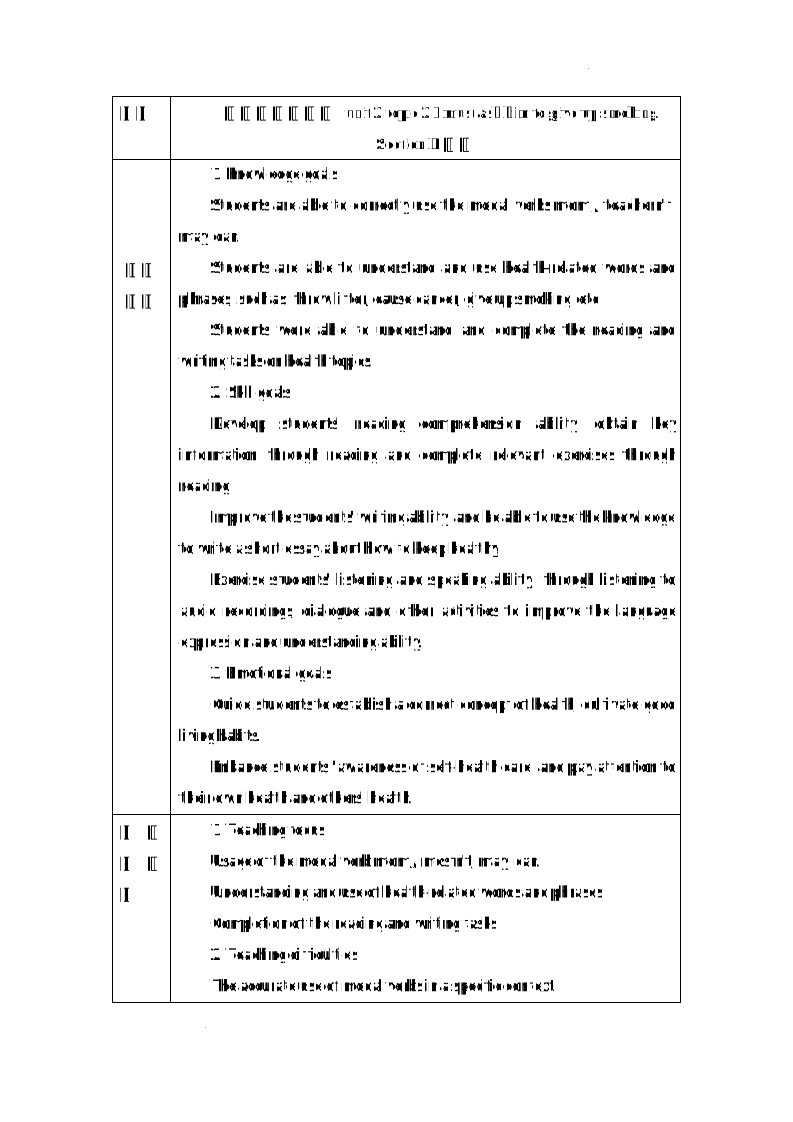
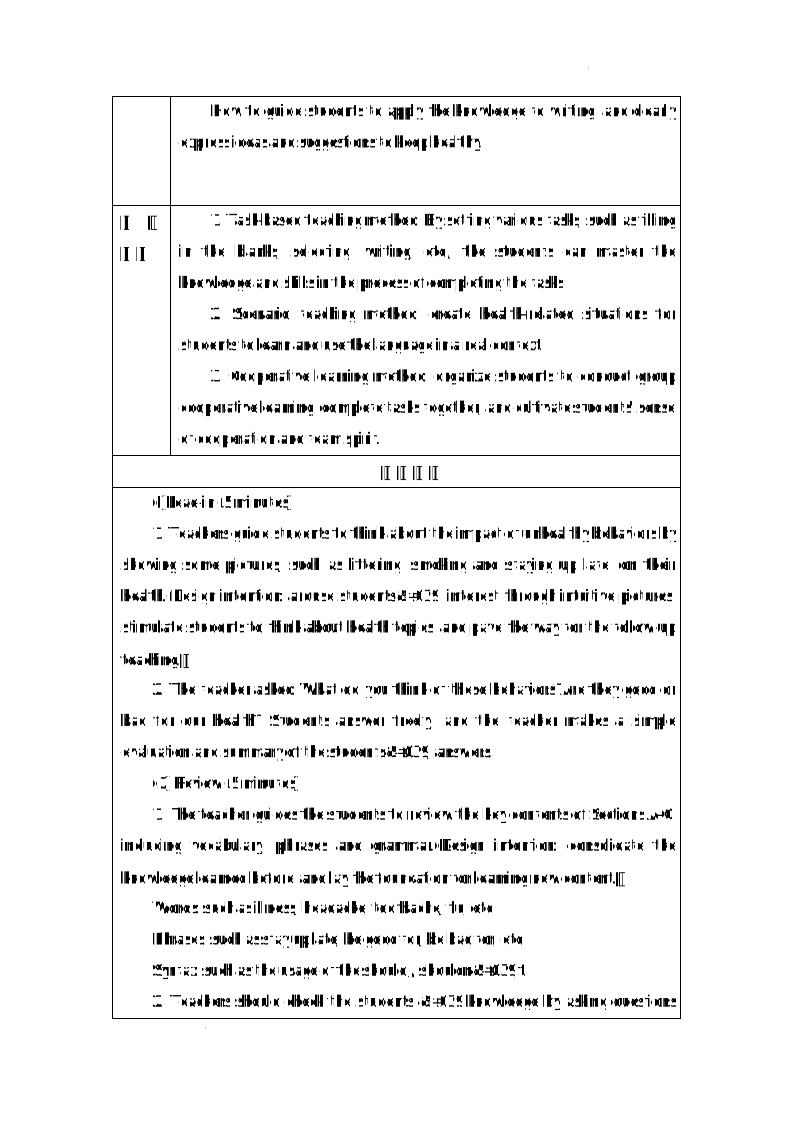
课题 仁爱版八上英语 unit 2 topic 2 I must ask him to give up smoking. Section D教案 教学目标 1. Knowledge goals Students are able to correctly use the modal verbs mom / teachern't, may, can. Students are able to understand and use health-related words and phrases, such as: throw litter, cause cancer, give up smoking, etc. Students were able to understand and complete the reading and writing tasks on health topics. 2. Skill goals Develop students' reading comprehension ability, obtain key information through reading and complete relevant exercises through reading. Improve the students' writing ability, and be able to use the knowledge to write a short essay about how to keep healthy. Exercise students' listening and speaking ability, through listening to audio recordings, dialogue and other activities to improve the language expression and understanding ability. 3. Emotional goals Guide students to establish a correct concept of health, cultivate good living habits. Enhance students 'awareness of self-health care, and pay attention to their own health and others' health. 教学重难点 1. Teaching focus Usage of the modal verb mom / mostn't, may, can. Understanding and use of health-related words and phrases. Completion of the reading and writing tasks. 2. Teaching difficulties The accurate use of modal verbs in a specific context. How to guide students to apply the knowledge to writing, and clearly express ideas and suggestions to keep healthy. 教学方法 1. Task-based teaching method: By setting various tasks, such as filling in the blanks, selecting, writing, etc., the students can master the knowledge and skills in the process of completing the tasks. 2. Scenario teaching method: create health-related situations for students to learn and use the language in a real context. 3. Cooperative learning method: organize students to conduct group cooperative learning, complete tasks together, and cultivate students' sense of cooperation and team spirit. 教学过程 (I)Lead-in (5 minutes) 1. Teachers guide students to think about the impact of unhealthy behaviors by showing some pictures, such as littering, smoking and staying up late, on their health.(Design intention: arouse students' interest through intuitive pictures, stimulate students to think about health topics, and pave the way for the follow-up teaching.) 2. The teacher asked: What do you think of these behaviors?Are they good or bad for our health? Students answer freely, and the teacher makes a simple evaluation and summary of the students' answers. (2) Review (5 minutes) 1. The teacher guides the students to review the key contents of Sections A-C, including vocabulary, phrases and grammar.(Design intention: consolidate the knowledge learned before, and lay the foundation for learning new content.) Words: such as illness, headache, toothache, flu, etc. Phrases: such as stay up late, be good for, be bad for, etc. Syntax: such as the usage of the should / shouldn't. 2. Teachers should check the students 'knowledge by asking questions and filling in the blanks, such as: We should eat more vegetables. We shouldn' t eat too much junk food. (3) Reading (5 minutes) 1. Students should read the passage quickly to understand the general idea of it.(Design intent: To cultivate students' ability to obtain information quickly.) 2. The teacher guides the students to read the passage carefully and complete the following tasks: Fill in the blanks: the teacher presents the empty part of the passage, let the students fill in the correct words according to the context and knowledge, such as: You mustn 't throw litter around. He thinks smoking can't help him relax. (Design intention: examine the students' understanding and use of modal verbs and vocabulary.) Answer the questions: The teacher raises some questions related to the content of the passage, such as: Why is smoking bad for our health?What should smokers do? Students think and answer the questions, and the teachers make comments and supplements.(Design intention: Cultivate students' reading comprehension ability and language expression ability.) (IV) Grammar explanation (5 minutes) 1. The teacher explains the usage of the modal verbs mom / mostn't, may, can: Dust means "must," and dustn't says "forbid, no," in a strong tone. For example: You must obey the traffic rules. You mustn't play on the road. "Maybe," yes, " in a more euphemistic tone. For example: It may rain tomorrow. You may go now. The can means "yes, yes, yes" and is often used to represent competence or request permission. For example: I can swim. Can I borrow your pen? 2. Teachers can let students consolidate their grammar knowledge through example sentences and exercises, such as: Fill in the blanks with mom / teachern't, may, can: You _ hand in your homework on time. You _ talk loudly in the library. _ I use your ruler? Choose to fill in the blanks: He _ be at home. I saw him just now. (A. must B. mayC. can't) (Design intention: systematically explain the usage of modal verbs, help students master key grammar knowledge, and deepen their understanding and application through practice.) (V) Functional sentence learning (5 minutes) 1. Teachers present functional sentences related to health, such as: Staying up late is bad for your health. Don't read in the sun. (Design Intent: To familiarize students with common expressions related to health topics.) 2. Teachers guide students to understand the meaning and usage of these functional sentences, and practice through imitation, sentence making and other ways, such as: It's important for your health to eat breakfast. We shouldn' t watch TV too much. (Design intention: cultivate students' ability to use functional sentences to communicate and express.) (VI) Project activities (5 minutes) 1. Students complete the "Testing How Healthy You Are" test, choose the answers that fit their own lifestyle, and calculate the score.(Design intention: Guide the students to pay attention to their own lifestyle and health status.) 2. Students discuss how to stay healthy in groups based on the test results and record them.(Design intention: cultivate students' sense of cooperation and thinking ability, so that students can inspire each other in the communication.) 3. Each group will send representatives to report the discussion results, and the teachers will summarize and evaluate them.(Design intention: train students' language expression ability and display ability, and let students share the methods and experiences to keep healthy.) (7) Writing (5 minutes) 1. The teacher guides the students to write a short article on how to stay healthy based on the test results and discussion.(Design intention: apply the knowledge learned to the actual writing to improve students' writing ability.) 2. Teachers provide writing templates and some useful expressions, such as: First, we should... Second,... Third,... to help students clarify their writing ideas. 3. Students finish writing independently, and teachers patrol and give guidance and help. (VIII) Display and Evaluation (5 minutes) 1. After the students finish the writing, the group will exchange compositions with each other and make mutual comments.(Design intention: Through mutual evaluation, let students learn the advantages of others and find their own shortcomings.) 2. Each group recommends an excellent composition and displays it in the whole class. The teacher comments on the composition displayed, points out the advantages and disadvantages, and gives praise and encouragement.(Design intention: to provide a platform for students to show and stimulate their interest and enthusiasm in writing.) (IX) Summary and homework assignment (5 minutes) 1. The teacher and the students summarize the highlights of this lesson, including the usage of modal verbs, health-related words and phrases, functional sentences, and writing skills.(Design intention: help students to comb the knowledge and deepen their memory.) 2. Homework arrangement: Review what you have learned in this lesson, and recite the key words and phrases. Perfect your own composition, and copy it into the exercise book. Review the information to learn more about ways to stay healthy.(Design intention: to consolidate the knowledge learned through homework and expand students' knowledge.) 学科网(北京)股份有限公司 $$
资源预览图
1
2
相关资源
由于学科网是一个信息分享及获取的平台,不确保部分用户上传资料的 来源及知识产权归属。如您发现相关资料侵犯您的合法权益,请联系学科网,我们核实后将及时进行处理。