专题06 期末复习之一般现在时-2024-2025学年七年级英语上学期期末复习重难点突破(人教版2024)
2024-12-18
|
2份
|
29页
|
1523人阅读
|
47人下载

资源信息
| 学段 | 初中 |
|---|---|
| 学科 | 英语 |
| 教材版本 | 初中英语人教版七年级上册 |
| 年级 | 七年级 |
| 章节 | - |
| 类型 | 题集-专项训练 |
| 知识点 | 一般现在时 |
| 使用场景 | 同步教学-期末 |
| 学年 | 2024-2025 |
| 地区(省份) | 全国 |
| 地区(市) | - |
| 地区(区县) | - |
| 文件格式 | ZIP |
| 文件大小 | 158 KB |
| 发布时间 | 2024-12-18 |
| 更新时间 | 2024-12-23 |
| 作者 | 乐学英语 |
| 品牌系列 | - |
| 审核时间 | 2024-12-18 |
| 下载链接 | https://m.zxxk.com/soft/49423092.html |
| 价格 | 4.00储值(1储值=1元) |
| 来源 | 学科网 |
内容正文:
2024-2025学年七年级英语上学期期末复习重难点突破(人教版)
专题06 期末复习之一般现在时
一般现在时用法
1.概述
一般现在时主要用于描述习惯性、经常性的动作或状态,以及普遍存在的真理或事实,它不仅仅描述现在的情况,还可以表示一种规律或习惯,有时也用于表达说话人的情感或态度。实义动词意义完全,能独立作谓语。在一般现在时中,实义动词的人称和数必须与主语保持一致。
2.标志性时间状语
一般现在时常常与表示频率或习惯性的时间状语(always, usually, often, sometimes, never等)连用,或者与具体的时间状语(in the morning, on Sunday等)连用。如:
We always have breakfast at 7 o'clock.我们总是在7点吃早饭。
He likes reading at night. 他喜欢在夜里读书。
3.句式
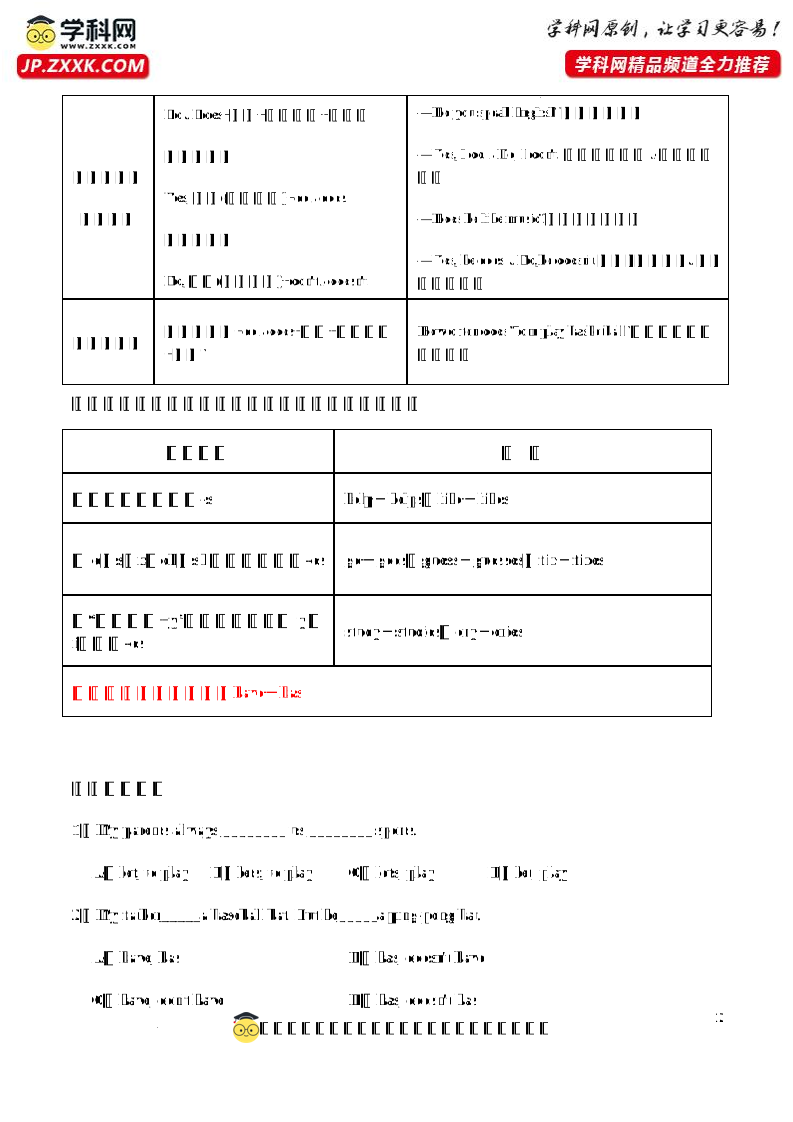
句 式
结 构
举 例
肯定句
主语+动词原形 / 动词第三人称单数形式+其他.
They play basketball after school.他们放学后打篮球。
He plays football on Sundays.他星期天踢足球。
否定句
主语+don't / doesn't+动词原形+其他.
I don't like eating rice. 我不喜欢吃米饭。
She doesn't like coffee.她不喜欢咖啡。
一般疑问句
及其答语
Do / Does+主语+动词原形+其他?
肯定回答:
Yes, 主语(人称代词)+do / does.
否定回答:
No, 主语(人称代词)+don't / doesn't.
—Do you speak English?你说英语吗?
—Yes, I do. / No, I don't. 是的,我说。 / 不,我不说。
—Does he like music?他喜欢音乐吗?
—Yes, he does. / No,he doesn't.是的,他喜欢。 / 不,他不喜欢。
特殊疑问句
特殊疑问词+do / does+主语+动词原形+其他?
How often does Tom play basketball?汤姆多久打一次篮球?
【拓展】实义动词的第三人称单数形式的变化规则
变化规则
举 例
一般情况下直接加-s
help→helps,like→likes
以o,s,x,ch,sh结尾的动词加-es
go→goes,guess→guesses,fix→fixes
以“辅音字母+y”结尾的动词,变y为i,再加-es
study→studies,cry→cries
【注意】不规则变化:have→has
一、单项选择
1.My parents always ________ us ________ sports.
A.let; to play B.lets; to play C.lets; play D.let; play
2.My father_____a baseball bat. But he_____a ping-pong bat.
A.have; has B.has; doesn't have
C.have; don't have D.has; doesn't has
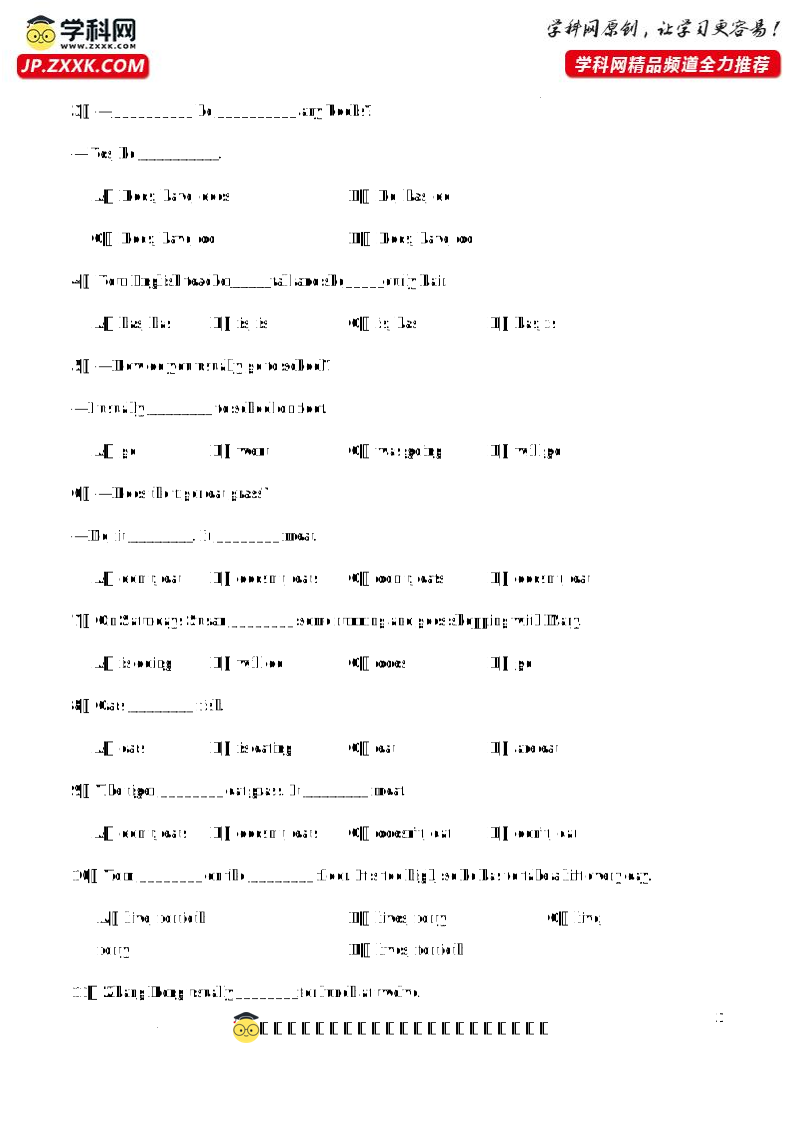
3.—__________ he __________ any books?
—Yes, he __________.
A.Does; have; does B.Do; has; do
C.Does; have; do D.Does; have; do
4.Your English teacher_____tall and she_____curly hair.
A.has; has B.is; is C.is; has D.has; is
5.—How do you usually go to school?
—I usually ________ to school on foot.
A.go B.went C.was going D.will go
6.—Does the tiger eat grass?
—No, it ________. It ________ meat.
A.don’t; eat B.doesn’t; eats C.don’t; eats D.doesn’t; eat
7.On Saturdays Susan ________ some running and goes shopping with Mary.
A.is doing B.will do C.does D.go
8.Cats ________ fish.
A.eats B.is eating C.eat D.are eat
9.The tiger ________ eat grass. It ________ meat.
A.don’t; eats B.doesn’t; eats C.doesn’t; eat D.don’t; eat
10.Tom ________ on the ________ floor. It’s too high, so he has to take a lift every day.
A.live; fortieth B.lives; forty C.live; forty D.lives; fortieth
11.Zhang Heng usually________for lunch at twelve.
A.goes to home B.goes home C.go home D.going home
12.I often ______ my homework after supper. But yesterday evening, I ______ TV.
A.do; watch B.did; watched C.did; watch D.do; watched
13.Tom usually _______ a bike to school. Look, he _______ to school now.
A.rides; is riding B.is riding; is riding
C.rides; rides D.is riding; rides
14.Sandy likes ________ TV. She ________ TV every day.
A.watching; watching B.watch; watches
C.to watch; is watching D.watching; watches
15.The boys usual______ books in the library on Tuesday afternoon but they don' t on Friday
A.read B.reads C.is reading D.are read
16.Jack and Tony_____ Chinese to us. They speak English.
A.don't speak B.doesn't speak C.isn't speaking D.speak
17.We ________ some healthy food and drink.
A.have got B.has got C.haven’t got D.hasn’t got
18.Mr. Slavin often____ to the theatre or ____ a film at half past seven .
A.go, watch B.goes, watches
C.is going ,is watching D.are going, are watching
19.Simon ________ doing sports and he ________ to the gym twice a week.
A.liked, go B.likes, go C.likes, goes D.liked, went
20.Winter in the north of China is often ________.
A.snowed B.snows C.snowing D.snowy
21.He always ________ a good time at school.
A.have B.to have C.having D.has
22.In the first lesson, our geography teacher ________ us a lot of interesting things about the world’s oceans and now he ________ us to travel the world with what we have learnt.
A.teaches, is teaching B.taught, teach C.teach, teaches D.taught, teaches
23.My mother sometimes ________ me ________ my homework.
A.helps, doing B.help, do C.helps, with D.help, to do
24.It often ________ in Beijing in winter. It’s so ________.
A.snowy; snows B.rainy; raining C.snowing; snowy D.rains; rainy
25.Sally ________ play the guitar. She ________ the piano.
A.isn’t, plays B.is, play C.doesn’t, plays D.don’t, play
26.My father likes football but he ________ it. He only ________ football matches on TV!
A.plays, watches B.doesn’t play, watches
C.plays, doesn’t watch D.doesn’t play, doesn’t watch
27.I ________ do my homework, so my mum is very angry.
A.isn’t B.doesn’t C.didn’t D.don’t
28.—Does he ________ geography?
—No, he doesn’t. He ________ history.
A.like; liking B.like; likes C.likes; like D.liked; likes
29.I have a basketball, but my brother ________ one.
A.don’t has B.don’t have
C.doesn’t have D.doesn’t has
30.Classes________8 a.m. Sometimes classes________a beautiful song.
A.starts at, ends at B.start at, ends with
C.start with, end at D.start at, end with
二、单词拼写
1.The teacher always (teach) us not to stay up late because it is bad for our health.
2.He often (play) football with Tom.
3.Every morning Jimmy (wake) up at 6:30.
4.When one of us (feel) sad, we tell the other one.
5.Mike is excited about English. He (enjoy) every minute of each English lesson.
6.I like the storybook. It (look) very interesting.
7.My sister is hard-working. She always (read) English in the morning.
8.Tom (think) math is very useful in our life.
9.Gina doesn’t like red, but Grace . (do)
10.Jane and Jack (be) students in the same school.
11.Tom often (watch) football games with his father.
12.Jackie (finish) all his homework very late every day.
13.Tom (wash) his face before breakfast every day.
14.Skipping (help)you stay healthy and fit.
15.He (not like) playing soccer.
16.- you often (go) to school by underground?
- Yes. But sometimes I (ride ) to school.
17.On Saturdays, Jason doesn’t (get)up early. He (have )breakfast at 8: 30 a.m. In the afternoon, he usually (visit) his grandparents.
18.Candice is a teacher. She (work ) in a middle school and (teach) Music.
19.Sam is a lazy boy. He (not like) studying. He (not do) his homework either.
20.-What Ben (do) after school?
-He always (play) foot ball with his classmates.
21.- How often your mother (go)climbing?
- Twice a week.
22.- John (see) films at weekends?
- No. He always (stay) at home at weekends.
23.—Let’s play basketball.
—That (sound) good.
24.He part in the school band practice on Tuesdays. (take)
25.Mike (have) a good ping-pong bat.
26.Linda always (have) some bread for breakfast.
27.The old computer (break) down easily, so I have to restart it often.
28.My mother always (cook) breakfast at six o’ clock in the morning.
29.My mother always (ask) me not to stay out too late at night.
30.We will go out when the rain (stop).
三、完成句子
1.Jack likes the white model plane. (改为否定句)
Jack the white model plane.
2.This is my pen.(改为一般疑问句)
your pen?
3.Susan likes to play with her friends.(改为一般疑问句)
Susan to play with her friends?
4.His friend watches TV every morning.(改为否定句)
His friend TV every morning.
5.She lives in Zhuhai.(就划线部分提问)
she live?
6.Peter often goes bike riding on weekends.(对划线部分提问)
Peter often go bike riding?
7.He wants to go to the park.(对画线部分提问)
he to go?
8.Peter has brown hair. (改为一般疑问句)
Peter brown hair?
9.Jim’s brother has a dog. (改为一般疑问句)
Jim’s brother a dog?
10.Linda likes carrots and eggs.(改为否定句)
Linda like carrots eggs.
原创精品资源学科网独家享有版权,侵权必究!1
学科网(北京)股份有限公司
$$
2024-2025学年七年级英语上学期期末复习重难点突破(人教版)
专题06 期末复习之一般现在时
一般现在时用法
1.概述
一般现在时主要用于描述习惯性、经常性的动作或状态,以及普遍存在的真理或事实,它不仅仅描述现在的情况,还可以表示一种规律或习惯,有时也用于表达说话人的情感或态度。实义动词意义完全,能独立作谓语。在一般现在时中,实义动词的人称和数必须与主语保持一致。
2.标志性时间状语
一般现在时常常与表示频率或习惯性的时间状语(always, usually, often, sometimes, never等)连用,或者与具体的时间状语(in the morning, on Sunday等)连用。如:
We always have breakfast at 7 o'clock.我们总是在7点吃早饭。
He likes reading at night. 他喜欢在夜里读书。
3.句式
句 式
结 构
举 例
肯定句
主语+动词原形 / 动词第三人称单数形式+其他.
They play basketball after school.他们放学后打篮球。
He plays football on Sundays.他星期天踢足球。
否定句
主语+don't / doesn't+动词原形+其他.
I don't like eating rice. 我不喜欢吃米饭。
She doesn't like coffee.她不喜欢咖啡。
一般疑问句
及其答语
Do / Does+主语+动词原形+其他?
肯定回答:
Yes, 主语(人称代词)+do / does.
否定回答:
No, 主语(人称代词)+don't / doesn't.
—Do you speak English?你说英语吗?
—Yes, I do. / No, I don't. 是的,我说。 / 不,我不说。
—Does he like music?他喜欢音乐吗?
—Yes, he does. / No,he doesn't.是的,他喜欢。 / 不,他不喜欢。
特殊疑问句
特殊疑问词+do / does+主语+动词原形+其他?
How often does Tom play basketball?汤姆多久打一次篮球?
【拓展】实义动词的第三人称单数形式的变化规则
变化规则
举 例
一般情况下直接加-s
help→helps,like→likes
以o,s,x,ch,sh结尾的动词加-es
go→goes,guess→guesses,fix→fixes
以“辅音字母+y”结尾的动词,变y为i,再加-es
study→studies,cry→cries
【注意】不规则变化:have→has
一、单项选择
1.My parents always ________ us ________ sports.
A.let; to play B.lets; to play C.lets; play D.let; play
2.My father_____a baseball bat. But he_____a ping-pong bat.
A.have; has B.has; doesn't have
C.have; don't have D.has; doesn't has
3.—__________ he __________ any books?
—Yes, he __________.
A.Does; have; does B.Do; has; do
C.Does; have; do D.Does; have; do
4.Your English teacher_____tall and she_____curly hair.
A.has; has B.is; is C.is; has D.has; is
5.—How do you usually go to school?
—I usually ________ to school on foot.
A.go B.went C.was going D.will go
6.—Does the tiger eat grass?
—No, it ________. It ________ meat.
A.don’t; eat B.doesn’t; eats C.don’t; eats D.doesn’t; eat
7.On Saturdays Susan ________ some running and goes shopping with Mary.
A.is doing B.will do C.does D.go
8.Cats ________ fish.
A.eats B.is eating C.eat D.are eat
9.The tiger ________ eat grass. It ________ meat.
A.don’t; eats B.doesn’t; eats C.doesn’t; eat D.don’t; eat
10.Tom ________ on the ________ floor. It’s too high, so he has to take a lift every day.
A.live; fortieth B.lives; forty C.live; forty D.lives; fortieth
11.Zhang Heng usually________for lunch at twelve.
A.goes to home B.goes home C.go home D.going home
12.I often ______ my homework after supper. But yesterday evening, I ______ TV.
A.do; watch B.did; watched C.did; watch D.do; watched
13.Tom usually _______ a bike to school. Look, he _______ to school now.
A.rides; is riding B.is riding; is riding
C.rides; rides D.is riding; rides
14.Sandy likes ________ TV. She ________ TV every day.
A.watching; watching B.watch; watches
C.to watch; is watching D.watching; watches
15.The boys usual______ books in the library on Tuesday afternoon but they don' t on Friday
A.read B.reads C.is reading D.are read
16.Jack and Tony_____ Chinese to us. They speak English.
A.don't speak B.doesn't speak C.isn't speaking D.speak
17.We ________ some healthy food and drink.
A.have got B.has got C.haven’t got D.hasn’t got
18.Mr. Slavin often____ to the theatre or ____ a film at half past seven .
A.go, watch B.goes, watches
C.is going ,is watching D.are going, are watching
19.Simon ________ doing sports and he ________ to the gym twice a week.
A.liked, go B.likes, go C.likes, goes D.liked, went
20.Winter in the north of China is often ________.
A.snowed B.snows C.snowing D.snowy
21.He always ________ a good time at school.
A.have B.to have C.having D.has
22.In the first lesson, our geography teacher ________ us a lot of interesting things about the world’s oceans and now he ________ us to travel the world with what we have learnt.
A.teaches, is teaching B.taught, teach C.teach, teaches D.taught, teaches
23.My mother sometimes ________ me ________ my homework.
A.helps, doing B.help, do C.helps, with D.help, to do
24.It often ________ in Beijing in winter. It’s so ________.
A.snowy; snows B.rainy; raining C.snowing; snowy D.rains; rainy
25.Sally ________ play the guitar. She ________ the piano.
A.isn’t, plays B.is, play C.doesn’t, plays D.don’t, play
26.My father likes football but he ________ it. He only ________ football matches on TV!
A.plays, watches B.doesn’t play, watches
C.plays, doesn’t watch D.doesn’t play, doesn’t watch
27.I ________ do my homework, so my mum is very angry.
A.isn’t B.doesn’t C.didn’t D.don’t
28.—Does he ________ geography?
—No, he doesn’t. He ________ history.
A.like; liking B.like; likes C.likes; like D.liked; likes
29.I have a basketball, but my brother ________ one.
A.don’t has B.don’t have
C.doesn’t have D.doesn’t has
30.Classes________8 a.m. Sometimes classes________a beautiful song.
A.starts at, ends at B.start at, ends with
C.start with, end at D.start at, end with
二、单词拼写
1.The teacher always (teach) us not to stay up late because it is bad for our health.
2.He often (play) football with Tom.
3.Every morning Jimmy (wake) up at 6:30.
4.When one of us (feel) sad, we tell the other one.
5.Mike is excited about English. He (enjoy) every minute of each English lesson.
6.I like the storybook. It (look) very interesting.
7.My sister is hard-working. She always (read) English in the morning.
8.Tom (think) math is very useful in our life.
9.Gina doesn’t like red, but Grace . (do)
10.Jane and Jack (be) students in the same school.
11.Tom often (watch) football games with his father.
12.Jackie (finish) all his homework very late every day.
13.Tom (wash) his face before breakfast every day.
14.Skipping (help)you stay healthy and fit.
15.He (not like) playing soccer.
16.- you often (go) to school by underground?
- Yes. But sometimes I (ride ) to school.
17.On Saturdays, Jason doesn’t (get)up early. He (have )breakfast at 8: 30 a.m. In the afternoon, he usually (visit) his grandparents.
18.Candice is a teacher. She (work ) in a middle school and (teach) Music.
19.Sam is a lazy boy. He (not like) studying. He (not do) his homework either.
20.-What Ben (do) after school?
-He always (play) foot ball with his classmates.
21.- How often your mother (go)climbing?
- Twice a week.
22.- John (see) films at weekends?
- No. He always (stay) at home at weekends.
23.—Let’s play basketball.
—That (sound) good.
24.He part in the school band practice on Tuesdays. (take)
25.Mike (have) a good ping-pong bat.
26.Linda always (have) some bread for breakfast.
27.The old computer (break) down easily, so I have to restart it often.
28.My mother always (cook) breakfast at six o’ clock in the morning.
29.My mother always (ask) me not to stay out too late at night.
30.We will go out when the rain (stop).
三、完成句子
1.Jack likes the white model plane. (改为否定句)
Jack the white model plane.
2.This is my pen.(改为一般疑问句)
your pen?
3.Susan likes to play with her friends.(改为一般疑问句)
Susan to play with her friends?
4.His friend watches TV every morning.(改为否定句)
His friend TV every morning.
5.She lives in Zhuhai.(就划线部分提问)
she live?
6.Peter often goes bike riding on weekends.(对划线部分提问)
Peter often go bike riding?
7.He wants to go to the park.(对画线部分提问)
he to go?
8.Peter has brown hair. (改为一般疑问句)
Peter brown hair?
9.Jim’s brother has a dog. (改为一般疑问句)
Jim’s brother a dog?
10.Linda likes carrots and eggs.(改为否定句)
Linda like carrots eggs.
参考答案:
一、
1.D
【详解】句意:我的父母总是让我们做运动。
考查谓语动词和非谓语动词。第一空是作谓语,句子是一般现在时,主语是复数,谓语动词用原形let;let sb do sth“让某人做某事”,用不带to的动词不定式作宾语补足语。故选D。
2.B
【详解】句意:我的爸爸有一个棒球拍,但是他没有乒乓球拍。have有,实义动词;has是have的三单形式;doesn’t have否定形式,主语应是第三人称单数;don’t have否定形式。这两句话的主语都是第三人称单数,故应选B。
3.A
【详解】have 作为实意动词“有”时,一般疑问句和否定句应用助动词do来提问,句意为:他有书吗?是的,他有。主语he是第三人称单数,助动词用does,后跟动词原形。所以选A。
4.C
【详解】句意:你的英语老师很高,她有一头卷发。has有,是第三人称单数形式;is是,be动词的形式。第一个空后是形容词,这里应填be动词,主语Your English teacher是单数,故用is;第二个空表示有,主语she是单数,故用has。选C。
5.A
【详解】句意:——你通常怎么上学? ——我通常步行去上学。
考查动词时态。根据“How do you usually go to school?”可知,句子时态为一般现在时,主语为I,谓语动词go应用原形。故选A。
6.B
【详解】句意:——老虎吃草吗?——不,不是。它吃肉。
考查一般疑问句。根据问句中“Does…”,可知否定回答应用“doesn’t”,故排除A和C;根据问句,可知时态为一般现在时,主语是“It”,为第三人称单数,故谓语动词用动词三单形式。故选B。
7.C
【详解】句意:在星期六,苏珊和玛丽一起跑步和购物。
考查一般现在时。根据“On Saturdays”可知,描述经常做的事情应该用一般现在时;do some running“跑步”,固定搭配,主语为第三人称单数,谓语动词用三单形式。故选C。
8.C
【详解】句意:猫吃鱼。
考查时态。根据句意及语境可知,本句时态为一般现在时,故排除B、D项(形式错误)。又根据主语“Cats”可知,谓语动词应该用原形,故排除A项。故选C。
9.B
【详解】句意:老虎不吃草。它吃肉。
考查一般现在时。根据生活常识可知,老虎不吃草,主语“the tiger”是第三人称单数,因此第一空“doesn’t”符合句意;再者根据“It”可知,是第三人称单数,因此第二空“eats”符合句意。故选B。
10.D
【详解】句意:Tom居住在第四十层,它太高了,所以他每天不得不坐电梯。
考查动词时态以及序数词用法。由下文every day判断第一空考查一般现在时第三人称单数形式,live要加s,故排除A,C,第二空考查基数词和序数词的区别,表示楼层用序数词,第几层,forty为基数词,fortieth为序数词,故选D。
11.B
【详解】句意:张恒经常在12点回家。
考查地点副词的用法和一般现在时的用法。home是地点副词,前面不使用介词to,故“回家”的英文是go home,故排除A;根据usually“经常”可知,时态是一般现在时,主语Zhang Heng是第三人称单数,故谓语动词go用三单形式。故选B。
12.D
【详解】句意:我经常在晚饭后做作业。但是昨天晚上,我在看电视。
第一空根据often可知此处用一般现在时,故排除B、C两项。第二空根据yesterday evening可知,此处用一般过去时,故为watched。故选D。
13.A
【详解】试题分析:句意:汤姆通常骑自行车去学校。看,他现在正在骑车去学校。根据usually可知本句的时态为一般现在时,Tom为第三人称单数,所以用rides,根据第二句中的Look和后面的时间状语now可知用本句是描述的此时此刻的情景即用现在进行时;故选A。
考点:考查动词的时态。
14.D
【详解】试题分析:句意:桑迪喜欢看电视。她每天都看电视。分析:考查固定短语like doing sth.喜欢做某事,通过时间状语every day体现为一般现在时,同时主语是单数第三人称,因此谓语动词用单数。明确答案为第四项。故选 D
考点:考查动词及非谓语动词的用法。
15.A
【详解】句意:孩子们通常星期二下午在图书馆看书,但星期五不看书。A. read 原形或过去式;B. reads 第三人称单数形式;C. is reading 现在进行时形式; D. are read一般现在时态的被动语态。根据句意可知,此句是一般现在时态,主语是The boys,此空故填read,故选A。
16.A
【详解】句意:杰克和托尼不和我们说中文。他们说英语。根据They speak English.可知,前句应用否定形式,故排除D,根据句意可知,此句是一般现在时态,故排除C,根据Jack and Tony,并列做主语,否定形式,借助动词don’t,故排除B,故选A。
17.A
【详解】句意:我们有一些健康的食物和饮料。主语We为第一人称复数形式,has是have的三单形式,首先要排除B,D形式;some与or(表示并列关系)用于肯定句中,故答案为A。
18.B
【详解】句意:斯莱文先生经常在7点半去剧院看电影。根据often判断,经常性的动作用一般现在时,主语Mr. Slavin是第三人称单数形式,注意动词用三单形式,故答案为B。
19.C
【详解】句意:西蒙喜欢运动,他每周去健身房两次。
考查时态。根据“twice a week”可知,句子时态是一般现在时,主语是三单,谓语动词用三单形式,故选C。
20.B
【详解】句意:中国北方的冬天经常下雪。
考查时态。根据“often”可知,句子用一般现在时,主语是单数名词,动词用三单形式,故选B。
21.D
【详解】句意:他在学校总是玩得很开心。
考查一般现在时。根据“always”可知,句子时态是一般现在时,主语是he,谓语动词用单数第三人称has。故选D。
22.D
【详解】句意:在第一节课上,我们的地理老师教了我们很多关于世界海洋的有趣的事情,现在他教我们用所学的知识环游世界。
考查动词时态和主谓一致。根据“In the first lesson, our geography teacher…us a lot of interesting things about the world’s oceans and”可知,句子时态为一般过去时,谓语动词应为动词的过去式,teach“教”,其过去式“taught”,符合语境;根据“now he…us to travel the world with what we have learnt.”可知,句子时态为一般现在时,主语he,第三人称单数,谓语动词应为三单形式,teach“教”,其三单形式“teaches”,符合语境。故选D。
23.C
【详解】句意:我妈妈有时帮我做作业。
考查动词短语和主谓一致原则。本句主语“My mother”是第三人称单数,谓语动词用三单形式,可排除BD选项;help sb. (to) do sth./ help sb. with sth.“帮助某人做某事”,可排除A选项。故选C。
24.D
【详解】句意:北京冬天经常下雨。雨真大。
考查一般现在时。snowy“下雪的”是形容词,rainy“下雨的”是形容词,snowing“下雪”是非谓语动词,rains“下雨”是动词三单形式。分析句子可知,第一空是作谓语动词,所以D选项符合,故选D。
25.C
【详解】句意:Sally不弹吉他。她弹钢琴。
考查时态。句子用一般现在时,主语是Sally,变否定句时借助doesn’t;第二个句子是主语是She,谓语动词用单三。故选C。
26.B
【详解】句意:我父亲喜欢足球,但他不踢。他只在电视上看足球比赛。
考查一般现在时用法。根据“but”可知,此处是转折关系,因此第一空表示否定含义,排除A、C;根据“only”可知,此处表示只在电视上看足球比赛,是肯定含义。故选B。
27.D
【详解】句意:我没有做作业,所以我妈妈非常生气。
考查时态和主谓一致。isn’t不是;doesn’t不,是第三人称单数形式;didn’t不,是一般过去时;don’t不,是一般现在时。根据“so my mum is very angry.”可知,我妈妈现在非常生气,因此表示我现在没有做作业,因此用一般现在时,谓语do是实义动词,因此助动词用do的形式,主语I是第一人称单数形式,因此用don’t,故选D。
28.B
【详解】句意:——他喜欢地理吗?——不,他不。他喜欢历史。
考查一般疑问句和动词三单。助动词Does后用动词原形,排除C、D;第二处在句中作谓语,时态是一般现在时,主语是He,动词用三单。故选B。
29.C
【详解】句意:我有一个篮球,但我哥哥没有。
考查否定句。句子是一般现在时,主语是第三人称单数形式,动词是实义动词,故否定句的助动词应用doesn’t,动词恢复原形have。故选C。
30.D
【详解】句意:课程在早上八点开始。有时候课程以一首动听的音乐结束。
考查介词词组辨析。start at 开始于…….;start with以……开始;end with以……结束。本题为一般现在时,主语“classes”为复数,谓语动词用原型即可;具体的时间点前用at,所以第一个空填start at;end with“以……结束”为固定搭配。故选D。
二、
1.teaches
【详解】句意:老师总是教我们不要熬夜,因为这对我们的健康不好。根据always可知,时态为一般现在时,主语teacher是单数形式,谓语动词使用第三人称单数形式teaches。故填teaches。
2.plays
【详解】句意:他经常和汤姆踢足球。根据“often”可知句子用一般现在时,主语是He,谓语动词用单三。故填plays。
3.wakes
【详解】句意:吉米每天早上6:30醒来。根据“Every morning”可知此句为一般现在时态;主语Jimmy是第三人称单数,故谓语用第三人称单数。故填wakes。
4.feels
【详解】句意:当我们中的一位感到悲伤时,我们告诉另一个。根据“tell”可知,时态为一般现在时,“one of...”作主语,谓语动词用单三形式。故填feels。
5.enjoys
【详解】句意:迈克对英语很兴奋。他喜欢每节英语课的每一分钟。根据“Mike is excited about English.”以及“He…every minute of each English lesson.”可知,句子时态为一般现在时,He作主语,谓语动词应用动词的第三人称单数形式;enjoy“喜欢”,动词,其三单形式为enjoys。故填enjoys。
6.looks
【详解】句意:我喜欢这本故事书。它看起来很有趣。根据“I like the storybook. It...(look) very interesting.”可知,句子用一般现在时,主语“It”是第三人称单数,谓语动词应用三单形式,故填looks。
7.reads
【详解】句意:我的妹妹很努力。她总是在早上读英语。根据“always”可知此句应用一般现在时;因为主语为“she”,故谓语动词应用单三形式。故填reads。
8.thinks
【详解】句意:汤姆认为数学在我们的生活中很有用。句子是一般现在时,主语是第三人称单数,动词用三单形式。故填thinks。
9.does
【详解】句意:吉娜不喜欢红色,但格蕾丝喜欢。根据转折词but可知,此处表示格蕾丝喜欢红色;当前后动词相同时,为了避免重复,可用助动词代替后面的动词;本题句子时态是一般现在时,主语Grace是第三人称单数,所以这里应使用助动词does。故填does。
10.are
【详解】句意:简和杰克在相同的学校。主语Jane and Jack 为复数,句子为一般现在时,故be动词应用are。故填are。
11.watches
【详解】句意:汤姆经常和他父亲一起看足球比赛。根据“often”可知,句子时态是一般现在时,主语是三单,谓语用三单形式,watches符合句意,故填watches。
12.finishes
【详解】句意:杰基每天都很晚才完成作业。根据“every day”可知本句是一般现在时,主语是Jackie,动词用三单形式,故填finishes。
13.washes
【详解】句意:汤姆每天早饭前洗脸。根据“every day”可知,时态是一般现在时,主语是第三人称单数,动词用三单。故填washes。
14.helps
【详解】句意:跳绳有助于你保持健康。句子时态为一般现在时,由“Skipping”可知,动名词作主语,谓语动词应用第三人称单数。故填helps。
15.doesn’t like
【详解】句意:他不喜欢踢足球。根据主语“He”第三人称单数,否定句借助助动词does,does not可缩写为doesn’t,故填doesn’t like。
16.句意:你经常坐地铁去上学吗?—是的,但是我有时骑自行车去上学。
根据句子中的“often”可知,句子是一般现在时的一般疑问句,第一个空因为主语是“you”,所以助动词用do,第二个空因为前面的助动词do后面跟动词原形,所以用go,第三个空主语是I,是第一人称,所以第三个空用ride,故答案填(1).Do.(2)go.(3)ride。
17.句意:在周六,杰森没有起的很早,他在八点半吃的早饭,下午,他经常拜访他的祖父母。
根据所给空前面的时间状语是“On Saturdays”可知,时态是一般现在时,第一个空前面的doesn’t助动词后面跟动词原形,所以用原形,第二、三个空主语是he第三人称单数,所以动词要用单三形式,故答案填(1).get.(2).has.(3).visits。
18.句意:Candice是一个老师,她在一个中学工作并且教音乐。
根据“Candice is a teacher”语境可知,时态是一般现在时,因为主语是“she”第三人称单数以及and连接的句子前后时态一致,所以动词都要用单三形式,故答案填(1).works.(2).teaches。
19.句意:萨姆是一个懒惰的男孩,他不喜欢学习,他也不做作业。
根据所给空前面的句子“Sam is a lazy boy”可知,时态应该是一般现在时,主语是“he”第三人称单数,谓语动词要用单三形式,有实义动词的否定形式要用助动词doesn’t,且后面跟动词原形,故答案填(1).doesn’t like.(2).doesn’t do。
20.句意:本放学后做了什么?——他总是和他的同班同学一起踢足球。
根据答句中的“always”可知,时态是一般现在时,问句中的主语“Ben”是第三人称单数,所以要用助动词does,助动词后面要跟动词原形,所以第二个空要用动词原形,第三个空主语是“he”,是第三人称单数,谓语动词要用单三形式,故答案填(1).does.(2).do.(3).plays。
21.句意:你的妈妈多久去爬一次山?——一周两次。
根据答句“Twice a week.”可知,时态是一般现在时,因为主语是“your mother”是第三人称单数,所以要用助动词does,助动词后面要跟动词原形,所以第二个空要用动词原形,故答案填(1).does.(2).go。
22.句意:约翰周末去看电影了吗?——没有,在周末她总是呆在家。
根据问句中的时间状语“at weekends”可知,时态是一般现在时,因为句子是一般疑问句且主语是“John”是第三人称单数,所以助动词要用does,而且助动词后面要跟动词原形,第三个空主语是“he”是第三人称单数,谓语动词要用单三形式,故答案填(1).Does.(2).see.(3).stays。
23.sounds
【详解】句意:——我们来打篮球吧。——这听起来太棒了。结合语境可知,句子时态是一般现在时,主语是“that”,动词用三单。故填sounds。
24.takes
【详解】句意:他每周二都参加学校乐队的排练。take part in“参加”,根据“on Tuesdays”可知用一般现在时,主语“He”后接动词第三人称单数形式takes。故填takes。
25.has
【详解】句意:迈克有一个好的乒乓球拍。时态是一般现在时,主语是第三人称单数,动词需用三单形式,故填has。
26.has
【详解】句意:琳达总是早饭吃一些面包。根据always可知用一般现在时,主语Linda是第三人称单数,故谓语动词使用have的三单形式has。故填has。
27.breaks
【详解】句意:这台旧电脑很容易坏,所以我得经常重启。由句中 “often”可知,此句用一般现在时,主语“The old computer”为第三人称单数,break用第三人称单数形式,故填breaks。
28.cooks
【详解】句意:我的妈妈总是在早上六点做早饭。cook做饭,是一个动词。根据句意和句中的always…at six o’clock in the morning可知,这里表示经常性的动作,应用一般现在时,主语My mother是第三人称单数,故谓语动词应变为cooks。
29.asks
【详解】句意:我妈妈总是叫我晚上不要在外面待得太晚。根据“always”可知本句是一般现在时,且主语“My mother”是单数,谓语动词需用三单形式。故填asks。
30.stops
【详解】句意:雨停了我们就出去。stop“停止”,句子是when引导的时间状语从句,遵循主将从现,从句用一般现在时,主语是the rain,谓语动词用单三。故填stops。
三、
1.doesn’t like
【详解】句意:杰克喜欢白色的飞机模型。本句含有实义动词likes,变为否定句时,要借助于助动词+not的缩写形式doesn’t;后面的实义动词用原形like。故填doesn’t like。
2.Is this
【详解】句意:这是我的钢笔。改成一般疑问句表达“这是你的钢笔吗”。疑问句将be动词“is”放在主语“this”前。句首首字母“i”大写。故填Is this。
3. Does like
【详解】句意:苏珊喜欢和她的朋友一起玩。根据题干可知句子是带有实义动词“like”的一般现在时的陈述句,改为一般疑问句,需用助动词“do”或“does”,主语其后的谓语动词用动词原形,因主语是单数第三人称形式,故助动词用does。用在句首,首字母需大写。故填Does;like。
4. doesn't watch
【详解】句意:他的朋友每天早上都看电视。根据时间状语“every morning”可知,题干应用一般现在时。在一般现在时中,若主语是第三人称单数,变否定句时应借助助动词doesn't,且谓语动词要还原,即“doesn't+动词原形”。故填doesn't watch。
5. Where does
【详解】句意:她住在珠海。对划线部分in Zhuhai提问,为地点状语,对地点提问应用疑问副词where,放句首首字母大写;且原句是一般现在时,主语是She,为第三人称单数,助动词用does,后接动词原形。故填Where;does。
6. When does
【详解】句意:彼得经常在周末骑自行车。划线部分on weekends是时间状语,且时间并不是具体的时刻,所以应使用when作为特殊疑问词。原句时态为一般现在时,疑问句也应是相同时态,彼得是第三人称单数,应使用助动词does,注意句子开头应大写第一个字母。故填When;does。
7. Where does want
【详解】句意:他想去公园。划线部分表示地点,对此提问用where,句首首字母大写;原句是一般现在时,句中无be动词,主语是“he”,所以借助助动词does构成疑问句;助动词后用动词原形,因此第三空用“wants”的原形。故填Where;does;want。
8. Does have
【详解】句意:彼得长着棕色的头发。原句是含有实义动词has的一般现在时,主语是第三人称单数Peter,变一般疑问句需要借助助动词does,其后跟动词原形,has变成have。故填Does;have。
9. Does have
【详解】句意:吉姆的哥哥有一只狗。原句是一般现在时,主语是第三人称单数,变为一般疑问句时,助动词用does,后跟动词原形have。故填Does;have。
10. doesn’t or
【详解】句意:琳达喜欢胡萝卜和鸡蛋。根据原句谓语动词“likes”可知,变否定句需借助助动词doesn’t,同时将and变为or。故填doesn’t;or
原创精品资源学科网独家享有版权,侵权必究!1
学科网(北京)股份有限公司
$$
资源预览图

1
2
3

相关资源
由于学科网是一个信息分享及获取的平台,不确保部分用户上传资料的 来源及知识产权归属。如您发现相关资料侵犯您的合法权益,请联系学科网,我们核实后将及时进行处理。