专题03 Starter Units ~Unit7重点语法归纳-2024-2025学年七年级英语上学期期末复习(人教版2024)
2024-11-28
|
2份
|
40页
|
4051人阅读
|
113人下载
精品
资源信息
| 学段 | 初中 |
|---|---|
| 学科 | 英语 |
| 教材版本 | 初中英语人教版七年级上册 |
| 年级 | 七年级 |
| 章节 | - |
| 类型 | 学案-知识清单 |
| 知识点 | 语法 |
| 使用场景 | 同步教学-期末 |
| 学年 | 2024-2025 |
| 地区(省份) | 全国 |
| 地区(市) | - |
| 地区(区县) | - |
| 文件格式 | ZIP |
| 文件大小 | 368 KB |
| 发布时间 | 2024-11-28 |
| 更新时间 | 2024-11-28 |
| 作者 | 小米夏 |
| 品牌系列 | - |
| 审核时间 | 2024-11-28 |
| 下载链接 | https://m.zxxk.com/soft/48990487.html |
| 价格 | 3.00储值(1储值=1元) |
| 来源 | 学科网 |
内容正文:
重点语法归纳
1.
原创精品资源学科网独家享有版权,侵权必究!10
学科网(北京)股份有限公司
学科网(北京)股份有限公司
Unit7
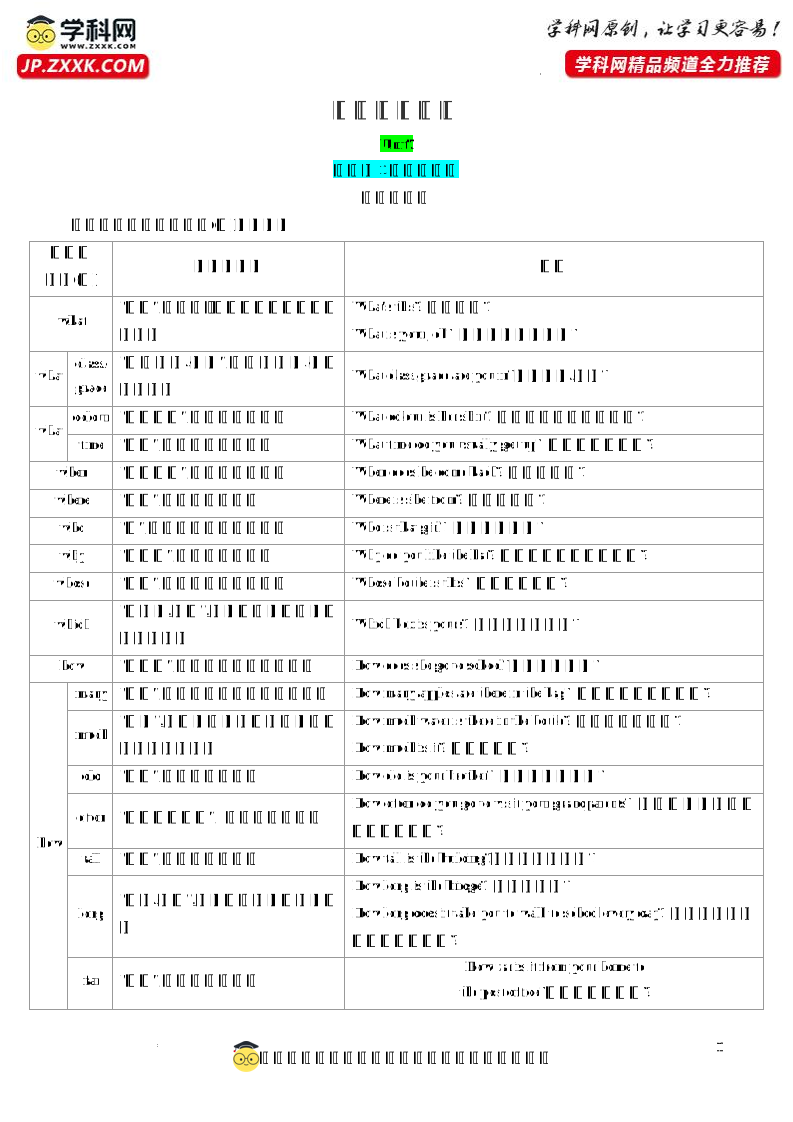
语法点1.特殊疑问句
特殊疑问句
一.常见的特殊疑问词(组)及其用法
特殊疑
问词(组)
含义及用法
例句
what
"什么",对活动、事物或人的职业等进行提问
What's this? 这是什么?
What is your job? 你是做什么工作的?
what
class/
grade
"哪个班级/年级",对所在班级/年级进行提问
What class/grade are you in?你在几班/年级?
what
colour
"什么颜色",对颜色进行提问
What colour is her skirt? 她的裙子是什么颜色的?
time
"几点",对时间点进行提问
What time do you usually get up? 你通常几点起床?
when
"什么时候",对时间进行提问
When does he come back? 他何时回来?
where
"哪里",对地点进行提问
Where is she from? 她来自哪里?
who
"谁",对姓名和身份进行提问
Who is that girl? 那个女孩是谁?
why
"为什么",对原因进行提问
Why do you like the hat? 你为什么喜欢这顶帽子?
whose
"谁的",对所属关系进行提问
Whose bottle is this? 这是谁的瓶子?
which
"哪一个,哪些",对特定范围内的人或物进行提问
Which box is yours? 哪个盒子是你的?
how
"怎么样",对方式或程度进行提问
How does she go to school?她怎样去上学?
how
many
"多少",对可数名词的数量进行提问
How many apples are there in the bag? 袋子里有多少个苹果?
much
"多少",对不可数名词的数量或事物的价钱进行提问
How much water is there in the bottle? 瓶子里有多少水?
How much is it? 这个多少钱?
old
"几岁",对年龄进行提问
How old is your brother? 你的弟弟几岁了?
often
"多长时间一次", 对频率进行提问
How often do you go to visit your grandparents? 你多久去看望一次你的爷爷奶奶?
tall
"多高",对高度进行提问
How tall is the building?这个建筑物多高?
long
"多长/多久",对长度或时间段进行提问
How long is the bridge? 这座桥多长?
How long does it take you to walk to school every day? 你每天步行上学需要多长时间?
far
"多远",对距离进行提问
How far is it from your home to
the post office?你家离邮局多远?
二.特殊疑问句的答语
回答特殊疑问句时不能用yes 或no,而要针对问题进行回答,即问什么答什么。回答时可用一个词或短语,也可用一个完整的句子。
—How old are you? 你几岁了?
—I'm thirteen. 我十三岁了。
—Who always gets to school early?谁总是提早到学校?
—Henry.亨利。
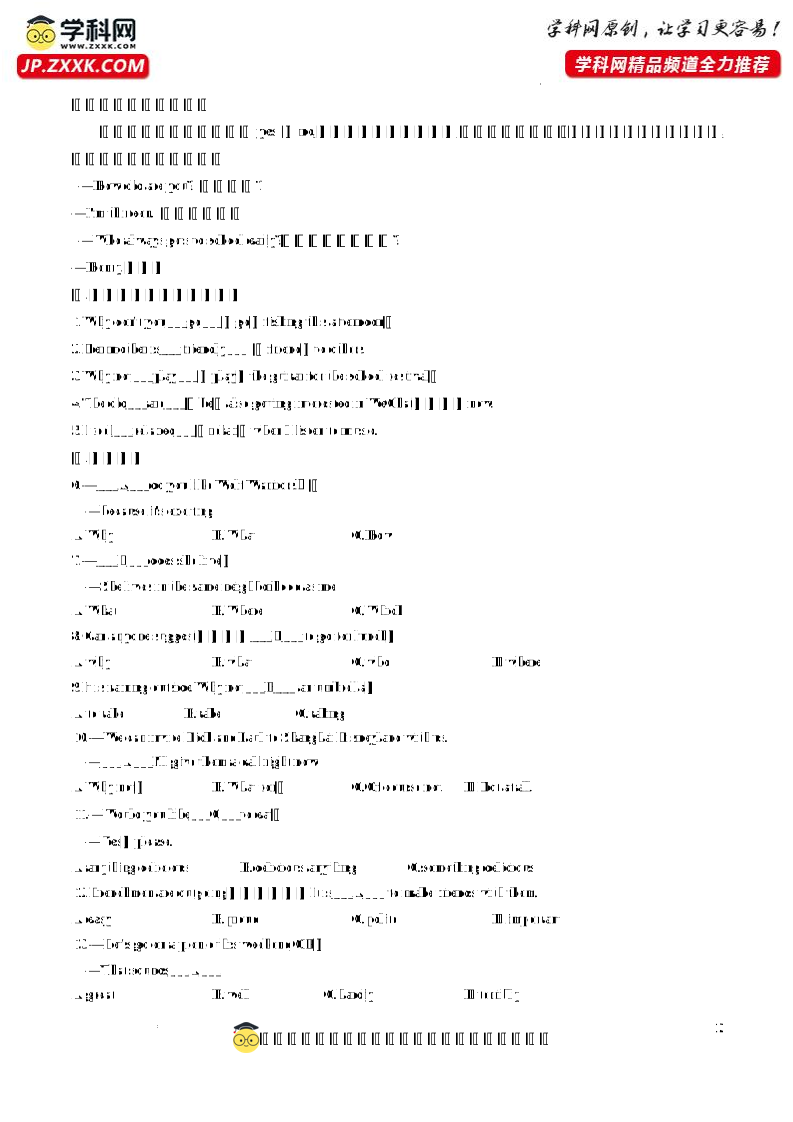
一.用所给词的适当形式填空
1.Why don't you___go___(go)fishing this afternoon?
2.Her mother is___friendly___ (friend)to others.
3.Why not___play___(play)the guitar for the school festival?
4.The old___are___(be)also getting interested in WeChat(微信)now.
5.I feel___relaxed___(relax)when I listen to music.
二.单项填空
6.—___A___do you like Wolf WarriorsⅡ?
—because it's exciting.
A.Why B.What C.How
7.—___B___does she live?
—She lives in the same neighborhood as me.
A.What B.Where C.Which
8.Can anyone suggest(建议)___D___to go for lunch?
A.why B.what C.who D.where
9.It is raining outside.Why not___B___ an umbrella?
A.to take B.take C.taking
10.—We can invite Nick and Paul to Shanghai Disneyland with us.
—___A___I'll give them a call right now.
A.Why not? B.What for? C.Of course not. D.Not at all.
11.—Would you like___C___to eat?
—Yes,please.
A.anything delicious B.delicious anything C.something delicious
12.Frenchmen are outgoing(外向的)。It is___A___ to make friends with them.
A.easy B.proud C.polite D.important
13.—Let's go on a picnic this weekend,OK?
—That sounds___A___.
A.great B.well C.hardly D.terribly
14.—___A___do you speak English so well?
—Because I practice it with my partner every day.
A.Why B.When C.Who D.What
15.—Bob,it's getting cold outside.___B___take a jacket?
—All right,Mum.
A.Why do you B.Why not C.Why did you D.Why don't
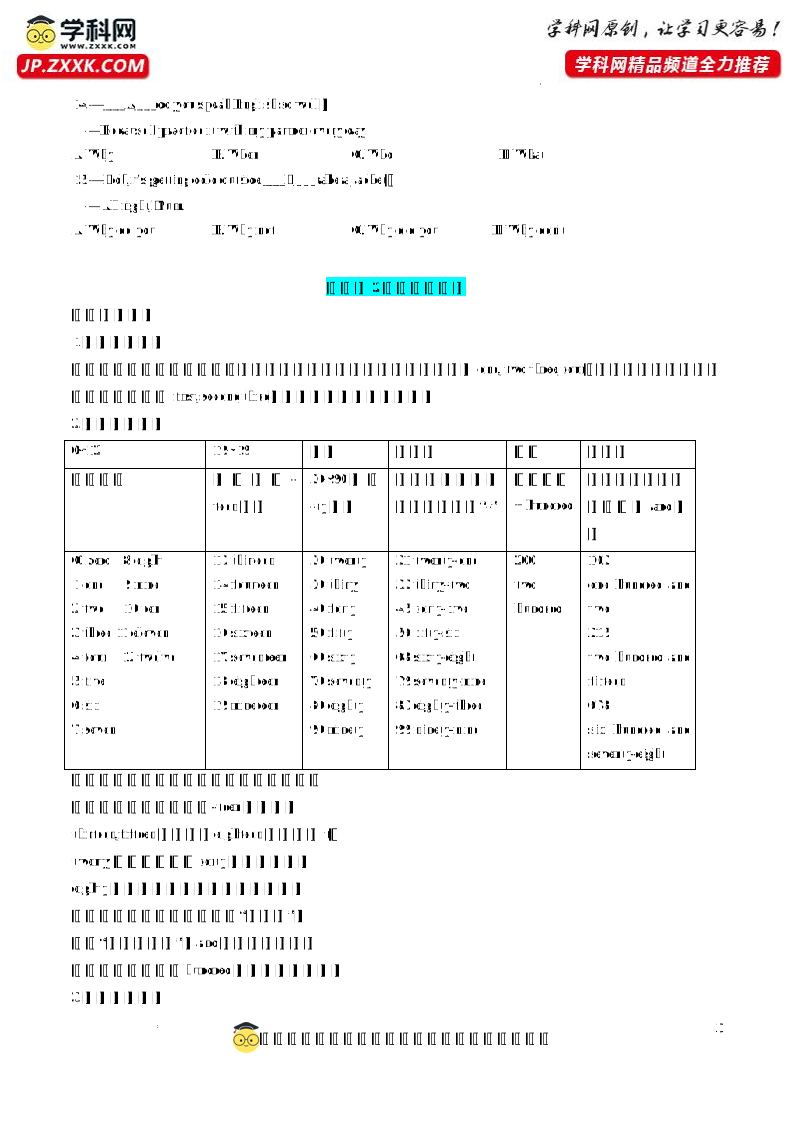
语法点2.基数词的用法
一、基本用法
1.基数词的概述
数词分为基数词和序数词。表示数字和数目多少的词是基数词,如one, two three,four;表示事物先后顺序的词叫序数词,如first,second,third。本单元主要学习基数词。
2.基数词的表达
0~12
19~19
几十
几十几
几百
几百几
逐个记忆
均以后缀-teen结尾
20~90均以-ty结尾
十位数与个位数之间加连词符“-”
具体数字+ hundred
百位数和末两位数之间用and连接
O zero 8 eight
1 one 9 nine
2 two 10 ten
3 three 11 eleven
4 four 12 twelve
5 five
6 six
7 seven
13 thirteen
14 fourteen
15 fifteen
16 sixteen
17 seventeen
18 eighteen
19 nineteen
20 twenty
30 thirty
40 forty
50 fifty
60 sixty
70 seventy
80 eighty
90 ninety
21 twenty-one
32 thirty-two
45 forty-five
56 fifty-six
68 sixty-eight
79 seventy-nine
83 eighty-three
99 ninety-nine
200
two hundred
102
one hundred and two
215
two hundred and fifteen
678
six hundred and seventy-eight
口诀助记基数词不难记找出规律很容易。
零至十二形各异,加上-teen为十几,
thirteen,fifteen看仔细,eighteen只有一个t;
twenty却是很奇怪,forty本身也不乖,
eighty一起搞例外,跟着也把规则坏;
十位后面是个位,表示数字“几十几”,
表示“几百几十几”,and常把百、十系。
勤学妙记加练习,hundred就是你的好成绩。
3.基数词的应用
用法
示例
表示数量,置于名词之前
I have three skirts.我有三条裙子。
表示编号,置于名词之后
He is in Class Six.他在六班。
Room 803 803号房
表示号码
My phone number is six two nine seven two four five.
我的电话号码是6297245。
表示年龄
My daughter is four years old.我女儿四岁了
表示时间
eight thirteen八点十三分
用来计算
Two and three is five.二加三等于五。
二、特殊用法
1.表示“在几十年代”或在“某人几十多岁时”,要用基数词的复数形式。
He was born in the 1990s.他出生于20世纪90年代。
Tu Youyou won the Nobel Prize in her eighties.屠呦呦在她80多岁的时候获得了诺贝尔奖。
2.基数词后接时间、距离、金钱等做主语时,谓语动词通常用单数形式。
Eight hundred dollars is a lot of money for me.八百美元对我来说是一大笔钱。
Two weeks is a long time.两星期是很长一段时间。
3.“基数词+单数可数名词+形容词”构成复合形容词,中间用连词符“-”连接。
This is an eight-year-old girl.这是个八岁大的女孩儿。
There is a 500-meter-long bridge over the river.河上有一座500米长的桥。
4. hundred, thousand, million等数词与具体数字连用时,用单数形式,且其后不接介词of;当其前面没有具体数字时,要用复数形式,且后面要加of。
three hundred teachers三百位老师
hundreds of students数百名学生
一.用所给词的适当形式填空
1.There are five___pairs___(pair)of shorts on the bed.
2.There are___hundreds___(hundred) of students in our school.
3.Three years___is___(be)a long time.
4.My sister was born in the___1970s___(1970).
5.His grandma looks young.In fact,she is in her___sixties___(sixty).
二.单项填空
6.It's my daughter's birthday today. She's___A___ years old.
A.eighteen B.eighteenth C.the eighteen D.the eighteenth
7.Li Wen is a normal(普通的)___C___boy from the countryside. He works hard and does well in school.
A.15 years old B.15-years-old C.15-year-old
8.—Excuse me,Mary.Can you read“198”in English?
—Yes, of course.___C___.
A.One hundred ninety-eight
B.One hundred nine eight
C.One hundred and ninety-eight
9.Two months(月)___B___a long time.We can visit our grandparents during the vacation.
A.am B.is C.are
10.—How many hours do you sleep(睡)every night?
—About___A___ hours.From 9:00 p.m to 6:00 a.m.
A.nine B.nineteen C.ninth D.ninety
Ⅲ.根据汉语意思完成句子
11.汤姆在七年一班。
Tom is in___Class___ ___One___,___Grade___ ___Seven___.
12.故事发生在20世纪30年代。
The story happened___in___ ___the___ ___1930s___.
13.电影院里有两百多人。
There are over___two___ ___hundred___ people in the movie theater.
14.七加六等于十三。
Seven and six___is___ ___thirteen___.
15.这双鞋八十元。
This pair of shoes___is___ ___eighty___yuan.
语法点3.序数词
1.序数词的构成
构成方式
示例
一般情况下基数词后加-th构成相应的序数词。
four→fourth
thirteen→thirteenth
整十数序数词的构成是将基数词词尾的y变为ie,再加-th。
twenty→twentieth
forty→fortieth
大于20的两位及两位以上的基数词变序数词时,仅将个位数变成序数词。
twenty-one→twenty-first
one hundred and fifty-three→ one hundred an d fifty-third
特殊情况特殊记。
one→first
two→second
three→third
five→fifth
eight→eighth
nine→ninth
twelve→twelfth
2.序数词的缩写
序数词的缩写形式是由阿拉伯数字加上序数词的最后两个字母构成。
first→1st second→2nd third→3rd fifth→5th
囗诀助记
基变序,有规律,一二三,特殊记;
从四起,加th;八去t,九减e ;
ve需用f替; ty要换tie;
如果遇到“几十几”,只变个位就可以。
3.序数词的用法
(1)序数词前一般要加定冠词the。
I live on the eighth floor.我住在八楼。
(2)序数词常用来修饰名词,但当序数词前有形容词性物主代词等限定词时,则不用定冠词the。
This is our first lesson.这是我们的第一课。
(3)表示分数时,分子用基数词,写在前面;分母用序数词,写在后面。当分子大于1时,表示分母的序数词要变成复数形式。
one fourth四分之一 two fifths五分之二
(4)序数词前有时也可加不定冠词a或an,这时表示的不再是具体范围内的“第几”,而是表示在原有基础上的“又一个,另一个”。
I think you must do it a second time.我觉得你必须再做一次。(已经做过一次)
(5)序数词可以用来表示顺序,编号等,但是应该放在名词的前面。
the fifth lesson第五课
注意 表示编号时既可以用序数词,也可用基数词,用基数词表示编号时,则需要把基数词放在名词之后,且名词及基数词首字母要大写,不能加冠词。
Lesson Five=the fifth lesson第五课
World War Ⅱ=the Second World War第二次世界大战
1.Some lanterns have riddles(谜语)on them, which encourage people to try to be the f to find the answer.
答案 first 本题考查固定结构“be the+序数词+to do sth.”,表示“第几个做某事”。根据常识可知,灯谜是鼓励人们努力成为第一个发现答案的人。故填序数词first。
2.I’m not sure how I feel about that, with my birthday coming. (第十八)
答案 eighteenth 生日前的数词一般要用序数词,表示第几个生日。故答案为 eighteenth。
3.The manager’s room is right above mine. It’s on the (three) floor.
答案 third 句意:经理的房间正好在我楼上,它在三楼(第三层楼)。本题考查数词的用法。此处表示“在三楼”,应用序数词。故填third。
4.He seems to have a (第六) sense for knowing that his brother will win.
答案 sixth 句意:他似乎有第六感,知道他弟弟会赢。本题考查数词的用法。序数词和不定冠词连用,表示“又一,再一”。故填sixth。
5.All the family members are busy getting ready for my father’s (forty) birthday party.
答案 fortieth 句意:所有的家庭成员都在忙着准备父亲的40岁生日派对。本题考查数词的用法。父亲的40岁生日,即第40个生日,用序数词表示顺序。注意以ty结尾的整十基数词变序数词时,要变y为ie,再加-th。故填fortieth。
6.Yancheng has the (two) largest population of more than 8 million in Jiangsu Province.
答案 second 句意:在江苏省,盐城是第二大人口城市,有八百多万人口。本题考查数词的用法。序数词加最高级表示“第几最……的”,此处意为“第二大的”,故填second。
7.Our Party was founded in 1921.We’ll celebrate her birthday on July 1st this year.
A.one hundred B.one hundredth C.the one hundredth
答案 B 本题考查序数词的用法。句意:我们的党成立于1921年。我们将在今年的7月1日庆祝她的100岁生日。表示“第……个生日”时,用序数词。her one hundredth birthday她的第100个生日。序数词前已经有形容词性物主代词her修饰,故不再加定冠词the。故选B。
8.Peng Ming finally became the winner of season of CCTV’s Chinese Poetry Conference.
A.five B.fifth C.the fifth D.fifths
答案 C 句意:彭敏最终成为央视第五季中国诗词大会的获胜者。本题考查数词的用法。此处用序数词加单数名词,序数词前要加定冠词,表示“第几”,故选C。
Unit6
语法点1.频率副词
一、基本用法
频率副词表示事情发生的频率,通常用于一般现在时。常用的有:always总是,一直, usually通常,often经常,常常,sometimes有时,never从不。频率比依次降低。以后还会学到 seldom很少,hardly ever几乎从不,很少。
二、特殊用法
1.频率副词的位置:句中只有一个行为动词时,频率副词位于动词之前;当有助动词/系动词/情态动词时,位于其后。
2.sometimes=at times可位于句首/句中/句末。
Sometimes I walk to school;sometimes I go to school by bike.我有时步行去上学,有时骑自行车去。
三、难点突破
1.be always doing sth.表示“总是做某事”,表示说话人的“赞叹、不满、厌烦”等情绪。
She is always asking the same question.她老是问相同的问题。(表示厌烦)
2.对频率副词或频率短语提问用 how often“多久(一次)”。
—How often does he go swimming?他多久游一次泳?
—Once a day.一天一次。
语法点2.时间的表达
形式
表达
例子
整点时间
整点+o'clock(o'clock可以省略)
six o'clock 6点钟
非整点时间
直接用数字表时间(先时后分),适用任何时间
five twenty5点20分
“分在前,时在后”表达法分为以下几种情况
分钟≤30,用“分钟+past+点钟”
sixteen past five5点16分thirty past two2点30分
分钟大于30,就用to来表示,结构“分钟(60减去已知分钟数)+to+下一点钟数”
five to nine 8点55分(差5分到9点)
分钟是15,一般用 a quarter来代替fifteen;如果分钟是30,一般用half来代替 thirty。
a quarter past four4点15分
half past three3点30分
注意 询问时间及答语。
问句:What time is it?=What's the time?几点了?
答语:It's+时间.
一.单项填空
1.—___B___is the School Day?
—It's on May 16th.
A.What B.When C.Where D.How
2.—___D___do you get up every morning?
—At half past six.
A.What color B.What sport C.What size D.What time
3.—Do you often go fishing with your father?
—NO,___A___.I don't like fishing at all.
A.never B.often C.usually D.sometimes
4.—___B___do you stay up(熬夜)?
—Never.I always go to bed early.
A.How long B.How often C.How soon D.How much
5.My sister___A___ goes to bed early because she needs a lot of sleep every day.
A.always B.sometimes C.hardly D.never
6.—When is your English lesson?
—It's at___C___.
A.ten past half B.ten to half C.half past ten D.half of ten
7.—What's the time now?
—___D___.
A.It's May 5th B.It's Sunday C.It's OK D.It is eight thirty
8.—When do students usually eat breakfast?
—They usually eat breakfast at___C___ in the morning.
A.a quarter at seven B.a quarter for seven
C.a quarter to seven D.a quarter in seven
9.—What time do you usually go to school?
—I go to school___B___ six o'clock .
A.in B.at C.on D.of
10.The boy is always___B___ me a hand whenever I am in trouble.
A.give B.giving C.to give D.gave
二.句型转换
11.Mr.Smith usually goes to work at 7:00.(对画线部分提问)
___What___ ___time___ ___does___Mr. Smith usually___go___ to work?
12.Alice sometimes cleans her room on weekends.(对画线部分提问)
___When___ ___does___Alice sometimes___clean___ her room?
13.It's six thirty.(同义句转换)
It's___half___ ___past___ ___six___.
14.When does your sister go to school?(同义句转换)
___What___ ___time___does your sister go to school?
15.I usually go to the movies once(一次) a week.(对画线部分提问)
___How___ ___often___do you usually go to the movies?
Unit5
考点二.情态动词can的用法
一、基本用法
can是情态动词,表示说话人的主观看法或语气。它没有人称和数的变化,也不能单独在句子中做谓语,但它可以与其后的不带to的动词不定式一起构成复合谓语。
1.can表示能力,常被译成“能,会”。过去式could,否定形式 couldn't。
I can sing English songs.我会唱英语歌曲。
2.表示请求或许可,常被用来请求对方的许可,或表示说话人自己的许可。
Can I help you?我能帮你忙吗?
Can you go to the picnic with us tomorrow?明天你能和我们一起去野餐吗?
3.can的否定式和缩略式。can的否定形式是can not或 cannot,其缩略形式是can't。
注意 can的陈述句变为疑问句时,应直接将can移到主语前面。肯定答语为“Yes,主语+can.”,否定答语为“No,主语+can't.”。
二、特殊用法
1.“can't+动词原形”,一定不可能,表示一种有把握的否定推测。
It's Sunday today. Mr.Li can't be in the office.今天是星期天。李老师不可能在办公室。
2.can表示“请求,许可”时,相当于may,但语气没有may严肃。Can I...?意思是“我可以/能……吗?”。肯定回答:Yes, you can./Yes, please./Certainly./Of course./Sure.等。否定回答:No,you can't/mustn't./Sorry.../ I'm afraid not.等。
三、难点突破
can/could表示“请求”及“许可”含义时,could比can的语气更加委婉、客气,常用于“Could I/you...?”句式中,表示“我/你能……吗?的意思。肯定回答用can/may,不用 could。
—Could I look at your pictures?我能看看你的照片吗?
—Of course,you can.当然了,你可以看。
一.用所给词的适当形式填空
1.Her sister can___speak___(speak)English.
2.—Can he play the piano?—Yes. he___can___(can).
3.—Is that girl in red Sally?—No it can't___be___(is)her. She has gone to Hong kong.
4.Lucy___can't___(can not)find her pencil-box.
5.—Can you go swimming with me tomorrow?—I'm sorry. I___can't___(can not).
二.单项填空
6.Could you please speak a little louder?I___A___ hear you very well.
A.can't B.mustn't C.shouldn't D.needn't
7.—___C___I swim here?
—I'm sorry. Children______ swim alone here.It's very dangerous.
A.Must;can't B.May;must C.Can;mustn't D.Can't;can
8.I have travelled(已旅行)a lot.I___A___ speak four languages.
A.can B.may C.must D.need
9.—Is that red hat Mrs.Brown's?
—It___C___be hers.She hates(讨厌)that color.
A.may B.must C.can't
10.—Robert,could you wash the car for me?
—Yes___C___.I'm coming,dad.
A.could B couldn't C.can D.can't
11.—Can you swim?
—___D___.
A.Yes,I do B.Yes,I am C.No,I can D.Yes,I can
12.—Can you fly a kite?
—___A___It's too hard.
A.No. I can't B.Yes. I can C.Yes, please D.No. I can
13.You___A___ swim here. It's too dangerous.
A.can't B.aren't C.don't D.doesn't
14.—Can I help you?
—___B___.I can do it well myself.
A.Yes, please B.No, thanks C.Sorry, you can't D.That's OK
15.Get up,or you can't___D___ home on time.
A.to get B.gets C.getting D.get
Unit4
关系
结构
例句
顺承、递进、并列
关系
常用and,both...and...,as well as,not only...but also...,neither...nor...等连接
I help him and he helps me.
我帮助他,他帮助我。
My sister not only sings well,but also dances well.
我妹妹不但唱得好,而且舞跳得也好。
转折关系
常用连词but,while,yet等连接
I bought my sister a present,but she didn’t like it.
我给我姐姐买了个礼物,但是她不喜欢。
选择关系
常用连词or,either...or...,not...but...等连接
Is it a boy or a girl?
是个男孩还是女孩?
因果关系
常用连词 for,so 等连接
They were making a lot of noise,so the teacher got angry.他们很吵,所以老师生气了。
一.用and,but,or,so,while填空
①Many birds stay in the nature reserve of Zhalong all year round while some only go there for a short stay.
②Keep trying, and you’ll succeed one day.
③Which is easier to learn,Japanese or French?
④It snowed heavily last night, so the ground is covered with snow now.
⑤Tom is a very smart boy, but he never shows off.
二.选择填空
1.Read the book Cute Pets, you will know how to take care of your cat.
A.or B.so C.and D.but
答案 C 句意:读一读《可爱的宠物》这本书,你就会知道该如何照顾你的猫了。本题考查连词。or或者,否则;so所以;and和,那么;but但是。空格处前后为顺承关系。故选C。
2.The doctors worked for ten hours, nobody took a break.
A.so B.for C.but D.or
答案 C 句意:医生们工作了十个小时,但没有人休息一下。本题考查连词的用法。前面说“工作了十个小时”,后面说“没有人休息”,前后有明显的转折关系,故选C。
3.Life is like a one-way race, treasure every moment as time cannot be won again.
A.so B.and C.or D.but
答案 A 句意:生活像一场单向的赛跑,所以要珍惜每时每刻,因为时间一去不再来。本题考查并列连词。so因此,所以;and和;or或者,否则;but但是。根据语境可知,设空处前后是因果关系,故选A。
4.Love from parents is like the wind—you can’t see it you can feel it.
A.and B.or C.but D.so
答案 C 句意:父母的爱就像是风——你虽然看不见它,却能感受到它。本题考查并列连词。空格前的you can’t see it和空格后的you can feel it之间存在转折关系,应用but。故选C项。
5.I’ve wanted to read Peter Pan for long, today I finally borrowed the book from the library.
A.or B.but C.and D.since
Unit3 My School
there be结构的一般现在时
一.there be结构的一般现在时的基本句型
there be结构表示"(某地)有……"。其一般现在时的基本句型为:
(1)肯定句:There is/are+主语+其他.
There is a book on the desk.桌子上有一本书。
(2)否定句:There isn't/aren't+主语+其他.
There is not a book on the desk.桌子上没有书。
(3)一般疑问句:Is/Are+there+主语+其他?
肯定回答:Yes, there is/are.
否定回答:No, there isn't/aren't.
—Is there a book on the desk? 桌子上有一本书吗?
—Yes, there is./No, there isn't.是的,有。/不,没有。
二. there be结构的主谓一致
(1)在there be结构中,如果be动词后的主语为可数名词单数或不可数名词,be动词用is。
There is a man under the tree.树下有一个人。
There is some water in the glass.玻璃杯里有一些水。
(2)如果be动词后的主语为可数名词复数,be动词用are。
There are many trees in the park.公园里有很多树。
(3)在有并列主语的情况下,be动词的数由离它最近的主语决定,即遵循"就近原则"。
There is a book, a bag and three pencils on the desk.桌子上有一本书、一个包和三支铅笔。
There are two girls and a dog in the room.房间里有两个女孩和一只狗。
易错have也表示"有",但一般表示"某人有某物"。
have a happy family.我有一个幸福的家庭。
句型转换
1.There are some pictures on the wall.(改为否定句)
There___are___ ___not___ ___any___ pictures on the wall.
2.There is some water in the bottle.(改为一般疑问句)
___Is___ ___there___ ___any___water in the bottle?
3.Are there any chairs near the window?(做肯定回答)
___Yes___,___there___ ___are___.
4.There are two bikes under the tree.(对画线部分提问)
___How___ ___many___ ___bikes___are there under the tree?
5.There is a little orange juice in the bottle.(对画线部分提问)
___How___ ___much___orange juice there in the bottle?
介词用法
方位介词
方位介词
用法
例句
at
"在……处",常用于较小的地点
We stayed at a hotel yesterday.昨天我们待在一个旅店。
in
"在……处",常用于较大的地点或表示一个范围
I live in Shanghai and my parents live in Beijing.我住在上海,我父母住在北京。
on
"在……上",表示在某一平面上,且两
者接触
There are some storybooks on the desk.桌子上有一些故事书。
above
"在……上方",表示高于某物
We are flying above the clouds.我们正在云层上方飞行。
below
"在……下方",表示低于某物
Please do not write below this line. 请不要写到这条线下面。
over
"在……上方",表示在某物垂直的正上方,且两者之间不接触
They held a large umbrella over her. 他们给她撑起一把大伞。
under
"在……下方",表示在某物垂直的正下方,且两者之间不接触
She placed the ladder under the window.她把梯子立在窗户下面。
behind
"在……的后面"
Who sits behind you?谁坐在你的后面?
in front of
"在……(外部)前面",注意与in the front of的区别,后者指"在某物内部的前面"
There are many big trees in front of my house.我家房子前有许多大树。
inside
"在……里面"
Go inside the house. 进屋里吧。
outside
"在……外面"
My father is washing his car outside our house. 我爸爸正在我们家屋外洗他的车。
next to
"在……旁边",与by、 near、beside 同义
Please stand next to your friend.请站在你的朋友旁边。
across from
"在……对面",与opposite同义
Our school is across from a bank. 我们的学校在一个银行的对面。
between
"在……(两者)中间"
I sat down between Jo and Diana.我在乔和黛安娜中间坐下。
图示记忆
用适当的介词填空
①Li Ming goes to school in his father‘’s car every day.
②Mr. Green is writing on the blackboard.
③They held a large umbrella over her.
④—Can a plane fly through the Atlantic Ocean?
—Yes,but it needs to go across the clouds for hours.
⑤You must be careful when you swim across the lake.
Unit2 We're Family!
一般现在时中实义动词的用法
一、基本用法(以have为例)
1. have意为“有”,强调某人拥有某物,用于一般现在时中有两种形式:have和has。当主语是第三人称单数时用has,其他人称形式用have。
I have a new bag.我有一个新包。
My friend has many toys.我的朋友有很多玩具。
We have a good teacher.我们有一位好老师。
结构
例句
肯定句
主语+have/has+其他
I have a ruler.我有一把格尺。
Tom has a Chinese friend.汤姆有一个中国朋友。
否定句
主语+ don't/doesn't + have +其他.
These students don't have new desks.这些学生没有新书桌。
Alan doesn't have a model plane.艾伦没有飞机模型。
一般疑问句
Do/Does+主语+have+其他?
肯定答语:Yes, 主语+do/does.
否定答语:No, 主语+don't/doesn't.
—Does your brother have a bat? 你弟弟有球拍吗?
—Yes, he does. /No, he doesn't.是的,他有。/不,他没有。
特殊疑问句
特殊疑问词+ do/does+主语+have+其他?
—What does your brother have? 你弟弟有什么?
—He has a Chinese book. 他有一本语文书。
一.用括号内所给词的适当形式填空
1.Alex (hope) he can visit the USA in the future.
2.Sandy with her friends often (fly) a kite in the park.
3. (be) your friend ready for tomorrow’s evening party?
4.Members in this club (be not) careful. They often leave the club with the lights on.
5.Cindy is a kind girl. Everyone in our class (enjoy) playing with her.
6.My best friend and I (be not) in the same school. We meet at the weekend.
7.My mother (not go) to work on Saturdays or Sundays.
8.Millie’s family often (read) together in the living room.
9.Watching football matches (be) her hobby.
10.We all know light (go) faster than sound.
二.按要求完成句子,每空一词
11.I’m your English teacher this term.(改为一般疑问句)
our English teacher this term?
12.Li Lei writes to his father every month. (改为一般疑问句)
Li Lei to his father every month?
13.My mother does housework in the morning.(改为否定句)
My mother housework in the morning.
14.Do you often have breakfast at home?(用 Kitty代替 you 改写句子)
Kitty often breakfast at home?
15.The old woman goes to the supermarket on foot. (对画线部分提问)
the old woman to the supermarket?
三.单项选择
16.My T⁃shirt white and my trousers yellow.
A.is;is B.is;are C.are;is D.are;are
17.When I play football with my cousins, my father sometimes our games. My mother often at weekends.
A.looks at;shops B.sees;shopping
C.watches;shops D.looks;shopping
18.—Do you often listen to music on the radio?
—No. But my mother .
A.do B.listens C.doesn’t D.does
19.— Millie’s cousin Andy a member of Grade 7?
—No, he from Grade 8.
A.Are;is B.Does;doesn’t
C.Are;aren't D.Is;is
20.— you play computer games at weekends, Alan?
—Yes. But my mother let me play for long.
A.Do;doesn't B.Do;isn’t
C.Are;doesn't D.Are;isn’t
一.1.hopes 主语Alex是第三人称单数,故谓语动词用第三人称单数形式,故填hopes。
2.flies 介词with前面的名词Sandy是主语,是第三人称单数,故谓语动词用第三人称单数形式,故填flies。
3.Is 主语your friend是第三人称单数,故be动词用is。
4.aren’t 主语Members是复数,be动词用are,否定形式在are后面加not。
5.enjoys 主语为Everyone,是第三人称单数,故谓语动词用第三人称单数形式,故填enjoys。
6.aren’t 连词and连接两个并列主语时,be动词用are,否定形式在are后面加not。
7.doesn’t go 行为动词go的否定结构为don’t/doesn’t go,因为主语My mother为第三人称单数,故填doesn't go。
8.read 设空句的主语family指“家庭成员”,谓语动词用复数形式。
9.is 动名词短语Watching football matches作主语时,be动词用is。
10.goes 分析句子结构可知,know后为宾语从句,宾语从句的主语为light,是第三人称单数,故谓语动词用第三人称单数形式。go的第三人称单数形式为goes。
二.11.Are you 12.Does;write 13.doesn’t do14.Does;have 15.How does;go
三.16.B 句意:我的T恤衫是白色的,我的裤子是黄色的。My T⁃shirt为第三人称单数,be动词应用is;my trousers为复数,be动词应用are。故选B。
17.C 当我和我表弟们踢足球的时候,我爸爸有时会观看我们的比赛。我妈妈经常在周末购物。第一句的主语为my father,第二句的主语为My mother,都是第三人称单数,故谓语动词都用动词第三人称单数形式;表示“观看比赛”,应用watch。故选C。
18.D 设空处所在句主语my mother是第三人称单数,谓语动词用第三人称单数形式。为避免重复,用does代替上句提到的动作。故选D。
19.D 句意:——米莉的表弟安迪是七年级的一员吗?——不,他来自八年级。be a member of...意为“是……中的一员”,主语Millie's cousin是第三人称单数,be动词用is;be from...意为“来自……”,主语he是第三人称单数,be动词用is。故选D。
20.A 第一空用助动词do帮助行为动词play构成疑问句,排除C、D选项;第二空所在句的主语为my mother,后用助动词does帮助行为动词let构成否定句。故选A。
名词所有格
名词所有格表示所属关系。
一.所有格的类型之's所有格
(1)"名词+'s"所有格主要用于表示有生命的名词的所有关系。
Mary's bag 玛丽的书包
Tom's computer 汤姆的电脑
(2)'s所有格的构成
①单数名词后直接加's。
This is my father's book.这是我父亲的书。
②复数名词词尾不为s时,加's;词尾为s时,其后只加'。
June 1st is Children's Day.6月1日是儿童节。
These are students' schoolbags.这些是学生们的书包。
易错 以-s结尾的人名的所有格的构成是在其后加'或's,如James'或James's。
(3)'s所有格的用法
①表示几个人共有时,只在最后一个名词后加's。
This is Tom and Jack's mother.这是汤姆和杰克的妈妈。(汤姆和杰克有同一个妈妈)
②表示各自拥有时,在各个词后加's。
Tom's and Jim's rooms are on the second floor. 汤姆和吉姆的房间都在二楼。(汤姆和吉姆有不同的房间)
二. 所有格的类型之of所有格
(1)of所有格多用于表示无生命名词的所有关系。
This is a map of China.这是一张中国地图。
(2)'s所有格和of所有格通常可以互相转换。一般来说,'s所有格都可以转换成of所有格,但并非所有的of所有格都可以转换成's所有格。
This is the boy's new bike.=This is the new bike of the boy.这是这个男孩的新自行车。
双重所有格是指既含有's所有格,又含有of所有格的结构。双重所有格可用来表示整体中的一部分,也可用来表示带有某种感情色彩。
Uncle Li is an old friend of my father's.李叔叔是我爸爸的一位老朋友。
用所给词的适当形式填空
1.On___Father's___(father)Day, I often prepare a special gift for my father.
2.September 10th is___Teachers'___(teacher)Day.
二.根据汉语意思完成句子
3.这是莉莉和露西的卧室。它整洁而且漂亮。
This is___Lily___ ___and___ ___Lucy's___bedroom.It's tidy and nice.
4.—什么时候是父亲节?—是六月的第三个周日。
—When is___Father's___ ___Day___?—On___the___ ___third___Sunday of June.
5.吉姆的手表和他哥哥的一样。
Jim's watch is the same as___his___ ___brother's___.
Unit1You and Me
一.含系动词be的一般现在时
1.be动词的一般现在时的形式
be动词的一般现在时有三种形式:am、is和are。它们分别和不同的主语搭配使用,我们可以通过下面的口诀进行记忆:
我(I)用am,你(you)用are,
is连着他(he)她(she)它(it),
主语单数找is,
主语复数选择are。
I'm Kate.我是凯特。
You are Kate.你是凯特。
She is Kate.她是凯特。
2.含有be动词的一般现在时的句式结构
The ruler is green. 这把尺子是绿色的。
The ruler isn't green. 这把尺子不是绿色的。
—Is the ruler green? 这把尺子是绿色的吗?—Yes, it is./No, it isn't. 是的,它是。/不,它不是。
一.用am、is、are填空
1.Ann in Class Three. She good at English.
2.— you Tom?
—No, I Tim.
4.Where Tony from?He from the US.
4.My pet cat very cute.We like it very much.
5.Jack and I both in Class 5,Grade 7.
1.is,is 2.Are,am 3.is,is 4. is 5.are
二.人称代词主格
1.人称代词主格
第一人称
第二人称
第三人称
单数
复数
单数
复数
单数
复数
I
我
we
我们
you
你
you
你们
he
他
she
她
it
它
they
他/她/它们
2.人称代词主格的用法
人称代词主格在句中作主语。he/she/it后的谓语动词用单数形式;we/you/they后的谓语动词用复数形式;I后接be动词时用am,接实义动词时用原形。
She is my sister and I am her brother. 她是我的姐姐,我是她的弟弟。
It is a bird.它是一只鸟。
They walk to school every day.他们每天步行去上学。
3.形容词性物主代词
物主代词是表示所有关系的代词,有人称和数的变化。物主代词可分为形容词性物主代词和名词性物主代词,此处主要讲解形容词性物主代词。
第一人称
第二人称
第三人称
单数
复数
单数
复数
单数
复数
my
我的
our
我们的
your
你的
your
你们的
his
他的
her
她的
its
它的
their她/他/
它们的
(1)形容词性物主代词相当于形容词,作定语,后接名词。
Is this your eraser? 这是你的橡皮吗?
(2)形容词性物主代词不能与冠词(a/an/the)或指示代词(this, that, these, those)等共同修饰名词。
This is his desk.这是他的书桌。
(3)与形容词共同修饰名词时,形容词性物主代词要放在形容词的前面。
his English books他的英语书
their Chinese friends他们的中国朋友们
一.根据句意及所给提示,用恰当的代词填空
1. (我) am Lily and (我) am 12 years old.
2. (我们)often play basketball with (他们)at school.
3. (我) am from China. (我的) name is Wang Yaming. You can call (我) Yaming.
4.Do (你)know the girl over there?
(她) is in Class 6, Grade 7.
5. (我们) must keep our classroom tidy. (它) is a little dirty.
1.I,I 2.We,them 3.I ,My ,me 4.you,She 5.We,It
$$重点语法归纳
1.
原创精品资源学科网独家享有版权,侵权必究!10
学科网(北京)股份有限公司
学科网(北京)股份有限公司
Unit7
语法点1.特殊疑问句
特殊疑问句
一.常见的特殊疑问词(组)及其用法
特殊疑
问词(组)
含义及用法
例句
what
What's this? 这是什么?
What is your job? 你是做什么工作的?
what
class/
grade
What class/grade are you in?你在几班/年级?
what
colour
What colour is her skirt? 她的裙子是什么颜色的?
time
What time do you usually get up? 你通常几点起床?
when
When does he come back? 他何时回来?
where
Where is she from? 她来自哪里?
who
Who is that girl? 那个女孩是谁?
why
Why do you like the hat? 你为什么喜欢这顶帽子?
whose
Whose bottle is this? 这是谁的瓶子?
which
Which box is yours? 哪个盒子是你的?
how
How does she go to school?她怎样去上学?
how
"多少",对可数名词的数量进行提问
How many apples are there in the bag? 袋子里有多少个苹果?
"多少",对不可数名词的数量或事物的价钱进行提问
How much water is there in the bottle? 瓶子里有多少水?
How much is it? 这个多少钱?
old
How old is your brother? 你的弟弟几岁了?
often
How often do you go to visit your grandparents? 你多久去看望一次你的爷爷奶奶?
tall
How tall is the building?这个建筑物多高?
long
How long is the bridge? 这座桥多长?
How long does it take you to walk to school every day? 你每天步行上学需要多长时间?
far
How far is it from your home to
the post office?你家离邮局多远?
二.特殊疑问句的答语
回答特殊疑问句时不能用yes 或no,而要针对问题进行回答,即问什么答什么。回答时可用一个词或短语,也可用一个完整的句子。
—How old are you? 你几岁了?
—I'm thirteen. 我十三岁了。
—Who always gets to school early?谁总是提早到学校?
—Henry.亨利。
一.用所给词的适当形式填空
1.Why don't you (go)fishing this afternoon?
2.Her mother is (friend)to others.
3.Why not (play)the guitar for the school festival?
4.The old (be)also getting interested in WeChat(微信)now.
5.I feel (relax)when I listen to music.
二.单项填空
6.— _do you like Wolf WarriorsⅡ?
—because it's exciting.
A.Why B.What C.How
7.—______does she live?
—She lives in the same neighborhood as me.
A.What B.Where C.Which
8.Can anyone suggest(建议)______to go for lunch?
A.why B.what C.who D.where
9.It is raining outside.Why not______ an umbrella?
A.to take B.take C.taking
10.—We can invite Nick and Paul to Shanghai Disneyland with us.
—______I'll give them a call right now.
A.Why not? B.What for? C.Of course not. D.Not at all.
11.—Would you like______to eat?
—Yes,please.
A.anything delicious B.delicious anything C.something delicious
12.Frenchmen are outgoing(外向的)。It is______ to make friends with them.
A.easy B.proud C.polite D.important
13.—Let's go on a picnic this weekend,OK?
—That sounds______.
A.great B.well C.hardly D.terribly
14.—______do you speak English so well?
—Because I practice it with my partner every day.
A.Why B.When C.Who D.What
15.—Bob,it's getting cold outside.______take a jacket?
—All right,Mum.
A.Why do you B.Why not C.Why did you D.Why don't
语法点2.基数词的用法
一、基本用法
1.基数词的概述
数词分为基数词和序数词。表示数字和数目多少的词是基数词,如one, two three,four;表示事物先后顺序的词叫序数词,如first,second,third。本单元主要学习基数词。
2.基数词的表达
0~12
19~19
几十
几十几
几百
几百几
逐个记忆
均以后缀-teen结尾
20~90均以-ty结尾
十位数与个位数之间加连词符“-”
具体数字+ hundred
百位数和末两位数之间用and连接
O zero 8 eight
1 one 9 nine
2 two 10 ten
3 three 11 eleven
4 four 12 twelve
5 five
6 six
7 seven
13 thirteen
14 fourteen
15 fifteen
16 sixteen
17 seventeen
18 eighteen
19 nineteen
20 twenty
30 thirty
40 forty
50 fifty
60 sixty
70 seventy
80 eighty
90 ninety
21 twenty-one
32 thirty-two
45 forty-five
56 fifty-six
68 sixty-eight
79 seventy-nine
83 eighty-three
99 ninety-nine
200
two hundred
102
one hundred and two
215
two hundred and fifteen
678
six hundred and seventy-eight
口诀助记基数词不难记找出规律很容易。
零至十二形各异,加上-teen为十几,
thirteen,fifteen看仔细,eighteen只有一个t;
twenty却是很奇怪,forty本身也不乖,
eighty一起搞例外,跟着也把规则坏;
十位后面是个位,表示数字“几十几”,
表示“几百几十几”,and常把百、十系。
勤学妙记加练习,hundred就是你的好成绩。
3.基数词的应用
用法
示例
表示数量,置于名词之前
I have three skirts.我有三条裙子。
表示编号,置于名词之后
He is in Class Six.他在六班。
Room 803 803号房
表示号码
My phone number is six two nine seven two four five.
我的电话号码是6297245。
表示年龄
My daughter is four years old.我女儿四岁了
表示时间
eight thirteen八点十三分
用来计算
Two and three is five.二加三等于五。
二、特殊用法
1.表示“在几十年代”或在“某人几十多岁时”,要用基数词的复数形式。
He was born in the 1990s.他出生于20世纪90年代。
Tu Youyou won the Nobel Prize in her eighties.屠呦呦在她80多岁的时候获得了诺贝尔奖。
2.基数词后接时间、距离、金钱等做主语时,谓语动词通常用单数形式。
Eight hundred dollars is a lot of money for me.八百美元对我来说是一大笔钱。
Two weeks is a long time.两星期是很长一段时间。
3.“基数词+单数可数名词+形容词”构成复合形容词,中间用连词符“-”连接。
This is an eight-year-old girl.这是个八岁大的女孩儿。
There is a 500-meter-long bridge over the river.河上有一座500米长的桥。
4. hundred, thousand, million等数词与具体数字连用时,用单数形式,且其后不接介词of;当其前面没有具体数字时,要用复数形式,且后面要加of。
three hundred teachers三百位老师
hundreds of students数百名学生
一.用所给词的适当形式填空
1.There are five______(pair)of shorts on the bed.
2.There are______(hundred) of students in our school.
3.Three years______(be)a long time.
4.My sister was born in the______(1970).
5.His grandma looks young.In fact,she is in her______(sixty).
二.单项填空
6.It's my daughter's birthday today. She's______ years old.
A.eighteen B.eighteenth C.the eighteen D.the eighteenth
7.Li Wen is a normal(普通的)______boy from the countryside. He works hard and does well in school.
A.15 years old B.15-years-old C.15-year-old
8.—Excuse me,Mary.Can you read“198”in English?
—Yes, of course.______.
A.One hundred ninety-eight
B.One hundred nine eight
C.One hundred and ninety-eight
9.Two months(月)______a long time.We can visit our grandparents during the vacation.
A.am B.is C.are
10.—How many hours do you sleep(睡)every night?
—About______ hours.From 9:00 p.m to 6:00 a.m.
A.nine B.nineteen C.ninth D.ninety
Ⅲ.根据汉语意思完成句子
11.汤姆在七年一班。
Tom is in .
12.故事发生在20世纪30年代。
The story happened .
13.电影院里有两百多人。
There are over people in the movie theater.
14.七加六等于十三。
Seven and six .
15.这双鞋八十元。
This pair of shoes yuan.
语法点3.序数词
1.序数词的构成
构成方式
示例
一般情况下基数词后加-th构成相应的序数词。
four→
thirteen→
整十数序数词的构成是将基数词词尾的y变为ie,再加-th。
twenty→
forty→
大于20的两位及两位以上的基数词变序数词时,仅将个位数变成序数词。
twenty-one→twenty-
one hundred and fifty-three→ one hundred an d fifty-third
特殊情况特殊记。
one→
two→
three→
five→
eight→
nine→
twelve→
2.序数词的缩写
序数词的缩写形式是由阿拉伯数字加上序数词的最后两个字母构成。
first→1st second→2nd third→3rd fifth→5th
囗诀助记
基变序,有规律,一二三,特殊记;
从四起,加th;八去t,九减e ;
ve需用f替; ty要换tie;
如果遇到“几十几”,只变个位就可以。
3.序数词的用法
(1)序数词前一般要加定冠词the。
I live on the eighth floor.我住在八楼。
(2)序数词常用来修饰名词,但当序数词前有形容词性物主代词等限定词时,则不用定冠词the。
This is our first lesson.这是我们的第一课。
(3)表示分数时,分子用基数词,写在前面;分母用序数词,写在后面。当分子大于1时,表示分母的序数词要变成复数形式。
one fourth四分之一 two fifths五分之二
(4)序数词前有时也可加不定冠词a或an,这时表示的不再是具体范围内的“第几”,而是表示在原有基础上的“又一个,另一个”。
I think you must do it a second time.我觉得你必须再做一次。(已经做过一次)
(5)序数词可以用来表示顺序,编号等,但是应该放在名词的前面。
the fifth lesson第五课
注意 表示编号时既可以用序数词,也可用基数词,用基数词表示编号时,则需要把基数词放在名词之后,且名词及基数词首字母要大写,不能加冠词。
Lesson Five=the fifth lesson第五课
World War Ⅱ=the Second World War第二次世界大战
1.Some lanterns have riddles(谜语)on them, which encourage people to try to be the f to find the answer.
2.I’m not sure how I feel about that, with my birthday coming. (第十八)
3.The manager’s room is right above mine. It’s on the (three) floor.
4.He seems to have a (第六) sense for knowing that his brother will win.
5.All the family members are busy getting ready for my father’s (forty) birthday party.
6.Yancheng has the (two) largest population of more than 8 million in Jiangsu Province.
7.Our Party was founded in 1921.We’ll celebrate her birthday on July 1st this year.
A.one hundred B.one hundredth C.the one hundredth
8.Peng Ming finally became the winner of season of CCTV’s Chinese Poetry Conference.
A.five B.fifth C.the fifth D.fifths
Unit6
语法点1.频率副词
一、基本用法
频率副词表示事情发生的频率,通常用于一般现在时。常用的有:always总是,一直, usually通常,often经常,常常,sometimes有时,never从不。频率比依次降低。以后还会学到 seldom很少,hardly ever几乎从不,很少。
二、特殊用法
1.频率副词的位置:句中只有一个行为动词时,频率副词位于动词之前;当有助动词/系动词/情态动词时,位于其后。
2.sometimes=at times可位于句首/句中/句末。
Sometimes I walk to school;sometimes I go to school by bike.我有时步行去上学,有时骑自行车去。
三、难点突破
1.be always doing sth.表示“总是做某事”,表示说话人的“赞叹、不满、厌烦”等情绪。
She is always asking the same question.她老是问相同的问题。(表示厌烦)
2.对频率副词或频率短语提问用 how often“多久(一次)”。
—How often does he go swimming?他多久游一次泳?
—Once a day.一天一次。
语法点2.时间的表达
形式
表达
例子
整点时间
整点+o'clock(o'clock可以省略)
six o'clock 6点钟
非整点时间
直接用数字表时间(先时后分),适用任何时间
five twenty5点20分
“分在前,时在后”表达法分为以下几种情况
分钟≤30,用“分钟+past+点钟”
sixteen past five5点16分thirty past two2点30分
分钟大于30,就用to来表示,结构“分钟(60减去已知分钟数)+to+下一点钟数”
five to nine 8点55分(差5分到9点)
分钟是15,一般用 a quarter来代替fifteen;如果分钟是30,一般用half来代替 thirty。
a quarter past four4点15分
half past three3点30分
注意 询问时间及答语。
问句:What time is it?=What's the time?几点了?
答语:It's+时间.
一.单项填空
1.—______is the School Day?
—It's on May 16th.
A.What B.When C.Where D.How
2.—______do you get up every morning?
—At half past six.
A.What color B.What sport C.What size D.What time
3.—Do you often go fishing with your father?
—NO,______.I don't like fishing at all.
A.never B.often C.usually D.sometimes
4.—___B___do you stay up(熬夜)?
—Never.I always go to bed early.
A.How long B.How often C.How soon D.How much
5.My sister______ goes to bed early because she needs a lot of sleep every day.
A.always B.sometimes C.hardly D.never
6.—When is your English lesson?
—It's at______.
A.ten past half B.ten to half C.half past ten D.half of ten
7.—What's the time now?
—______.
A.It's May 5th B.It's Sunday C.It's OK D.It is eight thirty
8.—When do students usually eat breakfast?
—They usually eat breakfast at______ in the morning.
A.a quarter at seven B.a quarter for seven
C.a quarter to seven D.a quarter in seven
9.—What time do you usually go to school?
—I go to school______ six o'clock .
A.in B.at C.on D.of
10.The boy is always___B___ me a hand whenever I am in trouble.
A.give B.giving C.to give D.gave
二.句型转换
11.Mr.Smith usually goes to work at 7:00.(对画线部分提问)
Mr. Smith usually to work?
12.Alice sometimes cleans her room on weekends.(对画线部分提问)
Alice sometimes her room?
13.It's six thirty.(同义句转换)
It's .
14.When does your sister go to school?(同义句转换)
does your sister go to school?
15.I usually go to the movies once(一次) a week.(对画线部分提问)
do you usually go to the movies?
Unit5
考点二.情态动词can的用法
一、基本用法
can是情态动词,表示说话人的主观看法或语气。它没有人称和数的变化,也不能单独在句子中做谓语,但它可以与其后的不带to的动词不定式一起构成复合谓语。
1.can表示能力,常被译成“能,会”。过去式could,否定形式 couldn't。
I can sing English songs.我会唱英语歌曲。
2.表示请求或许可,常被用来请求对方的许可,或表示说话人自己的许可。
Can I help you?我能帮你忙吗?
Can you go to the picnic with us tomorrow?明天你能和我们一起去野餐吗?
3.can的否定式和缩略式。can的否定形式是can not或 cannot,其缩略形式是can't。
注意 can的陈述句变为疑问句时,应直接将can移到主语前面。肯定答语为“Yes,主语+can.”,否定答语为“No,主语+can't.”。
二、特殊用法
1.“can't+动词原形”,一定不可能,表示一种有把握的否定推测。
It's Sunday today. Mr.Li can't be in the office.今天是星期天。李老师不可能在办公室。
2.can表示“请求,许可”时,相当于may,但语气没有may严肃。Can I...?意思是“我可以/能……吗?”。肯定回答:Yes, you can./Yes, please./Certainly./Of course./Sure.等。否定回答:No,you can't/mustn't./Sorry.../ I'm afraid not.等。
三、难点突破
can/could表示“请求”及“许可”含义时,could比can的语气更加委婉、客气,常用于“Could I/you...?”句式中,表示“我/你能……吗?的意思。肯定回答用can/may,不用 could。
—Could I look at your pictures?我能看看你的照片吗?
—Of course,you can.当然了,你可以看。
一.用所给词的适当形式填空
1.Her sister can______(speak)English.
2.—Can he play the piano?—Yes. he______(can).
3.—Is that girl in red Sally?—No it can't______(is)her. She has gone to Hong kong.
4.Lucy______(can not)find her pencil-box.
5.—Can you go swimming with me tomorrow?—I'm sorry. I______(can not).
二.单项填空
6.Could you please speak a little louder?I______ hear you very well.
A.can't B.mustn't C.shouldn't D.needn't
7.—______I swim here?
—I'm sorry. Children______ swim alone here.It's very dangerous.
A.Must;can't B.May;must C.Can;mustn't D.Can't;can
8.I have travelled(已旅行)a lot.I______ speak four languages.
A.can B.may C.must D.need
9.—Is that red hat Mrs.Brown's?
—It______be hers.She hates(讨厌)that color.
A.may B.must C.can't
10.—Robert,could you wash the car for me?
—Yes______.I'm coming,dad.
A.could B couldn't C.can D.can't
11.—Can you swim?
—______.
A.Yes,I do B.Yes,I am C.No,I can D.Yes,I can
12.—Can you fly a kite?
—______It's too hard.
A.No. I can't B.Yes. I can C.Yes, please D.No. I can
13.You______ swim here. It's too dangerous.
A.can't B.aren't C.don't D.doesn't
14.—Can I help you?
—______.I can do it well myself.
A.Yes, please B.No, thanks C.Sorry, you can't D.That's OK
15.Get up,or you can't______ home on time.
A.to get B.gets C.getting D.get
Unit4
关系
结构
例句
顺承、递进、并列
关系
常用and,both...and...,as well as,not only...but also...,neither...nor...等连接
I help him and he helps me.
我帮助他,他帮助我。
My sister not only sings well,but also dances well.
我妹妹不但唱得好,而且舞跳得也好。
转折关系
常用连词but,while,yet等连接
I bought my sister a present,but she didn’t like it.
我给我姐姐买了个礼物,但是她不喜欢。
选择关系
常用连词or,either...or...,not...but...等连接
Is it a boy or a girl?
是个男孩还是女孩?
因果关系
常用连词 for,so 等连接
They were making a lot of noise,so the teacher got angry.他们很吵,所以老师生气了。
一.用and,but,or,so,while填空
①Many birds stay in the nature reserve of Zhalong all year round some only go there for a short stay.
②Keep trying, you’ll succeed one day.
③Which is easier to learn,Japanese French?
④It snowed heavily last night, the ground is covered with snow now.
⑤Tom is a very smart boy, he never shows off.
二.选择填空
1.Read the book Cute Pets, you will know how to take care of your cat.
A.or B.so C.and D.but
2.The doctors worked for ten hours, nobody took a break.
A.so B.for C.but D.or
3.Life is like a one-way race, treasure every moment as time cannot be won again.
A.so B.and C.or D.but
4.Love from parents is like the wind—you can’t see it you can feel it.
A.and B.or C.but D.so
5.I’ve wanted to read Peter Pan for long, today I finally borrowed the book from the library.
A.or B.but C.and D.since
Unit3 My School
there be结构的一般现在时
一.there be结构的一般现在时的基本句型
there be结构表示"(某地)有……"。其一般现在时的基本句型为:
(1)肯定句:There is/are+主语+其他.
There is a book on the desk.桌子上有一本书。
(2)否定句:There isn't/aren't+主语+其他.
There is not a book on the desk.桌子上没有书。
(3)一般疑问句:Is/Are+there+主语+其他?
肯定回答:Yes, there is/are.
否定回答:No, there isn't/aren't.
—Is there a book on the desk? 桌子上有一本书吗?
—Yes, there is./No, there isn't.是的,有。/不,没有。
二. there be结构的主谓一致
(1)在there be结构中,如果be动词后的主语为可数名词单数或不可数名词,be动词用is。
There is a man under the tree.树下有一个人。
There is some water in the glass.玻璃杯里有一些水。
(2)如果be动词后的主语为可数名词复数,be动词用are。
There are many trees in the park.公园里有很多树。
(3)在有并列主语的情况下,be动词的数由离它最近的主语决定,即遵循"就近原则"。
There is a book, a bag and three pencils on the desk.桌子上有一本书、一个包和三支铅笔。
There are two girls and a dog in the room.房间里有两个女孩和一只狗。
易错have也表示"有",但一般表示"某人有某物"。
have a happy family.我有一个幸福的家庭。
句型转换
1.There are some pictures on the wall.(改为否定句)
There pictures on the wall.
2.There is some water in the bottle.(改为一般疑问句)
water in the bottle?
3.Are there any chairs near the window?(做肯定回答)
4.There are two bikes under the tree.(对画线部分提问)
are there under the tree?
5.There is a little orange juice in the bottle.(对画线部分提问)
orange juice there in the bottle?
介词用法
方位介词
方位介词
用法
例句
at
We stayed at a hotel yesterday.昨天我们待在一个旅店。
in
I live in Shanghai and my parents live in Beijing.我住在上海,我父母住在北京。
on
There are some storybooks on the desk.桌子上有一些故事书。
above
We are flying above the clouds.我们正在云层上方飞行。
below
Please do not write below this line. 请不要写到这条线下面。
over
They held a large umbrella over her. 他们给她撑起一把大伞。
under
She placed the ladder under the window.她把梯子立在窗户下面。
behind
Who sits behind you?谁坐在你的后面?
in front of
There are many big trees in front of my house.我家房子前有许多大树。
inside
Go inside the house. 进屋里吧。
outside
My father is washing his car outside our house. 我爸爸正在我们家屋外洗他的车。
next to
Please stand next to your friend.请站在你的朋友旁边。
across from
Our school is across from a bank. 我们的学校在一个银行的对面。
between
I sat down between Jo and Diana.我在乔和黛安娜中间坐下。
图示记忆
用适当的介词填空
①Li Ming goes to school his father‘’s car every day.
②Mr. Green is writing the blackboard.
③They held a large umbrella her.
④—Can a plane fly the Atlantic Ocean?
—Yes,but it needs to go the clouds for hours.
⑤You must be careful when you swim the lake.
Unit2 We're Family!
一般现在时中实义动词的用法
一、基本用法(以have为例)
1. have意为“有”,强调某人拥有某物,用于一般现在时中有两种形式:have和has。当主语是第三人称单数时用has,其他人称形式用have。
I have a new bag.我有一个新包。
My friend has many toys.我的朋友有很多玩具。
We have a good teacher.我们有一位好老师。
结构
例句
肯定句
主语+have/has+其他
I have a ruler.我有一把格尺。
Tom has a Chinese friend.汤姆有一个中国朋友。
否定句
主语+ don't/doesn't + have +其他.
These students don't have new desks.这些学生没有新书桌。
Alan doesn't have a model plane.艾伦没有飞机模型。
一般疑问句
Do/Does+主语+have+其他?
肯定答语:Yes, 主语+do/does.
否定答语:No, 主语+don't/doesn't.
—Does your brother have a bat? 你弟弟有球拍吗?
—Yes, he does. /No, he doesn't.是的,他有。/不,他没有。
特殊疑问句
特殊疑问词+ do/does+主语+have+其他?
—What does your brother have? 你弟弟有什么?
—He has a Chinese book. 他有一本语文书。
一.用括号内所给词的适当形式填空
1.Alex (hope) he can visit the USA in the future.
2.Sandy with her friends often (fly) a kite in the park.
3. (be) your friend ready for tomorrow’s evening party?
4.Members in this club (be not) careful. They often leave the club with the lights on.
5.Cindy is a kind girl. Everyone in our class (enjoy) playing with her.
6.My best friend and I (be not) in the same school. We meet at the weekend.
7.My mother (not go) to work on Saturdays or Sundays.
8.Millie’s family often (read) together in the living room.
9.Watching football matches (be) her hobby.
10.We all know light (go) faster than sound.
二.按要求完成句子,每空一词
11.I’m your English teacher this term.(改为一般疑问句)
our English teacher this term?
12.Li Lei writes to his father every month. (改为一般疑问句)
Li Lei to his father every month?
13.My mother does housework in the morning.(改为否定句)
My mother housework in the morning.
14.Do you often have breakfast at home?(用 Kitty代替 you 改写句子)
Kitty often breakfast at home?
15.The old woman goes to the supermarket on foot. (对画线部分提问)
the old woman to the supermarket?
三.单项选择
16.My T⁃shirt white and my trousers yellow.
A.is;is B.is;are C.are;is D.are;are
17.When I play football with my cousins, my father sometimes our games. My mother often at weekends.
A.looks at;shops B.sees;shopping
C.watches;shops D.looks;shopping
18.—Do you often listen to music on the radio?
—No. But my mother .
A.do B.listens C.doesn’t D.does
19.— Millie’s cousin Andy a member of Grade 7?
—No, he from Grade 8.
A.Are;is B.Does;doesn’t
C.Are;aren't D.Is;is
20.— you play computer games at weekends, Alan?
—Yes. But my mother let me play for long.
A.Do;doesn't B.Do;isn’t
C.Are;doesn't D.Are;isn’t
名词所有格
名词所有格表示所属关系。
一.所有格的类型之's所有格
(1)"名词+'s"所有格主要用于表示有生命的名词的所有关系。
Mary's bag 玛丽的书包
Tom's computer 汤姆的电脑
(2)'s所有格的构成
①单数名词后直接加's。
This is my father's book.这是我父亲的书。
②复数名词词尾不为s时,加's;词尾为s时,其后只加'。
June 1st is Children's Day.6月1日是儿童节。
These are students' schoolbags.这些是学生们的书包。
易错 以-s结尾的人名的所有格的构成是在其后加'或's,如James'或James's。
(3)'s所有格的用法
①表示几个人共有时,只在最后一个名词后加's。
This is Tom and Jack's mother.这是汤姆和杰克的妈妈。(汤姆和杰克有同一个妈妈)
②表示各自拥有时,在各个词后加's。
Tom's and Jim's rooms are on the second floor. 汤姆和吉姆的房间都在二楼。(汤姆和吉姆有不同的房间)
二. 所有格的类型之of所有格
(1)of所有格多用于表示无生命名词的所有关系。
This is a map of China.这是一张中国地图。
(2)'s所有格和of所有格通常可以互相转换。一般来说,'s所有格都可以转换成of所有格,但并非所有的of所有格都可以转换成's所有格。
This is the boy's new bike.=This is the new bike of the boy.这是这个男孩的新自行车。
双重所有格是指既含有's所有格,又含有of所有格的结构。双重所有格可用来表示整体中的一部分,也可用来表示带有某种感情色彩。
Uncle Li is an old friend of my father's.李叔叔是我爸爸的一位老朋友。
用所给词的适当形式填空
1.On___ __(father)Day, I often prepare a special gift for my father.
2.September 10th is__ __(teacher)Day.
二.根据汉语意思完成句子
3.这是莉莉和露西的卧室。它整洁而且漂亮。
This is__ _bedroom.It's tidy and nice.
4.—什么时候是父亲节?—是六月的第三个周日。
—When is ?—On Sunday of June.
5.吉姆的手表和他哥哥的一样。
Jim's watch is the same as .
Unit1You and Me
一.含系动词be的一般现在时
1.be动词的一般现在时的形式
be动词的一般现在时有三种形式:am、is和are。它们分别和不同的主语搭配使用,我们可以通过下面的口诀进行记忆:
我(I)用am,你(you)用are,
is连着他(he)她(she)它(it),
主语单数找is,
主语复数选择are。
I'm Kate.我是凯特。
You are Kate.你是凯特。
She is Kate.她是凯特。
2.含有be动词的一般现在时的句式结构
The ruler is green. 这把尺子是绿色的。
The ruler isn't green. 这把尺子不是绿色的。
—Is the ruler green? 这把尺子是绿色的吗?—Yes, it is./No, it isn't. 是的,它是。/不,它不是。
一.用am、is、are填空
1.Ann in Class Three. She good at English.
2.— you Tom?
—No, I Tim.
4.Where Tony from?He from the US.
4.My pet cat very cute.We like it very much.
5.Jack and I both in Class 5,Grade 7.
二.人称代词主格
1.人称代词主格
第一人称
第二人称
第三人称
单数
复数
单数
复数
单数
复数
I
我
we
我们
you
你
you
你们
he
他
she
她
it
它
they
他/她/它们
2.人称代词主格的用法
人称代词主格在句中作主语。he/she/it后的谓语动词用单数形式;we/you/they后的谓语动词用复数形式;I后接be动词时用am,接实义动词时用原形。
She is my sister and I am her brother. 她是我的姐姐,我是她的弟弟。
It is a bird.它是一只鸟。
They walk to school every day.他们每天步行去上学。
3.形容词性物主代词
物主代词是表示所有关系的代词,有人称和数的变化。物主代词可分为形容词性物主代词和名词性物主代词,此处主要讲解形容词性物主代词。
第一人称
第二人称
第三人称
单数
复数
单数
复数
单数
复数
my
我的
our
我们的
your
你的
your
你们的
his
他的
her
她的
its
它的
their她/他/
它们的
(1)形容词性物主代词相当于形容词,作定语,后接名词。
Is this your eraser? 这是你的橡皮吗?
(2)形容词性物主代词不能与冠词(a/an/the)或指示代词(this, that, these, those)等共同修饰名词。
This is his desk.这是他的书桌。
(3)与形容词共同修饰名词时,形容词性物主代词要放在形容词的前面。
his English books他的英语书
their Chinese friends他们的中国朋友们
一.根据句意及所给提示,用恰当的代词填空
1. (我) am Lily and (我) am 12 years old.
2. (我们)often play basketball with (他们)at school.
3. (我) am from China. (我的) name is Wang Yaming. You can call (我) Yaming.
4.Do (你)know the girl over there?
(她) is in Class 6, Grade 7.
5. (我们) must keep our classroom tidy. (它) is a little dirty.
$$
资源预览图
1
2
3
所属专辑

相关资源
由于学科网是一个信息分享及获取的平台,不确保部分用户上传资料的 来源及知识产权归属。如您发现相关资料侵犯您的合法权益,请联系学科网,我们核实后将及时进行处理。