专题02 Starter Units ~Unit7常考点和易错点-2024-2025学年七年级英语上学期期末复习(人教版2024)
2024-11-28
|
2份
|
55页
|
4052人阅读
|
122人下载
精品

资源信息
| 学段 | 初中 |
|---|---|
| 学科 | 英语 |
| 教材版本 | 初中英语人教版七年级上册 |
| 年级 | 七年级 |
| 章节 | - |
| 类型 | 学案-知识清单 |
| 知识点 | 词汇,语法 |
| 使用场景 | 同步教学-期末 |
| 学年 | 2024-2025 |
| 地区(省份) | 全国 |
| 地区(市) | - |
| 地区(区县) | - |
| 文件格式 | ZIP |
| 文件大小 | 2.37 MB |
| 发布时间 | 2024-11-28 |
| 更新时间 | 2024-11-28 |
| 作者 | 小米夏 |
| 品牌系列 | - |
| 审核时间 | 2024-11-28 |
| 下载链接 | https://m.zxxk.com/soft/48990486.html |
| 价格 | 3.00储值(1储值=1元) |
| 来源 | 学科网 |
内容正文:
Starter Units ~Unit7常考点和易错点
目录
1.辨析look、watch、see和read 2
2.help的用法 3
3.ask的用法 4
4.“What about...?”的用法 4
5.辨析family、home和house 5
6.like的用法 5
7.need的用法 6
8.询问价格的句型 7
9.busy的用法 8
10.辨析v.-ing与v.-ed形容词 8
11.辨析常见的感官动词 9
12.辨析bring、 take、 carry与get 10
13.辨析speak、talk、say和tell 11
14.辨析in、wear、put on和dress 12
15.辨析too、also、either和as well 12
16.teach的用法 13
17.频度副词的用法 13
18.与how相关的疑问词组 14
19.“What do you think of...?”的用法 15
20.sure的用法 15
21.turn的用法 16
22.forget的用法 17
23.辨析through、across、over与along 18
24.enjoy的用法 19
25.辨析a little、little、a few和few 19
26.“What do(es) sb. look like? ”的用法 20
27.order的用法 21
28.would like的用法 21
29.so...that... 的用法 22
30.surprise的用法 22
31.辨析listen、hear与sound 23
32.与put相关的短语 23
33.pick的用法 24
34.月份的英文全称及缩写 25
35.序数词的读法: 25
36.something某事;某物 25
37.enjoy v. 享受……的乐趣;喜欢 26
38.outside adv. 在外面 adj.外面的 prep.在……外面 26
39.prepare v.把……预备好;准备 26
40.join 参加;加入 27
41.fall v. 进入(某状态) 27
42.常见的学科(subjects)类名称: 27
43.useful adj.有用的;有益的 28
44.be good with 灵巧的;善于应付…… 的 28
45 .in front of 与 in the front of 29
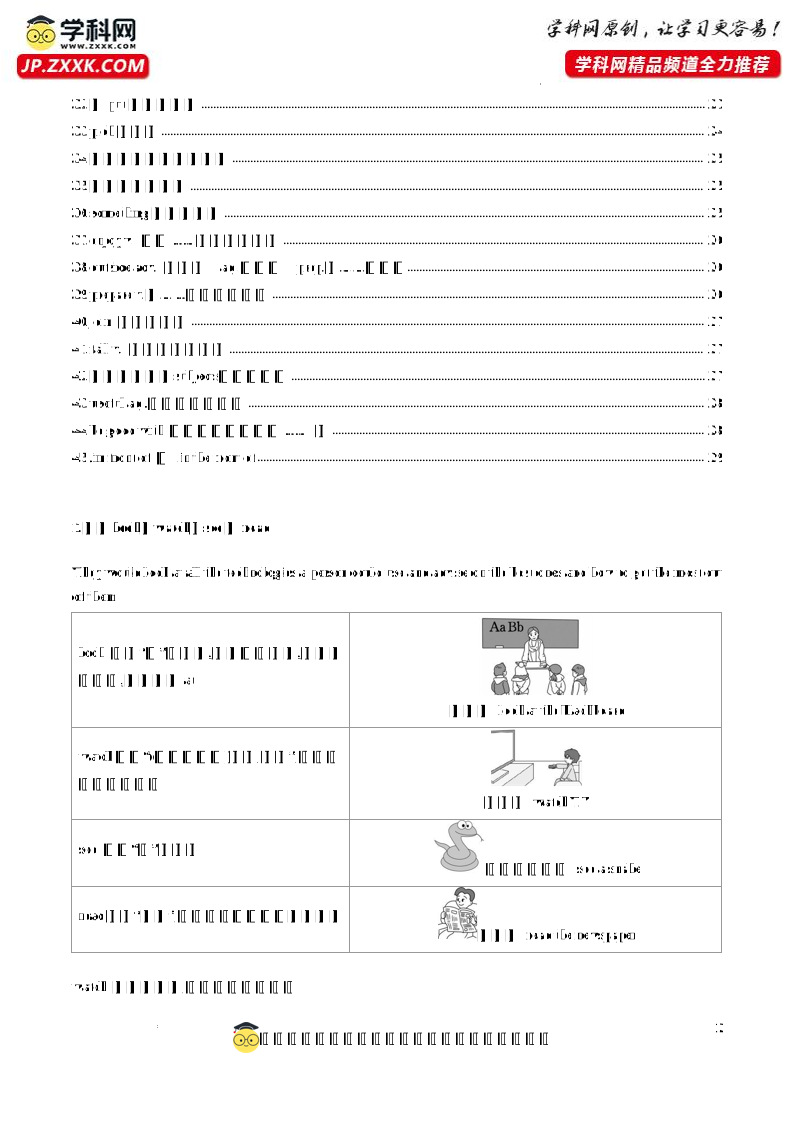
1.辨析look、watch、see和read
They would look at all the technologies a person could use and advise on the best ones and how to get the most out of them.
look 强调“看”的动作,作不及物动词,后面接宾语时,要加介词at
看黑板 look at the blackboard
watch强调“(聚精会神地)观看;注视”,如看电视、看比赛等
看电视 watch TV
see 强调“看”的结果
看见了一条蛇 see a snake
read意为“阅读”,如看书、看报纸、看杂志等
看报纸 read the newspaper
watch 专注用时长,比赛影视常登场。
see 以结果为导向,看到内容心中藏。
look 动作要先想,单独使用不恰当。
look at 搭配强,指向目标不能忘。
read 文字书中躺,阅读书籍心欢畅。
用方框中所给单词的正确形式填空(每个单词只能用一次)。
watch see look read
1. ! The children are listening to the teacher carefully. They are interested in the colorful culture in our country.
2.—While , the more careful you are, the more easily you can find answers in the article.
—That's true.
3.The documentary (纪录片) A Plastic Ocean is so educational that I have it several times so far.
4.I didn't you yesterday morning. Where were you?
1.Look 2.reading 3.watched 4.see
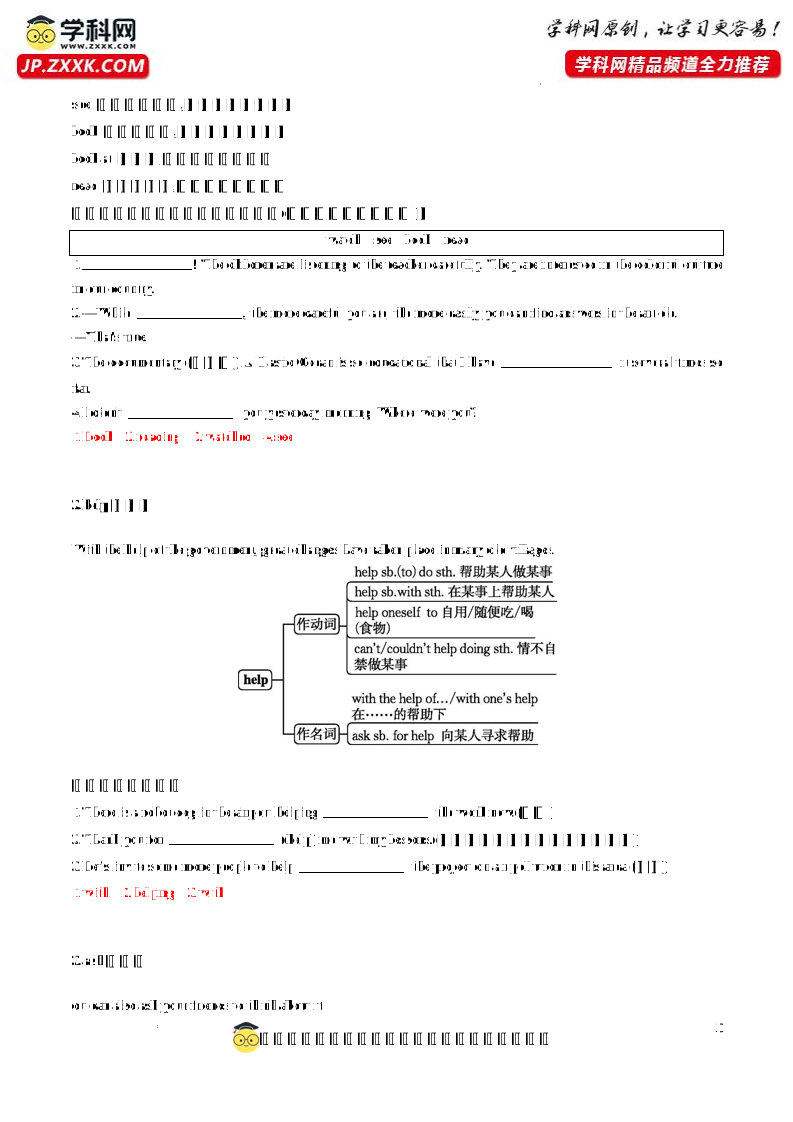
2.help的用法
With the help of the government, great changes have taken place in many old villages.
按要求完成句子。
1.There is a robot dog in the airport helping the work now.(盲填)
2.Thank you for (help) me with my lessons.(用括号内所给词的适当形式填空)
3.Let's invite some more people to help the project on air pollution in this area.(盲填)
1.with 2.helping 3.with
3.ask的用法
ou can also ask your friends to think about it.
ask多用作动词,意为“询问;要求;请求”,主要用法搭配如下:
拓展
ask还可用于以下搭配:ask sb. for help/advice向某人求助/征求意见;ask sb. to dinner请某人吃饭
根据汉语意思完成句子。
1.你应该要求Bob自己洗衣服。毕竟他现在十岁了。
You should Bob his own clothes. After all, he is ten years old now.
2.当我们身处险境时,我们可以向警察求助。
We can the police when we are in danger.
3.我可以问你一个问题吗?
May I you ?
4.这件事你可以问李明。他会告诉你。
You can Li Ming it. He will tell you.
1.ask to wash 2.ask for help 3.ask a question 4.ask about
4.“What about...?”的用法
What about singing the song Together for a Shared Future? Its name is the slogan (口号) of Beijing 2022 Olympic Winter Games.
“What about ...?”后面可接名词、代词或动名词形式,意为“……怎么样?”,可用于向对方提出建议或请求,其肯定回答:OK./All right./Good idea!/Yes, please.;否定回答:Sorry, I.../I'm afraid not.。
初中英语常见的提建议的句型还有以下几种:
根据括号中的汉语提示完成句子。
1.What about (踢足球) now?
=Would you like (踢足球) now?
2.What about (你的母亲)?You can't keep her too tired.
3.Our English teacher is kind. What about (你们的英语老师)?
1.playing football to play football 2.your mother3.yours/your English teacher
5.辨析family、home和house
After knowing the reason, the family had a meeting.
词汇含义及用法
family作集体名词,意为“家庭”,作主语时,谓语动词用单数;作个体名词,意为“家人”,作主语时,谓语动词用复数
home意为“家”,指一个人出生或居住的地方
house意为“房子”,即居住的房屋
用方框中所给单词的正确形式填空(每个单词只能用一次)。
home house family
1.Since I was born, my have lived in the same flat.
2.Tom likes the with a big garden very much, but its price goes beyond his ability to pay.
3.Thanks to the internet, we can do shopping at .
1.family 2.house 3.home
6.like的用法
It tells us that we should be proud of who we are, even if we don't look or feel like everyone else.
根据汉语意思完成句子。
1.我妹妹喜欢看电影,她最喜欢的电影是《花木兰》。
My sister movies and her favorite movie is Mulan.
2.生活就像骑自行车。为了保持平衡,你必须保持前行。
Life is riding a bicycle. To keep a balance, you must keep moving.
3.——你愿意和我分享你是如何提高你的英语口语的吗?
——尽可能频繁地阅读和倾听。
— to share how you improve your spoken English with me?
—By reading and listening as often as possible.
1.likes watching 2.like 3.Would you like
7.buy 的用法
I will buy you a new one.
根据汉语意思完成句子。
1.妈妈,你介意给我买件新衣服吗?
Mom, do you mind a new dress?
2.Mary,你决定买哪一个了吗?外套还是裙子?
Mary, have you decided which one ? The coat or the skirt?
3.我家里没有人从商店买塑料袋。
Nobody in my family plastic bags from the shop.
1.buying me 2.to buy 3.buys
7.need的用法
An AI psychologist would need to understand about both psychology and technology.
根据汉语意思完成句子。
1.为了建设美丽家园,每个人都需要遵循尊重自然、保护自然的规则。
To build a beautiful homeland, everyone to follow the rules of respecting and protecting nature.
2.——我的机器人不运作了。我该怎么办?
——我认为它需要检查。你可以打电话给客户服务部。
—My robot doesn't work. What should I do?
—I think it . You can call the customer service department.
3.虽然他是个残疾人,但他尽力帮助有需要的人。
Though he was a disabled man, he tried his best to help the people .
1.needs 2.needs checking 3.in need
8.询问价格的句型
How much does the meal cost?
1.price 表示价格高低时,用high或low。
2.price还可意为“代价”。at the price of意为“以……为代价;以……的价格”。
根据汉语意思完成句子。
1.这件裙子的价格是多少?
What is this dress?
2.新设计的汽车正在长春汽车博览会上展出。我想知道它多少钱。
The new-designed car is on show in Changchun Auto Expo. I wonder
.
1.the price of 2.how much it costs
9.busy的用法
As busy as a bee.
按要求完成句子。
1.My mother was busy (prepare) dinner when we arrived.(用所给词的适当形式填空)
2.To forget her trouble, she busied (her) in her garden. (用所给词的适当形式填空)
3.昨天她忙于大量的家务。(翻译句子)
She a lot of housework yesterday.
4.她太忙了以至于没有时间照料她的孩子。(翻译句子)
She is her child.
1.preparing 2. herself 3.busied herself in doing/was busy (in) doing/busied herself with/was busy with 4. too busy to look after/take care of
10.辨析v.-ing与v.-ed形容词
It is an interesting story that teaches us to work together and share.
考点意义和用法
v.-ing形容词一般用来形容物体本身具有的性质,表示“令人……的”。逻辑主语一般是物
v.-ed形容词一般用来形容人的感受,表示“感到……的”。逻辑主语一般是人
拓展 常见的v.-ing 形容词和v.-ed 形容词及其相关短语如下:
v.-ing v.-ed相关短语
Amazing amazed be amazed at 对……感到惊讶
Boring bored be bored with 对……感到厌烦
Exciting excited be excited about 对……感到兴奋
Interesting interested be interested in 对……感兴趣
Relaxing relaxed make oneself relaxed 放松自已
Surprising surprised be surprised at 对……感到惊讶
Tiring tired be tired of 对……感到厌烦
Worrying worried be worried about 为……感到担心
按要求完成句子。
1.She was good at physics although she found it (bore).(用所给词的适当形式填空)
2.When he heard the (excite) news, he was too (excite) to say a word.(用所给词的适当形式填空)
3.Watching TV can make us (relax), but watching TV too much is bad for our eyes.(用所给词的适当形式填空)
4.这份工作使她感到厌倦,她想做一些完全不同的事情。(根据汉语意思完成句子)
She the work and wanted to do something completely different.
1.boring 2.exciting excited 3.relaxed 4.was bored with/tired of
11.辨析常见的感官动词
That sounds really interesting!
词汇
相同点
不同点
常接形容词
sound
其后都接形容词作表语
意为“听起来”。指听觉
good, wonderful, interesting, boring
look
意为“看起来”。指视觉,描述的是某人/物的相貌/外观
beautiful, young, old
taste
意为“尝,品,吃”。指味觉,描述的是味道
delicious, salty, sweet, sour
smell
意为“发出气味;闻(到),嗅(到)”。指嗅觉,描述的是气味
sweet, nice,fresh
feel
意为“感觉,摸起来”。指触觉
soft, smooth,
comfortable
根据汉语意思完成句子,每空一词。
1.我听见窗外有鸟叫声。
I the birds singing outside the window.
2.这道菜尝起来很辣。
This dish very spicy.
3.我们能闻到厨房里传来的香味。
We can the smell coming from the kitchen.
4.我看见他走进了图书馆。
I him walk into the library.
5.这朵花摸起来很柔软。
This flower very soft.
1.take 2.carry 3.brings 4.get 5.bring 6.carrying 7.get 8.take
12.辨析bring、 take、 carry与get
I wonder what my friends would bring to put in the pot (锅) of soup if they were in the story.
bring、 take、 carry和get四个词都有“带;取”的意思,但用法不同,具体如下:
词汇
含义
例句
bring
带来
Bring me some coffee, please.
take
带走
Take these books to my office.
carry
提;携带
Tom can't carry this big box.
get=fetch
去拿来
She has gone to the milk station to get/fetch some milk.
图解助记
用bring、take、carry或get的适当形式填空。
1.Please these flowers to the classroom.
2.Granny Li, let me help you the heavy bag.
3.If we keep our hearts open, we can feel the happiness that friendship us.
4.The village is short of water and they have to walk miles to water.
5.—Remember to your book here tomorrow.
—OK, I will, Miss Li.
6.He is a big box on his back. As his friends, we should help him.
7.Let's go and some water.
8.Don't forget to your umbrella when you go out.
1.hear 2.tastes 3.smell 4.saw 5.feels
12.It's +adj. (+for/of sb.) to do sth.句型
It is very useful for a teacher in a classroom.
句型含义用法
It's+adj.+ for sb. + to do sth.做某事对某人来说是……该句型中的形容词是用于描述事物的特征、状态的,如easy、hard、important 等
It's+adj.+of sb.+ to do sth.某人做某事真是太……该句型中的形容词是用于描述行为者的性格、品质的,如 kind、clever、nice、careful等
根据汉语意思完成句子,每空一词。
1.对我们来说,按时完成作业很重要。
It's our homework on time.
2.帮助老人过马路是很棒的。
It's the elderly cross the street.
3.他帮助了一个老人过马路,这很友善。
It's to help an old man cross the street.
1.important for us to finish 2.great to help 3.kind of him
13.辨析speak、talk、say和tell
Frank knew that she thought it was better to talk about feelings instead of getting angry.
词汇含义及用法常用词组或结构
speak意为“说”,强调说的语言或者说话能力speak English 说英语;speak highly of 高度赞扬
talk意为“谈话”,强调与某人交谈talk to/with sb.与某人交谈;talk about sth.谈论某事
say意为“说”,侧重说话的内容say thanks/sorry to sb.向某人道谢/道歉
tell意为“告诉;讲述”,强调讲给别人听tell sb. (about) sth.=tell sth.to sb.告诉某人(关于)某事;tell lies 说谎;tell jokes 讲笑话
用方框中所给单词的正确形式填空(每个单词只能用一次)。
speak talk say tell
1.—An English corner was set up in our school yesterday.
—It's good for us to practice English there.
2.Seeing the offer from the university which she was looking forward to, Lily was too excited to anything.
3.Mr.Li will give us a next week.All of us are looking forward to it.
4.The idiom (成语) “Mengzi's mother makes three moves” us about a mother who tried her best to provide the best environment for her child.
1.speaking 2.say 3.talk 4.tells
14.辨析in、wear、put on和dress
“It's an Umbrella Hat. You can wear it on rainy days and...” Garth said.
词汇意义及用法
in
意为“穿着;戴着”,后接表示衣服类型或颜色的词
wear
意为“穿;戴;蓄(发、须等)”,宾语可以是衣服、帽子、鞋子、饰物、奖章、胡子等,表示状态
put on
意为“穿上”,宾语一般是衣服、鞋子、帽子等,表示瞬间的动作,不能和时间段连用
dress
意为“给……穿衣服”,宾语是人,dress oneself意为“某人自己穿衣服”,get/be dressed意为“穿好衣服”
按要求完成句子。
1.It's cold outside. (put) on your warm clothes, Bob.Don't catch a cold.(用括号内所给词的适当形式填空)
2.—Look! People outside are (wear) dresses and shorts.
—The weather must be very hot.(用括号内所给词的适当形式填空)
3.Get (dress) now, Tony! We are leaving in 10 minutes!(用括号内所给词的适当形式填空)
4.Do you know the boy red?(盲填)
5.今天多冷啊!你最好穿上外套。
How cold it is today! You'd better your coat.(根据汉语意思完成句子)
1.Put 2.wearing 3.dressed 4.in 5.put on
15.辨析too、also、either和as well
Hurricanes also pick up heat from the very hot areas of the world and drop it in less warm places.
词汇
用法
too
常用于肯定句或疑问句中,一般位于句末,常用逗号与前面的句子隔开
also
常用于肯定句或疑问句中,较正式,一般位于实义动词之前,系动词、助动词、情态动词之后
either
常用于否定句中,放在句末
as well
常用于肯定句中,放在句末,并且其前不用逗号隔开
选词填空。
too either also as well
1.I don't like tigers. My mother doesn't like tigers, .
2.I enjoy listening to pop music, and my friend Lisa enjoys it, .
3.David often helps me with my study. He shares his school things with me.
4.Keep on doing oral exercises in the English Corner. I'm sure you will improve your listening and speaking skills .
1.either 2.too 3.also 4.as well
16.teach的用法
They could teach others how to use future technologies.
用括号内所给词的适当形式填空。
1.Treasure Island is a useful novel. It (teach) me to be brave.
3.Students are taught (use) the brush pens in school and it helps them better understand the Chinese culture.
1.teaches 3.to use
17.频度副词的用法
Sometimes hurricanes do good.
1.含义:频度副词表示事情发生的频率,频度副词按频率发生的高低依次为:
2.用法:频度副词一般用在be动词、情态动词和助动词之后,实义动词之前。频度副词通常用于一般现在时中,表示现在经常或反复发生的动作或存在的状态。
选词填空。
never usually sometimes
1.—Could you please tell me when people eat mooncakes in China?
— on the Mid-Autumn Festival.
2.—Dad, I failed the exam again.
—Cheer up, Tom! challenges can bring out the best in us.
3.—Mr.White, could you give me some advice? I have trouble in learning math.
—Sure. You should be confident and give up.
1.Usually 2.Sometimes 3.never
18.与how相关的疑问词组
How long will the activity last?
疑问词组含义用法
how old多大提问年龄;答语为数词(+名词)
how many多少提问数量,后跟可数名词复数;答语为数词(+名词)
how much多少(钱)①提问数量,后跟不可数名词;答语为数词+名词;②提问价格;答语为数词+货币单位。③表示程度
how far多远提问距离;答语为数词+名词
how often多久一次提问频率;答语为频度副词
how long多长时间提问持续的时间;答语用“for+一段时间”或“since+过去的时间点”
how soon多久提问将来的时间;答语用“in+一段时间”
用恰当的疑问词组填空。
1.—Tim, is your home from our school?
—It's about five minutes' walk.
2.— do you go to the Science Club?
—Twice a week.
3.— have you stayed in Kaiping?
—For a month.
4.— will he get well, Doctor?
—In about a week, I think.
1.how far 2.How often 3.How long 4.How soon
19.“What do you think of...?”的用法
What do you think of the story?
1.“What do you think of...?” 意为“你认为……怎么样?”, of后接名词、代词或动名词形式。用来询问对某人、某 事的印象、评价、看法等。类似的表达还有:
How do you like...?
How do you feel about...?
What do you think about...?
2.回答该句型时,多阐明自己的看法或表明自己喜欢的程度。 常会用到以下句型:
(1)I+love/like/don't like/can't stand+宾语;
(2)Pretty good./It's fantastic.等表示观点、看法的句子。
根据汉语意思完成句子。
1.——David,你觉得学习中文怎么样?
——事实上,我发现很难在短时间内学好中文。
—What do you learning Chinese, David?
—Actually, I find it hard to learn Chinese well in a short time.
2.——关于电影《大雨》有一些不同的评论。你觉得怎么样?
——在我看来,这是一部优秀的电影。
—There are a few different kinds of reviews about the film A Heavy Rain.
How it?
—In my opinion, it's an excellent film.
1.think of 2.do you like
20.sure的用法
It would be this person's job to make sure that future supercomputers worked well.
按要求完成句子。
1.As we have kept practising recently, we are sure of (win) the game this time.(用所给词的适当形式填空)
2.Work a little harder, and you will be sure (make) a success.(用所给词的适当形式填空)
3.If you are (sure) of how to solve the problem, ask your teacher for help.(用所给词的适当形式填空)
4.他每天离开教室前都要确保所有的窗户都关了。(根据汉语意思完成句子)
He that all the windows are closed before he leaves the classroom every day.
5.果然,我在电话簿上找到了她的名字。(根据汉语意思完成句子)
, I found her name in the phone book.
6.会议将在九月举行,但没人知道确切的日期。(根据汉语意思完成句子)
The meeting will be held in September, but nobody knows the date .
1.winning 2.to make 3.unsure 4.makes sure 5.Sure enough 6.for sure
21.turn的用法
It turns out that it is.
拓展 与turn相关的短语
turn on 打开
turn off 关掉
turn into 变成
turn out 结果是
turn down 调低;拒绝接受
turn up 出现;调高
用与turn有关的短语填空,每空一词。
1.Could you please the light? I can't sleep well with it on.
2.Grandma wants to watch the program Legal Report. Please the TV.
3.He tried to join the army but was because of his poor health.
4.Water can ice.
5.The little boy was afraid and his mother for comfort.
6. —Do you mind if I the radio? I can't hear clearly.
—Better not. My baby is sleeping.
7.Spring is coming.The leaves on the trees .
1.turn off 2.turn on 3.turned down 4.turn into 5.turned to 6.turn up 7.turn green
22.forget的用法
The most common mistake is forgetting to add the coffee.
如:Don't forget to write down the correct answers next to the mistakes.别忘了在错误旁边写下正确答案。
I forgot borrowing the book from you last week.我忘了上周向你借了这本书。
拓展 与forget 用法相同的词还有
用括号内所给词的适当形式填空。
1.This morning, I forgot (lock) the door, so I turned back on my way to office.
2.—Have you forgotten (borrow) a ruler from Betty?
—Oh, yes. I'll return it to her tomorrow.
3.Don't forget (say) thanks when other people help you.
4.To live a low-carbon life, we must remember (turn) off the lights when we leave the room.
1.to lock 2.borrowing 3.to say 4.to turn
23.辨析through、across、over与along
It looks as if a hurricane passed through it.
词汇含义及用法示例
through作介词,常与go/walk 连用,表示“穿过;通过;经过”,指从空间内通过
across作介词,常与go/walk 连用,表示“横过;穿过”,指从物体表面通过。across from 意为“在……对面”
over作介词,表示“横过;越过”,指从物体上方经过
along作介词,表示“沿着”,通常指顺着狭长的路
用across、through或over填空。
1.The man went the city alone.
2.My father can swim the river easily.
3.Look, a plane is flying our head.
4.Jenny saw some monkeys and rabbits when she was walking the forest.
5.Look at the bird! It is flying the sea.
6.The sunshine is coming in the window.
7.They walked slowly the road, talking and laughing.
1.through 2.across 3.over 4.through 5.over6.through 7.along
24.enjoy的用法
Some students like to study alone. Others enjoy studying with a group.
用括号内所给词的适当形式填空。
1.My sister enjoys (take) photos, so she wants to buy a camera which allows her to take pictures of high quality.
2.—Did you enjoy (you) at the School Music Festival?
—Yes, we did. And our class won first prize.
1.taking 2.yourselves
25.辨析a little、little、a few和few
Tom has been in Shanghai for five years, so he can speak a little Chinese.
词汇意义及用法
a little意为“一点儿;少量”,修饰不可数名词,表示肯定意义;还可修饰比较级,表示程度
little意为“几乎没有”,修饰不可数名词,表示否定意义
a few意为“一些”,修饰可数名词复数,表示肯定意义
few意为“几乎没有”,修饰可数名词复数,表示否定意义
quite a few 相当多
There are only a few books on the table, but I still have quite a few in the bookcase. 虽然桌子上只有几本书,但我的书柜里还有很多书。
用方框中所给单词的正确形式填空(可重复使用)。
few a few little a little
1.Sorry, I can only give water to you.I don't have much.
2.This is an old song, so young people know it.
3.My father has many books, but he has English books.
4.—David often plays alone. He has friends.
—Yes. He is too shy to make friends.
5.—Would you like some milk in your tea?
—Yes, just .
6.She has written a lot of books, but of them are good ones.
7.No one knows why he has words than before.
8.There is ink in my pen. Could you give me ?
9.There aren't many oranges here, but you can take if you want to.
10.Can we do our work better with money and people?
1.a little 2.few 3.few 4. few 5.a little6.few 7.fewer 8.little a little 9.a few10.less fewer
26.“What do(es) sb. look like? ”的用法
What does the boy's sister look like?
“What do(es) sb. look like?”是用来询问某人的长相、外貌特征的常用句型,意为“……长什么样?”,句中的like是介词。其答语结构:
(1)与上述句型类似的句型有“What be sb. like?”,该句型通常用来询问性格、品质特征等,意为“……是个什么样的人?”,句中like是介词。例如:
—What's Ruth like? Ruth是一个什么样的人呢?
—She's quiet and a little shy.她很文静,且有点害羞。
(2)常见的描述外貌特征的形容词:tall/short/fat/thin/strong/weak/beautiful/pretty/ugly/old;
(3)常见的描述性格或品质特征的形容词:
quiet/brave/clever/wise/strict/serious/humorous/funny/active/lazy/hard-working/careful/careless/patient/kind/friendly/polite/helpful/smart/nice。
根据括号中的汉语提示完成句子。
1.— (他长得怎么样)?
—He is tall and thin.
2.—What does your cousin look like?
—He is a bit (胖的), because he likes eating sweet food.
3.— (他是一个什么样的人)?
—He is wise.
1.What does he look like 2.fat 3.What's he like
27.order的用法
—May I take your order, Mr.Chen?
—I'd like a cup of coffee and a cake as usual.
按要求完成句子。
1.The police ordered him (wait) right there until they made sure of the truth.(用所给词的适当形式填空)
2.The boss ordered that the work should (do) on time.(用所给词的适当形式填空)
3.好的。我马上回来为您点菜。(根据汉语意思完成句子)
OK. I'll be back to in a minute.
4.现在,他有机会让自己的生活重新走上正轨。(根据汉语意思完成句子)
Now he has a chance to put his life back .
1.to wait 2.be done 3.take your 4.in order
28.would like的用法
When you make a fresh salad, you may add your favorite fruit if you would like to.
根据汉语意思完成句子。
1.我的自行车坏了。我问他是否愿意和我分享他的。
My bike was broken. I asked him if he to share his with me.
2.你想为你妈妈的生日买什么?
What you buy for your mother's birthday?
3.——下周你愿意和我一起去看熊猫萌兰吗?
——当然,只要我能及时完成作业。
— see the panda Menglan with me next week?
—Sure, as long as I can finish my schoolwork in time.
1.would like 2.would like to 3.Would you like to
29.so...that... 的用法
I was so tired that I couldn't walk on.
so...that...意为“如此……以至于……”,so后面要跟形容词或副词,that引导结果状语从句。
so...that...引导的否定句和too...to...结构可以互换。
so...that...引导的肯定句可以和...enough to...结构互换。
同义句转换。
1.Sam is always too busy to have time for his family.
Sam is always busy he has no time for his family.
2.The woman was so weak that she couldn't stand up.
The woman was weak stand up.
3.The film was so interesting that I saw it again and again.
The film for me it again and again.
1.so that 2.too to 3.was interesting enough to see
30.surprise的用法
I opened the door and all my friends shouted “Happy Birthday!”. I had no idea they were coming. I was so surprised.
surprising 意为“令人惊讶的”,多用来修饰物;surprised 意为“感到惊讶的”,多用来修饰人。与surprised 相关的搭配如下:
be surprised at... 对……感到惊讶
be surprised to do sth. 对做某事感到惊讶
be surprised that... 对……感到惊讶
根据汉语提示完成句子。
1.在我告诉他后,他对这个消息感到很吃惊。
After I told him, he was surprised the news.
2.令大家惊讶的是,他获得了一等奖。
, he won first prize.
3.听到这个令人吃惊的消息他们都感到很吃惊。
They were to hear the news.
1.at 2.To everyone's surprise 3.surprised surprising
31.辨析listen、hear与sound
That sounds really interesting!
词汇
用法
listen
不及物动词,意为“听”,强调听的动作
listen to 意为“听……”,后跟人或物作宾语
hear
意为“听到;听见”,强调听的结果
hear sb.do sth.意为“听到某人做某事”,强调全过程
hear sb.doing sth.意为“听到某人正在做某事”,强调动作正在进行
sound
连系动词,意为“听起来”,后跟形容词作表语
sound like意为“听起来像”
用方框中所给单词的正确形式填空。
listen hear sound
1.Chinese folk music beautiful. I like it very much.
2.The teacher to his story and then gave him some suggestions to help him.
3.—Excuse me, could you please speak a little more loudly?
—Sorry, I thought you could me.
1.sounds 2.listened 3.hear
32.与put相关的短语
She put all of her things in their proper places.
从左边选择恰当的短语并用其适当形式填空。
1.If you feel sick, you should not going to the doctor.
2.You are not allowed to ads on this wall without permission.
3.He the things that you left on the floor and left.
4.He turned off the television, his coat and walked out.
5.Don't your hands. Put them up.
6.The firemen had the fire when we got there.
7.He such a useful suggestion, which was agreed by all the members.
8.I wonder when you will the play.
9.He went camping with us and taught us how to a tent.
10.Nothing is impossible if you it.
1.put off 2.put up 3.put away 4.put on 5.put down 6. put out 7.put forward 8.put on 9.put up 10.put your heart into
33.pick的用法
I ran to pick them up.
按要求完成下列练习。
1.I'm very busy. Could you help me (pick out/pick up) the telephone?(选词填空)
2.我八点钟到你家来接你。(根据汉语意思完成句子)
I'll come by your house at 8 o'clock and .
3.她在学校从来没有学过法语,只是在巴黎工作时学会的。(根据汉语意思完成句子)
She never studied French in school — she just when she was working in Paris.
1.pick up 2.pick you up 3.picked it up
34.月份的英文全称及缩写
January(Jan.)一月
February(Feb.)二月
March(Mar.)三月
April(Apr.)四月
May(不能缩写)五月
June(Jun.)六月
July(Jul.)七月
August(Aug.)八月
September(Sept.)九月
October(Oct.)十月
November(Nov.)十一月
December(Dec.)十二月
35.序数词的读法:
(1) 1、2、3单独记(即first, second, third)
(2) 8后少t,9少e(即eighth, ninth)
(3) 5、12变ve为fth(即fifth, twelfth)
(4) 整十位数变y为ie再加th(如twentieth)
一个月的某一天用序数词表示,一般用缩写,缩写保留数字和后两位字母或只有数字。比如5月31号,May 31st或May 31,读作May (the)thirty-first。
36.something某事;某物
(1)常用于肯定句中。
Let me tell you something about my school.让我来告诉你一些我学校的事情吧。
(2)作主语时,谓语动词用单数形式。
Something is wrong with my computer.新电脑出故障了。
(3)被形容词修饰时,形容词位于something之后。
We should spend our pocket money wisely and use it to do something meaningful. 我们应该理性使用零花钱,用它做一些有意义的事情。
37.enjoy v. 享受……的乐趣;喜欢
(1)enjoy sth.享受某物(的乐趣)
I really enjoyed the weekend.我很享受这个周末。
(2)enjoy doing sth.喜欢做某事
Sandy’s uncle is a teacher. He enjoys staying with kids.桑迪的叔叔是一名教师,他喜欢和孩子们待在一起。
(3)enjoy oneself过得高兴,玩得愉快
People enjoy themselves during the Lantern Festival.人们在元宵节那天玩得很开心。
38.outside adv. 在外面 adj.外面的 prep.在……外面
39.prepare v.把……预备好;准备
[动词]把……预备好;准备
还可意为“(为……)做准备”。常见搭配有:
I prepare my speech for tomorrow’s meeting.我为明天的会议准备发言稿。
On Mother’s Day, students should prepare presents for their mothers.在母亲节这天,学生们应该为他们的母亲准备礼物。(衡阳中考改编)
Robert is preparing for his match.罗伯特正在准备他的比赛。
I prepare to join the swimming club.我准备加入游泳俱乐部。
40.join 参加;加入
join
指加入某个党派、团体、组织等,并成为其中一员。
join in
多指参加小规模的活动如“游戏、比赛”, 多用于口语。
take part in
指参加会议或群众性活动,着重说明主语参加该项活动并在活动中发挥积极作用。
We’ll take part in/join in some after-school activities.
Would you like to join us? 我们将参加一些课外活动。你想加入我们吗?
41.fall v. 进入(某状态)
fall in love with 爱上……
The crowd fell silent.人群安静了下来。
Did you fall ill last week?你上周生病了吗?
Once you fall in love with it, you’ll get lots of fun. 一旦你爱上了它,你会得到很多乐趣。
【拓展】fall的其他含义:
42.常见的学科(subjects)类名称:
Chinese语文
English英语
chemistry化学
physics物理
history历史
geography地理
maths(=mathematics)数学
biology生物
art美术
music音乐
PE(=physical education)体育
IT(=information technology)
43.useful adj.有用的;有益的
(1)由“use(n.使用;用途)+-ful(形容词后缀)”构成,可在句中作定语或者表语。
(2)useful的发音以辅音音素开头,其前如果需要不定冠词,应用a。
be useful to sb.对某人有用
be useful for doing sth.对做某事有用
These cute and useful bags are popular with young people.这些可爱又实用的包很受年轻人的欢迎。(作定语)
The English-Chinese dictionary is useful.这本英汉词典很有用。(作表语)
A cool box is useful for keeping your picnic food.冷藏箱对保存你的野餐很有用。
【词缀学习】
-ful是形容词后缀,加在某些名词后面,意为“充满……的,有……性质的”。
help helpful colour colourful颜色鲜艳的
thank thankful感激的 hope hopeful有希望的
care careful小心的 success successful成功的
44.be good with 灵巧的;善于应付…… 的
其后通常接名词。
The teacher is very good with children.这位老师对孩子很有一套。
Peter is good with money.彼得很会理财。
be good at 擅长
be good to对……友好
be good for对……有益
David is good at skating.戴维擅长滑冰。
He is good to us.他对我们很友好。
Tea is good for your health.茶对你的健康有益。
45 .in front of 与 in the front of
in front of 在……前面(在物体外部的前面)
in the front of 在……前部(在物体内部的前面)
The driver sits in the front of the bus. 公共汽车的司机都是坐在车前的。
The car stopped in front of the post office. 车在邮局前面停了下来。
原创精品资源学科网独家享有版权,侵权必究!10
学科网(北京)股份有限公司
学科网(北京)股份有限公司
$$
Starter Units ~Unit7常考点和易错点
目录
1.辨析look、watch、see和read 2
2.help的用法 3
3.ask的用法 4
4.“What about...?”的用法 4
5.辨析family、home和house 5
6.like的用法 5
7.need的用法 6
8.询问价格的句型 7
9.busy的用法 8
10.辨析v.-ing与v.-ed形容词 8
11.辨析常见的感官动词 9
12.辨析bring、 take、 carry与get 10
13.辨析speak、talk、say和tell 11
14.辨析in、wear、put on和dress 12
15.辨析too、also、either和as well 12
16.teach的用法 13
17.频度副词的用法 13
18.与how相关的疑问词组 14
19.“What do you think of...?”的用法 15
20.sure的用法 15
21.turn的用法 16
22.forget的用法 17
23.辨析through、across、over与along 18
24.enjoy的用法 19
25.辨析a little、little、a few和few 19
26.“What do(es) sb. look like? ”的用法 20
27.order的用法 21
28.would like的用法 21
29.so...that... 的用法 22
30.surprise的用法 22
31.辨析listen、hear与sound 23
32.与put相关的短语 23
33.pick的用法 24
34.月份的英文全称及缩写 25
35.序数词的读法: 25
36.something某事;某物 25
37.enjoy v. 享受……的乐趣;喜欢 26
38.outside adv. 在外面 adj.外面的 prep.在……外面 26
39.prepare v.把……预备好;准备 26
40.join 参加;加入 27
41.fall v. 进入(某状态) 27
42.常见的学科(subjects)类名称: 27
43.useful adj.有用的;有益的 28
44.be good with 灵巧的;善于应付…… 的 28
45 .in front of 与 in the front of 29
1.辨析look、watch、see和read
They would look at all the technologies a person could use and advise on the best ones and how to get the most out of them.
look 强调“看”的动作,作不及物动词,后面接宾语时,要加介词at
看黑板 look at the blackboard
watch强调“(聚精会神地)观看;注视”,如看电视、看比赛等
看电视 watch TV
see 强调“看”的结果
看见了一条蛇 see a snake
read意为“阅读”,如看书、看报纸、看杂志等
看报纸 read the newspaper
watch 专注用时长,比赛影视常登场。
see 以结果为导向,看到内容心中藏。
look 动作要先想,单独使用不恰当。
look at 搭配强,指向目标不能忘。
read 文字书中躺,阅读书籍心欢畅。
用方框中所给单词的正确形式填空(每个单词只能用一次)。
watch see look read
1. ! The children are listening to the teacher carefully. They are interested in the colorful culture in our country.
2.—While , the more careful you are, the more easily you can find answers in the article.
—That's true.
3.The documentary (纪录片) A Plastic Ocean is so educational that I have it several times so far.
4.I didn't you yesterday morning. Where were you?
2.help的用法
With the help of the government, great changes have taken place in many old villages.
按要求完成句子。
1.There is a robot dog in the airport helping the work now.(盲填)
2.Thank you for (help) me with my lessons.(用括号内所给词的适当形式填空)
3.Let's invite some more people to help the project on air pollution in this area.(盲填)
3.ask的用法
ou can also ask your friends to think about it.
ask多用作动词,意为“询问;要求;请求”,主要用法搭配如下:
拓展
ask还可用于以下搭配:ask sb. for help/advice向某人求助/征求意见;ask sb. to dinner请某人吃饭
根据汉语意思完成句子。
1.你应该要求Bob自己洗衣服。毕竟他现在十岁了。
You should Bob his own clothes. After all, he is ten years old now.
2.当我们身处险境时,我们可以向警察求助。
We can the police when we are in danger.
3.我可以问你一个问题吗?
May I you ?
4.这件事你可以问李明。他会告诉你。
You can Li Ming it. He will tell you.
4.“What about...?”的用法
What about singing the song Together for a Shared Future? Its name is the slogan (口号) of Beijing 2022 Olympic Winter Games.
“What about ...?”后面可接名词、代词或动名词形式,意为“……怎么样?”,可用于向对方提出建议或请求,其肯定回答:OK./All right./Good idea!/Yes, please.;否定回答:Sorry, I.../I'm afraid not.。
初中英语常见的提建议的句型还有以下几种:
根据括号中的汉语提示完成句子。
1.What about (踢足球) now?
=Would you like (踢足球) now?
2.What about (你的母亲)?You can't keep her too tired.
3.Our English teacher is kind. What about (你们的英语老师)?
5.辨析family、home和house
After knowing the reason, the family had a meeting.
词汇含义及用法
family作集体名词,意为“家庭”,作主语时,谓语动词用单数;作个体名词,意为“家人”,作主语时,谓语动词用复数
home意为“家”,指一个人出生或居住的地方
house意为“房子”,即居住的房屋
用方框中所给单词的正确形式填空(每个单词只能用一次)。
home house family
1.Since I was born, my have lived in the same flat.
2.Tom likes the with a big garden very much, but its price goes beyond his ability to pay.
3.Thanks to the internet, we can do shopping at .
6.like的用法
It tells us that we should be proud of who we are, even if we don't look or feel like everyone else.
根据汉语意思完成句子。
1.我妹妹喜欢看电影,她最喜欢的电影是《花木兰》。
My sister movies and her favorite movie is Mulan.
2.生活就像骑自行车。为了保持平衡,你必须保持前行。
Life is riding a bicycle. To keep a balance, you must keep moving.
3.——你愿意和我分享你是如何提高你的英语口语的吗?
——尽可能频繁地阅读和倾听。
— to share how you improve your spoken English with me?
—By reading and listening as often as possible.
7.buy 的用法
I will buy you a new one.
根据汉语意思完成句子。
1.妈妈,你介意给我买件新衣服吗?
Mom, do you mind a new dress?
2.Mary,你决定买哪一个了吗?外套还是裙子?
Mary, have you decided which one ? The coat or the skirt?
3.我家里没有人从商店买塑料袋。
Nobody in my family plastic bags from the shop.
7.need的用法
An AI psychologist would need to understand about both psychology and technology.
根据汉语意思完成句子。
1.为了建设美丽家园,每个人都需要遵循尊重自然、保护自然的规则。
To build a beautiful homeland, everyone to follow the rules of respecting and protecting nature.
2.——我的机器人不运作了。我该怎么办?
——我认为它需要检查。你可以打电话给客户服务部。
—My robot doesn't work. What should I do?
—I think it . You can call the customer service department.
3.虽然他是个残疾人,但他尽力帮助有需要的人。
Though he was a disabled man, he tried his best to help the people .
8.询问价格的句型
How much does the meal cost?
1.price 表示价格高低时,用high或low。
2.price还可意为“代价”。at the price of意为“以……为代价;以……的价格”。
根据汉语意思完成句子。
1.这件裙子的价格是多少?
What is this dress?
2.新设计的汽车正在长春汽车博览会上展出。我想知道它多少钱。
The new-designed car is on show in Changchun Auto Expo. I wonder
.
9.busy的用法
As busy as a bee.
按要求完成句子。
1.My mother was busy (prepare) dinner when we arrived.(用所给词的适当形式填空)
2.To forget her trouble, she busied (her) in her garden. (用所给词的适当形式填空)
3.昨天她忙于大量的家务。(翻译句子)
She a lot of housework yesterday.
4.她太忙了以至于没有时间照料她的孩子。(翻译句子)
She is her child.
10.辨析v.-ing与v.-ed形容词
It is an interesting story that teaches us to work together and share.
考点意义和用法
v.-ing形容词一般用来形容物体本身具有的性质,表示“令人……的”。逻辑主语一般是物
v.-ed形容词一般用来形容人的感受,表示“感到……的”。逻辑主语一般是人
拓展 常见的v.-ing 形容词和v.-ed 形容词及其相关短语如下:
v.-ing v.-ed相关短语
Amazing amazed be amazed at 对……感到惊讶
Boring bored be bored with 对……感到厌烦
Exciting excited be excited about 对……感到兴奋
Interesting interested be interested in 对……感兴趣
Relaxing relaxed make oneself relaxed 放松自已
Surprising surprised be surprised at 对……感到惊讶
Tiring tired be tired of 对……感到厌烦
Worrying worried be worried about 为……感到担心
按要求完成句子。
1.She was good at physics although she found it (bore).(用所给词的适当形式填空)
2.When he heard the (excite) news, he was too (excite) to say a word.(用所给词的适当形式填空)
3.Watching TV can make us (relax), but watching TV too much is bad for our eyes.(用所给词的适当形式填空)
4.这份工作使她感到厌倦,她想做一些完全不同的事情。(根据汉语意思完成句子)
She the work and wanted to do something completely different.
11.辨析常见的感官动词
That sounds really interesting!
词汇
相同点
不同点
常接形容词
sound
其后都接形容词作表语
意为“听起来”。指听觉
good, wonderful, interesting, boring
look
意为“看起来”。指视觉,描述的是某人/物的相貌/外观
beautiful, young, old
taste
意为“尝,品,吃”。指味觉,描述的是味道
delicious, salty, sweet, sour
smell
意为“发出气味;闻(到),嗅(到)”。指嗅觉,描述的是气味
sweet, nice,fresh
feel
意为“感觉,摸起来”。指触觉
soft, smooth,
comfortable
根据汉语意思完成句子,每空一词。
1.我听见窗外有鸟叫声。
I the birds singing outside the window.
2.这道菜尝起来很辣。
This dish very spicy.
3.我们能闻到厨房里传来的香味。
We can the smell coming from the kitchen.
4.我看见他走进了图书馆。
I him walk into the library.
5.这朵花摸起来很柔软。
This flower very soft.
1.take 2.carry 3.brings 4.get 5.bring 6.carrying 7.get 8.take
12.辨析bring、 take、 carry与get
I wonder what my friends would bring to put in the pot (锅) of soup if they were in the story.
bring、 take、 carry和get四个词都有“带;取”的意思,但用法不同,具体如下:
词汇
含义
例句
bring
带来
Bring me some coffee, please.
take
带走
Take these books to my office.
carry
提;携带
Tom can't carry this big box.
get=fetch
去拿来
She has gone to the milk station to get/fetch some milk.
图解助记
用bring、take、carry或get的适当形式填空。
1.Please these flowers to the classroom.
2.Granny Li, let me help you the heavy bag.
3.If we keep our hearts open, we can feel the happiness that friendship us.
4.The village is short of water and they have to walk miles to water.
5.—Remember to your book here tomorrow.
—OK, I will, Miss Li.
6.He is a big box on his back. As his friends, we should help him.
7.Let's go and some water.
8.Don't forget to your umbrella when you go out.
12.It's +adj. (+for/of sb.) to do sth.句型
It is very useful for a teacher in a classroom.
句型含义用法
It's+adj.+ for sb. + to do sth.做某事对某人来说是……该句型中的形容词是用于描述事物的特征、状态的,如easy、hard、important 等
It's+adj.+of sb.+ to do sth.某人做某事真是太……该句型中的形容词是用于描述行为者的性格、品质的,如 kind、clever、nice、careful等
根据汉语意思完成句子,每空一词。
1.对我们来说,按时完成作业很重要。
It's our homework on time.
2.帮助老人过马路是很棒的。
It's the elderly cross the street.
3.他帮助了一个老人过马路,这很友善。
It's to help an old man cross the street.
13.辨析speak、talk、say和tell
Frank knew that she thought it was better to talk about feelings instead of getting angry.
词汇含义及用法常用词组或结构
speak意为“说”,强调说的语言或者说话能力speak English 说英语;speak highly of 高度赞扬
talk意为“谈话”,强调与某人交谈talk to/with sb.与某人交谈;talk about sth.谈论某事
say意为“说”,侧重说话的内容say thanks/sorry to sb.向某人道谢/道歉
tell意为“告诉;讲述”,强调讲给别人听tell sb. (about) sth.=tell sth.to sb.告诉某人(关于)某事;tell lies 说谎;tell jokes 讲笑话
用方框中所给单词的正确形式填空(每个单词只能用一次)。
speak talk say tell
1.—An English corner was set up in our school yesterday.
—It's good for us to practice English there.
2.Seeing the offer from the university which she was looking forward to, Lily was too excited to anything.
3.Mr.Li will give us a next week.All of us are looking forward to it.
4.The idiom (成语) “Mengzi's mother makes three moves” us about a mother who tried her best to provide the best environment for her child.
14.辨析in、wear、put on和dress
“It's an Umbrella Hat. You can wear it on rainy days and...” Garth said.
词汇意义及用法
in
意为“穿着;戴着”,后接表示衣服类型或颜色的词
wear
意为“穿;戴;蓄(发、须等)”,宾语可以是衣服、帽子、鞋子、饰物、奖章、胡子等,表示状态
put on
意为“穿上”,宾语一般是衣服、鞋子、帽子等,表示瞬间的动作,不能和时间段连用
dress
意为“给……穿衣服”,宾语是人,dress oneself意为“某人自己穿衣服”,get/be dressed意为“穿好衣服”
按要求完成句子。
1.It's cold outside. (put) on your warm clothes, Bob.Don't catch a cold.(用括号内所给词的适当形式填空)
2.—Look! People outside are (wear) dresses and shorts.
—The weather must be very hot.(用括号内所给词的适当形式填空)
3.Get (dress) now, Tony! We are leaving in 10 minutes!(用括号内所给词的适当形式填空)
4.Do you know the boy red?(盲填)
5.今天多冷啊!你最好穿上外套。
How cold it is today! You'd better your coat.(根据汉语意思完成句子)
15.辨析too、also、either和as well
Hurricanes also pick up heat from the very hot areas of the world and drop it in less warm places.
词汇
用法
too
常用于肯定句或疑问句中,一般位于句末,常用逗号与前面的句子隔开
also
常用于肯定句或疑问句中,较正式,一般位于实义动词之前,系动词、助动词、情态动词之后
either
常用于否定句中,放在句末
as well
常用于肯定句中,放在句末,并且其前不用逗号隔开
选词填空。
too either also as well
1.I don't like tigers. My mother doesn't like tigers, .
2.I enjoy listening to pop music, and my friend Lisa enjoys it, .
3.David often helps me with my study. He shares his school things with me.
4.Keep on doing oral exercises in the English Corner. I'm sure you will improve your listening and speaking skills .
16.teach的用法
They could teach others how to use future technologies.
用括号内所给词的适当形式填空。
1.Treasure Island is a useful novel. It (teach) me to be brave.
3.Students are taught (use) the brush pens in school and it helps them better understand the Chinese culture.
17.频度副词的用法
Sometimes hurricanes do good.
1.含义:频度副词表示事情发生的频率,频度副词按频率发生的高低依次为:
2.用法:频度副词一般用在be动词、情态动词和助动词之后,实义动词之前。频度副词通常用于一般现在时中,表示现在经常或反复发生的动作或存在的状态。
选词填空。
never usually sometimes
1.—Could you please tell me when people eat mooncakes in China?
— on the Mid-Autumn Festival.
2.—Dad, I failed the exam again.
—Cheer up, Tom! challenges can bring out the best in us.
3.—Mr.White, could you give me some advice? I have trouble in learning math.
—Sure. You should be confident and give up.
18.与how相关的疑问词组
How long will the activity last?
疑问词组含义用法
how old多大提问年龄;答语为数词(+名词)
how many多少提问数量,后跟可数名词复数;答语为数词(+名词)
how much多少(钱)①提问数量,后跟不可数名词;答语为数词+名词;②提问价格;答语为数词+货币单位。③表示程度
how far多远提问距离;答语为数词+名词
how often多久一次提问频率;答语为频度副词
how long多长时间提问持续的时间;答语用“for+一段时间”或“since+过去的时间点”
how soon多久提问将来的时间;答语用“in+一段时间”
用恰当的疑问词组填空。
1.—Tim, is your home from our school?
—It's about five minutes' walk.
2.— do you go to the Science Club?
—Twice a week.
3.— have you stayed in Kaiping?
—For a month.
4.— will he get well, Doctor?
—In about a week, I think.
19.“What do you think of...?”的用法
What do you think of the story?
1.“What do you think of...?” 意为“你认为……怎么样?”, of后接名词、代词或动名词形式。用来询问对某人、某 事的印象、评价、看法等。类似的表达还有:
How do you like...?
How do you feel about...?
What do you think about...?
2.回答该句型时,多阐明自己的看法或表明自己喜欢的程度。 常会用到以下句型:
(1)I+love/like/don't like/can't stand+宾语;
(2)Pretty good./It's fantastic.等表示观点、看法的句子。
根据汉语意思完成句子。
1.——David,你觉得学习中文怎么样?
——事实上,我发现很难在短时间内学好中文。
—What do you learning Chinese, David?
—Actually, I find it hard to learn Chinese well in a short time.
2.——关于电影《大雨》有一些不同的评论。你觉得怎么样?
——在我看来,这是一部优秀的电影。
—There are a few different kinds of reviews about the film A Heavy Rain.
How it?
—In my opinion, it's an excellent film.
20.sure的用法
It would be this person's job to make sure that future supercomputers worked well.
按要求完成句子。
1.As we have kept practising recently, we are sure of (win) the game this time.(用所给词的适当形式填空)
2.Work a little harder, and you will be sure (make) a success.(用所给词的适当形式填空)
3.If you are (sure) of how to solve the problem, ask your teacher for help.(用所给词的适当形式填空)
4.他每天离开教室前都要确保所有的窗户都关了。(根据汉语意思完成句子)
He that all the windows are closed before he leaves the classroom every day.
5.果然,我在电话簿上找到了她的名字。(根据汉语意思完成句子)
, I found her name in the phone book.
6.会议将在九月举行,但没人知道确切的日期。(根据汉语意思完成句子)
The meeting will be held in September, but nobody knows the date .
21.turn的用法
It turns out that it is.
拓展 与turn相关的短语
turn on 打开
turn off 关掉
turn into 变成
turn out 结果是
turn down 调低;拒绝接受
turn up 出现;调高
用与turn有关的短语填空,每空一词。
1.Could you please the light? I can't sleep well with it on.
2.Grandma wants to watch the program Legal Report. Please the TV.
3.He tried to join the army but was because of his poor health.
4.Water can ice.
5.The little boy was afraid and his mother for comfort.
6. —Do you mind if I the radio? I can't hear clearly.
—Better not. My baby is sleeping.
7.Spring is coming.The leaves on the trees .
22.forget的用法
The most common mistake is forgetting to add the coffee.
如:Don't forget to write down the correct answers next to the mistakes.别忘了在错误旁边写下正确答案。
I forgot borrowing the book from you last week.我忘了上周向你借了这本书。
拓展 与forget 用法相同的词还有
用括号内所给词的适当形式填空。
1.This morning, I forgot (lock) the door, so I turned back on my way to office.
2.—Have you forgotten (borrow) a ruler from Betty?
—Oh, yes. I'll return it to her tomorrow.
3.Don't forget (say) thanks when other people help you.
4.To live a low-carbon life, we must remember (turn) off the lights when we leave the room.
23.辨析through、across、over与along
It looks as if a hurricane passed through it.
词汇含义及用法示例
through作介词,常与go/walk 连用,表示“穿过;通过;经过”,指从空间内通过
across作介词,常与go/walk 连用,表示“横过;穿过”,指从物体表面通过。across from 意为“在……对面”
over作介词,表示“横过;越过”,指从物体上方经过
along作介词,表示“沿着”,通常指顺着狭长的路
用across、through或over填空。
1.The man went the city alone.
2.My father can swim the river easily.
3.Look, a plane is flying our head.
4.Jenny saw some monkeys and rabbits when she was walking the forest.
5.Look at the bird! It is flying the sea.
6.The sunshine is coming in the window.
7.They walked slowly the road, talking and laughing.
24.enjoy的用法
Some students like to study alone. Others enjoy studying with a group.
用括号内所给词的适当形式填空。
1.My sister enjoys (take) photos, so she wants to buy a camera which allows her to take pictures of high quality.
2.—Did you enjoy (you) at the School Music Festival?
—Yes, we did. And our class won first prize.
25.辨析a little、little、a few和few
Tom has been in Shanghai for five years, so he can speak a little Chinese.
词汇意义及用法
a little意为“一点儿;少量”,修饰不可数名词,表示肯定意义;还可修饰比较级,表示程度
little意为“几乎没有”,修饰不可数名词,表示否定意义
a few意为“一些”,修饰可数名词复数,表示肯定意义
few意为“几乎没有”,修饰可数名词复数,表示否定意义
quite a few 相当多
There are only a few books on the table, but I still have quite a few in the bookcase. 虽然桌子上只有几本书,但我的书柜里还有很多书。
用方框中所给单词的正确形式填空(可重复使用)。
few a few little a little
1.Sorry, I can only give water to you.I don't have much.
2.This is an old song, so young people know it.
3.My father has many books, but he has English books.
4.—David often plays alone. He has friends.
—Yes. He is too shy to make friends.
5.—Would you like some milk in your tea?
—Yes, just .
6.She has written a lot of books, but of them are good ones.
7.No one knows why he has words than before.
8.There is ink in my pen. Could you give me ?
9.There aren't many oranges here, but you can take if you want to.
10.Can we do our work better with money and people?
26.“What do(es) sb. look like? ”的用法
What does the boy's sister look like?
“What do(es) sb. look like?”是用来询问某人的长相、外貌特征的常用句型,意为“……长什么样?”,句中的like是介词。其答语结构:
(1)与上述句型类似的句型有“What be sb. like?”,该句型通常用来询问性格、品质特征等,意为“……是个什么样的人?”,句中like是介词。例如:
—What's Ruth like? Ruth是一个什么样的人呢?
—She's quiet and a little shy.她很文静,且有点害羞。
(2)常见的描述外貌特征的形容词:tall/short/fat/thin/strong/weak/beautiful/pretty/ugly/old;
(3)常见的描述性格或品质特征的形容词:
quiet/brave/clever/wise/strict/serious/humorous/funny/active/lazy/hard-working/careful/careless/patient/kind/friendly/polite/helpful/smart/nice。
根据括号中的汉语提示完成句子。
1.— (他长得怎么样)?
—He is tall and thin.
2.—What does your cousin look like?
—He is a bit (胖的), because he likes eating sweet food.
3.— (他是一个什么样的人)?
—He is wise.
27.order的用法
—May I take your order, Mr.Chen?
—I'd like a cup of coffee and a cake as usual.
按要求完成句子。
1.The police ordered him (wait) right there until they made sure of the truth.(用所给词的适当形式填空)
2.The boss ordered that the work should (do) on time.(用所给词的适当形式填空)
3.好的。我马上回来为您点菜。(根据汉语意思完成句子)
OK. I'll be back to in a minute.
4.现在,他有机会让自己的生活重新走上正轨。(根据汉语意思完成句子)
Now he has a chance to put his life back .
28.would like的用法
When you make a fresh salad, you may add your favorite fruit if you would like to.
根据汉语意思完成句子。
1.我的自行车坏了。我问他是否愿意和我分享他的。
My bike was broken. I asked him if he to share his with me.
2.你想为你妈妈的生日买什么?
What you buy for your mother's birthday?
3.——下周你愿意和我一起去看熊猫萌兰吗?
——当然,只要我能及时完成作业。
— see the panda Menglan with me next week?
—Sure, as long as I can finish my schoolwork in time.
29.so...that... 的用法
I was so tired that I couldn't walk on.
so...that...意为“如此……以至于……”,so后面要跟形容词或副词,that引导结果状语从句。
so...that...引导的否定句和too...to...结构可以互换。
so...that...引导的肯定句可以和...enough to...结构互换。
同义句转换。
1.Sam is always too busy to have time for his family.
Sam is always busy he has no time for his family.
2.The woman was so weak that she couldn't stand up.
The woman was weak stand up.
3.The film was so interesting that I saw it again and again.
The film for me it again and again.
30.surprise的用法
I opened the door and all my friends shouted “Happy Birthday!”. I had no idea they were coming. I was so surprised.
surprising 意为“令人惊讶的”,多用来修饰物;surprised 意为“感到惊讶的”,多用来修饰人。与surprised 相关的搭配如下:
be surprised at... 对……感到惊讶
be surprised to do sth. 对做某事感到惊讶
be surprised that... 对……感到惊讶
根据汉语提示完成句子。
1.在我告诉他后,他对这个消息感到很吃惊。
After I told him, he was surprised the news.
2.令大家惊讶的是,他获得了一等奖。
, he won first prize.
3.听到这个令人吃惊的消息他们都感到很吃惊。
They were to hear the news.
31.辨析listen、hear与sound
That sounds really interesting!
词汇
用法
listen
不及物动词,意为“听”,强调听的动作
listen to 意为“听……”,后跟人或物作宾语
hear
意为“听到;听见”,强调听的结果
hear sb.do sth.意为“听到某人做某事”,强调全过程
hear sb.doing sth.意为“听到某人正在做某事”,强调动作正在进行
sound
连系动词,意为“听起来”,后跟形容词作表语
sound like意为“听起来像”
用方框中所给单词的正确形式填空。
listen hear sound
1.Chinese folk music beautiful. I like it very much.
2.The teacher to his story and then gave him some suggestions to help him.
3.—Excuse me, could you please speak a little more loudly?
—Sorry, I thought you could me.
32.与put相关的短语
She put all of her things in their proper places.
从左边选择恰当的短语并用其适当形式填空。
1.If you feel sick, you should not going to the doctor.
2.You are not allowed to ads on this wall without permission.
3.He the things that you left on the floor and left.
4.He turned off the television, his coat and walked out.
5.Don't your hands. Put them up.
6.The firemen had the fire when we got there.
7.He such a useful suggestion, which was agreed by all the members.
8.I wonder when you will the play.
9.He went camping with us and taught us how to a tent.
10.Nothing is impossible if you it.
33.pick的用法
I ran to pick them up.
按要求完成下列练习。
1.I'm very busy. Could you help me (pick out/pick up) the telephone?(选词填空)
2.我八点钟到你家来接你。(根据汉语意思完成句子)
I'll come by your house at 8 o'clock and .
3.她在学校从来没有学过法语,只是在巴黎工作时学会的。(根据汉语意思完成句子)
She never studied French in school — she just when she was working in Paris.
34.月份的英文全称及缩写
January(Jan.)一月
February(Feb.)二月
March(Mar.)三月
April(Apr.)四月
May(不能缩写)五月
June(Jun.)六月
July(Jul.)七月
August(Aug.)八月
September(Sept.)九月
October(Oct.)十月
November(Nov.)十一月
December(Dec.)十二月
35.序数词的读法:
(1) 1、2、3单独记(即first, second, third)
(2) 8后少t,9少e(即eighth, ninth)
(3) 5、12变ve为fth(即fifth, twelfth)
(4) 整十位数变y为ie再加th(如twentieth)
一个月的某一天用序数词表示,一般用缩写,缩写保留数字和后两位字母或只有数字。比如5月31号,May 31st或May 31,读作May (the)thirty-first。
36.something某事;某物
(1)常用于肯定句中。
Let me tell you something about my school.让我来告诉你一些我学校的事情吧。
(2)作主语时,谓语动词用单数形式。
Something wrong with my computer.新电脑出故障了。
(3)被形容词修饰时,形容词位于something之后。
We should spend our pocket money wisely and use it to do . 我们应该理性使用零花钱,用它做一些有意义的事情。
37.enjoy v. 享受……的乐趣;喜欢
(1)enjoy sth.享受某物(的乐趣)
I really the weekend.我很享受这个周末。
(2)enjoy doing sth.喜欢做某事
Sandy’s uncle is a teacher. He enjoys with kids.桑迪的叔叔是一名教师,他喜欢和孩子们待在一起。
(3)enjoy oneself过得高兴,玩得愉快
People enjoy during the Lantern Festival.人们在元宵节那天玩得很开心。
38.outside adv. 在外面 adj.外面的 prep.在……外面
39.prepare v.把……预备好;准备
[动词]把……预备好;准备
还可意为“(为……)做准备”。常见搭配有:
I prepare my speech tomorrow’s meeting.我为明天的会议准备发言稿。
On Mother’s Day, students should presents for their mothers.在母亲节这天,学生们应该为他们的母亲准备礼物。(衡阳中考改编)
Robert is for his match.罗伯特正在准备他的比赛。
I prepare join the swimming club.我准备加入游泳俱乐部。
40.join 参加;加入
join
指加入某个党派、团体、组织等,并成为其中一员。
join in
多指参加小规模的活动如“游戏、比赛”, 多用于口语。
take part in
指参加会议或群众性活动,着重说明主语参加该项活动并在活动中发挥积极作用。
We’ll take part in/join in some after-school activities.
Would you like to join us? 我们将参加一些课外活动。你想加入我们吗?
41.fall v. 进入(某状态)
fall in love with 爱上……
The crowd fell silent.人群安静了下来。
Did you fall ill last week?你上周生病了吗?
Once you fall in love with it, you’ll get lots of fun. 一旦你爱上了它,你会得到很多乐趣。
【拓展】fall的其他含义:
42.常见的学科(subjects)类名称:
语文
英语
化学
物理
历史
地理
数学
生物
美术
音乐
体育
(=information technology)
43.useful adj.有用的;有益的
(1)由“use(n.使用;用途)+-ful(形容词后缀)”构成,可在句中作定语或者表语。
(2)useful的发音以辅音音素开头,其前如果需要不定冠词,应用a。
be useful to sb.对某人有用
be useful for doing sth.对做某事有用
These cute and useful bags are popular with young people.这些可爱又实用的包很受年轻人的欢迎。(作定语)
The English-Chinese dictionary is useful.这本英汉词典很有用。(作表语)
A cool box is useful for keeping your picnic food.冷藏箱对保存你的野餐很有用。
【词缀学习】
-ful是形容词后缀,加在某些名词后面,意为“充满……的,有……性质的”。
help colour 颜色鲜艳的
thank 感激的 hope 有希望的
care 小心的 success 成功的
44.be good with 灵巧的;善于应付…… 的
其后通常接名词。
The teacher is very good with children.这位老师对孩子很有一套。
Peter is good with money.彼得很会理财。
be good at 擅长
be good to对……友好
be good for对……有益
David is good skating.戴维擅长滑冰。
He is good us.他对我们很友好。
Tea is good your health.茶对你的健康有益。
45 .in front of 与 in the front of
in front of 在……前面(在物体外部的前面)
in the front of 在……前部(在物体内部的前面)
The driver sits the bus. 公共汽车的司机都是坐在车前的。
The car stopped the post office. 车在邮局前面停了下来。
原创精品资源学科网独家享有版权,侵权必究!10
学科网(北京)股份有限公司
学科网(北京)股份有限公司
$$
资源预览图
1
2
3
所属专辑

相关资源
由于学科网是一个信息分享及获取的平台,不确保部分用户上传资料的 来源及知识产权归属。如您发现相关资料侵犯您的合法权益,请联系学科网,我们核实后将及时进行处理。