话题16 社交礼仪 课件 -2025届高三英语上学期一轮复习专项
|
15页
|
349人阅读
|
2人下载
普通
内容正文:
话题16 社交礼仪
Book4 Module 3
文化与礼仪
social habit custom tradition
civilization manner culture shock culture barrier cultural exchange
称谓与身份
address title ( entitle) gentleman class noble rank status first name family /last name
words
言谈举止
交流方式: greet, conversation , meet , interact, gesture, small talk, body language, sign language, physical /eye contact, face-to-face communication
行为、态度: behave (behavior), respond, complain, interrupt, disturb, apologize ( apology), impress (impressive,impression),
tip, respect (respectable, respectful), note , tone
offend (offense, offensive)
相关形容词: polite (impolite), correct, proper, rude, aggessive, embarrassed, decent, punctual, awkward, self-conscious, defensive, graceful
模板来自于 http://meihua.docer.com/
3
ceremony, occasion, formal (informal), personal , private (privacy), individual, simple, in public, entertain,
a fancy-dress, housewarming, toast,
costume party, smartly /well/elegantly dressed
场合与着装
turn down put up with
be aware of look sb in the eye
greet sb with a smile show politeness to be polite to in response to keep/ break one's appointment apologize to sb for
make an apology to sb for formal occasions
pay attention to table manners in public drink a toast to/ drink to sb/ sth conduct yourself
leave / make a deep impression on sb look down on
phrases
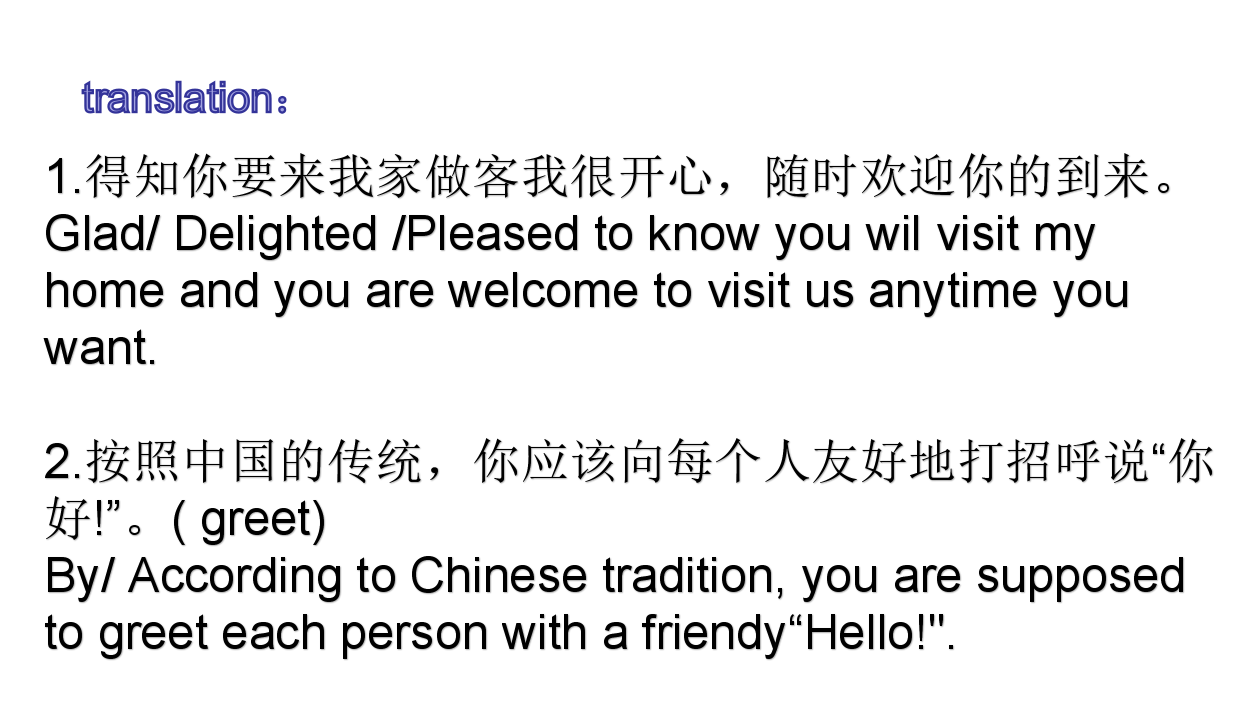
1.得知你要来我家做客我很开心,随时欢迎你的到来。
Glad/ Delighted /Pleased to know you wil visit my home and you are welcome to visit us anytime you want.
2.按照中国的传统,你应该向每个人友好地打招呼说“你好!”。( greet)
By/ According to Chinese tradition, you are supposed to greet each person with a friendy“Hello!".
translation:
例句1
3.应邀参加晚宴时,你最好早点到,以示对主人的尊重。(状语从句的省略; turn up )
When invited to a dinner party, you'd better turn up early to show your respect to the host.
4.在一些国家,人们用筷子吃饭,而在另一些国家,人们用刀叉吃饭。( while)
In some countries, people eat with chopsticks, while in others, knives and forks.
5.吃饭时,避免在咀嚼食物时发出声音。
When enjoying the meal ,(you need to) avoid making noises while chewing food.
6.满嘴食物时说话是不礼貌的。
It's bad manners/ It's rude to talk with your mouth full.
7. 入乡随俗,你就能在那里过得很愉快!
When in Rome, do as the Romans do, and you will be able to enjoy your stay there!
writing
假定作是本华,你的外国笔友 lane 打算七月来中国,特来信了解中国的社交习俗。请你用英语回封信,从以下几个方面作具体介绍:
1.见面时的问候方式 2.对赞美的回答方式
3.接收礼物时的回应方式 4.餐桌礼节
1. 词数80左右,信的开头和结束语已为你写好(不计人总词数):
2.可根据内容要点适当增加细节以使行文连贯。
Dear Jane,
Glad to hear from you and you're welcome to China in July. The following
are some Chinese customs.
Firstly, we greet each other by saying "Hello" or asking such questions as "Where are you going?”or "Are you busy?" to epress our care. Secondy, when praised, we reply with "Oh, no!" or "I'm over-praised." to show good manners. Next, when receiving a gif, we usually say“It 's unecessay.,”besides"Thanks!"
to show politeness and then put it away. Finay, at dinmer parties,we talk loudy
and touch glasses when drinking to someone ’s health or success to show that
we’ re warm.
Anyhow, different cultures,different customs. If you“do as the Romans do
when in Rome", you'll enjoy more of your stay here.
I hope what's mentioned above might be helpful and wish you a good jourmey.
Yours sincerely,
Li Hua
dictation:
1.达成协议
2.与某人握手
3.向……问好
4.面对面交流
5.因为某事向某人道歉
6.正式场合
7.公众场合
8.为……干杯
9.行为规范,举止得体
1. make a deal
2. shake hands with
3. say hello to
4.face-to-face communication
5. make an apology to sb for 6. formal occasion
7. in public 8.drink (a toast) to 9.conduct yourself
dictation:
10.给某人留下深刻印象
11帮某人一个忙
12.由……到……情况不等
13.被卷入……之中
14.应某人的要求
15.惊慌失措地
16.作为……的回应
17.保持警惕
10 .leave / make a deep impression on sb
11.do sb. a favor 12.vary from……to……
13. be involved in 14.at the request of sb. 15. in panic
16.in response to
17.on guard
dictation
1.我们并不只是通过口头和书面语言交流。(more than)
We communicate with more than just spoken and written words.
2.我们为中国过去二十年所取得的成就感到骄傲。(what 引导名词性从句做介词宾语)
We are proud of what China has achieved in the past two decades.
dictation
3.任务完成后,我们将开始愉快的假期。(独立主格)
The task finished,we will have a pleasant vacation.
$$
资源预览图