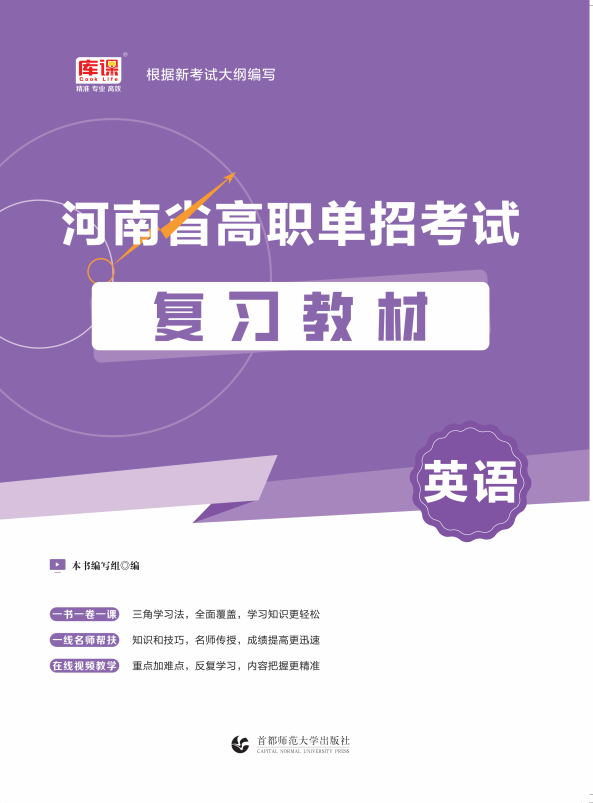
第7节 形容词和副词-2025版河南省高职单招考试英语复习教材
2024-11-11
|
2份
|
11页
|
300人阅读
|
3人下载
教辅
资源信息
| 学段 | 中职 |
|---|---|
| 学科 | 英语 |
| 教材版本 | - |
| 年级 | 高三 |
| 章节 | - |
| 类型 | 学案 |
| 知识点 | 形容词、副词 |
| 使用场景 | 中职复习 |
| 学年 | 2025-2026 |
| 地区(省份) | 河南省 |
| 地区(市) | - |
| 地区(区县) | - |
| 文件格式 | ZIP |
| 文件大小 | 2.62 MB |
| 发布时间 | 2024-11-11 |
| 更新时间 | 2024-11-11 |
| 作者 | 库课科技集团股份有限公司 |
| 品牌系列 | 库课文化·中职复习教材 |
| 审核时间 | 2024-11-11 |
| 下载链接 | https://m.zxxk.com/soft/48521793.html |
| 价格 | 3.00储值(1储值=1元) |
| 来源 | 学科网 |
内容正文:
第七节 形容词和副词
一、形容词
形容词用来修饰名词或代词,说明人或事物的性质、状态或特征。
(一)形容词的句法功能
1.
作定语
This
is
an
interesting
book.
这是一本有趣的书。
2.
作表语
This
bike
is
expensive.
这辆自行车价格昂贵。
3.
作宾语补足语
We
should
keep
our
classroom
clean
and
neat.
我们应该保持我们的教室干净整洁。
(二)形容词的位置
1.
作定语时,形容词常置于所修饰的名词之前。
a
beautiful
girl
一个漂亮的女孩 a
strange
dream
一个奇怪的梦
2.
作表语时,形容词常置于系动词之后。
The
leaves
turn
green.
树叶变绿了。
3.
作宾语补足语时,形容词常紧跟宾语。
The
public
speech
always
makes
me
nervous.
公开演讲总会让我很紧张。
4.
修饰复合不定代词时,形容词常置于其后。
There
is
nothing
new
in
todays
newspaper.
今天的报纸上没什么新鲜事。
·44·
名词化的形容词
(1)
“ the+形容词”相当于名词,表示一类人、一类事物或某种抽象概念。
the
poor
穷人 the
rich
富人
the
young
年轻人 the
old
老人
(2)
某些表示国家、民族的形容词也可与 the 连用,表示“某国(或民族)的人”。
the
Chinese
中国人 the
Swiss
瑞士人
the
Spanish
西班牙人 the
Dutch
荷兰人
(三)形容词的构词法
1.
构成形容词的常见前缀
前缀 例词
a- alive、afraid、alone、asleep
un- unhappy、unfair、unwilling、uncomfortable
in- indoor、informal、inconvenient
im- impolite、impossible
dis- disabled、dishonest
2.
构成形容词的常见后缀
后缀 例词
-ful useful、helpful、hopeful、careful、successful
-ly lovely、friendly、lonely、lively
-y sunny、snowy、sleepy、funny
-less useless、helpless、careless、endless
-ous courageous、dangerous、joyous
3.
以-ing 和-ed 结尾的形容词
以-ing 结尾的形容词通常用来修饰物;而以-ed 结尾的形容词通常用来修饰人。 现将常见的这类形容词
列表如下:
英语单词 汉语词义
exciting;
excited 令人兴奋的;兴奋的
moving;
moved 动人的;感动的
·54·
(续表)
英语单词 汉语词义
tiring;
tired 令人疲倦的;疲惫的
interesting;
interested 有趣的;感兴趣的
disappointing;
disappointed 令人失望的;感到失望的
surprising;
surprised 使人惊奇的;感到惊奇的
frightening;
frightened 引起恐惧的;受惊的
touching;
touched 动人的;受感动的
The
book
is
so
interesting
that
a
lot
of
children
are
interested
in
it.
这本书很有趣,以至于很多孩子都对它感兴趣。
Hearing
the
exciting
news,
all
the
students
were
quite
excited.
听到这个令人兴奋的消息,所有的学生都非常兴奋。
二、副词
副词用来修饰动词、形容词、其他副词或全句,说明时间、地点、程度、方式等概念。
(一)常见副词的种类
(1)
时间副词(表示动作发生的时间):
now、then、soon、recently、finally、before、today、tomorrow 等
(2)
地点副词(表示动作发生的地点):
here、there、everywhere、in、out 等
(3)
频度副词(表示动作发生的频率):
never、sometimes、often、always 等
(4)
方式副词(表示动作发生的方式):
quickly、hard、carefully、politely 等
(5)
程度副词(表示动作进行的程度):
extremely、very、slightly、partly 等
(6)
疑问副词(用以询问动作发生的时间、地点、方式等):
when、where、how、why
(二)副词的句法功能
1.
作状语
She
speaks
English
fluently.
她英语讲得很流利。
2.
作表语
The
class
is
over.
下课了。
3.
作定语
The
children
there
dont
have
enough
food.
那里的孩子没有足够的食物。
4.
作宾语补足语
Please
let
me
out.
请放我出去。
·64·
(三)副词的位置
1.
副词的位置较为灵活,可位于实义动词之前,be 动词、助动词、情态动词之后。
He
carefully
picked
up
all
the
bits
of
broken
glass.
他仔细地把碎玻璃都捡了起来。
She
was
clearly
speaking
the
truth.
她讲的显然是实情。
2.
修饰形容词、副词时,常位于所修饰词之前。
It
is
a
quite
pretty
house.
这是一所相当精致的房子。
(四)副词的构词法
副词多以 ly 结尾。 形容词变副词的规则如下:
情况 规则 例词
一般情况 加-ly careful—carefully gradual—gradually
以 y 结尾 变 y 为 i,再加-ly happy—happily easy—easily
以 le 结尾 去 e,再加-y simple—simply possible—possibly
以 ue 结尾 去 e,再加-ly true—truly
以 ll 结尾 加-y full—fully
以 ic 结尾 加-ally basic—basically energetic—energetically
三、形容词和副词的比较等级
大多数形容词和副词有三个等级:
(1)
原级,平常所见到的形容词或副词是原级。 形容词如:big、difficult、beautiful 等;副词如:quickly、
hardly、well 等。
(2)
比较级,在两者之间作比较,表示“……比……更……”,如:taller(比较高的)、more
quickly(更快地)。
(3)
最高级,在两个以上的人或事物当中表示“最……”,如:the
tallest(最高的)、the
most
quickly(最快地)。
(一)形容词和副词比较级与最高级的构成规则
1.
规则变化
情况 规则 例词
一般情况 在词尾加-er 或-est fast—faster—fastest strong—stronger—strongest
以字母 e 结尾的词 在词尾加-r 或-st wide—wider—widest nice—nicer—nicest
以一个辅音字母结尾的
重读闭音节词
先双写结尾的辅音字母,
再加-er 或-est
hot—hotter—hottest big—bigger—biggest
以“辅音字母+y”结尾的词 变 y 为 i,再加-er 或-est happy—happier—happiest angry—angrier—angriest
多音节词和部分双音节词 在原级前加 more 或 most
crowded—more
crowded—most
crowded
beautiful—more
beautiful—most
beautiful
·74·
2.
不规则变化
原级 比较级 最高级
much / many more most
good / well better best
bad / ill worse worst
little less least
far farther / further farthest / furthest
(二)形容词和副词比较等级的基本用法
1.
原级比较
(1)
A+谓语动词+as+形容词或副词原级+as+B,意为“A 和 B 一样……”。
Tom
runs
as
fast
as
me.
汤姆跑得和我一样快。
(2)
A+谓语动词+not+so / as+形容词或副词原级+as+B,意为“A 不像 B 那样……”。
Tom
is
not
so / as
tall
as
me.
汤姆没有我高。
有些短语中虽然包含 asas结构,但不表示比较含义。 常见的有 asas
possible(尽可能……)、as
long
as(只要)、as
soon
as(尽快;一……就……)、as
well
as(和;也)等。
As
soon
as
the
students
heard
the
good
news,
they
couldnt
help
jumping.
一听到这个好消息,学生们就禁不住跳了起来。
Tell
them
what
they
need
to
know
as
quickly
as
possible.
尽可能快地告诉他们需要了解些什么。
2.
比较级的用法
(1)
A+谓语动词+比较级+than+B,意为“A 比 B 更……”。
The
book
is
more
interesting
than
that
one.
这本书比那本更有趣。
(2)
主语 + 谓语动词 + 比较级 + and + 比较级, 意为 “ …… 越
来越……”。
Oil
price
is
getting
higher
and
higher.
油价越来越高。
He
does
his
homework
more
and
more
carefully.
他的家庭作业做得越来越认真。
·84·
(3)
“The+比较级,
the+比较级”意为“……越……,……就越……”。
The
sooner,
the
better.
越快越好。
The
more
careful
you
are,
the
fewer
mistakes
youll
make.
你越认真,你犯的错误就越少。
3.
最高级的用法
(1)
主语+谓语动词+the+形容词最高级(+名词)或(+the)+副词最高级+范围,意为“……是……最……”。
Mary
is
the
most
considerate
among
these
children.
玛丽在这些孩子中最体贴人。
I
jump
(the)
farthest
in
my
class.
我是班里跳得最远的。
(2)
主语+be+one
of
the+形容词最高级+复数名词+范围,意为“……是……中最……的……之一”。
Beijing
is
one
of
the
largest
cities
in
China.
北京是中国最大的城市之一。
(3)
主语+be+the+序数词+形容词最高级+单数名词+范围,意为“……是……中的第……的……”。
Tom
is
the
third
tallest
student
in
our
class.
汤姆是我们班第三高的学生。
两者相比用比较,三者以上用最高。
两者若是一个样,asas要用上。
甲不如乙加
not,意思与
less
than
差不多。
程度渐变“越来越……”,比较级用 and 来连接。
两种情况同时变,the
more,
the
more是模板。
4.
倍数的表达
倍数表达法的常见结构如下:
(1)
A+谓语动词+倍数+as+形容词或副词的原级+as+B.
Asia
is
about
four
times
as
large
as
Europe.
亚洲的面积大约是欧洲的四倍。
(2)
A+谓语动词+倍数+形容词或副词的比较级+than+B.
The
rope
is
twice
longer
than
that
one.
这根绳子是那根绳子的两倍长。
(3)
A+谓语动词+倍数+the
size / width / height / length+of+B.
This
river
is
twice
the
width
of
that
one.
这条河是那条河的两倍宽。
·94·
考点 1 形容词辨析
—Ive
lost
my
key!
—Oh,
Im
to
hear
that.
A.
glad B.
happy C.
nice D.
sorry
句意:———我弄丢了我的钥匙! ———哦,听到这我很遗憾。 glad:开心的;happy:快乐的;nice:
好的;sorry:遗憾的,惋惜的,同情的。
D
We
will
have
a
field
trip
this
afternoon.
The
news
makes
everyone
.
A.
bad B.
beautiful C.
happy D.
hungry
句意:今天下午我们要去越野旅行。 这个消息使每个人都很开心。 bad:坏的;beautiful:美丽
的;happy:高兴的;hungry:饥饿的。
C
Thats
.
A.
enough
good B.
good
enough
C.
well
enough D.
enough
well
句意:那足够好了。 分析句子结构可知,空处在句中作表语,应用形容词 good。 enough 作副
词修饰形容词时,应置于所修饰词之后。
B
考点 2 副词辨析
,
nothing
important
was
stolen
last
night.
A.
Luckily B.
Unluckily C.
Unfortunately D.
Carefully
句意:幸运的是,昨晚没有什么重要的东西被偷。 此处修饰整个句子,应用副词。 luckily:幸
运地;unluckily:不幸地;unfortunately:不幸地,遗憾地;carefully:仔细地。
A
Smiling
leaves
a
positive
feeling
on
people.
A.
suddenly B.
always C.
recently D.
never
句意:微笑总是给人们留下积极的感受。 suddenly:突然;always:总是;recently:最近;never:
从不。
B
·05·
考点 3 比较等级
The
medicine
I
take,
the
I
seem
to
feel.
A.
much;
bad
B.
more;
bad
C.
more;
worse
D.
much;
worse
句意:我吃的药越多,情况就越糟。 “ the +比较级,
the +比较级” 是固定用法,意为
“越……,就越……”。 much:许多,more 是其比较级;bad:坏的,worse 是其比较级。
C
—Many
boy
students
think
physics
is
geography.
—I
agree.
Im
weak
in
geography.
A.
much
difficult
than B.
as
difficult
as
C.
less
difficult
than D.
more
difficult
than
句意:———许多男同学认为物理没有地理难。 ———我同意,我地理很差。 根据“ I
agree.
Im
weak
in
geography. ”可知,此处表示“物理没有地理难”,应用 less
difficult
than。
C
The
Yellow
River
is
the
second
river
in
China.
A.
long B.
longer
C.
longest D.
the
longest
句意:黄河是中国的第二大长河。 “主语+be+the+序数词+形容词最高级+单数名词+范围”
是固定用法,意为“……是……中的第……的……”。
C
—Excuse
me,
sir.
The
shoes
are
a
bit
small
for
me.
—Dont
worry.
Ill
change
them
for
a
size.
A.
smaller B.
smallest
C.
larger D.
largest
句意:———打扰一下,先生。 这双鞋对我来说有点小。 ———别担心。 我会换一双大一点的。
根据句意可知,此处表示“更大的尺码”,故应用 large 的比较级形式 larger。 smaller:较小的;smallest:最小的;
larger:较大的;largest:最大的。
C
1.
When
your
package
arrives,
please
check
.
A.
carefully B.
carelessly
C.
careful D.
careless
·15·
2.
The
cake
tastes
and
sells
.
A.
well;
well B.
good;
good
C.
well;
good
D.
good;
well
3.
you
work,
you
will
get.
A.
The
harder;
the
luckier B.
The
harder;
the
lucky
C.
The
hard;
the
lucky D.
The
hard;
the
luckier
4.
Im
very
glad
to
see
that
our
city
is
becoming
international.
A.
more
and
more
B.
the
more
C.
the
most D.
most
5.
I
am
even
than
Mike.
A.
tall B.
taller C.
tallest D.
the
taller
6.
Sally
is
getting
.
We
feel
happy
for
her.
A.
worse
B.
bad
C.
good
D.
better
7.
I
am
in
reading
different
kinds
of
books.
A.
interested;
interested B.
interesting;
interesting
C.
interested;
interesting D.
interesting;
interested
8.
Its
outside
because
its
snowing.
A.
hot B.
warm C.
cool D.
freezing
9.
Jack
is
boy
in
our
class.
A.
smartest B.
smarter
C.
the
smarter D.
the
smartest
10.
The
boy
is
.
He
often
shares
his
things
with
others.
A.
helpful B.
honest
C.
generous D.
clever
11.
The
you
exercise,
the
you
will
be.
A.
much;
healthy B.
more;
healthier
C.
much;
more
healthy D.
more;
more
healthier
12.
The
yellow
house
is
much
than
the
red
one.
A.
large
B.
larger
C.
largest
D.
largely
13.
We
should
avoid
answering
the
phone
in
public
places.
A.
quietly B.
loudly C.
heavily D.
quickly
14.
The
story
was
so
that
we
all
lost
ourselves
in
it.
A.
boring B.
alive C.
terrible D.
lively
15.
The
film
covers
Chinese
history.
It
is
worth
seeing
again.
A.
mainly B.
really C.
nearly D.
hardly
·25·
12.
C 【解析】句意:所有老师都会为他们的学生取得的进步而感到骄傲。 take
pride
in 为固定短语,意为“为……感到骄
傲”,故第一空应用零冠词;根据“ made
by
their
students” 可知,第二处特指“学生们取得的进步”,故第二空应用定冠
词 the。
13.
C 【解析】句意:如果我们坐在公共汽车的前部,我们会看到更好的风景。 in
the
front
of 表示“在……(内部)的前面”,
in
front
of 表示“在……(外部)的前面”,第一处表示“在公共汽车内部的前面”,故第一空应用定冠词 the;view 当“风景,景
色”讲时是可数名词,此处泛指“更好的风景”,且 better 的发音以辅音音素开头,故第二空应用不定冠词 a。
14.
D 【解析】句意:在美国,汽车是一种受欢迎的交通工具。 “the+可数名词单数”表示一类事物,故第一空应用定冠词 the;
第二处泛指“一种受欢迎的交通工具”,且 popular 的发音以辅音音素开头,故第二空应用不定冠词 a。
15.
C 【解析】句意:我没有立即告诉他这个消息,因为我想给他一个惊喜。 news 是不可数名词,且此处表特指,故第一空应
用定冠词 the;surprise 是可数名词,此处泛指“一个惊喜”,且其发音以辅音音素开头,故第二空应用不定冠词 a。
第六节 连 词
1.
D 【解析】句意:我们老师要求我们拿出笔记本,但是我找不到我的(笔记本)了。 根据句意可知,空处前后两句为转折关
系,故应用 but 连接。 so:所以;and:和;or:或者;but:但是。
2.
C 【解析】句意:当我遇到困难的时候,你总能伸出援手。 分析句子结构并结合句意可知,空处引导时间状语从句,且表示
“当……时”,故应用 when 引导从句。 although:尽管;unless:除非;when:当……时;since:自……以来。
3.
B 【解析】句意:———今天天气怎么样? ———天气晴朗但很冷。 根据句意和句中的“ fine” “ cold”可知,空处前后为转折关
系,故应用表示转折的连词 but 连接。 with:和,具有;but:但是;or:或者;for:为了。
4.
B 【解析】句意:昆明既不太冷也不太热。 neithernor是固定搭配,意为“既不……也不……”。
5.
C 【解析】句意:———你想吃哪一个,面包还是鸡肉? ———请给我鸡肉。 根据句意可知,空处前后是选择关系,故空处应用
or。 and:和;but:但是;or:或者,还是;so:所以。
6.
A 【解析】句意:再给我一分钟,我就能完成它。 此处是“祈使句+and / or+陈述句”句型。 在该句型中,and 表示顺承关系,
or 表示转折关系。 根据句意可知,此处表示顺承关系,故应用 and。
7.
B 【解析】句意:我们的未来在我们自己手中,因此我们必须不遗余力地为之奋斗。 根据句意可知,空处前后两句为因果
关系,且后一句表示结果,故空处应用 so。 because:因为;so:因此;as:当……时;or:或者。
8.
C 【解析】句意:因为不会说法语,莉莉不知道如何解决这个问题。 分析句子结构并结合句意可知,空处引导原因状语从
句,表示“因为”,故应用 because 引导从句。 although:虽然;but:但是;because:因为;so:因此。
9.
D 【解析】句意:布鲁斯擅长踢足球而迈克擅长打篮球。 根据句意可知,空处前后两句之间是对比关系,故应用 while 连
接。 when:当……时;since:自……以来;until:直到……为止;while:然而。
10.
D 【解析】句意:仔细阅读这篇文章,你可以很容易地找到答案。 此处是“祈使句+and / or+陈述句”句型,在该句型中,and
表示顺承关系,or 表示转折关系。 根据句意可知,此处表示顺承关系,故应用 and。
第七节 形容词和副词
1.
A 【解析】句意:当包裹到达的时候,请认真检查。 分析句子结构并结合句意可知,空处作状语修饰动词 check,且意为“认真
地”,故应用副词 carefully。 carefully:(adv. )认真地;carelessly:(adv. )粗心地;careful:(adj. )认真的;careless:(adj. )粗心的。
·5·
2.
D 【解析】句意:蛋糕尝起来不错,而且卖得很好。 分析句子结构可知,第一空作系动词 taste 的表语,应用形容词 good。 第
二空作状语修饰动词 sell,故应用副词 well。
3.
A 【解析】句意:越努力越幸运。 “The+比较级,
the+比较级”是固定用法,意为“越……,就越……”。
4.
A 【解析】句意:我很高兴看到我们的城市变得越来越国际化。 “比较级+and+比较级”意为“越来越……”,若形容词 / 副
词的比较级由“more+形容词 / 副词原形”构成,则用“more
and
more+形容词 / 副词的原级”的形式。 international 的比较级为
more
international,故空处应填 more
and
more。
5.
B 【解析】句意:我比迈克还要高。 根据空后的“than”可知,空处应用形容词 tall 的比较级形式 taller。
6.
D 【解析】句意:萨莉正在渐渐好转。 我们为她感到高兴。 根据“ We
feel
happy
for
her. ”可排除选项 A、B;根据语境可知,
此处将萨莉现在的状况和过去的状况进行对比,表示“更好的”,故空处应用形容词比较级。 worse:更坏的,更差的,bad 的
比较级;bad:坏的,严重的;good:好的;better:更好的,good 的比较级。
7.
C 【解析】句意:我对阅读各种有趣的书很感兴趣。 以-ed 结尾的形容词一般用来修饰人,以-ing 结尾的形容词一般用来修
饰物。 第一空修饰人,应用 interested, be
interested
in 是固定短语,意为“对……感兴趣”;第二空修饰物 books,应用
interesting。
8.
D 【解析】句意:因为正在下雪,所以外面很冷。 hot:热的;warm:温暖的;cool:凉爽的;freezing:极冷的。
9.
D 【解析】句意:杰克是我们班最聪明的男孩。 根据空后的“in
our
class”可知,此处应用最高级形式。 形容词最高级前应
用定冠词 the。
10.
C 【解析】句意:这个男孩很慷慨。 他经常与别人分享他的东西。 helpful:有帮助的;honest:诚实的;generous:慷慨的;
clever:聪明的。
11.
B 【解析】句意:你锻炼得越多,你就会越健康。 “The+比较级,
the+比较级”是固定用法,意为“ ……越……,……就
越……”。 healthy 的比较级形式是 healthier。
12.
B 【解析】句意:这所黄色的房子比那所红色的房子大得多。 根据句意和空后的“than”可知,空处应用形容词 large 的比
较级形式 larger。
13.
B 【解析】句意:我们应该避免在公共场合大声接电话。 quietly:安静地;loudly:大声地;heavily:大量地,沉重地;quickly:
快速地。
14.
D 【解析】句意:这个故事是如此的生动有趣以至于我们都沉浸在其中。 boring:无聊的;alive:活着的;terrible:可怕的;
lively:充满趣味的。
15.
B 【解析】句意:那部电影涵盖了中国历史。 它的确值得再看一次。 mainly:主要地;really:确实,的确;nearly:几乎,差不
多;hardly:几乎不。
第八节 动词、动词的时态和语态
1.
D 【解析】句意:这次他失败了,但他不会放弃。 look
up:查阅;put
up:举起,搭建,张贴;turn
up:出现,出席,调高(音量);
give
up:放弃。
2.
D 【解析】句意:小偷正在超市里偷东西时被抓住了。 根据主句中的“was
caught”可知,本句描述的是过去发生的事情,故
从句也应用过去的某种时态;根据句意可知,此处指过去某一时间正在做某事,故从句应用过去进行时,即谓语动词用
“was / were+现在分词”的形式。
3.
C 【解析】句意:听! 他们正在唱一首英文歌。 根据“Listen!”并结合句意可知,此处描述的是现在正在进行的动作,故应
用现在进行时,即谓语动词用“am / is / are+现在分词”的形式。
·6·
资源预览图

1

2

3

4
由于学科网是一个信息分享及获取的平台,不确保部分用户上传资料的 来源及知识产权归属。如您发现相关资料侵犯您的合法权益,请联系学科网,我们核实后将及时进行处理。