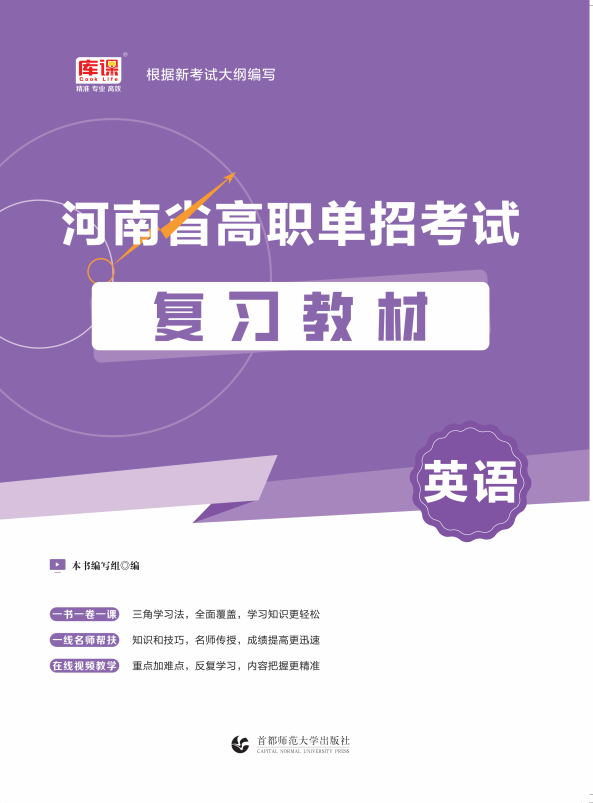
第1节 名词-2025版河南省高职单招考试英语复习教材
2024-11-11
|
2份
|
7页
|
441人阅读
|
1人下载
教辅
资源信息
| 学段 | 中职 |
|---|---|
| 学科 | 英语 |
| 教材版本 | - |
| 年级 | 高三 |
| 章节 | - |
| 类型 | 学案 |
| 知识点 | 名词 |
| 使用场景 | 中职复习 |
| 学年 | 2025-2026 |
| 地区(省份) | 河南省 |
| 地区(市) | - |
| 地区(区县) | - |
| 文件格式 | ZIP |
| 文件大小 | 2.26 MB |
| 发布时间 | 2024-11-11 |
| 更新时间 | 2024-11-11 |
| 作者 | 库课科技集团股份有限公司 |
| 品牌系列 | 库课文化·中职复习教材 |
| 审核时间 | 2024-11-11 |
| 下载链接 | https://m.zxxk.com/soft/48521785.html |
| 价格 | 3.00储值(1储值=1元) |
| 来源 | 学科网 |
内容正文:
第一章 词 法
第一节 名 词
1.
D 【解析】句意:我不是这个包的主人。 它可能是吉姆的。 根据空后的“ Jims” 可知,空处表示“主人”,应用 owner。
inventor:发明家;teacher:教师;driver:司机;owner:主人,物主。
2.
C 【解析】句意:杰克是简的父亲的一个朋友。 分析句子结构并结合句意可知,空处应用-s 所有格表示所有关系。 双重所
有格的基本结构为“名词+of+-s 所有格”或“名词+of+名词性物主代词”。 “简的父亲”的英文表达为 Janes
father。 此处表
示“简的父亲的一个朋友”,故应用 a
friend
of
Janes
fathers。
3.
A 【解析】句意:上个月医院里所有的女医生都加薪了。 根据空前的“All”可知,此处应用复合名词 woman
doctor 的复数形
式。 “man / woman+名词”构成的复合名词变复数时,man / woman 和名词都变为复数。
4.
C 【解析】句意:请给我三杯牛奶。 milk 是不可数名词。 此处为“基数词+量词+of+不可数名词” 的结构,根据空前的
“three”可知,此处量词 glass 应用其复数形式 glasses。
5.
A 【解析】句意:新丝绸之路为更多国家提供了一个良好的交流机会。 chance:机会;speed:速度;question:问题;lesson:课。
6.
D 【解析】句意:南希量了量体温,发现自己发烧了。 cough:咳嗽;toothache:牙疼;stomachache:胃疼;fever:发烧。
7.
C 【解析】句意:金钱是幸福生活的基础吗? result:结果;study:学习;basis:基础;price:价格。
8.
A 【解析】句意:这些书是我哥哥的。 分析句子结构并结合句意可知,此处应用名词所有格。 brothers:哥哥的,名词所有
格;brother:哥哥,brothers 是其复数形式。
9.
C 【解析】句意:冰箱里有一些西红柿和牛奶。 根据 be 动词“are”可知,第一空应用可数名词的复数形式。 tomato:西红柿,
可数名词,其复数形式为 tomatoes;milk:牛奶,不可数名词,无复数形式。
10.
A 【解析】句意:多亏我们教练,我们打败了其他队伍赢得了胜利。 victory:胜利;progress:进步;difference:不同;message:信息。
11.
C 【解析】句意:我的铅笔盒里有两把小刀。 根据“two”可知,此处应用可数名词的复数形式。 knife 的复数形式为 knives。
12.
C 【解析】句意:———这件毛衣的尺码不适合我。 ———好的,我给你拿一件大一点的。 price:价格;color:颜色;size:尺码;
material:材料。
13.
A 【解析】句意:在我们城市,大多数学生都可以进入大学接受高等教育。 education:教育,higher
education 是固定短语,
意为“高等教育”;information:信息;suggestion:建议;attention:关注。
14.
A 【解析】句意:———汤姆总是每天阅读一个小时。 ———那是一个好习惯。 habit:习惯;dream:梦想;time:时间;wish:
愿望。
15.
B 【解析】句意:赵老师给了我两条关于写作的建议。 advice 是不可数名词,表示数量时,应借助量词。 “两条建议”的英
文表达为 two
pieces
of
advice。
·1·
第一章
词 法
第一节 名 词
一、名词的分类
名词是表示人、事物或抽象概念等名称的词。 根据不同的标准,名词可以分为以下几类。
名词
普通名词
可数名词 用来指能以数目来计算的名词,如 pen、apple、tree。
不可数名词 用来指不能以数目来计算的名词,如 water、air、milk。
专有名词
主要指人名、地名、江河湖海名、书名、机构名、月份、星期、节日或某一事物所特有的名称等,开头字母一
般大写,如 Alice、France、May、New
Years
Day。
二、名词的数
(一)可数名词规则的复数变化
(1)
一般加-s 或-es
情况 变化 例词
一般情况 加-s friend—friends
朋友 idea—ideas
想法
以 s、x、ch、sh 结尾的词 加-es box—boxes
盒子 sandwich—sandwiches
三明治
以“辅音字母+y”结尾的词 变 y 为 i 再加-es city—cities
城市 country—countries
国家
以“元音字母+y”结尾的词 直接加-s monkey—monkeys
猴子 boy—boys
男孩
(2)
以 o 结尾的词,多加-es
tomato—tomatoes
西红柿 potato—potatoes
土豆
hero—heroes
英雄
☞注意:以“元音字母+o”或 oo 结尾的词和一些以 o 结尾的外来词只加-s。
radio—radios
收音机 zoo—zoos
动物园
photo—photos
照片 piano—pianos
钢琴
(3)
以 f 或 fe 结尾的词,通常变 f 或 fe 为 v,再加-es,读作[vz]
wife—wives
妻子
life—lives
生活
leaf—leaves
叶子
·1·
☞注意:有些词只加-s,读作[s]。
roof—roofs
屋顶 belief—beliefs
信仰
妻子(wife)拿刀(knife)去砍狼(wolf),小偷( thief)见了着了慌,
架子(shelf)底下躲自(self)命( life),半片(half)叶子( leaf)遮目光。
但以下词要直接在词尾加-s:
海湾(gulf)边,屋顶( roof)上,农奴(serf)首领(chief)两相望,
谁说他们没信仰(belief),证据(proof)写在手帕(handkerchief)上。
(二)可数名词不规则的复数变化
规则 例词
词尾加-en 或-ren ox—oxen
牛 child—children
儿童
变内部元音 foot—feet
脚 man—men
男人 tooth—teeth
牙齿
形式不变(单复数同形) sheep
羊 deer
鹿 species
物种
(1)
表示“各国人”的名词变复数的口诀:
中(Chinese)日 ( Japanese) 瑞士 ( Swiss) 不变,英 (Englishman) 法 ( Frenchman) 变 a 为 e,其余 (如
German 等)后面加-s。
(2)
fish 通常单复数同形;表示不同种类的鱼时多加-es。
There
are
three
fish.
这里有三条鱼。
There
are
many
different
fishes
in
the
river.
这条河里有很多不同种类的鱼。
(3)
people 指“人”时,作复数用;指“民族”时,其复数形式为 peoples。
two
people 两个人 two
peoples 两个民族
(4)
当一个名词用于另一个名词前作定语时,一般要用其单数形式,而不用复数。
train
station
火车站
plane
ticket
机票
morning
exercise
早操
(三)合成名词的变化规则
规则 例词
将主体名词变为复数 passer-by—passers-by
路人 son-in-law—sons-in-law
女婿
无主体名词,通常在最后一个词后加复数词尾 standby—standbys
备用物品 grown-up—grown-ups
成年人
以 man / woman 构成的合成词变复数时,把 man / woman 变
为复数
fireman—firemen
消防员
policewoman—policewomen
女警察
·2·
(续表)
规则 例词
“ man / woman + 名词” 构成的复合名词变复数时, man /
woman 和名词都变为复数
woman
singer—women
singers
女歌手
man
doctor—men
doctors
男医生
(四)不可数名词
不可数名词没有复数形式,不能与不定冠词 a(n)连用。 如果需要表示数量关系,应借助于适当的量词,
或者使用可以修饰不可数名词的单词或词组。
a
glass
of
milk
一杯牛奶 three
pieces
of
paper
三张纸
a
cup
of
tea
一杯茶 a
burst
of
laughter
一阵笑声
量词可以用于修饰可数名词,
也可以修饰不可数名词。 在“基数词+量词+of+可数名词复数 / 不可数
名词”结构中,若基数词大于“1”,则量词需要变为其复数形式。
a
loaf
of
bread 一条面包 a
bowl
of
noodles 一碗面条
three
pairs
of
shoes 三双鞋 two
baskets
of
eggs 两篮鸡蛋
two
pieces
of
meat 两块肉 four
bags
of
potato
chips 四袋炸薯条
(五)可数名词与不可数名词的用法
1.
常用来修饰可数名词和不可数名词的词(组)
只修饰可数名词 many、a
good / great
many、a
great / large / small
number
of、few、a
few
只修饰不可数名词 much、little、a
little、a
great / good
deal
of、a
large / small
amount
of
既可修饰可数名词,也可修饰不可数名词 some、a
lot
of、plenty
of、a
large
quantity
of、large
quantities
of
2.
单复数形式分别表示不同意义的词
wood
木头—woods 森林 chicken 鸡肉—chickens
鸡
glass 玻璃—glasses 眼镜 good 好处—goods 货物
time 时间—times 次数,倍数 interest
兴趣—interests
利益
三、名词的格
名词在句中表示所有关系的语法形式叫作名词所有格,名词所有格包括-s 所有格、of 所有格和双重所
有格。
1.
-s 所有格
规则 例词
大多数单数名词、复数名词词尾没有 s 时,后加-s
my
mothers
bag
我妈妈的包
the
childrens
books
孩子们的书
·3·
(续表)
规则 例词
以 s 结尾的单数名词后加-
或-s Dickens / Dickenss
novels
狄更斯的小说
以 s 结尾的复数名词后直接加- the
workers
factory
工人们的工厂
复合名词一般在最后一个词的词尾加-s my
mother-in-laws
house
我岳母的房子
若两人共有一样东西,只在后一个名词后加-s;若是单独拥
有,则两个名词后都要加-s
Jane
and
Marys
room
简和玛丽的房间(共有)
Janes
and
Marys
rooms
简的房间和玛丽的房间(不共有)
2.
of 所有格
无生命的名词通常用“名词+of+名词”结构来表示所有关系。
the
windows
of
the
house
房子的窗户
the
engine
of
the
car
车的引擎
3.
双重所有格
双重所有格的基本结构为“名词+of+-s 所有格”或“名词+of+名词性物主代词”。
a
friend
of
my
fathers
我父亲的一位朋友
a
book
of
mine
我的一本书
考点 1 名词辨析
—Could
you
tell
me
where
I
can
buy
a
dictionary?
—Sure.
Go
along
the
street,
and
theres
a
on
your
right.
A.
bank B.
bookstore C.
museum D.
restaurant
句意:———你能告诉我在哪里可以买到词典吗? ———当然可以。 沿着这条街直走,书店就在
你的右边。 根据问句中的“buy
a
dictionary”可知,买词典应该去书店。 bank:银行;bookstore:书店;museum:
博物馆;restaurant:餐馆。
B
Tom
spent
a
lot
of
free
playing
computer
games.
A.
class B.
time C.
dog D.
friend
句意:汤姆花了很多空闲时间玩电脑游戏。 class:班级;time:时间,free
time 是固定短语,意
为“空闲时间”;dog:狗;friend:朋友。
B
The
third
month
of
a
year
is
.
A.
May B.
March C.
July D.
December
·4·
句意:一年中的第三个月是三月。 根据“The
third
month
of
a
year”可知,此处指“三月”。
May:五月;March:三月;July:七月;December:十二月。
B
The
why
he
was
late
was
that
he
missed
the
train.
A.
cause B.
excuse C.
reason D.
matter
句意:他迟到的原因是他错过了火车。 根据“he
missed
the
train”可知,此处指原因。 cause:
起因;excuse:借口; reason:原因,The
reason
why is / was
that 是固定句型,意为“……的原因是……”;
matter:事情,问题。
C
考点 2 名词的数
I
paid
$10
for
this
morning.
A.
4
bottles
milks B.
4
bottles
of
milk
C.
four
bottles
of
milks D.
4
milks
句意:今天早上我花了十美元买了四瓶牛奶。 milk 是不可数名词,无复数形式。 如果需要表
示数量关系,应借助于适当的量词,或者使用可以修饰不可数名词的单词或词组。 四瓶牛奶的正确表达为
four / 4
bottles
of
milk。
B
All
the
like
to
eat
.
A.
child;
tomatoes B.
children;
tomatoes
C.
childrens;
tomatos D.
childs;
tomatos
句意:所有孩子都喜欢吃西红柿。 child 和 tomato 均为可数名词;根据第一空前的“All
the”并
结合句意可知,第一空和第二空均应用名词复数形式。 child 的复数形式为 children;tomato 的复数形式为
tomatoes。
B
There
are
only
twenty
teachers
in
that
school.
A.
woman B.
womans C.
women D.
womens
句意:那所学校只有 20 名女教师。 根据“are” “ twenty”可知,此处应用可数名词复数形式。
“man / woman+名词” 构成的复合名词变复数时,man / woman 和名词都变为复数。 故空处应用可数名词
woman 的复数形式 women。
C
考点 3 名词的格
Walking
along
the
river,
I
met
a
friend
of
.
A.
my
father B.
my
fathers C.
my
fathers D.
my
fathers
·5·
句意:沿着河边散步时,我遇到了我父亲的一个朋友。 分析句子结构并结合句意可知,此处
为双重所有格结构。 双重所有格的基本结构为“名词+of+-s 所有格”或“名词+of+名词性物主代词”。
B
1.
Im
not
the
of
the
bag.
It
could
be
Jims.
A.
inventor B.
teacher C.
driver D.
owner
2.
Jack
is
a
friend
of
.
A.
Jane
father B.
Janes
father C.
Janes
fathers D.
Jane
fathers
3.
All
the
in
the
hospital
got
a
rise
last
month.
A.
women
doctors B.
women
doctor C.
woman
doctors D.
woman
doctor
4.
Give
me
three
,
please.
A.
glass
of
milk B.
glass
of
milks C.
glasses
of
milk D.
glasses
of
milks
5.
The
New
Silk
Road
offers
a
good
for
more
nations
to
communicate.
A.
chance B.
speed C.
question
D.
lesson
6.
Nancy
took
the
temperature
and
found
she
had
a
.
A.
cough B.
toothache C.
stomachache D.
fever
7.
Is
money
the
of
a
happy
life?
A.
result B.
study C.
basis D.
price
8.
These
books
are
my
.
A.
brothers B.
brothers C.
brother D.
brother
9.
There
are
some
and
in
the
fridge.
A.
tomatos;
milk B.
tomatos;
milks C.
tomatoes;
milk D.
tomatoes;
milks
10.
Thanks
to
our
coach,
we
beat
the
other
team
and
won
a
.
A.
victory B.
progress C.
difference D.
message
11.
I
have
two
in
my
pencil
box.
A.
knife B.
knifes C.
knives D.
a
knife
12.
—The
sweater
is
not
the
right
for
me.
—Well,
I
will
get
you
a
bigger
one.
A.
price B.
color C.
size D.
material
13.
Most
students
can
go
to
college
for
higher
in
our
city.
A.
education
B.
information C.
suggestion
D.
attention
14.
—Tom
always
reads
for
an
hour
every
day.
—Thats
a
good
.
A.
habit B.
dream C.
time D.
wish
15.
Miss
Zhao
gave
me
two
on
my
writing.
A.
piece
of
advice B.
pieces
of
advice
C.
advice D.
advices
·6·
资源预览图

1

2

3
由于学科网是一个信息分享及获取的平台,不确保部分用户上传资料的 来源及知识产权归属。如您发现相关资料侵犯您的合法权益,请联系学科网,我们核实后将及时进行处理。