Unit 6(复习课件) -2024-2025学年英语五年级上册单元速记·巧练系列(译林版三起)
2024-10-15
|
29页
|
486人阅读
|
6人下载
精品
资源信息
| 学段 | 小学 |
|---|---|
| 学科 | 英语 |
| 教材版本 | 小学英语译林版(三起)(2012)五年级上册 |
| 年级 | 五年级 |
| 章节 | Unit 6 My e-friend |
| 类型 | 课件 |
| 知识点 | - |
| 使用场景 | 同步教学-单元练习 |
| 学年 | 2024-2025 |
| 地区(省份) | 全国 |
| 地区(市) | - |
| 地区(区县) | - |
| 文件格式 | PPTX |
| 文件大小 | 7.83 MB |
| 发布时间 | 2024-10-15 |
| 更新时间 | 2024-10-15 |
| 作者 | 英语精品资料- |
| 品牌系列 | 上好课·上好课 |
| 审核时间 | 2024-10-15 |
| 下载链接 | https://m.zxxk.com/soft/47976769.html |
| 价格 | 5.00储值(1储值=1元) |
| 来源 | 学科网 |
内容正文:
Unit 6 My e-friend
(译林版英语五年级上册复习)
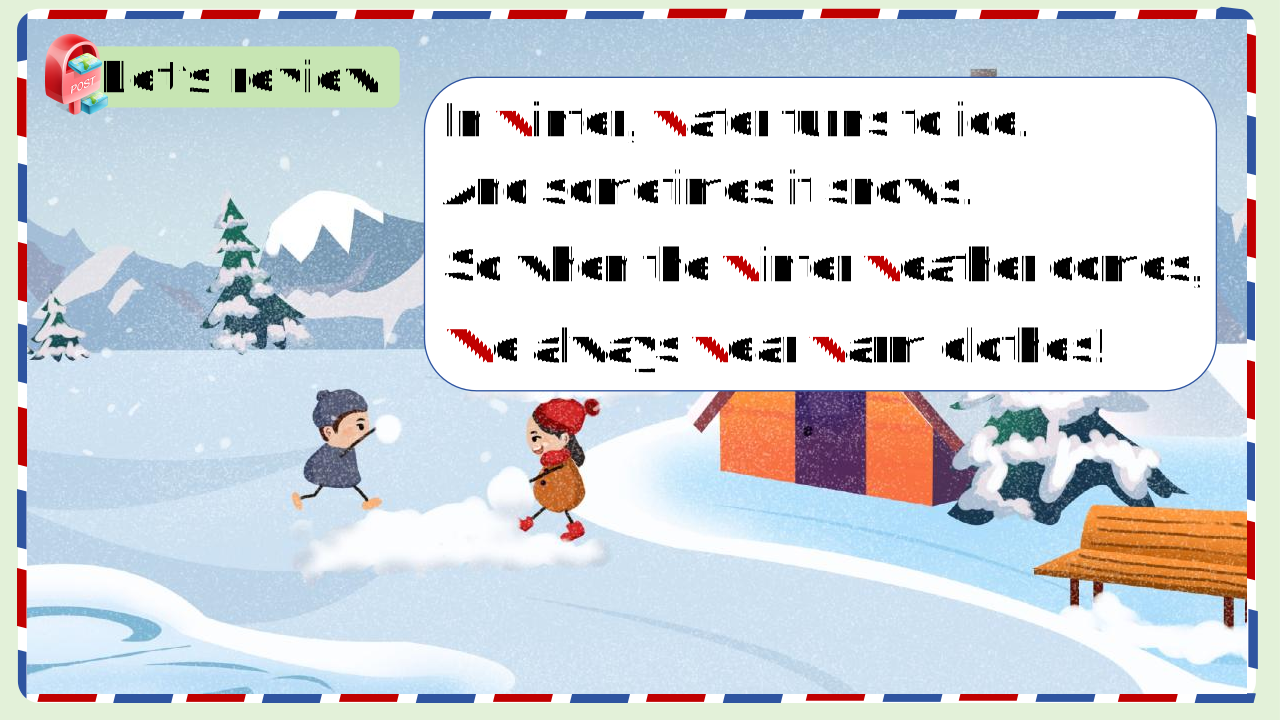
In winter, water turns to ice.
And sometimes it snows.
So when the winter weather comes,
We always wear warm clothes!
Let’s review
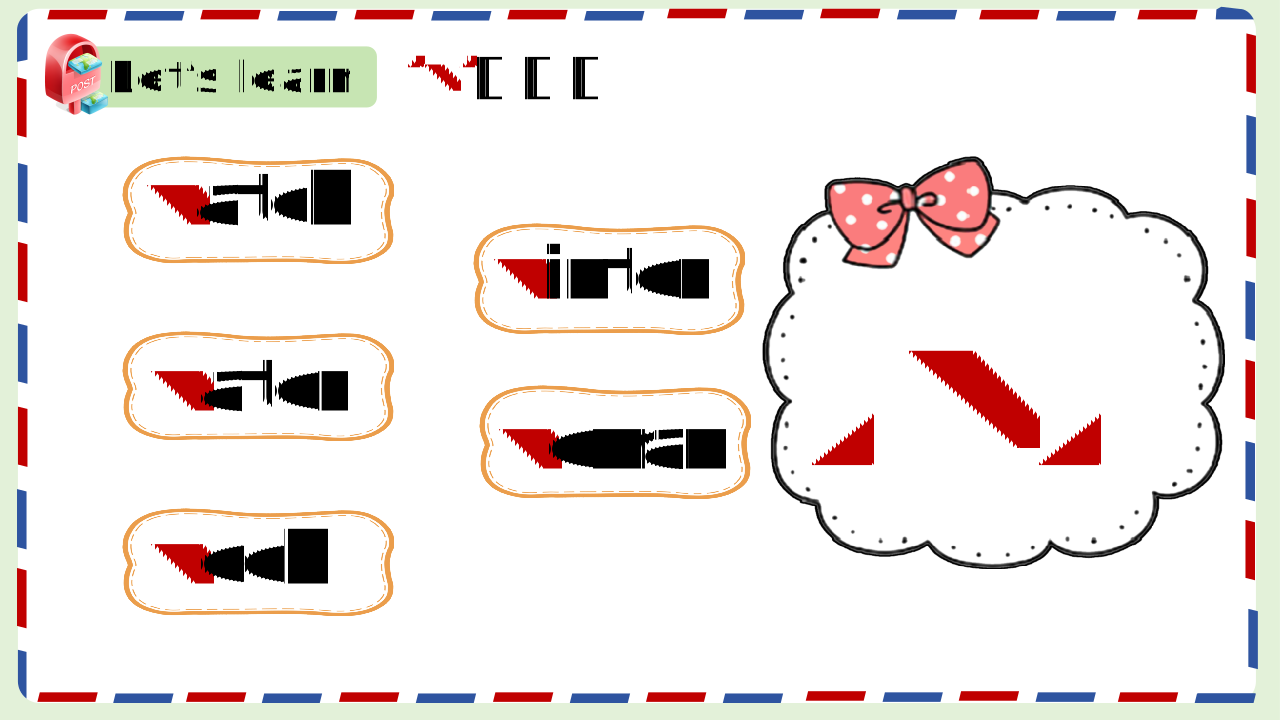
Let’s learn
”w”的发音
watch
water
week
winter
woman
/w/
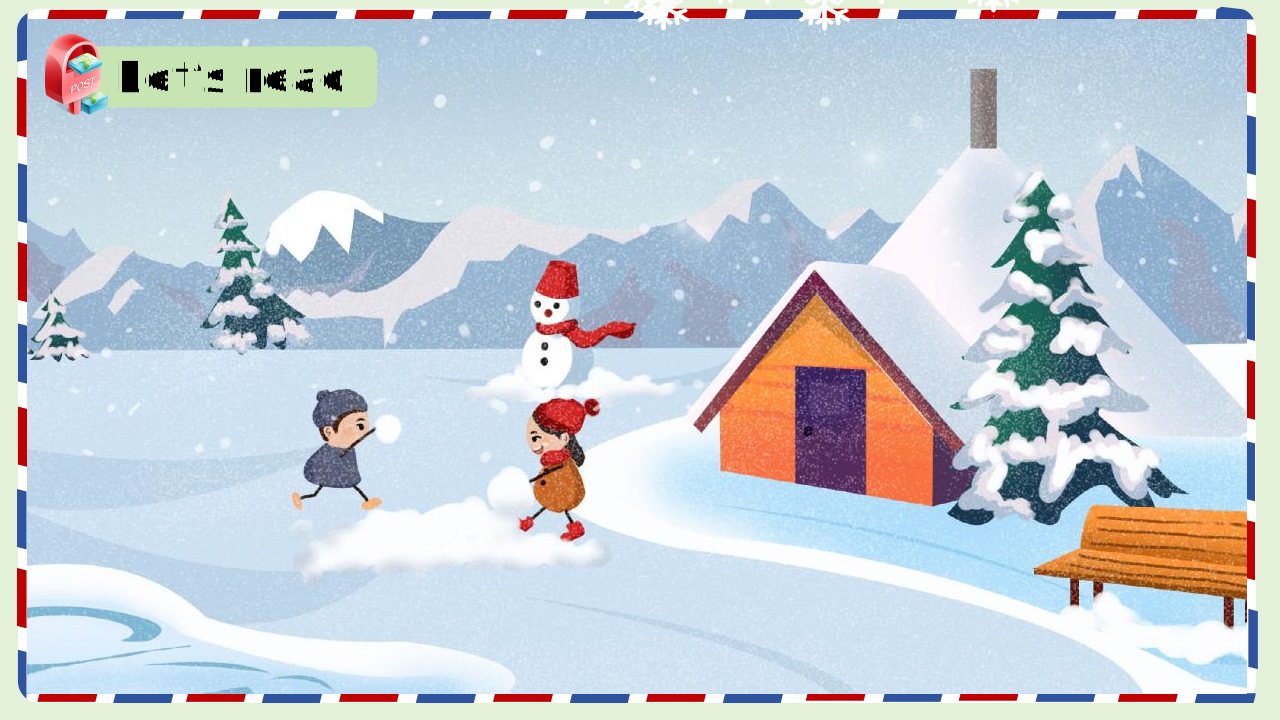
Let’s read
with
worker
wing
wait
watch
we
swim
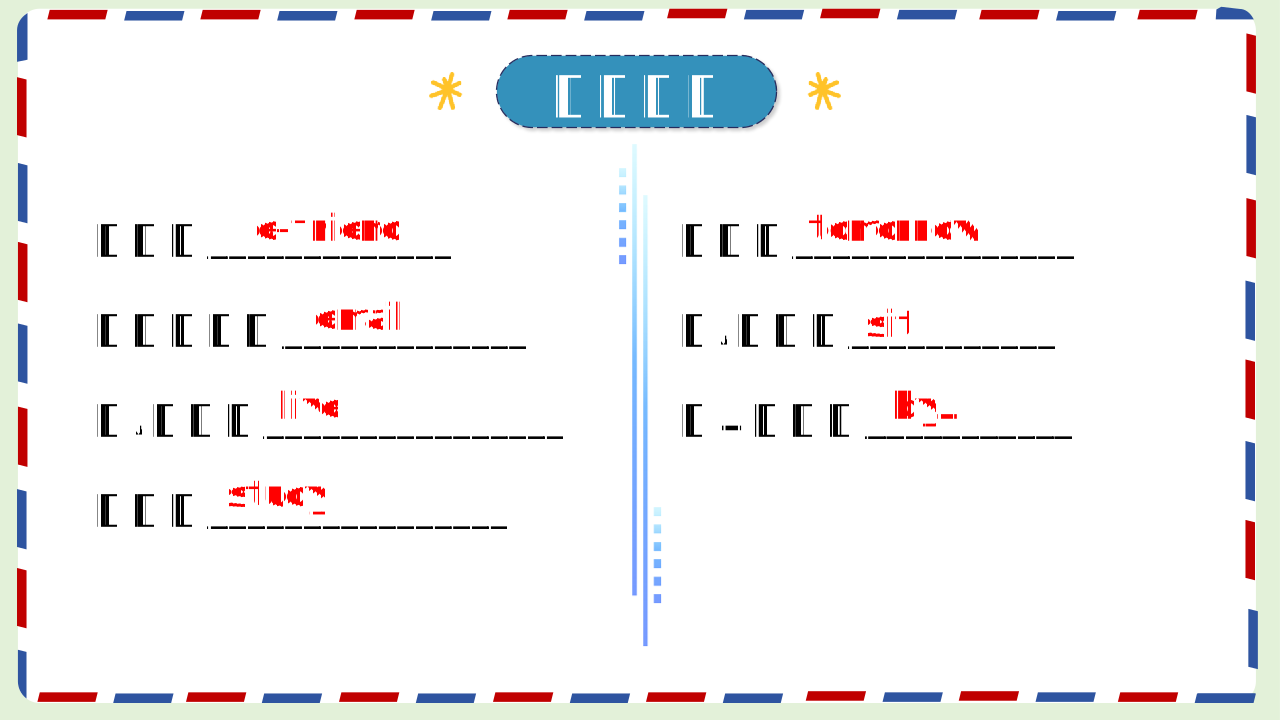
网友:_____________
电子邮件:_____________
住,居住:________________
学习:________________
明天:_______________
坐,坐在:___________
在…旁边:___________
e-friend
email
live
tomorrow
sit
study
by…
必记单词
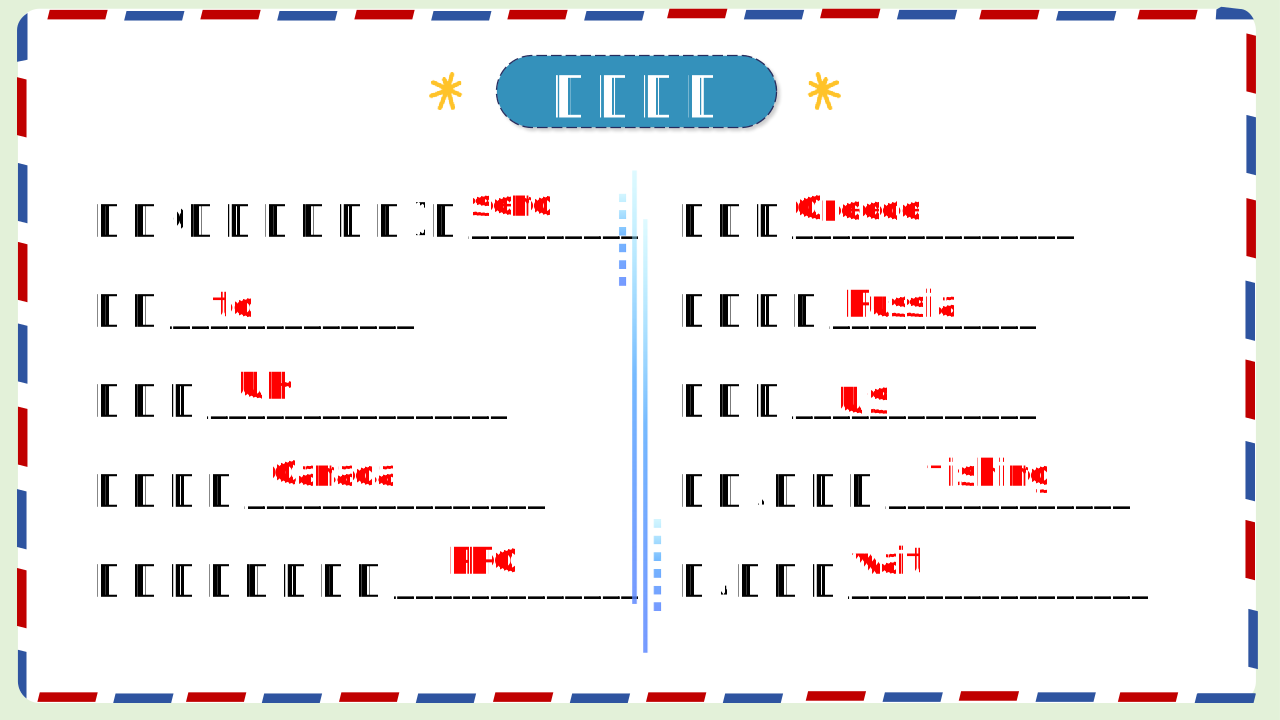
发出(信件、邮件等):_________
给:_____________
英国:________________
加拿大:________________
中华人民共和国:_____________
希腊:_______________
俄罗斯:___________
美国:_____________
钓鱼,捕鱼:_____________
等,等待:________________
send
to
UK
Canada
Greece
Russia
US
fishing
必记单词
PRC
wait
常考短语
我的网友my e-friend 踢足球play football
住在英国live in the UK 在操场上in the playground
在学校 at school 学习汉语study Chinese
说汉语speak Chinese 等一会儿wait a minute
放学后after school 吃鱼eat fish
去钓鱼go fishing 等了又等wait and wait
常考短语
在冬天in winter 吃苹果eat apples
教你teach you 像这样like this
什么学科what subjects 坐在河边sit by the river
发送这封电子邮件send this email 上语文课have Chinese lessons
擅长钓鱼be good at fishing 穿暖和的衣服wear warm clothes
写英文地址write English addresses 写中文地址write Chinese addresses
询问某人是否会讲某种语言的句型及其答语:
—Can+主语+ speak+语言?
—Yes,主语+ can./ No,主语+ can't.
必会句型
询问某人的年龄及其答语:
—How old+ be动词+主语?
—主语+ be动词+年龄+ year(s) old.
必会句型
询问某人喜欢的学科及其答语:
—What subjects do( es)+主语+ like?
—主语+ like(s)+学科.
必会句型
询问某人居住地的句型及其答语:
—Where do/ does+主语+ live?
—主语+ live(s)+某地.
必会句型
例如:—Where does he live?
—He lives in the UK.
核心语法
1.一般现在时的一般疑问句:
(1) be动词( am/ is/ are)引导的一般疑问句。
(2)实义动词引导的一般疑问句。
(3)情态动词( can/ would/ should...)引导的一般疑问句。
2.一般现在时的特殊疑问句。
考 点 速 记
一般现在时的一般疑问句
考点 1
原文:—Does he have Chinese lessons at school? 他在学校上过中文课吗?
—No, he doesn’t. 不,他没有。
一般现在时的一般疑问句是指询问是否属实的句子,一般只用 yes或 no 来回答。通常存在三种情况:
1. be动词( am/ is/ are)引导的一般疑问句:
句中含 be动词的陈述句变一般疑问句时要将 be放在句子开头,具体结构为:
—Be动词+主语+其他?
—Yes,主语+ be动词./ No,主语+ be动词+ not.
如:(1)—Are you a student?你是一名学生吗?
—Yes, I am./ No,I am not.是的,我是。/不,我不是。
(2)—Is she happy?她开心吗?
—Yes, she is./ No, she isn't.是的,她开心。/不,她不开心。
2.含实义动词的一般疑问句:
句中的谓语动词为实义动词时,变一般疑问句要在句子开头加助动词 Do/Does,句中的动词要改为原形,具体结构为:
—Do/ Does+主语+动词原形(+其他)?
—Yes,主语+ do( es)./ No,主语+ do( es)+ not.
如:—Do you like apples?你喜欢苹果吗?
—Yes,I do.是的,我喜欢。
3.情态动词( can/ would/ should...)引导的一般疑问句:
句中含情态动词的陈述句变一般疑问句时要将情态动词提前,具体结构为:
—情态动词+主语+动词原形(+其他)?
—Yes,主语+情态动词./ No,主语+情态动词+ not.
如:—Can you play basketball?你会打篮球吗?
—No,I can't.不,我不会。
提分练
Do
do
Does
doesn’t
Do
don’t
Are
sheep
Do
Can
books
No
hers
Are there any people at the concert?
Does Tina’s father have a nice car?
Should he finish his homework today?
—Do they have two fish at home? —No, they don't.
—Do dogs like running in the yard? —Yes, they do.
考 点 速 记
一般现在时的特殊疑问句
考点 2
原文:What subjects does he like? 他喜欢什么科目?
He likes Maths and PE. 他喜欢数学和体育。
一、概念:特殊疑问句是以特殊疑问词开头,对句子中的某一成分提问的句子。
二、常用的疑问词: where, who, what, whose, why, which, when, how 等。
三、特殊疑问句的语序:
1.如果疑问词作主语或主语的定语,则语序是陈述句语序。
如:(1)—Who is in the classroom?谁在教室里?
—Tim蒂姆。
(2)—Whose bike is black?谁的自行车是黑色的?
—Liu Tao's.刘涛的(自行车)。
2.如果疑问词作其他成分,则语序为“特殊疑问词+ be动词/助动词/情态动词+主语(+其他)?”,即“特殊疑问词+一般疑问句?”。
如:(1) What can you do?你会做什么?
(2) What does she like?她喜欢什么?
(3) How is the soup?这个汤怎么样?
(4) Where are you form?你来自哪里?
(5) When do you get up?你什么时候起床?
Homework
★注意:回答特殊疑问句时,不能用 yes或者 no,而应该问什么答什么。
如:(1)—Why do you like pandas?
—Because They're cute.
(2)—Who is hungry? —Helen.
(3)—Where's your school?
—Near Renmin Park.
提分练
Who
How old
What colour
How many
What
Where
What subject
When
F
D
E
B
A
C
What does your sister do?
What do you like to do ?
What does Lily look like?
What's her name?
Thank you!
$$
资源预览图
1
2
3
4
5
6
相关资源
由于学科网是一个信息分享及获取的平台,不确保部分用户上传资料的 来源及知识产权归属。如您发现相关资料侵犯您的合法权益,请联系学科网,我们核实后将及时进行处理。