Unit 4(知识清单) -2024-2025学年英语五年级上册单元速记·巧练系列(译林版三起)
2024-09-27
|
7页
|
958人阅读
|
55人下载
精品
资源信息
| 学段 | 小学 |
|---|---|
| 学科 | 英语 |
| 教材版本 | 小学英语译林版(三起)(2012)五年级上册 |
| 年级 | 五年级 |
| 章节 | Unit 4 Hobbies |
| 类型 | 学案-知识清单 |
| 知识点 | - |
| 使用场景 | 同步教学-单元练习 |
| 学年 | 2024-2025 |
| 地区(省份) | 全国 |
| 地区(市) | - |
| 地区(区县) | - |
| 文件格式 | DOCX |
| 文件大小 | 121 KB |
| 发布时间 | 2024-09-27 |
| 更新时间 | 2024-09-27 |
| 作者 | 英语精品资料- |
| 品牌系列 | 上好课·上好课 |
| 审核时间 | 2024-09-27 |
| 下载链接 | https://m.zxxk.com/soft/47638299.html |
| 价格 | 4.00储值(1储值=1元) |
| 来源 | 学科网 |
内容正文:
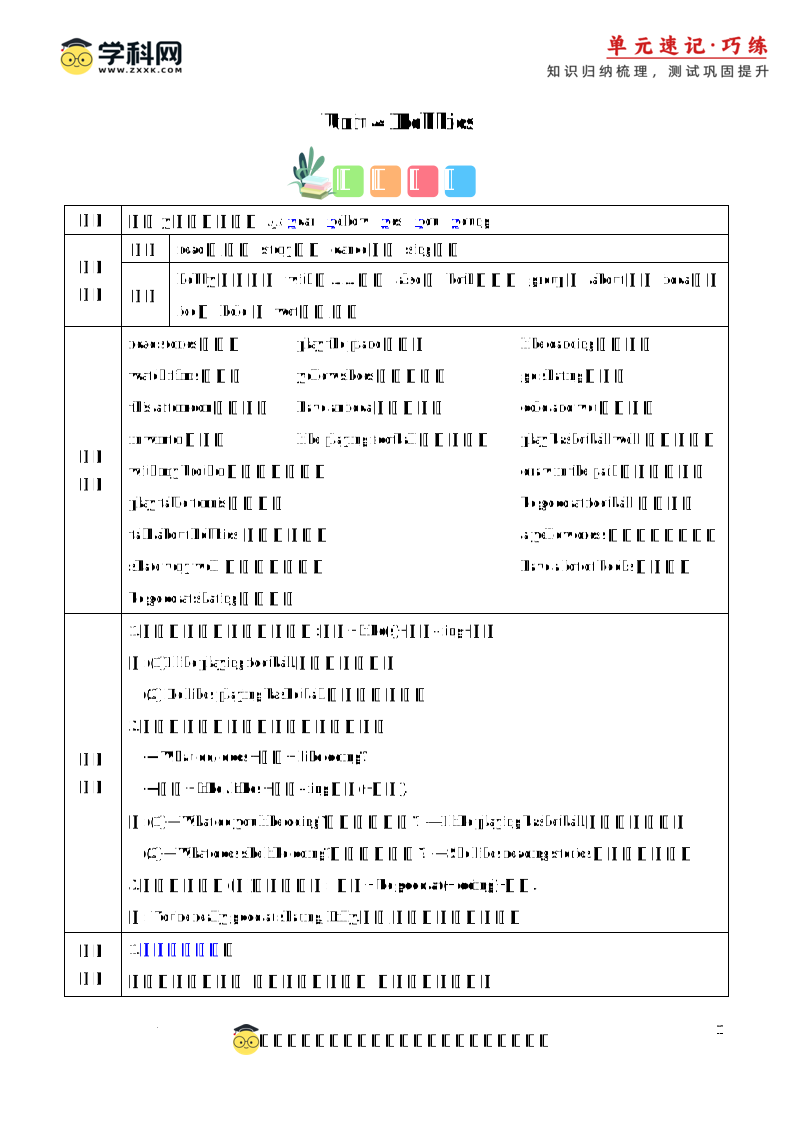
Unit 4 Hobbies
知 识 归 纳
语音
字母y在单词中可发 /j/: year yellow yes you young
必记
单词
四会
read读,阅读 story故事 dance跳舞 sing唱歌
三会
hobby业余爱好 with与……一起 also也 both两个都 group组 about关于 idea主意 ice冰 hole 洞 wet湿的,潮的
常考
短语
read stories读故事 play the piano弹钢琴 like dancing喜欢跳舞
watch films看电影 yellow shoes黄色的鞋子 go skating去溜冰
this afternoon今天下午 have an idea有一个主意 cold and wet又冷又湿
in winter在冬天 like playing football喜欢踢足球 play basketball well 篮球打得好
with my brother与我的弟弟一起 draw in the park在公园里画画
play table tennis打乒乓球 be good at football 擅长足球
talk about hobbies 谈论业余爱好 a yellow dress一条黄色的连衣裙
skate very well 溜冰溜得非常好 have a lot of books有很多书
be good at skating擅长溜冰
必会
句型
1.表达某人喜欢做某事的句型:主语+ like(s)+动词- ing+其他.
例:(1)I like playing football.我喜欢踢足球。
(2) He likes playing basketball.他喜欢打篮球。
2.询问某人喜欢做什么的句型及其答语:
—What do/ does +主语+ like doing?
—主语+ like / likes +动词- ing形式(+其他).
例:(1)—What do you like doing?你喜欢做什么? —I like playing basketball.我喜欢打篮球。
(2)—What does she like doing?她喜欢做什么? —She likes reading stories.她喜欢读故事。
3.表达某人擅长(做)某事的句型: 主语+ be good at(+ doing)+其他.
例: You're really good at skating, Billy.比利,你真的很擅长溜冰。
核心
语法
1.动名词的用法。
①动名词作主语。 ②动名词作宾语。 ③动名词作表语。
2.如何询问某人的爱好。
①What do/ does sb. like doing? ②What's sb.'s hobby?
考 点 速 记
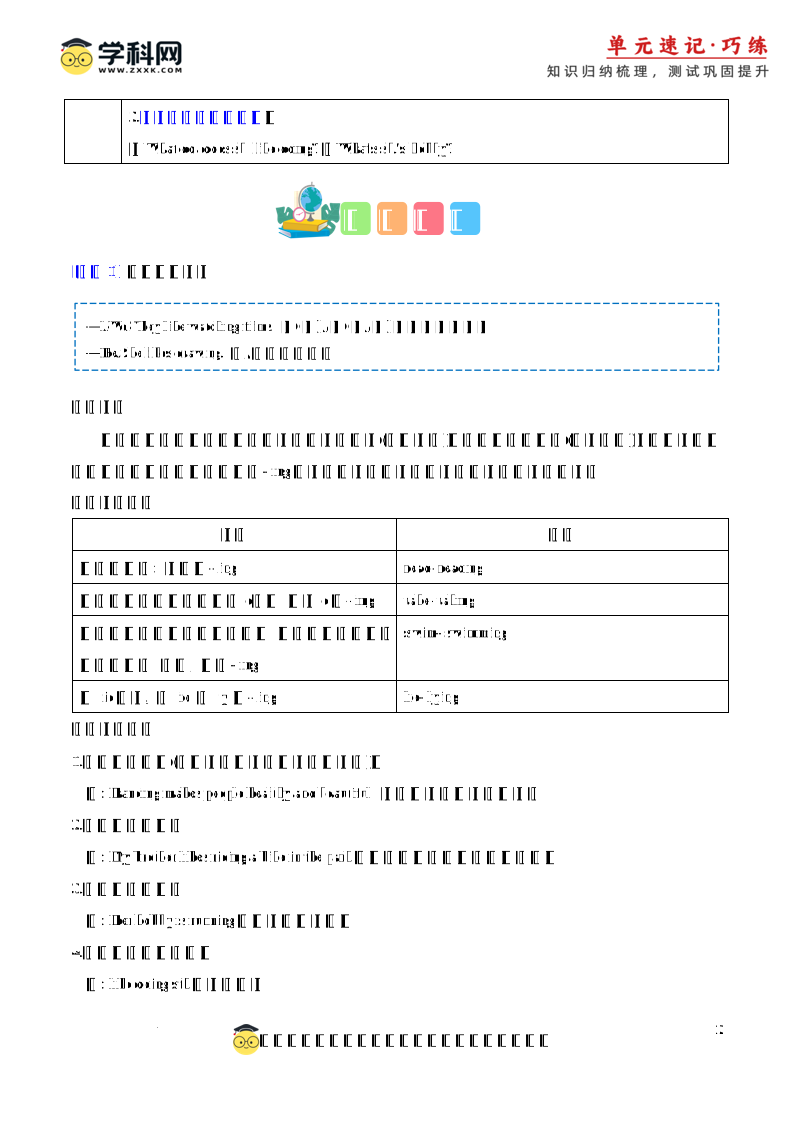
[考点1] 动名词的规则
—I/We/They like watching films. 我(们)/他(她/它)们喜欢看电影。
—He/She likes drawing. 他/她喜欢画画。
一、概念
动名词由动词变化而来。它既有名词的性质(可作主语),又有动词的性质(可带宾语)。动名词在形式上与现在分词相同,即动词- ing形式,其变化规则和现在分词的变化规则相同。
二、变化规则
规则
例词
一般情况下: 直接加- ing
read- reading
如果动词末尾有不发音的e,则 去掉e加- ing
take- taking
以重读闭音节结尾,且末尾只 有一个辅音字母,应双写末尾 字母, 再加- ing
swim- swimming
以 ie结尾, 把 ie 变 y 加- ing
lie- lying
三、具体用法
1.动名词作主语(谓语动词用第三人称单数形式):
如: Dancing makes people healthy and beautiful. 跳舞使人们健康、美丽。
2.动名词作宾语:
如: My brother likes riding a bike in the park.我哥哥喜欢在公园里骑自行车。
3.动名词作表语:
如: Her hobby is running.她的爱好是跑步。
4.常见的动名词搭配:
如: like doing sth.喜欢做某事
go doing sth.去做某事
be busy doing sth.忙于做某事
be good at doing sth.= do/ does well in doing sth.擅长做某事
How/ What about doing sth.?做某事怎么样?
★快乐小口诀:
动名词很好记,动词后加- ing,词尾若有哑巴e,去e再加别忘记,单辅重读闭音节,末尾字母要双写,遇到词尾是 ie, ie 变 y再加- ing。
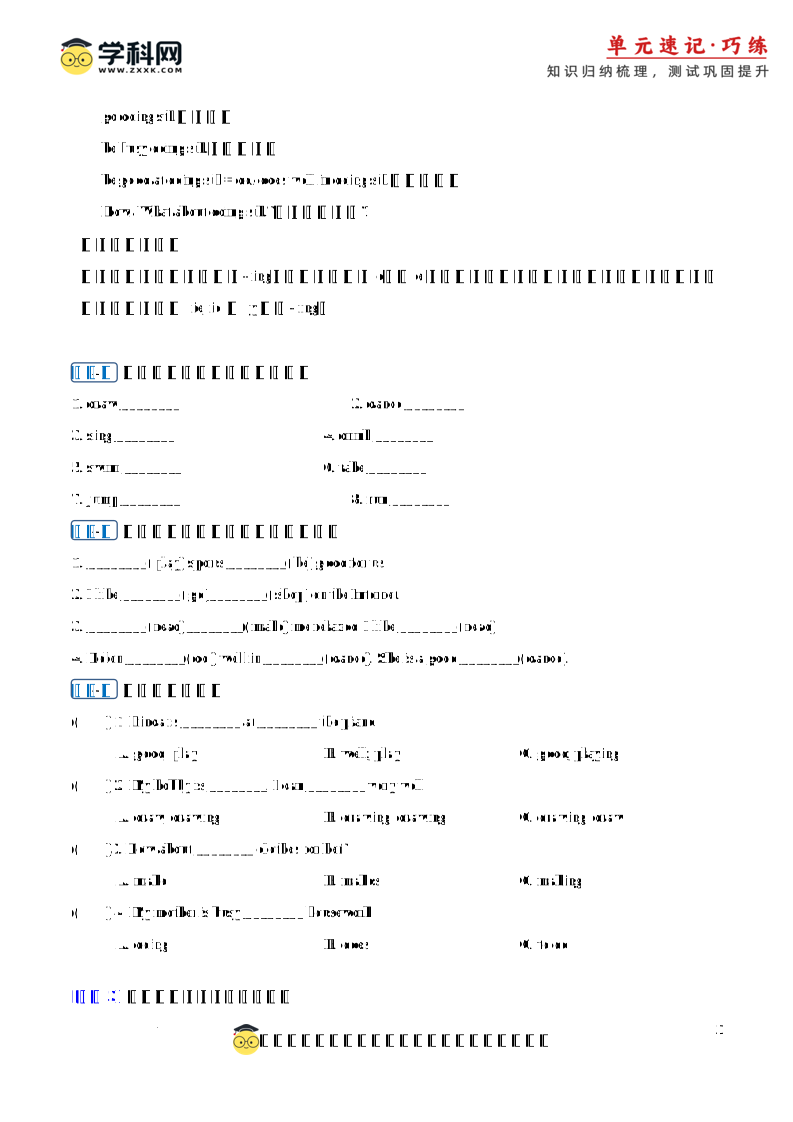
提分练 一、写出下列动词的动名词。1
1. draw ________ 2. dance ________
3. sing ________ 4. drink ________
5. swim ________ 6. take ________
7. jump ________ 8. run ________
提分练 二、用所给单词的适当形式填空。1
1. ________( play) sports ________( be) good for us.
2. I like ________( go)________( shop) on the Internet.
3. ________( read)________( make) me relaxed. I like ________( read).
4. Helen ________( do ) well in ________( dance). She is a good ________( dance).
提分练 三、单项选择。1
( ) 1. Linda is ________ at ________ the piano.
A. good; play B. well; play C. good; playing
( ) 2. My hobby is ________. I can ________ very well.
A. draw; drawing B. drawing; drawing C. drawing; draw
( )3. How about ________ clothes for her?
A. make B. makes C. making
( ) 4. My mother is busy ________ housework.
A. doing B. does C. to do
[考点2] 如何询问及表述某人的爱好
—What do you/they like doing? 你(们)/他(她/它)们喜欢做什么?
—I/We/They like watching films. 我(们)/他(她/它)们喜欢看电影。
一、like的含义
like意为“喜欢”,常用于表示自己的爱好和喜欢做的事情,具体用法如下所示:
1. like doing sth.表示长期或习惯性喜欢做某事,一般用于介绍某人的爱好。
如:I like playing football.我喜欢踢足球。
2. like to do sth.表示偶尔或具体喜欢做某事。
如:I like to run in the park.我喜欢在公园里跑步。
二、询问及表述某人的爱好的句型
1.—What do / does +主语+ like doing?
—主语+ like / likes + doing sth.
如:—What does Tina like doing?蒂娜喜欢做什么?
—She likes playing basketball.她喜欢打篮球。
2.—What’s sb.’s /形容词性物主代词+ hobby?
—Sb.’s/形容词性物主代词+ hobby+ is+ doing sth./ Doing sth.+ is+ sb.’s/形容词性物主代词+ hobby.
如:—What's Su Hai's hobby?苏海的爱好是什么?
—Su Hai’s / Her hobby is playing the piano./ Playing the piano is Su Hai’s / her hobby.
苏海的/她的爱好是弹钢琴。/弹钢琴是苏海的/她的爱好。
提分练 一、用所给词的适当形式填空。
1.—What ________( do) your sister like doing?
—She likes ________( dance).
2. Mike can ________( run) fast. He likes ________( run).
3. Tim likes ________( swim) and ________( draw).
4. ________( He ) hobby is ________( play) tennis.
提分练 二、单项选择。
( )1.—What do you like doing?
—________
A. I like cats. B. I like watching films. C. You like skating.
( ) 2. Planting ________ my cousin's hobby.
A. is B. are C. am
( ) 3.—What’s ________ hobby?
—________ hobby is making cakes.
A. Judy; Her B. Judy’s; Her C. Judy's; She
( ) 4.—What ________ she ________ doing?
—She ________ running.
A. do; like; like B. does; likes; likes C. does; like; likes
提分练 三、按要求完成句子。
1. My hobby is playing the violin. (对画线部分提问)
________ hobby?
2. Jenny likes swimming with her friends.(改为一般疑问句并作否定回答)
—________ Jenny ________ ________ with her friends?
—No, ________ ________.
[考点3] be good at的用法
You’re really good at skating. 你真的擅长溜冰。
解析:·be good at意为“擅长于”,后接名词或动词的-ing形式。
·be动词的具体形式有am,is和are,在运用时要根据主语的不同而选择不同的形式。
注意:be good at (doing) sth. = do well in (doing) sth.
例如: Wang Bing and Mike are good at Maths. 王兵和迈克擅长数学。
提分练 用所给词的适当形式填空。
1. —Would you like ___________ (play) football with me?
—Sorry. I am good at ___________ (play) volleyball.
2. —What ___________ (be) you good at?
—I ___________ (be) good at ___________ (dance).
3. Tracy's sister is very young, but she's good at (swim).
[考点4] also和too的用法区别
He also likes playing table tennis. 他也喜欢打乒乓球。
She also likes playing the piano. 她也喜欢弹钢琴。
also 和 too 都是副词,都译为“也”,但两者在用法上有所不同。
· also 一般用于肯定句或疑问句中,通常位于be动词、助动词或情态动词之后,实义动词之前;
· too一般用于肯定句中,但它通常位于句末,语气要比 also轻。
提分练 选词填空。
1.John is (also/too) 19 years old. Tom is 19 years old (also/too).
2.She can speak English. She can (also/too) speak French.
参考答案
[考点1] 1. have 2. has 3. have 4. have 5.have 6.has 7.have
[考点2] 1.don’t have 2.don’t, any, or 3.no, or 4.no, or 5.doesn't have any 6.have no
[考点3] 1.to play, playing 2.are, am, dancing 3.swimming
[考点4] 1.also, too 2.also
原创精品资源学科网独家享有版权,侵权必究!6
学科网(北京)股份有限公司
$$
资源预览图
1
2
3
相关资源
由于学科网是一个信息分享及获取的平台,不确保部分用户上传资料的 来源及知识产权归属。如您发现相关资料侵犯您的合法权益,请联系学科网,我们核实后将及时进行处理。