Unit 3(知识清单) -2024-2025学年英语五年级上册单元速记·巧练系列(译林版三起)
2024-09-27
|
6页
|
1156人阅读
|
55人下载
精品
资源信息
| 学段 | 小学 |
|---|---|
| 学科 | 英语 |
| 教材版本 | 小学英语译林版(三起)(2012)五年级上册 |
| 年级 | 五年级 |
| 章节 | Unit 3 Our animal friends |
| 类型 | 学案-知识清单 |
| 知识点 | - |
| 使用场景 | 同步教学-单元练习 |
| 学年 | 2024-2025 |
| 地区(省份) | 全国 |
| 地区(市) | - |
| 地区(区县) | - |
| 文件格式 | DOCX |
| 文件大小 | 116 KB |
| 发布时间 | 2024-09-27 |
| 更新时间 | 2024-09-27 |
| 作者 | 英语精品资料- |
| 品牌系列 | 上好课·上好课 |
| 审核时间 | 2024-09-27 |
| 下载链接 | https://m.zxxk.com/soft/47638297.html |
| 价格 | 4.00储值(1储值=1元) |
| 来源 | 学科网 |
内容正文:
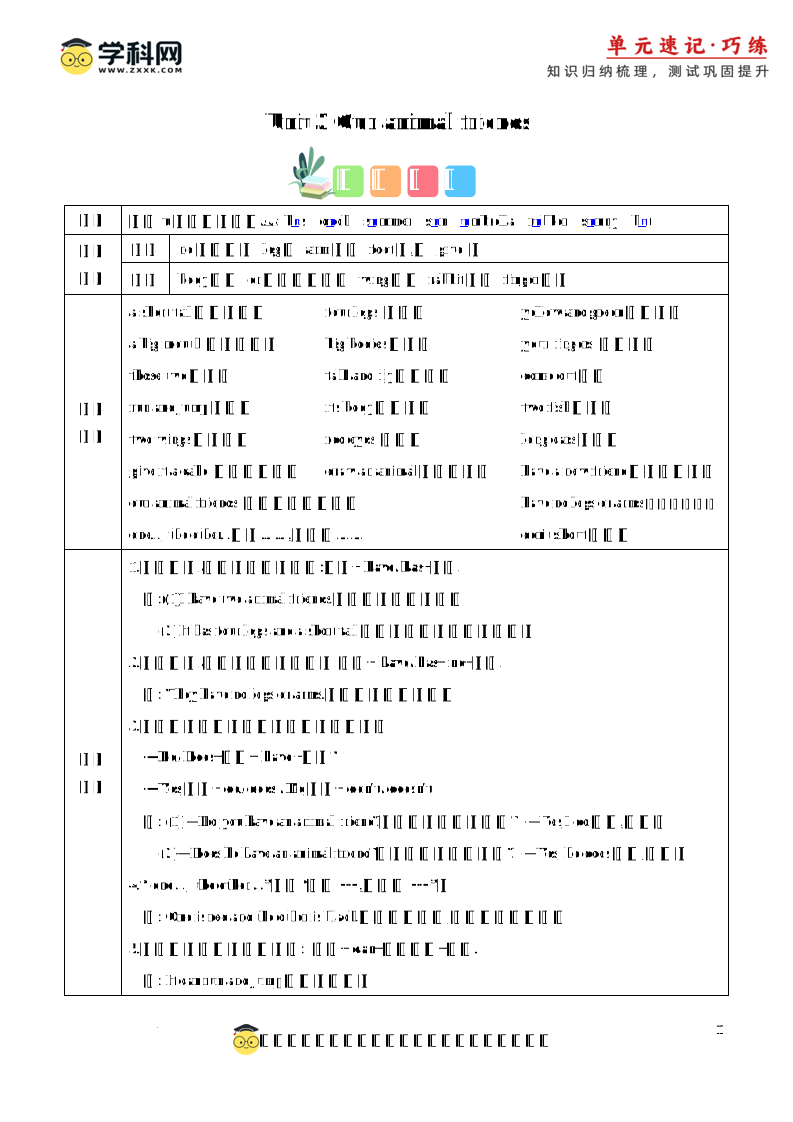
Unit 3 Our animal friends
知 识 归 纳
语音
字母u在单词中可发/ʌ/: bus duck summer sun umbrella rubber sunny but
必记
单词
四会
no没有,无 leg腿 arm手臂 foot脚,足 give 给
三会
body身体 or也不,也没有 wing翅膀 rabbit兔子 finger手指
常考
短语
a short tail一条短尾巴 four legs 四条腿 yellow and green黄绿相间
a big mouth 一张大嘴巴 big bodies大身体 your fingers 你的手指
those two那两个 talk and fly说话和飞 come out出来
run and jump跑和跳 its body它的身体 two fish两条鱼
two wings两只翅膀 red eyes 红眼睛 long ears长耳朵
give it a cake 给它一块蛋糕 draw an animal画一只动物 have a new friend有一位新朋友
our animal friends 我们的动物朋友们 have no legs or arms没有腿和手臂
one..., the other...一个……,另一个…… don't shout不要叫
必会
句型
1.表示某人/某物有某物的句型:主语+ have/ has+某物.
例:(1)I have two animal friends.我有两个动物朋友。
(2) It has four legs and a short tail.它有四条腿和一条短尾巴。
2.表示某人/某物没有某物的句型:主语+ have/ has+ no+某物.
例: They have no legs or arms.它们没有腿和胳膊。
3.询问某人是否有某物的句型及其答语:
—Do/ Does+主语+ have +某物?
—Yes,主语+ do/ does./ No,主语+ don't/ doesn't.
例: (1)—Do you have an animal friend?你有一个动物朋友吗? —Yes,I do.是的,我有。
(2)—Does he have an animal friend?他有一个动物朋友吗? —Yes, he does.是的,他有。
4.“ one ..., the other ...”表示“一个⋯⋯,另一个⋯⋯”。
例: One is red and the other is black.一个是红色的,另一个是黑色的。
5.表示某人能做某事的句型: 主语+ can+动词原形+其他.
例: It can run and jump.它能跑能跳。
核心
语法
1. have/ has的用法: have / has句型表示拥有某物,是一种所属关系。
2.和there be句型的区别: there be指客观存在; have 指所属关系,重点在于主观拥有。
考 点 速 记
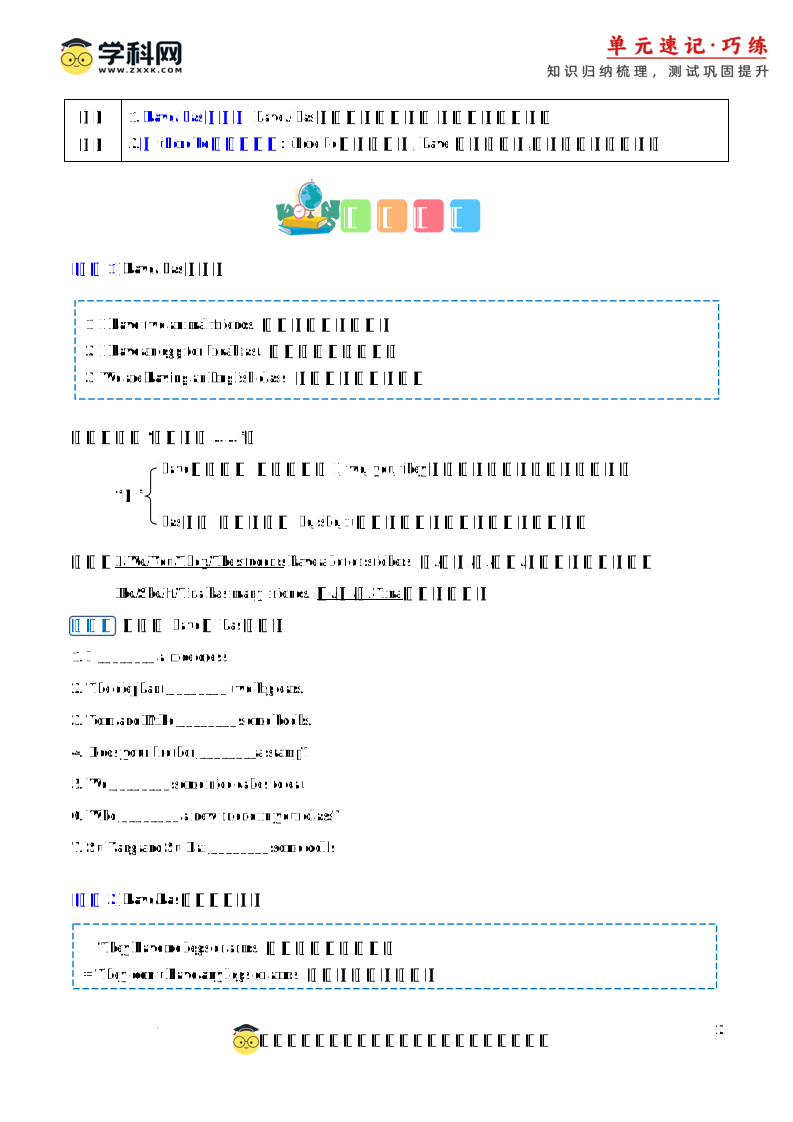
[考点1] have/ has的用法
1. I have two animal friends. 我有两个动物朋友。
2. I have an egg for breakfast. 我早餐吃一个鸡蛋。
3. We are having an English class. 我们正在上英语课。
解析:表示“某人拥有……”。
have动词原形 (当主语是I, we, you, they以及复数名词时,用动词原形)
“有”
has三单 (当主语是he, she, it以及单数、不可数名词时,用三单)
例如:I/We/You/They/The students have a lot of stickers. 我/我们/你/他们/学生们有许多贴纸。
He/She/It/Tina has many friends. 他/她/它/Tina有很多朋友。
提分练 一、用have或has填空。
1. I ________ a nice dress.
2. The elephant ________ two big ears.
3. Tom and Mike ________ some books.
4. Does your brother ________a stamp?
5. We ________ some nice cakes to eat.
6. Who ________ a new friend in your class?
7. Su Yang and Su Hai ________ some dolls.
[考点2] have/has的否定句结构
They have no legs or arms. 它们没有腿和手臂。
= They don’t have any legs or arms. 它们没有腿和手臂。
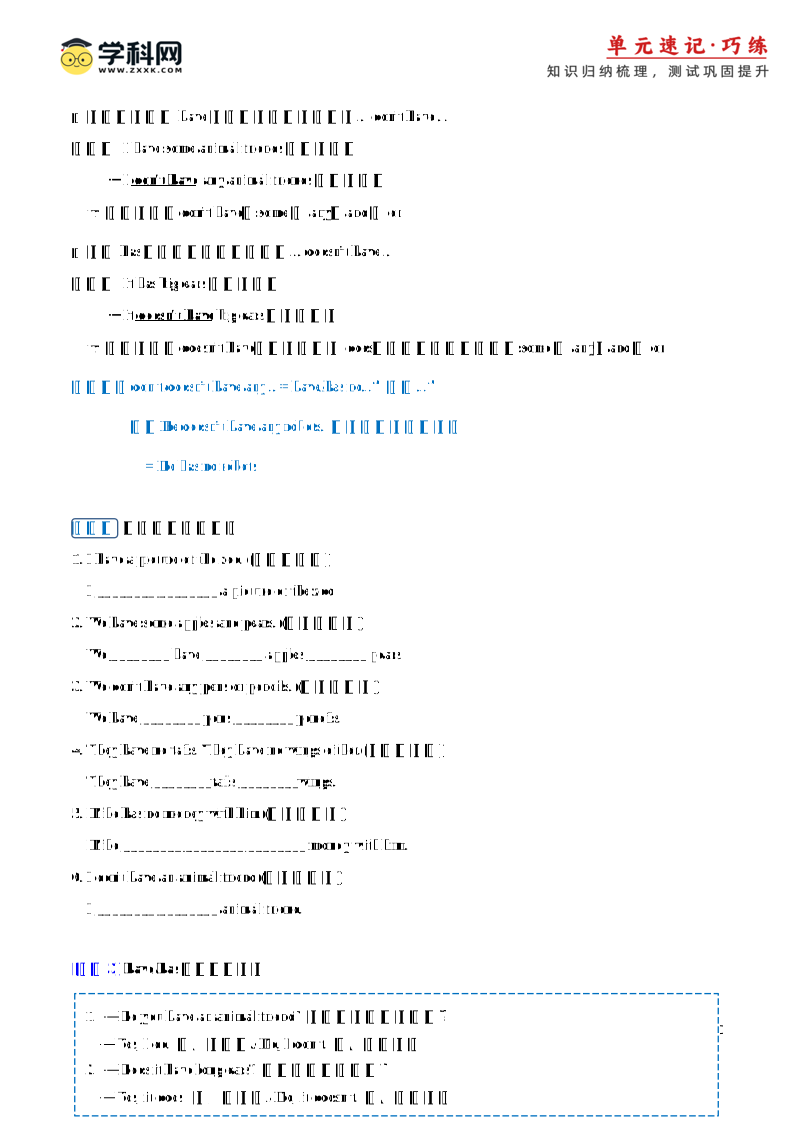
· 含有实义动词have句型的否定句结构是:... don’t have ...
典例: I have some animal friends.(肯定句)
→I don't have any animal friends.(否定句)
★ 解题思路:don’t have,some变any,and变or
· 含有has句型的否定句结构是:... doesn’t have ...
典例: It has big ears.(肯定句)
→It doesn't have big ears.(否定句)
★ 解题思路:doesn’t have(前有助动词does,后面动词用原形),some变any,and变or
【注意】don’t/doesn’t have any... = have/has no...“没有...”
如:He doesn’t have any robots. 他没有一些机器人。
= He has no robots.
提分练 按要求完成句子。
1. I have a picture of the zoo. (改为否定句)
I ________ ________ a picture of the zoo.
2. We have some apples and pears. (改为否定句)
We ________ have ________ apples ________ pears.
3. We don’t have any pens or pencils. (改为同义句)
We have ________ pens ________ pencils.
4. They have no tails. They have no wings either.(合并为一句)
They have ________tails ________wings.
5. Mike has no money with him.(改为同义句)
Mike ________ ________ ________ money with him.
6. I don't have an animal friend.(改为同义句)
I ________ ________ animal friend.
[考点3] have/has的一般疑问句
1. —Do you have an animal friend? 你有一个动物朋友吗?
—Yes, I do. 是, 我有。/ No, I don’t. 不, 我没有。
2. —Does it have long ears? 它有长长的耳朵吗?
—Yes, it does. 是, 它有。/ No, it doesn’t. 不, 它没有。
· 含有实义动词have句型的一般疑问句结构是:Do....have ...?
肯定回答:Yes, I/We/They do.
否定回答:No, I/We/They don’t.
典例: I have some animal friends.(改为一般疑问句,并作肯定及否定回答)
→Do you have any animal friends?
Yes, I do.或No, I don’t.
★解题思路:Do....have ...? ,some变any,and变or
· 含有has句型的一般疑问句结构是:Does....have ...?
典例: It has big ears.(改为一般疑问句,并作肯定及否定回答)
→Does it have big ears?
Yes, it does.或No, it doesn’t.
★ 解题思路:Does....have ...?(前有助动词does,后面动词用原形),some变any,and变or
提分练 一、单项选择。
( ) 1. Lanlan and Huahua ________ a little dog.
A. has B. there is C. have
( ) 2. ________ some apples on the table.
A. There are B. There have C. There is
( ) 3.—What ________ your sister ________?
—She has a postcard from China.
A. do; have B. does; has C. does; have
( ) 4. ________ an English book in your bag? ________ he ________?
A. Has there B. Is there C. Are there
提分练 二、按要求完成句子。
1. We have some bananas.(改为一般疑问句,并作肯定回答)
— you bananas?
—Yes, .
2. My animal friend has a big mouth.(改为一般疑问句,并作否定回答)
— animal friend a big mouth?
—No, .
3. It has some thin legs.(改为一般疑问句,并作肯定回答)
— it thin legs?
— , it .
4. He has a baby cat. (对画线部分提问)
________ ________ he ________?
5. Do you have a nice doll? ( you 换为 Ann)
________ Ann ________a nice doll?
参考答案
[考点1] 1. have 2. has 3. have 4. have 5.have 6.has 7.have
[考点2] 1.don’t have 2.don’t, any, or 3.no, or 4.no, or 5.doesn't have any 6.have no
[考点3] 一、1. C 2. A 3. C 4. B
二、1.Do, have any, we do 2.Does your, have, it doesn't 3.Does, have, any, Yes, does
4.What does, have 5.Does, have
原创精品资源学科网独家享有版权,侵权必究!6
学科网(北京)股份有限公司
$$
资源预览图
1
2
3

相关资源
由于学科网是一个信息分享及获取的平台,不确保部分用户上传资料的 来源及知识产权归属。如您发现相关资料侵犯您的合法权益,请联系学科网,我们核实后将及时进行处理。