Unit 3 课时3 语法-【宝典训练】2023-2024学年七年级下册英语高效课堂课件(沪教牛津版)
2024-07-03
|
41页
|
87人阅读
|
6人下载
教辅

资源信息
| 学段 | 初中 |
|---|---|
| 学科 | 英语 |
| 教材版本 | 初中英语沪教牛津版(广州深圳沈阳通用)(2012)七年级下册 |
| 年级 | 七年级 |
| 章节 | Unit 3 Our animal friends |
| 类型 | 课件 |
| 知识点 | - |
| 使用场景 | 同步教学-新授课 |
| 学年 | 2024-2025 |
| 地区(省份) | 全国 |
| 地区(市) | - |
| 地区(区县) | - |
| 文件格式 | PPTX |
| 文件大小 | 160 KB |
| 发布时间 | 2024-07-03 |
| 更新时间 | 2024-07-03 |
| 作者 | 深圳天骄文化传播有限公司 |
| 品牌系列 | 宝典训练·高效课堂 |
| 审核时间 | 2024-07-03 |
| 下载链接 | https://m.zxxk.com/soft/46111405.html |
| 价格 | 3.00储值(1储值=1元) |
| 来源 | 学科网 |
内容正文:
Unit 3 Our animal friends
课时3 语法
目 录
01
课时精讲
02
课时过关
01
课时精讲
代词是代替名词、名词词组或更高层次的语法结构的词。大多数代词具有名词和形容词的功能。英语中的代词,按其特点分为:人称代词、物主代词、指示代词、反身代词、相互代词、疑问代词、关系代词、连接代词和不定代词九种。在这一单元中,我们主要掌握人称代词,物主代词和反身代词的用法。
第 ‹#› 页
课时3 语法
返回目录
►【复习一】人称代词
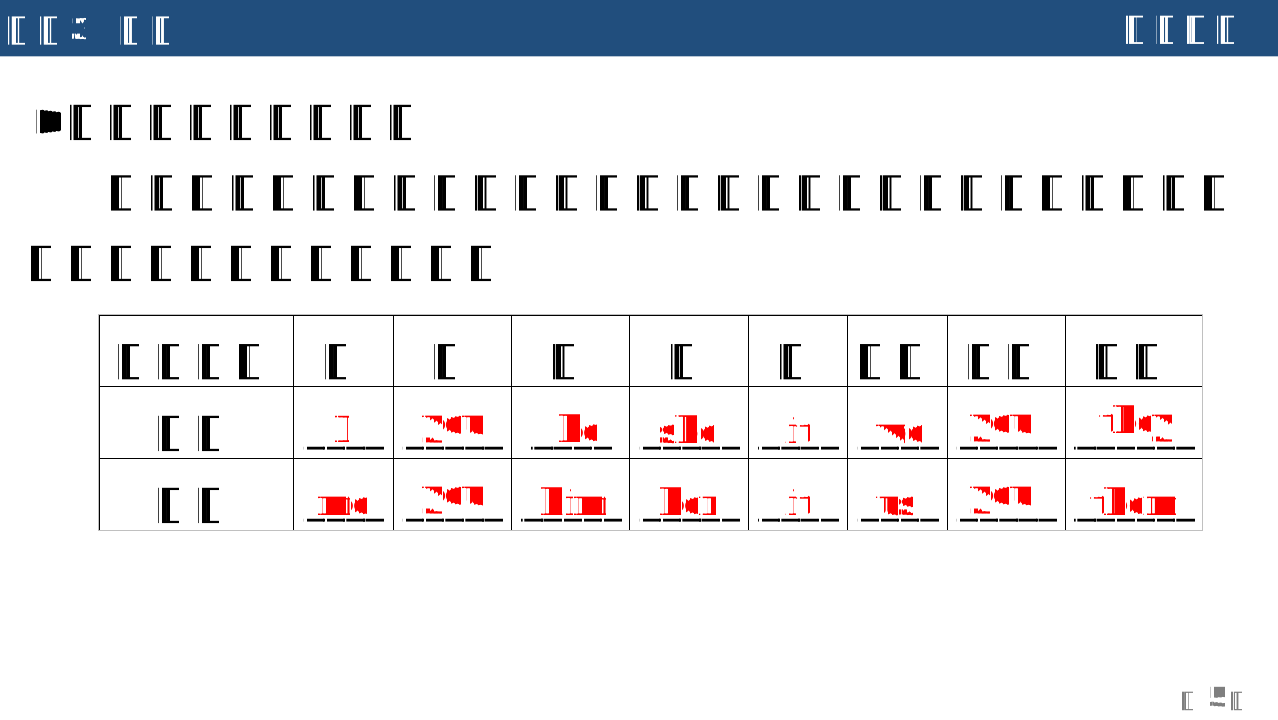
人称代词是表示我、你、他、她、它、我们、你们、他们的词。人称代词分为主格和宾格。
人称代词 我 你 他 她 它 我们 你们 他们
主格 ____ _____ ____ _____ ____ ____ _____ ______
宾格 ____ _____ _____ _____ ____ ____ _____ ______
I
you
he
she
it
we
you
they
me
you
him
her
it
us
you
them
第 ‹#› 页
课时3 语法
返回目录
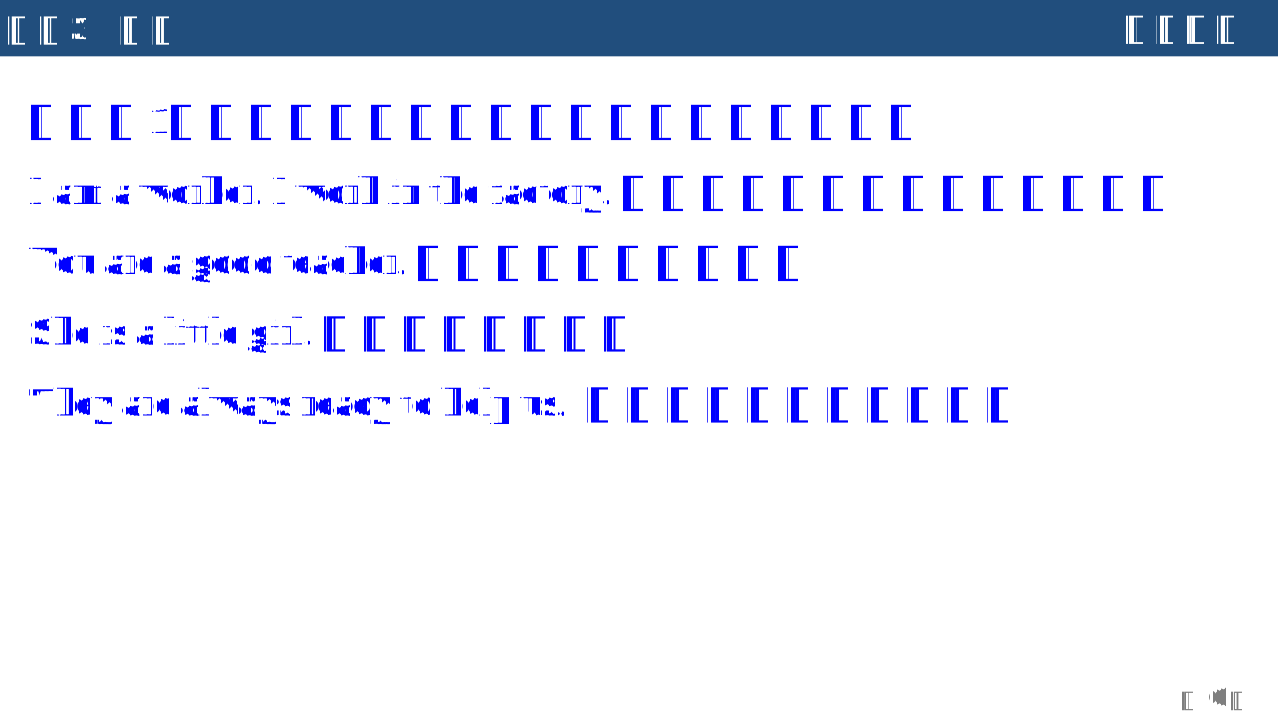
【解析1】人称代词的主格一般在句中作主语。如:
I am a worker. I work in the factory. 我是一名工人,我在工厂工作。
You are a good teacher. 你是一名优秀的教师。
She is a little girl. 她是一个小女孩。
They are always ready to help us. 他们总是愿意帮助我们。
第 ‹#› 页
课时3 语法
返回目录
【解析2】人称代词的宾格在句中可以作及物动词或介词的宾语。如:
Our teacher is very strict with us. 我们的老师对我们很严格。
Please help me with my English. 请帮我学英语。
【解析3】人称代词需要注意的情况:第一人称单数代词“I (我)”不论在什么地方都要大写。如:
I study English every day. 我天天学习英语。
My mother and I go there by bus. 妈妈和我坐公交去那里。
第 ‹#› 页
课时3 语法
返回目录
►【复习二】形容词性物主代词 & 名词性物主代词
表示所有关系的代词叫做物主代词。物主代词可分为形容词性物主代词和名词性物主代词。
物主
代词 我的 你的 他的 她的 它的 我们的 你们的 他们的
形容
词性 ___ ____ ____ ___ ____ ____ _____ ______
名词性 ____ _____ ___ ____ ___ _____ ______ _______
my
your
his
her
its
our
your
their
mine
yours
his
hers
its
ours
yours
theirs
第 ‹#› 页
课时3 语法
返回目录
【解析1】形容词性物主代词可用作定语。如:
I love my country. 我热爱我的国家。
Is this your car? 这是你的汽车吗?
His name is Tom. 他的名字是汤姆。
第 ‹#› 页
课时3 语法
返回目录
【解析2】名词性物主代词可用作主语,宾语,表语以及与of连接的定语。如:
Li Hua's bike is red, and yours is green. 李华的自行车是红色的,而你的是绿色的。
That car is mine, not yours. 那辆汽车是我的,不是你的。
These books are ours. 这些书是我们的。
Tom's bike is broken. He is using mine. 汤姆的自行车坏了,他现在在用我的。
Yesterday I met a friend of mine in the street. 昨天我在街上碰见了我的一位朋友。
第 ‹#› 页
课时3 语法
返回目录
【语法点一】反身代词
表示我自己,你自己,他自己,它自己,我们自己,你们自己,他们自己等的词叫做反身代词。
反身代词 第一人称 第二人称 第三人称
单数 我自己 你自己 他自己 她自己 它自己
________ __________ ________ ________ _______
复数 我们自己 你们自己 他们自己
__________ ___________ ____________
myself
yourself
himself
herself
itself
ourselves
yourselves
themselves
第 ‹#› 页
课时3 语法
返回目录
►反身代词的构成
【解析1】第一、第二人称的反身代词由形容词性物主代词加上-self,-selves构成。如:
myself我自己;ourselves我们自己;yourself你自己;yourselves你们自己
【解析2】第三人称的反身代词是由宾格加上-self,-selves构成。如:
himself他自己;herself她自己;itself它自己;themselves他们/她们/它们自己
第 ‹#› 页
课时3 语法
返回目录
►反身代词的用法
【解析1】反身代词用作及物动词的宾语,表示动作回到动作执行者的本身。
第 ‹#› 页
课时3 语法
返回目录
【例题1】I teach ________ English. 我自学英语。(teach oneself 自学)
The little girl can dress _________. 小女孩能自己穿衣服。(dress oneself 自己穿衣服)
We enjoyed ___________ last Sunday. 上周日我们玩得很高兴。(enjoy oneself 玩得高兴)
Please help ______________________ to some fish. 鱼肉请随便吃。(help oneself to随便用……)
myself
herself
ourselves
yourself/yourselves
第 ‹#› 页
课时3 语法
返回目录
【解析2】反身代词用在主语后或句末,表示强调“本人;自己”。
第 ‹#› 页
课时3 语法
返回目录
【例题2】The child ________ drew this picture. 孩子自己画的这张画。
You should ask the children ____________. 你应该问一问孩子们自己。
I will go there ________. 我将亲自去那里。
himself
themselves
myself
第 ‹#› 页
课时3 语法
返回目录
【语法点二】表示方位的介词
►什么是方位介词
简单地说,方位介词就是表示方位或地点的介词,常见的有at,in,on,between,inside,outside,in front of等等。
第 ‹#› 页
课时3 语法
返回目录
►主要方位介词的用法
【解析1】at表示“在……处”,一般指城镇、学校、车站等较小的比较具体的地点。如:
He will arrive at the small village. 他将到达这个小村庄。
【解析2】in表示“在……内部;在……里面”,表达国家、大城市、大岛屿等较大的地点。如:
What's in the box? 盒子里有什么?
They arrived in Beijing yesterday. 他们昨天到达了北京。
第 ‹#› 页
课时3 语法
返回目录
【拓展1】lie in, lie on, lie to的区别和用法
(1)in表示A地在B地范围之内。如:
Shanghai lies in the east of China. 上海在中国的东部。
(2)on表示A地与B地接壤、毗邻。如:
North Korea lies on the east of China. 北朝鲜在中国的东面。
(3)to表示A地在B地范围之外,即二者之间有距离间隔。如:
Japan lies to the east of China. 日本在中国的东面。
第 ‹#› 页
课时3 语法
返回目录
【拓展2】注意 in the newspaper和in the street 的含义
(1)in the newspaper 在报纸上 如:
She had read about it in the newspaper. 关于这件事她已经在报纸上看到了。
(2)in the street 在街上 如:
I can see many people in the street. 我在街上能看到很多人。
第 ‹#› 页
课时3 语法
返回目录
【解析3】on 表示“在某物的上面”,但两者互相接触。如:
My books are on that table. 我的书在那张桌子上。
第 ‹#› 页
课时3 语法
返回目录
【拓展1】方位介词on,over,above的区别和用法
(1)on表示一物放在另一物上面,两者紧贴在一起。
(2)over表示一种垂直悬空的上下关系,即“在……垂直上方”。如:
There is a bridge over the river. 河上有座桥。
(3)above通常指在不垂直的上方,或者一般的“高于……”,指“在……之上”。如:
Our office is above the hairdresser's. 我们的办公室就在理发店上面。
第 ‹#› 页
课时3 语法
返回目录
【拓展2】方位介词under,below的区别和用法
(1)under表示“在某物垂直的正下方”,两者之间接触或者不接触。如:
My cat is under my chair. 猫就在我的椅子下面。
She had a T-shirt on under her sweater. 她在毛衣里面穿了件T恤衫。
(2)below表示“低于……,在……之下”,不垂直,不接触。如:
See the note below. 参见底下的注释。
第 ‹#› 页
课时3 语法
返回目录
【解析4】behind表示“在某物的后面”。如:
There is a garden behind the house. 屋后有个花园。
【解析5】in front of表示“在……的前面”,意思正好与behind相反。如:
There are some big trees in front of our classroom. 我们教室前面有一些大树。
第 ‹#› 页
课时3 语法
返回目录
【拓展】 方位介词短语 in front of,in the front of的区别和用法
(1)in front of指在某物的外部的前方;意思是“在……的前面”。
(2)in the front of指在某物的内部靠前的地方;意思是“在……的前部”。如:
The driver is always in the front of the bus. 司机总在公交车的前部。
第 ‹#› 页
课时3 语法
返回目录
【解析6】near表示“在附近”。如:
The ball is near the door. 球在门旁边。
第 ‹#› 页
课时3 语法
返回目录
【拓展】方位介词(短语)near,beside/by,next to的区别和用法
(1)near意为“在……附近”,表示的距离比by和beside稍远些,也时常换用。如:
There is a theatre near his home. 他家附近有一家剧院。
(2)beside/by表示“在……旁边”;常可换用。如:
The hotel is beside /by the river. 那家酒店在河边。
(3)next to表示“紧挨着;紧靠……的旁边”。如:
The boy sat next to his mother. 男孩紧挨着他妈妈坐着。
第 ‹#› 页
课时3 语法
返回目录
【解析7】between表示 “在……之间”;常用于搭配between…and… “在……和……之间”。如:
Between the bookshop and the hospital is our school. 我们学校就在书店和医院之间。
第 ‹#› 页
课时3 语法
返回目录
【拓展】between,among的区别和用法
(1)between 表示“在两者之间”。如:
Don't sit between the two girls. 不要坐在两个女孩子中间。
(2)among 表示“在……之间(三者或以上)”。如:
We built a house among the trees. 我们在树林中建了一座房子。
第 ‹#› 页
课时3 语法
返回目录
熟记下列介词
above—below 在……上面/在……下面
over—under 在……上面/在……下面(垂直)
inside—outside 在……里面/在……外面
into—out of 进去/出来
behind—in front of 在……后面/在……前面
opposite 在……对面
第 ‹#› 页
课时3 语法
返回目录
next to 紧挨着
beside/by 在……旁边
on the right of 在右边
on the left of 在……左边
in the right-hand corner 在右手边的角落里
in the left-hand corner 在左手边的角落里
第 ‹#› 页
课时3 语法
返回目录
02
课时过关
一、用适当的人称代词、物主代词、反身代词填空,使句子完整通顺
1.—Are _____ a middle school student now?
—Yes,____ study in Yucai School.
2.—Look! What is under the chair? —Oh! _____ is my cat.
3.—I am so hungry. Please give ____ something to eat. —What about some bread?
you
I
It
me
第 ‹#› 页
课时3 语法
返回目录
4.—My sister studies very hard at school.
—Oh, _____ is a good student. No wonder (难怪) all the teachers like _____.
5.I have a new pen pal from America. ______ (Her/Hers) name is Nancy.
6.—My bike is black. What about _______ (your/yours)?
—Oh, ______ (my/mine) is red.
7._____ (Our/Ours)classroom is big, but _______ (their/theirs) is bigger.
she
her
Her
yours
mine
Our
theirs
第 ‹#› 页
课时3 语法
返回目录
8.The little boy can dress _________ now.
9.Many nice clothes are on sale (甩卖) in our store. Have a look by __________!
10.Did you enjoy _________ at Linda's birthday party last night, May?
11.Nobody helped me. I finished the job all by ________.
12.Don't worry. The children are old enough to take care of ____________.
himself
yourselves
yourself
myself
themselves
第 ‹#› 页
课时3 语法
返回目录
二、用方位介词填空
1.There is a bag ____ the teachers' desk, with some books and some chalk.
2.An old man was sitting _______ the tree.
3.Tom stood _________ his parents. That is, he was in the middle.
4.Japan lies ____ the east of China.
5.Beijing is ____ the north of China.
onxh
under
between
to
in
第 ‹#› 页
课时3 语法
返回目录
6.I can't see the blackboard clearly. Two tall boys are sitting __________ me.
7.There is a map of China ____ the wall of our classroom.
8.The teacher came in with a book ____ his hand.
9.Mr Smith lives ____ that building. His house is ____ the fifth floor.
10.Some people are waiting ____ the bus stop. They are standing in a queue (排队).
in front of
on
in
in
on
at
第 ‹#› 页
课时3 语法
返回目录
三、语法填空
阅读下面短文,按照句子结构的语法性和上下文连贯的要求,在空格处填入一个适当的词或使用括号中词语的正确形式填空。
Last Sunday Sue had a very happy birthday party. Many of her 1._________ (friend)came over to her party and gave 2._____ (she) a lot of gifts.
friends
her
第 ‹#› 页
课时3 语法
返回目录
Tom gave her 3.___ book called Harry Potter. When Sue opened Lily's gift, she was very 4.___________ (surprise). She also got other gifts and then she asked her mother. “But Mom, 5.______ about your gift?”
“Go and look for your gift in your bedroom,” her mom said. Sue ran 6.________(quick)to her room. On her bed she 7._____(see)a small red box. There 8._____ (be)nothing but a card in it. It read:
a
surprised
what
quickly
saw
was
第 ‹#› 页
课时3 语法
返回目录
“Dear Sue, I'm your gift.My 9.____ (one)three letters are the same as the letters of the word ‘come’. My last two letters are the same as the letters of the word ‘water'. My middle three letters are the same as the letters of the word ‘put’. What am I?”
Sue thought for a few minutes, 10._____ then said, “Oh, Great! Thank you, Mom”.
first
and
第 ‹#› 页
课时3 语法
返回目录
本节内容到此结束!
logo
$$
资源预览图
1

2

3
4
5
6
相关资源
由于学科网是一个信息分享及获取的平台,不确保部分用户上传资料的 来源及知识产权归属。如您发现相关资料侵犯您的合法权益,请联系学科网,我们核实后将及时进行处理。