Unit 3 课时2 阅读-【宝典训练】2023-2024学年七年级下册英语高效课堂课件(沪教牛津版)
2024-07-03
|
29页
|
52人阅读
|
4人下载
教辅

资源信息
| 学段 | 初中 |
|---|---|
| 学科 | 英语 |
| 教材版本 | 初中英语沪教牛津版(广州深圳沈阳通用)(2012)七年级下册 |
| 年级 | 七年级 |
| 章节 | Unit 3 Our animal friends |
| 类型 | 课件 |
| 知识点 | - |
| 使用场景 | 同步教学-新授课 |
| 学年 | 2024-2025 |
| 地区(省份) | 全国 |
| 地区(市) | - |
| 地区(区县) | - |
| 文件格式 | PPTX |
| 文件大小 | 135 KB |
| 发布时间 | 2024-07-03 |
| 更新时间 | 2024-07-03 |
| 作者 | 深圳天骄文化传播有限公司 |
| 品牌系列 | 宝典训练·高效课堂 |
| 审核时间 | 2024-07-03 |
| 下载链接 | https://m.zxxk.com/soft/46111404.html |
| 价格 | 2.00储值(1储值=1元) |
| 来源 | 学科网 |
内容正文:
Unit 3 Our animal friends
课时2 阅读
目 录
01
课时精讲
02
课时过关
03
拓展训练
01
课时精讲
课文重点句子的讲解
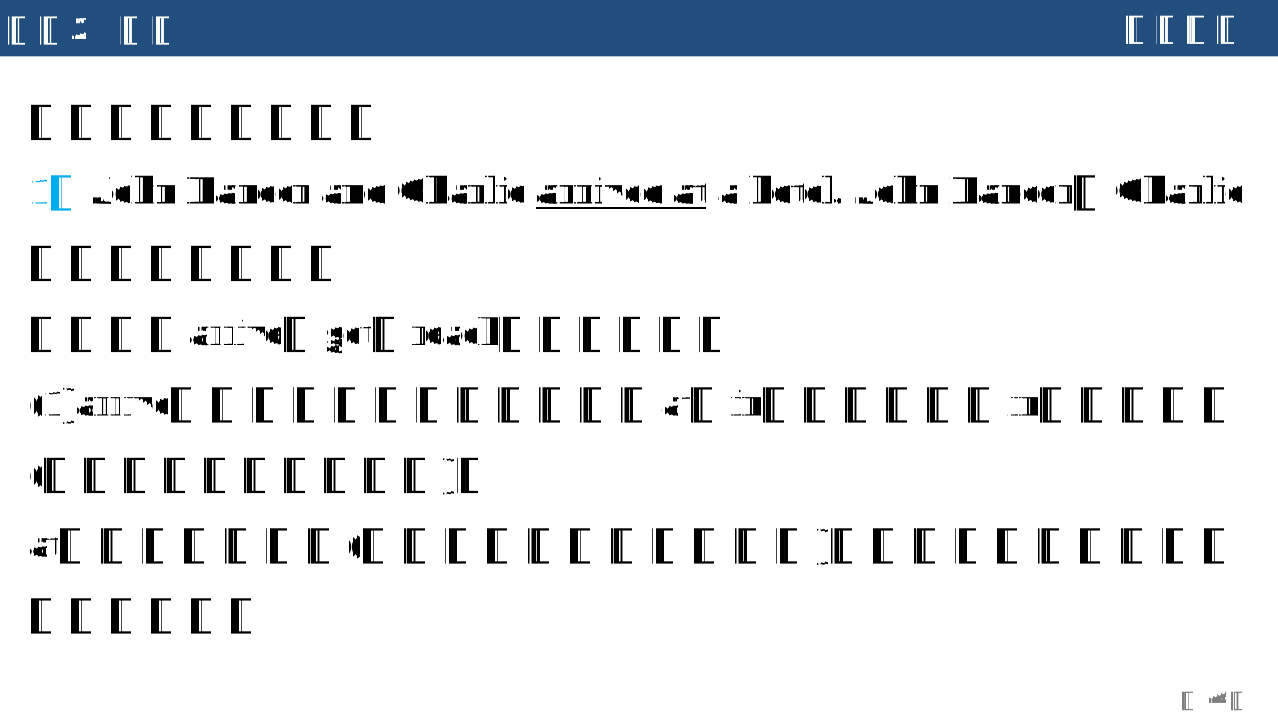
1.John Dancer and Charlie arrived at a hotel. John Dancer和Charlie到达了一家宾馆。
【辨析】arrive,get,reach的区别和用法
(1)arrive是不及物动词,后常接介词at或in,一般来说,in后接大地点(如国家,城市,地区等);
at后接具体小地点(如车站、影院等具体地点),若是地点副词,则不需要用介词。
第 ‹#› 页
课时2 阅读
返回目录
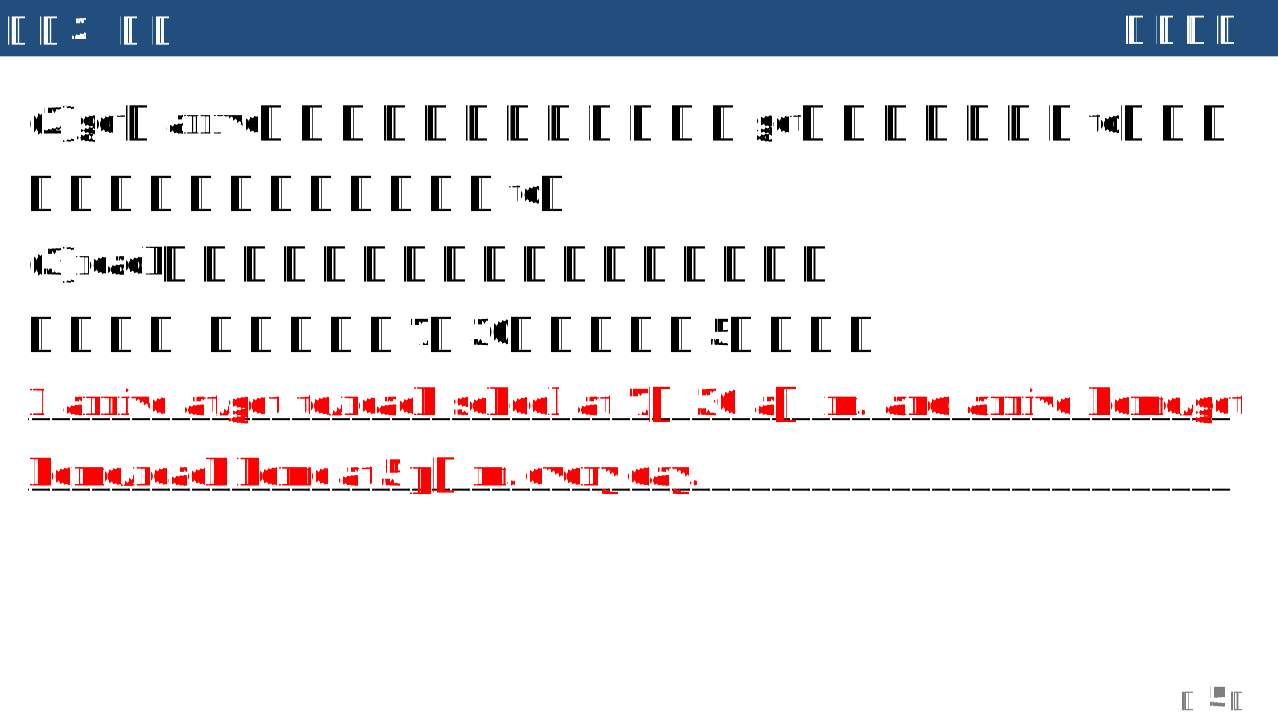
(2)get与arrive一样,都是不及物动词,但get其后接的是介词to,如果后面接副词,则不需要介词to。
(3)reach是及物动词,直接接宾语,无需介词。
【例题】 我每天早上7点30到校,下午5点到家。
________________________________________________________________________________________________________________________
I arrive at/get to/reach school at 7:30 a.m. and arrive home/get home/reach home at 5 p.m. every day.
第 ‹#› 页
课时2 阅读
返回目录
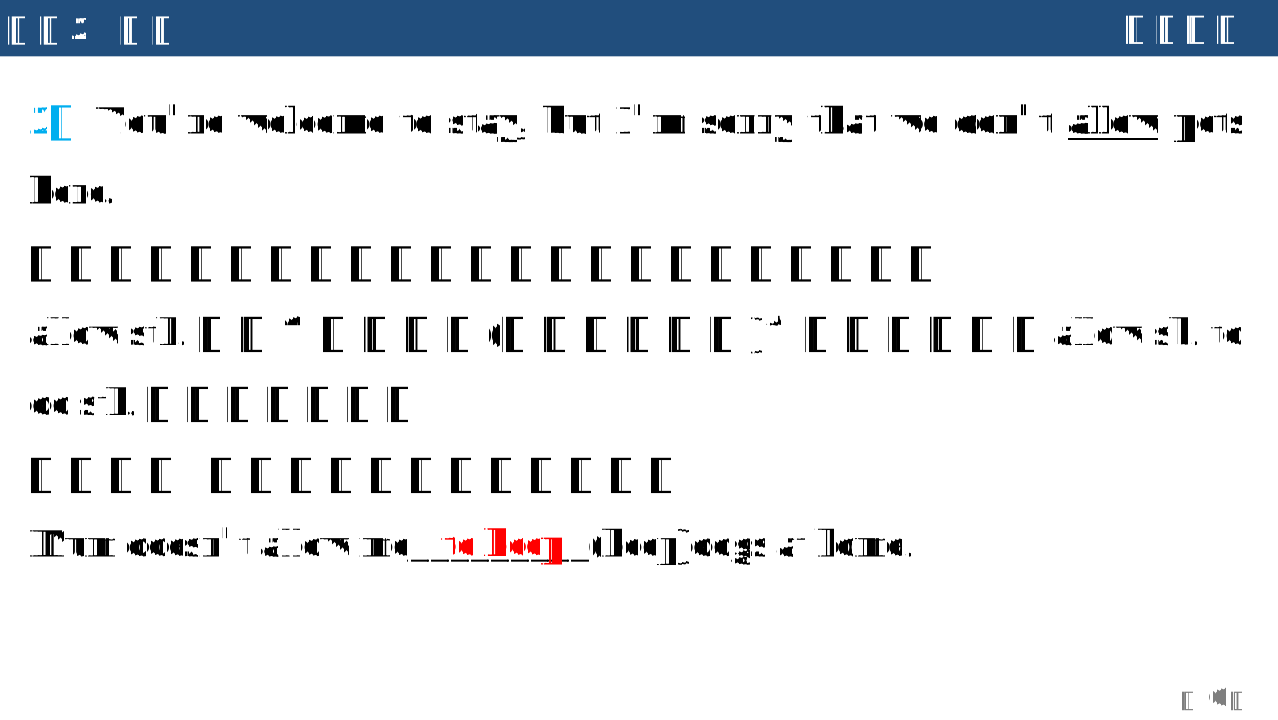
2.You're welcome to stay, but I'm sorry that we don't allow pets here.
欢迎入住,但很抱歉我们不允许把宠物带进来这里。
allow sth. 表示“允许进入(或出去、通过)”,常用短语:allow sb. to do sth. 允许某人做某事
【例题】 妈妈不允许我在家里养狗。
Mum doesn't allow me_________(keep)dogs at home.
to keep
第 ‹#› 页
课时2 阅读
返回目录
3.What do you think the word “eyes” means in the story?
你认为单词“eyes”在故事中是什么意思?
(1)What do/does…mean? ……是什么意思?
What does “newspaper” mean? “newspaper”是什么意思?
(2)What do you mean by…? 你说的……是什么意思?
What do you mean by saying that? 你说的那个是什么意思?
第 ‹#› 页
课时2 阅读
返回目录
4.I'm blind and I can't go anywhere by myself.
我是盲人,我不能独自去任何地方。
by oneself = on one's own意为“独自地”,常用于句尾,强调没有别人帮助、陪伴。
【例题】Don't leave me at home by myself, Dad.
= Don't leave me at home ____ ____ _____, Dad.
on my own
第 ‹#› 页
课时2 阅读
返回目录
【拓展】常用的由反身代词构成的短语:
talk to oneself 自言自语 enjoy oneself 玩得高兴 help oneself to 随便吃(用)
teach oneself 自学 dress oneself自己穿衣服
第 ‹#› 页
课时2 阅读
返回目录
5.The receptionist apologized and led John and Charlie to their room.
接待员道歉并且带领约翰和查理去他们的房间。
apologize = say sorry v. 道歉 apology n. 道歉
【拓展】
(1)apologize to sb. = say sorry to sb. 意为“向某人道歉”。
而apologize for sth./doing sth. 意为 “为(做了)某事道歉,因……而道歉”。
【例题】 You should make an ________ (apologize)to him for your mistake.
(2)lead:(过去式led) lead(sb.)to带着(某人)到……
apology
第 ‹#› 页
课时2 阅读
返回目录
6.He soon fell asleep. 他很快就睡着了。
fall asleep入睡,睡着
【区分】go to bed 上床睡觉,强调睡觉这个事情,不一定睡着了;fall asleep强调睡着了。
第 ‹#› 页
课时2 阅读
返回目录
7.Some time later, Charlie started barking. 过了一会儿,Charlie开始吠叫。
start to do sth. = begin to do sth. = start doing sth. 开始做某事 如:
It started raining/to rain. 开始下雨了。
第 ‹#› 页
课时2 阅读
返回目录
8.John would not go without his “eyes”. 没有他的“眼睛”,John不会离开。
without 介词,意为“无,没有”。without是with的反义词,其后跟名词、代词或动名词。
【例题】Fish can't live_________ (没有) water.
without
第 ‹#› 页
课时2 阅读
返回目录
9.Finally, the fireman got Charlie out of the building too and they were both safe.
最后,这名消防员也把查理救出了大楼,他们都是安全的了。
(1)finally
①终于,最终(用于经过一段长时间、特别是经过困难或耽搁之后的事),类似表达at last, eventually, in the end等。
②最后(用于举例,引出所提事情、观点的最后一项、一点),类似表达有in conclusion, lastly等。
③彻底地,其近义词有completely, fully, totally等。
【例题】 Tom has finished his homework, _________ (final).
finally
第 ‹#› 页
课时2 阅读
返回目录
(2)both 两者都。反义词:neither 如:We are both students. 我们两个都是学生。
all 两者以上都。反义词:none 如:The students are all listening. 学生都在听讲。
用法:all, both作主语同位语时,放在be动词后,实义动词前。
第 ‹#› 页
课时2 阅读
返回目录
02
课时过关
一、翻译下列重点短语
1.一只搜救犬 ______________
2.欢迎做某事 _______________________
3.到达 __________________________
4.独自 ____________
5.一个盲人 _____________
6.向……道歉 __________________
7.带着(某人)到…… ___________________________
a rescue dog
be welcome to do sth.
arrive at/get to/reach
by oneself
a blind man
apologize to sb.
lead(sb.) to=take sb. to
第 ‹#› 页
课时2 阅读
返回目录
8.入睡 ________________________
9.把某人叫醒 _____________
10.一段时间后 _________________
11.救某人的命 __________________
12.在门底下 ___________________________
13.看到某人正在做某事 ____________________
14.蹲下;趴下 __________
15.紧挨着 _________________
16.把……接出来 _____________
be asleep/fall asleep
wake sb. up
some time later
save one's life
at the bottom of the door
see sb. doing sth.
get down
next to=beside
get…out of
第 ‹#› 页
课时2 阅读
返回目录
二、回顾课文,完成短文
One day, John Dancer and Charlie got to a hotel. The receptionist didn't want 1.______ (let)his dog, Charlie, in. John told him Charlie was his “eyes” instead of a pet. John was 2.___ blind man and he couldn't go anywhere 3._________ Charlie's help. The receptionist said sorry and 4._____ (lead)John and Charlie to their room. John was so tired that he soon fell 5.________ (sleep).Some time later, Charlie started barking. John woke up and smelt smoke. A fire! Smoke started to come in from
to let
a
without
led
asleep
第 ‹#› 页
课时2 阅读
返回目录
under the door. With the help of Charlie, John put some wet 6.________ (towel)along the bottom of the door. Then he got down on the floor next to Charlie and waited 7.____ help. Soon he heard the sound of a fire engine. A fireman arrived and got 8.____ (he)out of the building, 9._____ the fireman didn't want to take Charlie. John would not go if the fireman left his “eyes” alone. At last, the fireman also got Charlie out of the building and they were both safe. How 10.___________ (danger)it was!
towels
for
him
but
dangerous
第 ‹#› 页
课时2 阅读
返回目录
三、阅读理解
People sometimes like to read stories of dogs very much. They think that dogs are much cleverer than cats, sheep, cows or other animals in their homes. One of my close friends, Bob, has a very large police dog named Jack. Every Sunday afternoon, Bob and Jack have a walk in the park nearby. Jack likes these walks very much. One Sunday afternoon. I paid a visit to my friend. I stayed there for a long time and my friend and I had much more talk with each other than ever before. Soon it was time for
第 ‹#› 页
课时2 阅读
返回目录
them to take a walk in the park. We forgot that. Jack became worried about it. He walked around the room several times and then sat down in front of me and looked at me. But I still paid no attention (注意) to him. I went on talking with my friend. At last, Jack could not wait any longer. He went out of the room and came back a few minutes later. He sat down in front of me again. But this time, he held my hat in his mouth. Suddenly,I understood what Jack meant and so did my friend.
第 ‹#› 页
课时2 阅读
返回目录
( )1.How many people are there in this story?
A.One. B.Two.
C.Three. D.Four.
( )2.Jack______________.
A.is a close friend of mine
B.enjoys long walks in the park every Sunday afternoon
C.has many close friends
D.enjoys talks in the room
B
B
第 ‹#› 页
课时2 阅读
返回目录
( )3.Jack took my hat in his mouth to show that______________.
A.I should leave the house at once
B.he liked my hat very much
C.he was hungry and he tried to eat it
D.he wanted to have a rest
A
第 ‹#› 页
课时2 阅读
返回目录
( )4.Jack was worried because______________.
A.he wanted to eat something
B.it was Sunday afternoon again
C.he was not feeling well
D.he wanted his master (主人) to take him for walk
D
第 ‹#› 页
课时2 阅读
返回目录
( )5.Which of the following is TRUE?
A.When Jack and I were talking, my friend didn't pay any attention to us.
B.When I was talking to my friend, Jack didn't pay any attention to us.
C.When my friend and I were talking, we didn't pay any attention to Jack.
D.When my friend was talking to Jack, I paid attention to them.
C
第 ‹#› 页
课时2 阅读
返回目录
03
拓展训练
简要描述自己最喜爱的动物。(补全介词或连词)
Dogs are our best friends
I think dogs are our best friends. Dogs help people 1.____ many ways. They help the police catch thieves 2._____ find missing people. Dogs also help farmers 3.____ their farms. Some specially trained dogs can help blind people 4.____ the road safely. Without dogs, we cannot do many things. They are our best friends. We should be kind to dogs and take care 5.____ them.
in
and
on
on
of
第 ‹#› 页
课时2 阅读
返回目录
本节内容到此结束!
logo
$$
资源预览图

1

2

3
4
5
6

相关资源
由于学科网是一个信息分享及获取的平台,不确保部分用户上传资料的 来源及知识产权归属。如您发现相关资料侵犯您的合法权益,请联系学科网,我们核实后将及时进行处理。