广东省珠海市田家炳中学2022-2023学年高一上学期寒假英语作业议论文阅读强化练习
2024-01-12
|
3页
|
652人阅读
|
28人下载
资源信息
| 学段 | 高中 |
|---|---|
| 学科 | 英语 |
| 教材版本 | 高中英语人教版必修第二册 |
| 年级 | 高一 |
| 章节 | - |
| 类型 | 试卷 |
| 知识点 | - |
| 使用场景 | 寒暑假-寒假 |
| 学年 | 2022-2023 |
| 地区(省份) | 广东省 |
| 地区(市) | 珠海市 |
| 地区(区县) | - |
| 文件格式 | DOCX |
| 文件大小 | 44 KB |
| 发布时间 | 2024-01-12 |
| 更新时间 | 2024-01-14 |
| 作者 | 匿名 |
| 品牌系列 | - |
| 审核时间 | 2024-01-12 |
| 下载链接 | https://m.zxxk.com/soft/42840252.html |
| 价格 | 0.50储值(1储值=1元) |
| 来源 | 学科网 |
内容正文:
高一年级第一学期寒假英语作业—完形填空强化练习 班级 ________ 姓名______________
2022~2023学年度高一年级第一学期寒假英语作业
议论文阅读强化练习
A
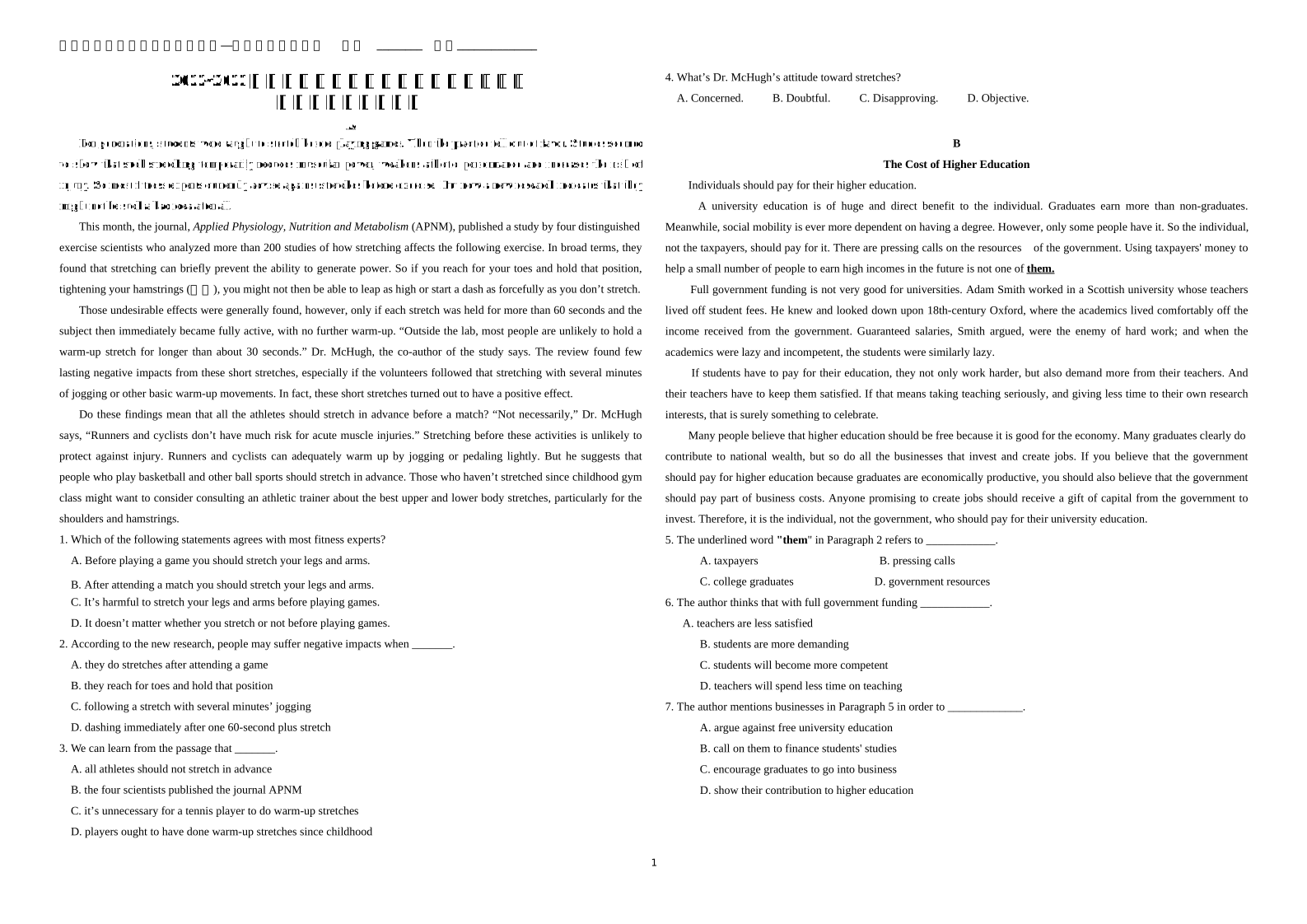
For generations, students were taught to stretch before playing games. Then the practice fell out of favor. Studies seemed to show that such stretching temporarily reduces muscular power, weakens athletic performance and increases the risk of injury. So most fitness experts currently advise against stretches before exercise. But now a new research indicates that they might not be such a bad idea after all.
This month, the journal, Applied Physiology, Nutrition and Metabolism (APNM), published a study by four distinguished exercise scientists who analyzed more than 200 studies of how stretching affects the following exercise. In broad terms, they found that stretching can briefly prevent the ability to generate power. So if you reach for your toes and hold that position, tightening your hamstrings (腿筋), you might not then be able to leap as high or start a dash as forcefully as you don’t stretch.
Those undesirable effects were generally found, however, only if each stretch was held for more than 60 seconds and the subject then immediately became fully active, with no further warm-up. “Outside the lab, most people are unlikely to hold a warm-up stretch for longer than about 30 seconds.” Dr. McHugh, the co-author of the study says. The review found few lasting negative impacts from these short stretches, especially if the volunteers followed that stretching with several minutes of jogging or other basic warm-up movements. In fact, these short stretches turned out to have a positive effect.
Do these findings mean that all the athletes should stretch in advance before a match? “Not necessarily,” Dr. McHugh says, “Runners and cyclists don’t have much risk for acute muscle injuries.” Stretching before these activities is unlikely to protect against injury. Runners and cyclists can adequately warm up by jogging or pedaling lightly. But he suggests that people who play basketball
资源预览图
1
相关资源
由于学科网是一个信息分享及获取的平台,不确保部分用户上传资料的 来源及知识产权归属。如您发现相关资料侵犯您的合法权益,请联系学科网,我们核实后将及时进行处理。