Unit6SectionA3a-3c课件2023-2024学年人教版英语九年级全册
2023-10-26
|
16页
|
770人阅读
|
25人下载
普通
内容正文:
Unit 6 When was it invented?
Section A 3a-3c
accidental
by accident
ruler
boil
remain
smell
saint
adj. 意外的;偶然的
偶然;意外地
n. 统治者;支配者
v. 煮沸;烧开
v. 保持不变;剩余
n. 气味 v. 发出……气味;闻到
n. 圣人;圣徒
national
trade
take place
popularity
doubt
without doubt
adj. 国家的;民族的
n. 贸易;交易 v. 做买卖;从事贸易
发生;出现
n. 受欢迎;普及
n. 疑惑;疑问 v. 怀疑
毫无疑问;的确
What are they doing?
Do you know what it is?
3a.Read the passage and match every paragraph with the main idea.
Paragraph 1 Lu Yu and his book Cha Jing
Paragraph 2 How tea spread to other countries
Paragraph 3 How tea was invented by accident
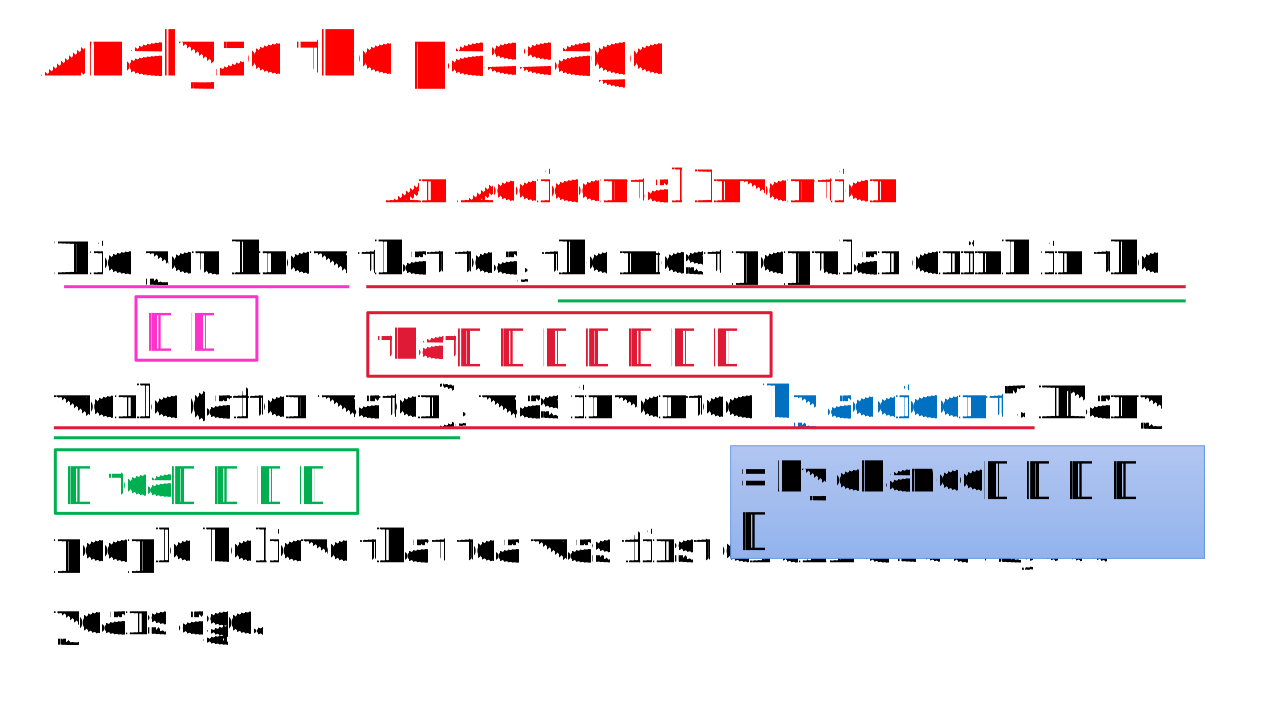
An Accidental Invention
Did you know that tea, the most popular drink in the
world (after water), was invented by accident? Many
people believe that tea was first drunk about 5,000 years ago.
主句
that引导的宾语从句
作tea的同位语
= by chance偶然;意外
Analyze the passage
It is said that a Chinese ruler called Shen Nong was the first to discover tea as a drink. One day
Shen Nong was boiling drinking water over an open fire. Some leaves from a tea plant fell into the water and remained there for some time.
it是形式主语
that引导的从句是真正的主语
过去分词短语作后置定语
It is said that … = people say that … 据说……
拓展:It is believed that … 人们认为/相信……
It is reported that … 据报道……
It is known that … 众所周知……
fall into 落入;陷入
拓展:fall asleep 睡着
fall behind 落后
fall down 跌倒;倒塌
It produced a nice smell so he tasted the brown water. It was quite delicious, and so, one of the world’s favorite drinks was invented.
one of … ……之一,作主语时,谓语动词用单数形式。
拓展:one of the+形容词最高级+可数名词复数
最……的……之一
It produced a nice smell so he tasted the brown water.
水里散发出一种怡人的气味,因此他品尝了这种棕色的水。
(1)smell 可作不可数名词,也可作可数名词,意为“气味”。用作可数名词时,表示“某一种气味”。
e.g. This flower doesn’t have much smell.
这朵花的香味不浓。
There’s a smell of cooking. 有股烧菜做饭的味儿。
9
A few thousand years later, Lu Yu, “the saint of tea”, mentioned Shen Nong in his book Cha Jing. The book describes how tea plants we
资源预览图

1

2

3

4

5
6
相关资源
示范课
由于学科网是一个信息分享及获取的平台,不确保部分用户上传资料的 来源及知识产权归属。如您发现相关资料侵犯您的合法权益,请联系学科网,我们核实后将及时进行处理。