07 Unit 4 Protecting the Environment 单元测试--英语沪外版选择性必修第三册
2023-04-01
|
25页
|
296人阅读
|
11人下载
资源信息
| 学段 | 高中 |
|---|---|
| 学科 | 英语 |
| 教材版本 | 高中英语沪外版选择性必修第三册 |
| 年级 | 高二 |
| 章节 | Unit 4 Protecting the Environment |
| 类型 | 作业-单元卷 |
| 知识点 | - |
| 使用场景 | 同步教学-单元练习 |
| 学年 | 2026-2027 |
| 地区(省份) | 上海市 |
| 地区(市) | - |
| 地区(区县) | - |
| 文件格式 | DOCX |
| 文件大小 | 93 KB |
| 发布时间 | 2023-04-01 |
| 更新时间 | 2023-04-09 |
| 作者 | 青青河边草 |
| 品牌系列 | 上好课·上好课 |
| 审核时间 | 2023-04-01 |
| 下载链接 | https://m.zxxk.com/soft/38401432.html |
| 价格 | 2.00储值(1储值=1元) |
| 来源 | 学科网 |
内容正文:
单元测试
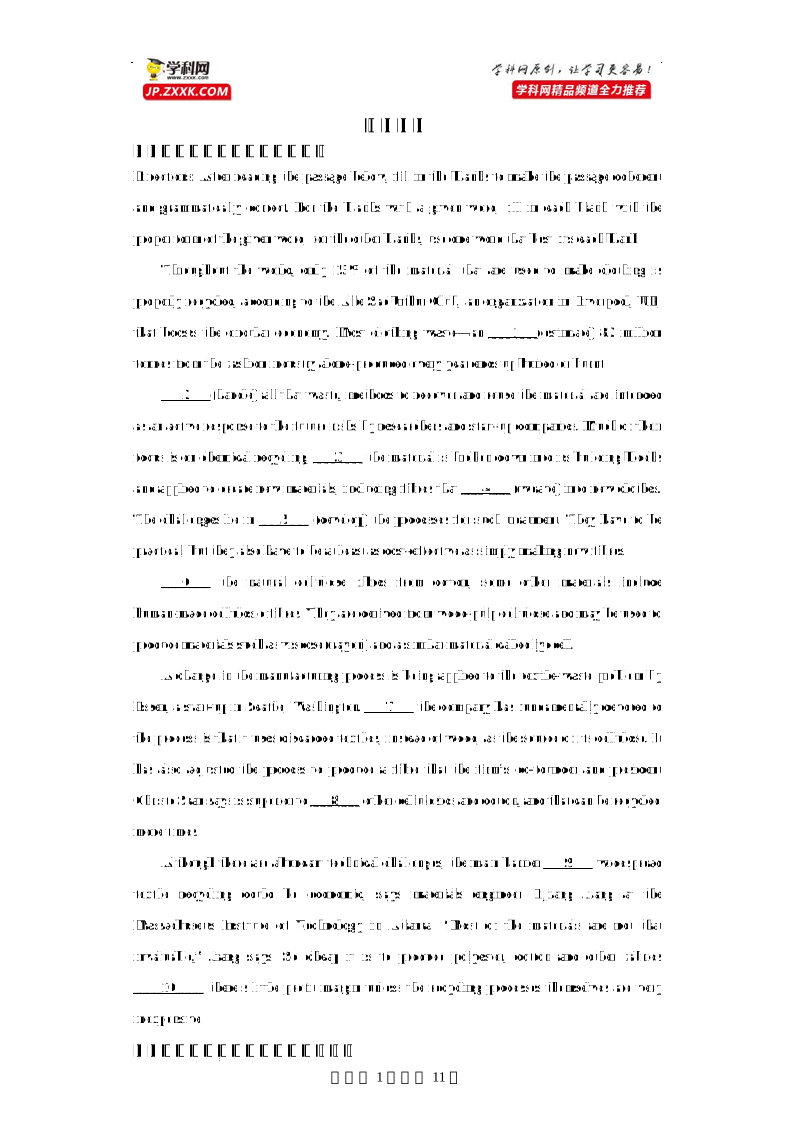
一、用单词的适当形式完成短文
Directions: After reading the passage below, fill in the blanks to make the passage coherent and grammatically correct. For the blanks with a given word, fill in each blank with the proper form of the given word; for the other blanks, use one word that best fits each blank.
Throughout the world, only 15% of the material that are used to make clothing is properly recycled, according to the Alle SacUrthur Club, an organization in Liverpool, UK, that boosts the circular economy. Most clothing waste—an ___1___(estimate) 82 million tonnes from the fashion industry alone-produced every year ends up buried or burnt.
___2___(handle) all that waste, methods to recover and reuse the material are intended as an active response to the future risks by researchers and start-up companies. Much of their focus is on chemical recycling, ___3___ the material is broken down into its building blocks and applied to create new materials, including fibres that ___4___ (weave) into new clothes. The challenges lie in ___5___ (develop) the processes for such treatment. They have to be practical, but they also have to be at least as cost-effective as simply making new fibres.
___6___ the natural cellulose fibres from cotton, some other materials include human-made cellulosic fibres. They are derived from wood-pulp cellulose and may be used to produce materials such as viscose (rayon) and a similar material called lyocell.
A change in the manufacturing process is being applied to the textile-waste problem by Essen, a start-up in Seattle, Washington. ___7___ the company has fundamentally devoted to the process is that it uses discarded textiles, instead of wood, as the source of its cellulose. It has also adjusted the process to produce a fibre that the firm’s co-founder and president Christo Stan says is superior to ___8___ other cellulosics and cotton, and that can be recycled more times.
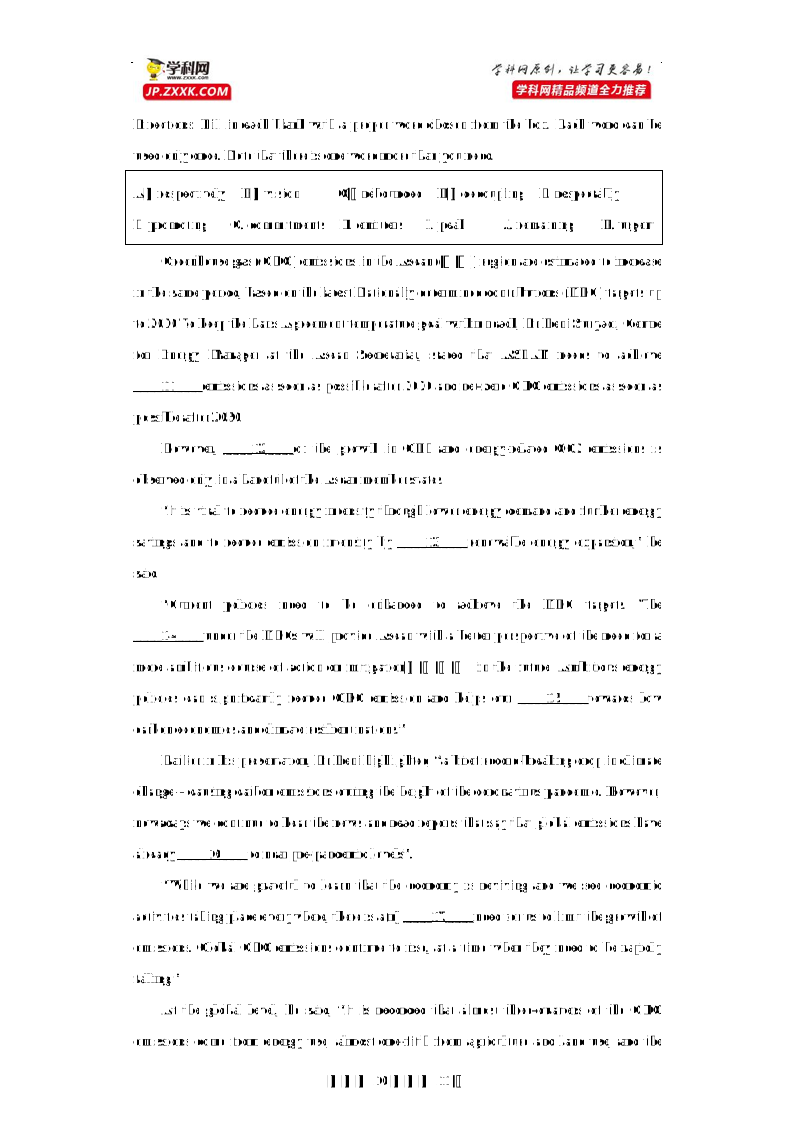
Although there are abundant technical challenges, the main barrier ___9___ widespread
资源预览图
1
2

3
所属专辑

相关资源
由于学科网是一个信息分享及获取的平台,不确保部分用户上传资料的 来源及知识产权归属。如您发现相关资料侵犯您的合法权益,请联系学科网,我们核实后将及时进行处理。