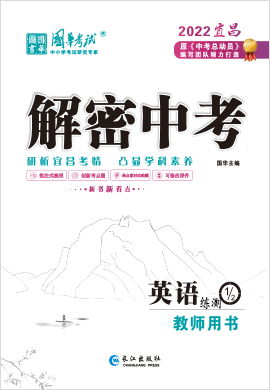
素养综合训练16(九全)Units 1~2(课件PPT)-【解密中考】2022中考英语练测(宜昌专用)
2022-05-06
|
33页
|
91人阅读
|
1人下载
教辅
内容正文:
素养综合训练十六 九年级全册Units 1—2
上一页
下一页
返回首页
His mother tongue was German and at school he 2 French and English,but he felt his English was poor.So he 3 his mind to improve his English.He began to work hard 4 it.He made so much 5 that he could soon read English newspapers and write English articles.
上一页
下一页
返回首页
However,there were 6 things that he thought were too difficult for him—the grammar and some of the idioms(习语).He often encouraged himself by saying “ 7 I keep on trying,I'll make even greater progress.” At the same time,his close friend,Engels,often wrote to 8 him for his hard work in learning English.
上一页
下一页
返回首页
In one of Marx's books,he gave people who were learning a foreign language some 9 on how to learn it well.He said a foreign language was necessary for a person to have a 10 future.He said a person should translate every word he 11 into the foreign language he was learning.If he could do this,it would be 12 for him to use the language freely.
上一页
下一页
返回首页
In April,1841,he 13 his doctor's degree.After that,he began to write articles for a newspaper.He wrote about the housing 14 of poor people and their hard life.Whatever he tried,he did his best.
During the 1840s,Marx and Engels wrote a book 15 .These words of theirs became very famous:“Working people of all countries,unite(联合)!”
上一页
下一页
返回首页
( )1.A.farms B.factories
C.schools D.countries
( )2.A.read B.wrote
C.hated D.learned
( )3.A.made up B.set up
C.took up D.picked up
D
D
A
上一页
下一页
返回首页
( )4.A.on B.at
C.in D.for
( )5.A.success B.progress
C.time D.energy
( )6.A.one B.two
C.three D.four
B
B
B
上一页
下一页
返回首页
( )7.A.But B.If
C.And D.As
( )8.A.praise B.ask
C.help D.call
( )9.A.examples B.meanings
C.money D.advice
B
A
D
上一页
下一页
返回首页
( )10.A.busier B.better
C.smarter D.worse
( )11.A.wrote B.said
C.heard D.knew
( )12.A.difficult B.impossible
C.possible D.important
B
C
C
上一页
下一页
返回首页
( )13.A.failed B.received
C.pro
资源预览图

1

2

3

4

5

6
相关资源
示范课
由于学科网是一个信息分享及获取的平台,不确保部分用户上传资料的 来源及知识产权归属。如您发现相关资料侵犯您的合法权益,请联系学科网,我们核实后将及时进行处理。