专题11 阅读填表-冲刺2022年中考英语必考题型终极押题(无锡专用)
2022-04-14
|
22页
|
777人阅读
|
54人下载

资源信息
| 学段 | 初中 |
|---|---|
| 学科 | 英语 |
| 教材版本 | - |
| 年级 | 九年级 |
| 章节 | - |
| 类型 | 题集 |
| 知识点 | - |
| 使用场景 | 中考复习 |
| 学年 | 2022-2023 |
| 地区(省份) | 江苏省 |
| 地区(市) | 无锡市 |
| 地区(区县) | - |
| 文件格式 | DOCX |
| 文件大小 | 303 KB |
| 发布时间 | 2022-04-14 |
| 更新时间 | 2023-04-09 |
| 作者 | Easy English初高中英语精品 |
| 品牌系列 | - |
| 审核时间 | 2022-04-14 |
| 下载链接 | https://m.zxxk.com/soft/33190196.html |
| 价格 | 3.00储值(1储值=1元) |
| 来源 | 学科网 |
内容正文:
2022年中考英语必考题型终极押题(无锡专用)-阅读填表
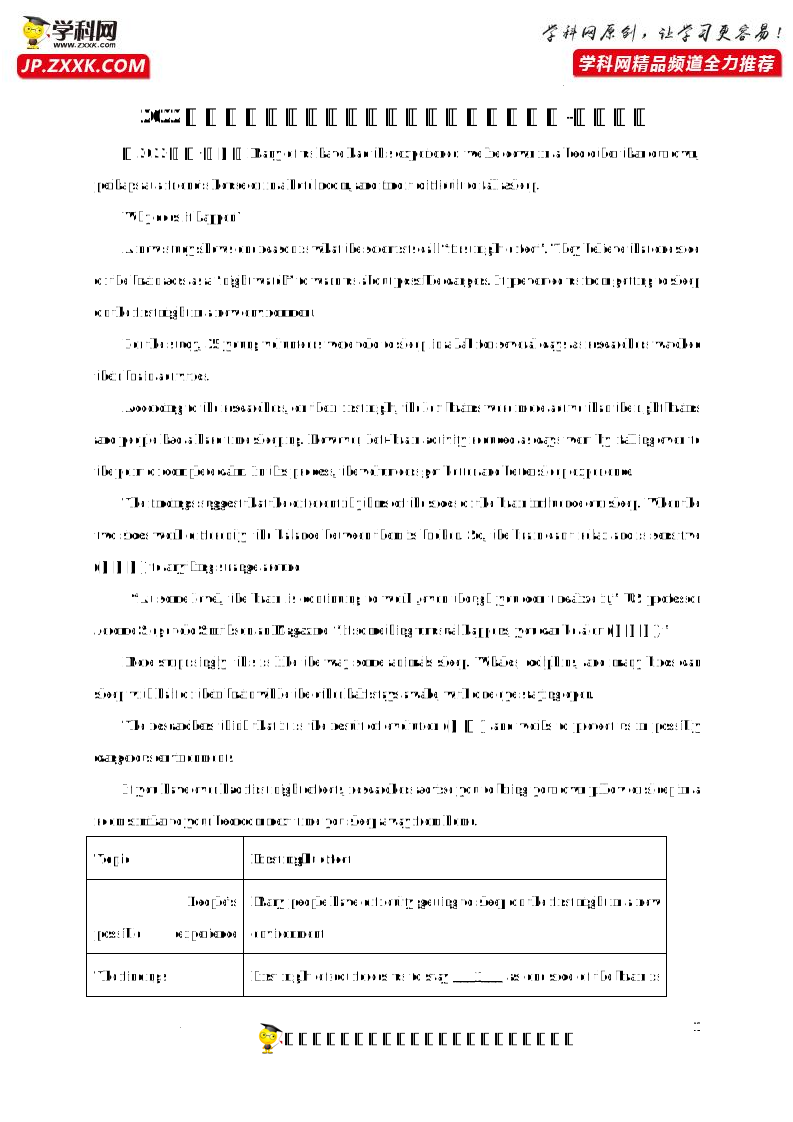
(2022·江苏·一模)Many of us have had this experience: we lie down in a bed other than our own, perhaps at a friend’s house or in a hotel room, and find it difficult to fall asleep.
Why does it happen?
A new study shows one reason is what the scientists call “first night effect”. They believe that one side of the brain acts as a “night watch” to warn us about possible dangers. It prevented us from getting to sleep on the first night in a new environment.
For the study, 35 young volunteers were told to sleep in a lab for several days as researchers watched their brain activities.
According to the researchers, on their first night, the left brains were more active than the right brains and people had a hard time sleeping. However, left-brain activity reduced as days went by, falling even to the point of complete calm. In this process, the volunteers got better and better sleep experience.
The findings suggest that the different rhythms of the sides of the brain influence our sleep. When the two sides work differently, the balance between them is broken. So, the brain can’t relax and is sensitive (敏感的) to anything strange around.
“At some level, the brain is continuing to work ,even though you don’t realize it,” US professor Jerome Siege told Smithsonian Magazine. “If something unusual happens, you can be alert (警惕的).”
More surprisingly, this is like the way some animals sleep. Whales, dolphins, and many birds can sleep with half of their brain while the other half stays awake, with one eye staying open.
The researchers think that it is the result of evolution (进化) and works to protect us in possibly dangerous environments.
If you have ever had first night effects, researchers advise you to bring your own pillow or sleep in a room similar to your bedroom next time you sleep away from home.
Topic
First night effect
People’s possible experience
Many people have difficulty getting to sleep on the first night in a new environment.
资源预览图
1
2
3

相关资源
由于学科网是一个信息分享及获取的平台,不确保部分用户上传资料的 来源及知识产权归属。如您发现相关资料侵犯您的合法权益,请联系学科网,我们核实后将及时进行处理。