Unit 4 Section A Grammar Focus-3c【高效课堂】2021-2022学年七年级英语下册同步备课系列(人教版)
2022-03-07
|
4份
|
53页
|
220人阅读
|
4人下载
精品
资源信息
| 学段 | 初中 |
|---|---|
| 学科 | 英语 |
| 教材版本 | 初中英语人教版(2012)七年级下册 |
| 年级 | 七年级 |
| 章节 | Unit 4 Don't eat in class. |
| 类型 | 备课综合 |
| 知识点 | - |
| 使用场景 | 同步教学 |
| 学年 | 2022-2023 |
| 地区(省份) | 全国 |
| 地区(市) | - |
| 地区(区县) | - |
| 文件格式 | ZIP |
| 文件大小 | 4.04 MB |
| 发布时间 | 2022-03-07 |
| 更新时间 | 2023-04-09 |
| 作者 | 烁烁的紫金牛 |
| 品牌系列 | - |
| 审核时间 | 2022-03-07 |
| 下载链接 | https://m.zxxk.com/soft/32714728.html |
| 价格 | 5.00储值(1储值=1元) |
| 来源 | 学科网 |
内容正文:
Unit 4 Don’t eat in class.
Section A Grammar Focus-3c教学设计
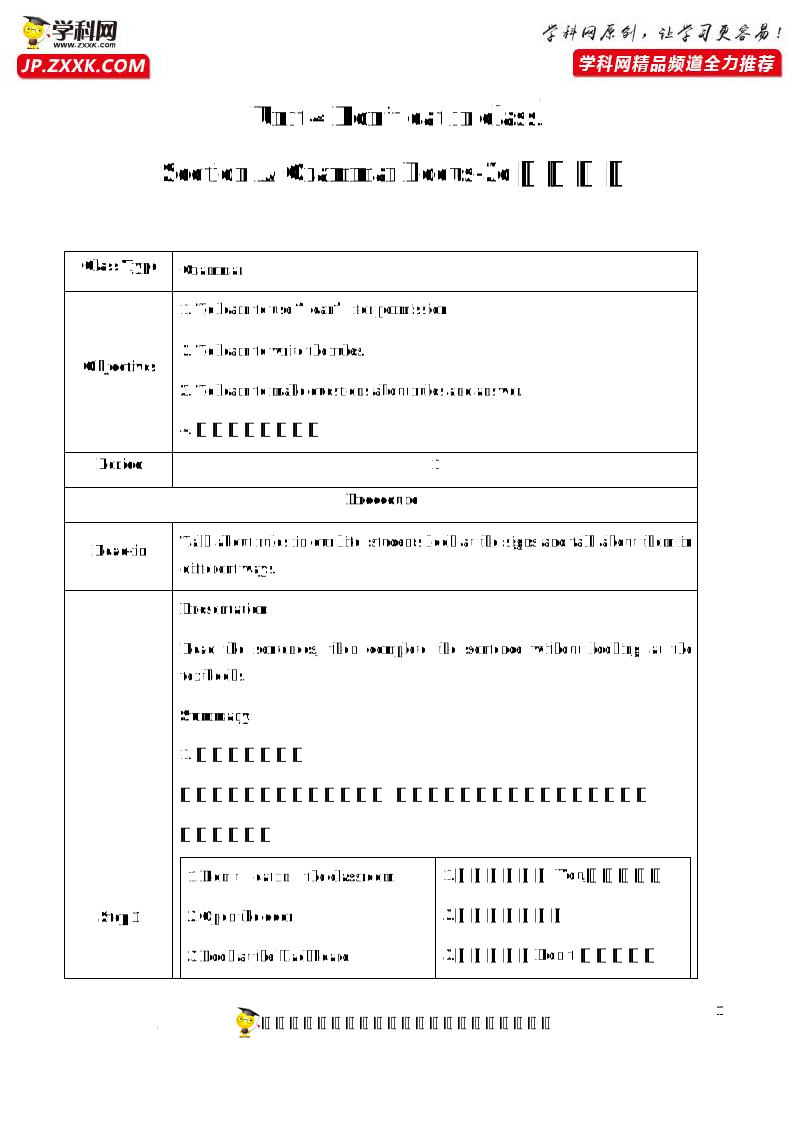
Class Type
Grammar
Objectives
1. To learn to use “can” for permission.
2. To learn to write the rules.
3. To learn to make questions about rules and answer.
4. 祈使句的相关用法
Period
1
Procedure
Lead-in
Talk about rules in our life, students look at the signs and talk about them in different ways.
Step 1
Presentation:
Read the sentences, then complete the sentence without looking at the textbooks.
Summary:
1. 什么是祈使句?
用于表达命令,请求,劝告, 警告,禁止等的句子就叫做祈使句。
祈使句的特点
1.Don’t eat in the classroom.
2.Open the door!
3.Look at the blackboard.
4.Please be careful!
5.Stand up, please!
1.主语(多数是You,一般省略)
2.开头:动词原形
3.否定形式:Don’t +动词原形
4.为了表达委婉的语气,可在
句首,句末加上please。
5.祈使句用降调。
肯定祈使句
Do型
以动词原形开头
Listen to me!
Be型
Be +adj.
Be quick!
Let型
let+sb.+动词原形
Let ’s walk!
1.__________(open)the door for me, please!
2._________ (be )careful when you go out at night!
3.--Let ’s _______(play) the piano for half an hour.
--That sounds good.
否定祈使句
Don’t型
Don't +动词原形开头
Don’t talk!
No型
No +n./v. + ing
No photos!
Let否定型
Don’t let…+动词原形
Don’t let him go in!
1.Don’t _______(talk)in class!
2.No ________ (run), it's dangerous to do so !
3.Don’t let him ___(eat)in class.
难点突破:
Let's是 Let us 的缩写形式
Let's不等于 Let us
1.Let's walk and talk.(建议)
2.Let us walk and talk . (请求)
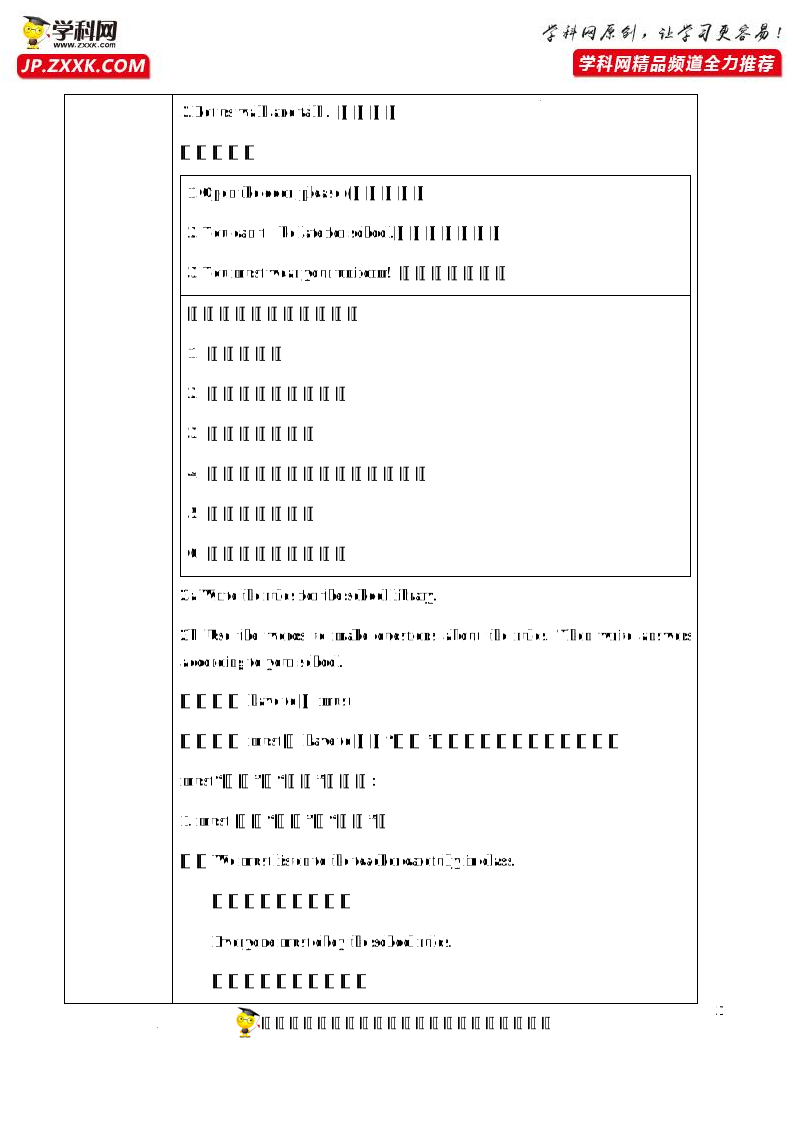
巧变祈使句
1.Open the door ,please!(变否定句)
2.You can’t be late for school.(变成祈使句)
3.You must wear your uniform! (变成祈使句)
将下列句子翻译成英语。
1. 请看着我。
2. 不要在路上踢足球。
3. 让我们帮助他。
4. 同学们,在图书馆请保持安静。
5. 上课不要迟到。
6. 在校期间要穿校服。
3a Write the rules for the school library.
3b Use the words to make questions about the rules. Then write answers according to your school.
情态动词have to与must
情态动词must和have to都有“必须”的含义,它们的用法如下:
must “必须”、“应该”的用法:
1. must 表示“必须”、“应该”。
例:We must listen to the teacher carefully in class.
我们必须专心听讲。
Everyone must obey the school rules.
每个人必须遵守校规。
2. must的否定形式must not=mustn’t表示“不应该”、“禁止”、“不准”。语气比较强烈。
例:You mustn’t talk in class. 你上课不准讲话。
We mustn’t b
资源预览图
1

2
3

相关资源
由于学科网是一个信息分享及获取的平台,不确保部分用户上传资料的 来源及知识产权归属。如您发现相关资料侵犯您的合法权益,请联系学科网,我们核实后将及时进行处理。