Unit 1 Art-【高考领航】2021-2022学年新教材高中英语选择性必修第三册同步核心辅导与测评课件(人教版)
2021-12-27
|
8页
|
653人阅读
|
7人下载
教辅

内容正文:
话题导入·思维激活
*
话题导入·思维激活
艺术是花,美丽处处可见;艺术是雪,洁白纯洁让人永生难忘;艺术是海,其中藏着无数珍宝;艺术是灯,为我们照亮前进的路;艺术是一块磁石,将人吸引;艺术是歌,让人沉醉。
*
话题导入·思维激活
*
话题导入·思维激活
话题
导入·思维激活
C
*
话题导入·思维激活
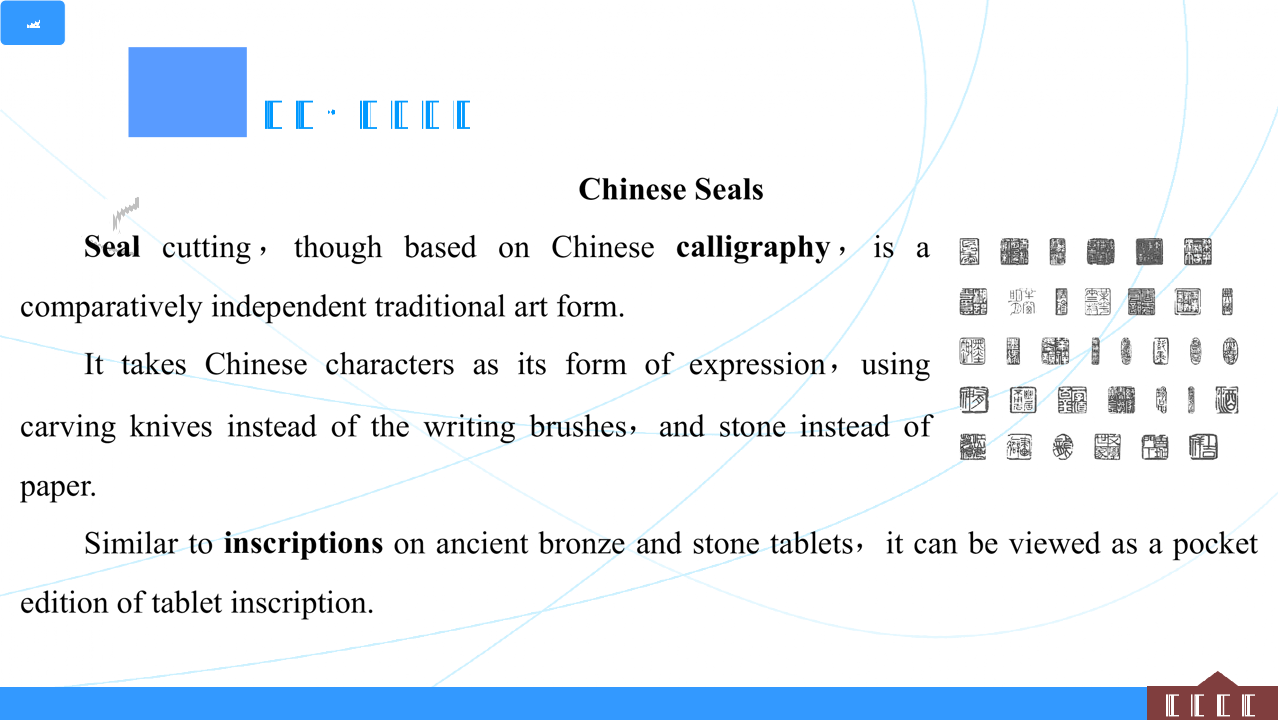
The seal has many names in history.
It was called xiyin during the Warring States Period,the Qin and Han dynasties,and the Wei and Jin periods.
The Ming and the Qing dynasties were universally acknowledged to be the two golden periods in the history of seal cutting,and the seal was known as seal cutting then.
And the long period from the Tang Dynasty to the Yuan Dynasty turned out to be a time when the royal seal was on the decline.
The use of the seal also varied.
*
话题导入·思维激活
Clay impression was used before the Sui and Tang dynasties and inkpad or red ink paste has been used since the Tang and the Song dynasties.
Xiyin can be classified into official seals and private seals.
Official seals refer to those of emperors and officials.
The making materials used in ancient times mainly include gold,silver,copper,jade,amber,agate,stone,bamboo and wood.And copper seals made up an overwhelming majority.
Most of the seals were cast,and some were carved.
*
话题导入·思维激活
“Chinese Seal,Dancing Beijing”,the emblem of the Beijing 2008 Olympic Games officially uncovered on August 3,2003,is a combination of the five rings,a Chinese seal character of Beijing and “Beijing 2008” in English.
*
话题导入·思维激活
【话题词汇】
1.seal n. 印章,封条
2.calligraphy n. 书法
3.inscription n. (石头或金属上)刻写的文字, 铭刻,碑
4.red ink paste 印泥
5.emblem n. 徽章
*
$
资源预览图

1

2

3
4
相关资源
示范课
由于学科网是一个信息分享及获取的平台,不确保部分用户上传资料的 来源及知识产权归属。如您发现相关资料侵犯您的合法权益,请联系学科网,我们核实后将及时进行处理。