Unit 1 Festivals and celebrattions 单元限时练习 - 2020-2021学年下学期高一英语同步精品课堂(人教版新教材必修第三册)
2021-04-02
|
2份
|
17页
|
1115人阅读
|
14人下载
资源信息
| 学段 | 高中 |
|---|---|
| 学科 | 英语 |
| 教材版本 | 高中英语人教版必修第三册 |
| 年级 | 高一 |
| 章节 | Unit 1 Festivals and Celebrations |
| 类型 | 作业-同步练 |
| 知识点 | - |
| 使用场景 | 同步教学 |
| 学年 | 2021-2022 |
| 地区(省份) | 全国 |
| 地区(市) | - |
| 地区(区县) | - |
| 文件格式 | ZIP |
| 文件大小 | 56 KB |
| 发布时间 | 2021-04-02 |
| 更新时间 | 2023-04-09 |
| 作者 | 东方红 |
| 品牌系列 | - |
| 审核时间 | 2021-04-02 |
| 下载链接 | https://m.zxxk.com/soft/27682299.html |
| 价格 | 2.00储值(1储值=1元) |
| 来源 | 学科网 |
内容正文:
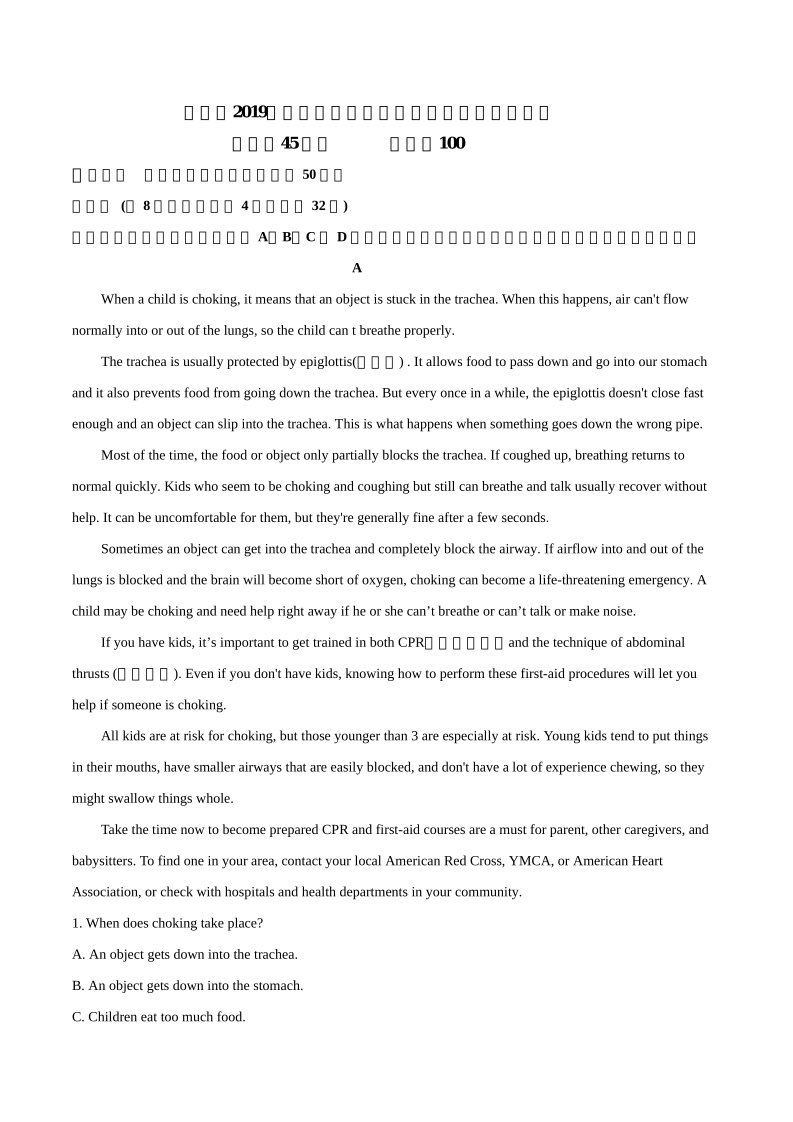
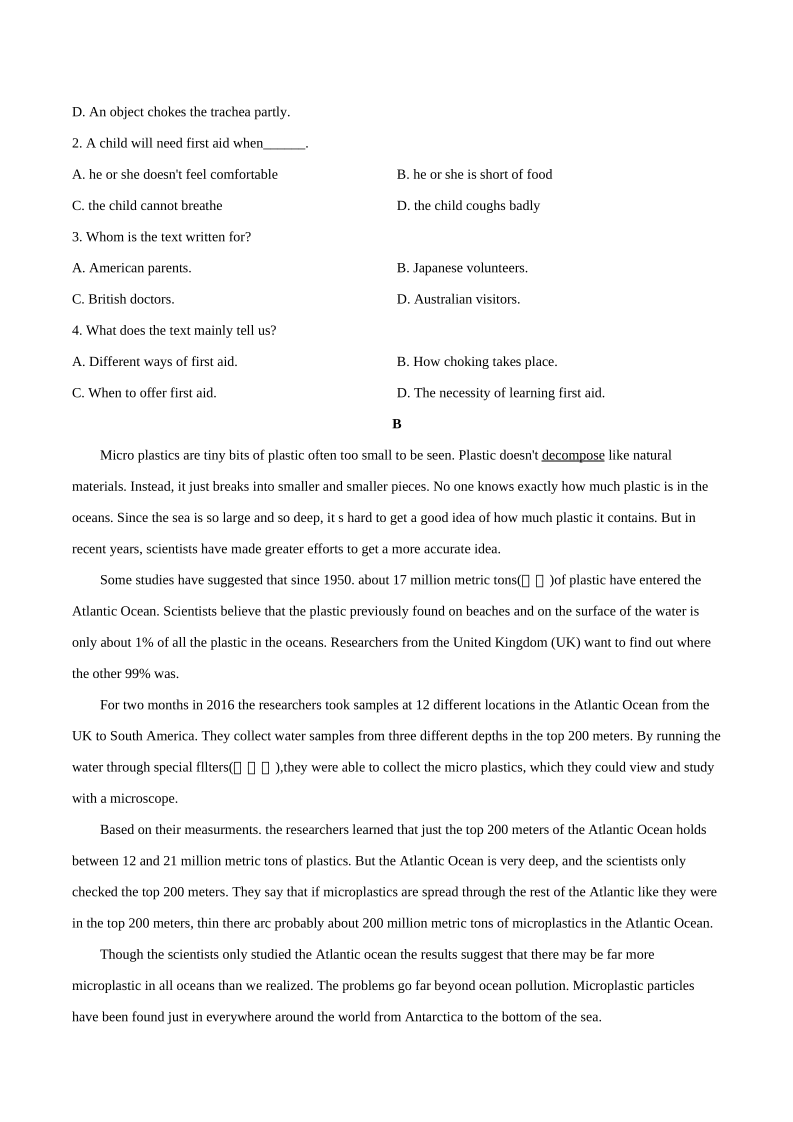
人教(2019)版高中英语必修第三册第一单元限时练
时间:45分钟 分值:100
第一部分 阅读理解(共两节,满分50分)
第一节 (共8小题;每小题4分,满分32分)
阅读下列短文,从每题所给的A、B、C和D四个选项中,选出最佳选项,并在答题纸上将该项涂黑。
A
When a child is choking, it means that an object is stuck in the trachea. When this happens, air can't flow normally into or out of the lungs, so the child can t breathe properly.
The trachea is usually protected by epiglottis(喉头盖) . It allows food to pass down and go into our stomach and it also prevents food from going down the trachea. But every once in a while, the epiglottis doesn't close fast enough and an object can slip into the trachea. This is what happens when something goes down the wrong pipe.
Most of the time, the food or object only partially blocks the trachea. If coughed up, breathing returns to normal quickly. Kids who seem to be choking and coughing but still can breathe and talk usually recover without help. It can be uncomfortable for them, but they're generally fine after a few seconds.
Sometimes an object can get into the trachea and completely block the airway. If airflow into and out of the lungs is blocked and the brain will become short of oxygen, choking can become a life-threatening emergency. A child may be choking and need help right away if he or she can’t breathe or can’t talk or make noise.
If you have kids, it’s important to get trained in both CPR(心肺夏苏)and the technique of abdominal thrusts (腹部施压). Even if you don't have kids, knowing how to perform these first-aid procedures will let you help if someone is choking.
All kids are at risk for choking, but those younger than 3 are especially at risk. Young kids tend to put things in their mouths, have smaller airways that are easily blocked, and don't have a lot of experience chewing, so they might swallow things whole.
Take the time now to become prepared CPR and first-aid courses are a must for parent, other caregivers, and babysitters. To find one in your area, contact your local American Red Cross, YMCA, or American Heart Association, or c
资源预览图
1
2
相关资源
由于学科网是一个信息分享及获取的平台,不确保部分用户上传资料的 来源及知识产权归属。如您发现相关资料侵犯您的合法权益,请联系学科网,我们核实后将及时进行处理。